The short answer
The Cavalier is a gentle, devoted velcro companion that suits families, apartments and seniors, with an easy temperament but real grooming and company needs. It is affectionate, adaptable and lovely with kids, dogs and cats, and its exercise needs are gentle: a couple of walks plus play, with the dog kept lean. The catch is that a Cavalier bonds so hard it can struggle when left alone a lot, so it suits a home with company. Add regular brushing, routine ear and eye care, and reward-based training, and you have one of the easiest companion breeds to live with.
The gentle velcro temperament
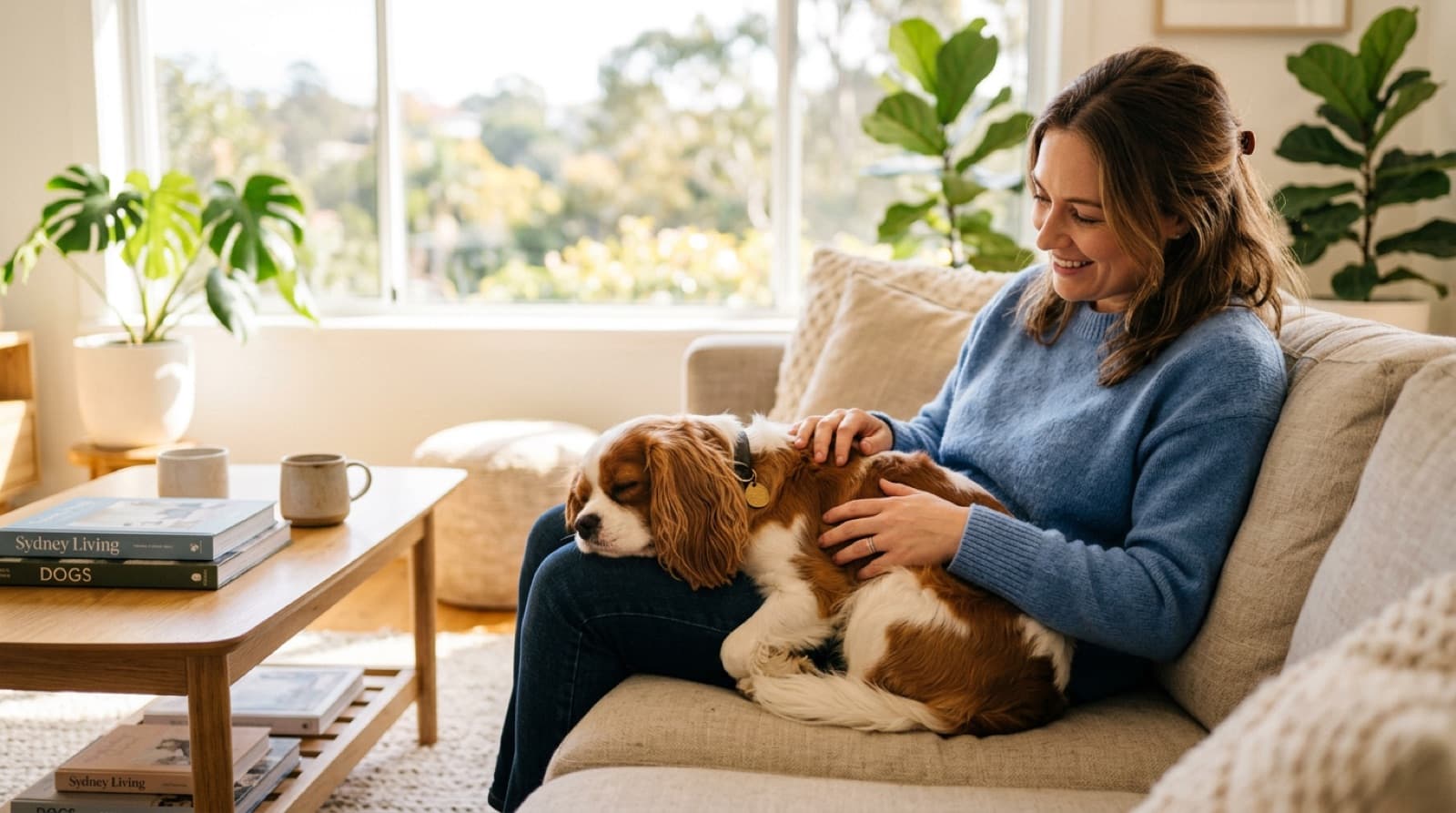
The first thing to know about a Cavalier is that it lives to be with you. These are deeply people-oriented dogs, often called velcro dogs because they follow their family from room to room and are happiest curled up on a lap or leaning against a leg. That closeness is the whole point of the breed. A Cavalier was bred to be a companion, not a worker, and it takes that job seriously.
Alongside that devotion sits one of the softest, most even temperaments you will find in a dog. Cavaliers are gentle, affectionate, cheerful and adaptable. They are rarely pushy or dominant, they are not typically barky or highly strung, and they take life in their stride. That easy nature is why they slot into so many different homes, from busy families to quiet retired households, and why they are a favourite of first-time and experienced owners alike.
They are also famously good with everyone. Cavaliers are patient and gentle with children, they usually love the company of other dogs, and many live happily with cats. There is very little edge to the breed, which is exactly what makes it such a reliable family companion. What you get, over and over, is a small dog with a big, warm personality that simply wants to be near its people.
Is a Cavalier right for you?
For the right home, a Cavalier is a wonderful dog, but there is one honest catch to sit with before you adopt: this is not a breed for a home that is empty all day. Because Cavaliers bond so hard and want to be with their people, they are prone to separation-related distress when left alone for long or frequent stretches. Left too much on their own, they can bark, pace, become unsettled or genuinely distressed, and that is a welfare problem, not bad behaviour.
So the ideal Cavalier home is one where someone is around a good part of the day, whether that is a household that works from home, a retired owner, or a family with someone often about. If nobody is home much, a Cavalier can still work with a real plan for company: a second pet, dog walkers or daycare, and a routine that avoids long daily isolation. Where a home cannot offer any of that, this is probably not the right breed, and it is kinder to be honest about it up front.
The good news is that separation problems are largely preventable. You build independence gently from the day you bring the dog home: short absences that grow slowly, calm and low-key comings and goings, a predictable routine, and making sure the dog is walked and content before you head out. A safe, comfortable spot and something to chew while you are gone help too. Set a Cavalier up this way and its need for company becomes an easy, joyful thing rather than a source of stress.
Families, apartments and seniors
Part of what makes the Cavalier so popular is how many kinds of home it fits. For families, the gentle, patient temperament is the big draw. A well-raised Cavalier is calm and affectionate with children and rarely reactive, which makes it a lovely first dog for kids. As with any dog, teach children to be gentle and respectful, never to disturb the dog while it is eating or resting, and supervise young kids at play, but the breed itself brings a soft, forgiving nature to the mix.
For apartment and unit living, a Cavalier is one of the better small-breed choices in Sydney. It is compact, it is quiet by nature, and it has low-to-moderate exercise needs, so it does not need a big yard to be content. What it needs is company and its daily walks, not floor space. Do check your building or strata rules on pets before you adopt, and keep up the walks and play so an easy-going dog stays fit and happy indoors.
And for older adopters, the Cavalier is one of the classic senior companions. It is small and easy to handle, its exercise needs are gentle rather than demanding, and its whole nature is to sit close and keep you company. That suits a retired or at-home household beautifully, and the mutual love of company means both dog and owner get exactly what they need. An older, settled rescue Cavalier can be an especially good fit here, offering a ready-made companion without the work of raising a puppy.
Exercise and keeping lean
A Cavalier has modest exercise needs. A couple of gentle walks a day, plus some play and a bit of sniffing time, is plenty for most. They are adaptable and will happily match a relaxed pace, but daily activity still matters. It is easy to let a dog that would rather doze on the couch skip its walk, and that is how a Cavalier drifts into being unfit and overweight. Keep the walks regular even when the dog seems content to stay put.
Keeping a Cavalier lean is not just about fitness, it is one of the most important things you can do for the breed. Cavaliers carry a well-known risk of heart disease, and extra weight adds strain to a heart that may already be working harder than it should. A trim, well-conditioned Cavalier is a healthier one. Watch the treats, feed measured meals rather than free-feeding, and check in with your vet about the right body condition. We go into the heart and the breed's other health issues in the Cavalier health issues guide.
Sydney heat shapes how you exercise a small, affectionate dog. Walk in the cool of early morning or the evening through summer, carry water, and go easy in the middle of a hot, humid day. Heat, not cold, is the real dog-safety risk here. For an older Cavalier, or one already diagnosed with a heart condition, keep exercise gentle and let your vet guide how much is right. The point with this breed is never to over-exert it, just to keep it moving comfortably every day.
Grooming and coat care
The Cavalier's silky, feathered coat is beautiful, and it does ask for regular care. This is not a wash-and-go breed, but the routine is very manageable once it becomes a habit. Here is what a Cavalier needs:
- Brushing several times a week. The silky coat and the feathering on the ears, legs, feet and tail tangle and mat if it is left, so a good brush a few times a week keeps it smooth and comfortable.
- Watch the mat hot-spots. Mats form fastest behind and under the ears, in the armpits where the front legs meet the body, and in the feathering on the back legs. Give those areas extra attention.
- Regular ear care. The long, low-hanging ears look lovely but trap moisture and warmth, so check inside them regularly and clean gently as your vet advises. Keep an eye out for redness, odour or head-shaking.
- Eye cleaning. A gentle wipe around the eyes helps manage tear staining and keeps the area clean and comfortable.
- Nails, teeth and feet. Trim nails regularly, care for the teeth (small breeds are prone to dental issues), and check the fur between the paw pads.
- Occasional professional grooming. Many owners book a groomer now and then to tidy the feathering and neaten the feet. It keeps the coat easy to manage between brushes.
None of this is hard, but it is worth building into your week from day one, and worth starting gently with a rescue dog that may not be used to being handled or brushed. A few minutes of brushing while the dog is on your lap fits neatly into the kind of quiet, close time a Cavalier loves anyway.
Easy, reward-based training
Cavaliers are a pleasure to train. They are bright, eager to please, and they love the attention that comes with a training session, so they pick things up quickly when you make it worth their while. Short, upbeat sessions with high-value food and plenty of praise are all it takes to teach the basics and to shape good manners around the house.
The one rule that really matters with this breed is to be gentle. A Cavalier is soft and sensitive, and harsh, punishment-based methods are the wrong tool entirely. A raised voice, a rough correction, or old-fashioned dominance training will only worry a dog like this and knock its confidence, and a worried Cavalier does not learn well. Reward the behaviour you want, stay consistent across the whole household, and keep it fun. This is also the approach best backed by welfare evidence, which is why bodies like the Australian Veterinary Association support reward-based training. A rescue Cavalier may have small gaps to fill in, and you fill them the same gentle way, at the dog's pace. The RSPCA Australia Knowledgebase is a good general reference on positive training and settling a new dog in.
Cavaliers in Sydney
A few Sydney-specific things are worth planning for. Heat is the first. A small, affectionate dog like a Cavalier can still overheat on a hot, humid Sydney day, so keep exercise to the cooler hours in summer, carry water, and never leave a dog in a parked car. Their easy pace makes this simple: a gentle morning and evening walk suits both the dog and the climate.
The second is paralysis ticks. These are a year-round danger right across the Sydney region and they can be fatal, so keep your Cavalier on a vet-recommended tick prevention product all year, and run your fingers through the coat to check for ticks after any walk in bushland or long grass. Talk to your vet about the right product for your dog. It is a small habit that protects a dog you will quickly come to adore.
The third is that the Cavalier is genuinely well suited to Sydney apartment and unit life. It is small, quiet and adaptable, and it does not need a yard to be happy. Do confirm your building or strata rules on pets before you adopt, and remember that a Cavalier's real requirement is company and daily walks rather than square metres. Quiet local off-leash spots and gentle strolls suit the breed far more than a big, demanding exercise routine ever would.
Browse adoptable Cavaliers in Sydney
A Cavalier gives a gentle, devoted companion to a home that can offer company and a little grooming time. Browse live NSW listings and set an alert so you hear the moment one comes in.
See Available Cavaliers →Adopting a rescue Cavalier
A rescue is a genuinely good way to bring a Cavalier into your life, and an older rescue dog in particular is often a gentle, ready-made companion. A grown Cavalier has usually left the busy puppy stage behind, its temperament is there to see, and a good rescue can tell you honestly how it goes with children, other pets, grooming and being left alone. For a home that wants a soft, settled lap dog rather than a project, that clarity is a real gift.
This is also a soft breed that deserves a soft landing. Some rescue Cavaliers arrive having had less handling, grooming or company than they needed, and the answer is always patience: gentle brushing, a calm routine, and lots of the quiet closeness the breed loves. Rescues such as RSPCA NSW, AWL NSW, Sydney Dogs and Cats Home, Monika's Doggie Rescue and Maggie's Rescue take in dogs of all breeds and crosses and know their dogs well, and you can register a new Cavalier with the NSW Pet Registry once it comes home. For where to look and what adoption involves, our Cavalier adoption guide goes into detail, and the full Sydney resources hub covers the rest.
Frequently Asked Questions
Are Cavaliers good family dogs?
Yes, the Cavalier King Charles Spaniel is one of the best family companion breeds you can adopt. They are gentle, affectionate and patient, they get on beautifully with children, and they simply want to be part of whatever the family is doing. The main thing to plan for is company, because a Cavalier bonds so closely that it does not cope well left alone all day. A home where someone is around a lot, or where the dog has company, is the ideal setting. Give a Cavalier that, plus regular brushing and gentle daily exercise, and you get a devoted, easy-going family dog. As with any breed, teach children to be calm and respectful and supervise young kids around the dog.
Are Cavaliers good apartment dogs?
Yes, Cavaliers are one of the better breeds for apartment and unit living in Sydney. They are small, they are quiet by nature, they are not high-energy, and they are happy indoors as long as they get their daily walks and plenty of time with their people. What makes or breaks apartment life for a Cavalier is company, not space. Because they hate being alone, a unit where the dog is left empty all day is harder on them than a small floor plan ever would be. Check your building or strata rules before you adopt, keep up the daily walks and play, and a Cavalier settles into apartment life easily.
Do Cavaliers get separation anxiety?
Cavaliers are prone to separation-related distress because they bond so hard and love being with their people. They are true velcro dogs, so long or frequent stretches alone can leave them barking, unsettled or distressed, and that is not the dog being naughty. The way to lower the risk is to build independence gently from the start, keep a predictable daily routine, make sure the dog is walked and content before you leave, and avoid long daily isolation. A Cavalier really suits a home where someone is around a fair bit, or where it has company. If a dog shows genuine distress at being left, treat it as a welfare issue and get help from a vet or a force-free behaviour professional.
How much grooming does a Cavalier need?
A Cavalier needs regular grooming, though nothing extreme. The silky coat, with its feathering on the ears, legs, feet and tail, should be brushed several times a week to prevent mats and tangles, especially behind the ears and where the legs meet the body. On top of brushing, the long, low-hanging ears need routine checking and gentle cleaning because they trap moisture, and the eyes benefit from a wipe to keep tear staining down. Nails need regular trimming and teeth need regular care. Many owners book an occasional professional groom to tidy the feathering and the feet. It is a manageable routine, but it is not a wash-and-go coat, so factor the brushing time in.
How much exercise does a Cavalier need?
A Cavalier has low-to-moderate exercise needs, and is happy with a couple of gentle walks a day plus some play. They are adaptable and will happily match a relaxed household, but they still need daily activity to stay fit and content, so do not skip the walks just because the dog would curl up on the couch instead. Keeping a Cavalier lean matters more than piling on distance, because carrying extra weight is bad for the breed and adds strain to a body already prone to heart trouble. In Sydney, walk in the cooler parts of the day through summer. For an older Cavalier or one with a heart condition, keep exercise gentle and follow your vet's advice.
Are Cavaliers easy to train?
Yes, Cavaliers are generally easy to train because they are bright, eager to please and love the attention that training brings. Short, upbeat, reward-based sessions with food and praise work wonderfully with them. The key thing is to keep it gentle, because this is a soft, sensitive breed and harsh or heavy-handed methods are exactly the wrong tool. A raised voice or rough correction will only worry a Cavalier and set back your training. Reward the behaviour you want, be consistent across the household, and make it fun. A rescue Cavalier may have small gaps to fill in gently, and any good rescue will tell you how the dog has gone with basic training.
Are Cavaliers good for seniors?
Yes, Cavaliers are a wonderful companion for many older adopters. They are small and easy to handle, their exercise needs are gentle rather than demanding, they are calm and affectionate indoors, and they thrive on the close company an at-home owner can give, which suits a retired household beautifully. That mutual need for company is really the heart of the match. A couple of gentle walks and a lap to sit on is a Cavalier's idea of a good day. It is worth planning ahead for grooming and vet costs, and an older, settled rescue Cavalier can be an especially easy fit for a senior who wants a ready-made companion rather than a puppy.
Are Cavaliers good with other pets?
Yes, Cavaliers are typically excellent with other dogs and cats. They are gentle, sociable and non-confrontational by nature, they usually enjoy canine company, and many live happily alongside cats. That easy-going temperament is one reason they suit multi-pet homes so well, and it also means a Cavalier often benefits from having another pet around for company when the humans are out. Introductions should still be done calmly and gradually, and a rescue can tell you how a particular dog has gone with other animals. As always, supervise early meetings and give each pet its own space, food and quiet spot to retreat to.
Keep reading
Adoptable Cavaliers in Sydney
Live listings of Cavalier King Charles Spaniels and crosses across Sydney and NSW rescues.
Cavalier Adoption in Sydney
Where to adopt, why Cavaliers end up in rescue, and what adoption costs against a breeder.
Cavalier Health Issues in Sydney
The heart and other breed health concerns, plus Sydney heat and year-round paralysis tick prevention.
All Sydney Adoption Guides
Browse every breed and how-to guide for adopting a rescue dog in Sydney.