The short answer
The Catahoula is a generally robust, moderately long-lived working breed, with one concern that sets it apart. Its mottled merle coat is linked to congenital deafness, in one ear or both, and dogs bred from two merle parents, the double-merles, also risk eye defects. Beyond that it faces the usual large-breed issues: hip dysplasia, some skin and allergy trouble, and an underactive thyroid. Learn one emergency above all: bloat. A swollen belly with unproductive retching in a deep-chested dog is life-threatening, and minutes matter. Have a merle dog's hearing and sight checked, manage the heat in Sydney, keep year-round tick prevention, and see a vet at the first signs of trouble.
The merle coat and deafness: the Catahoula signature
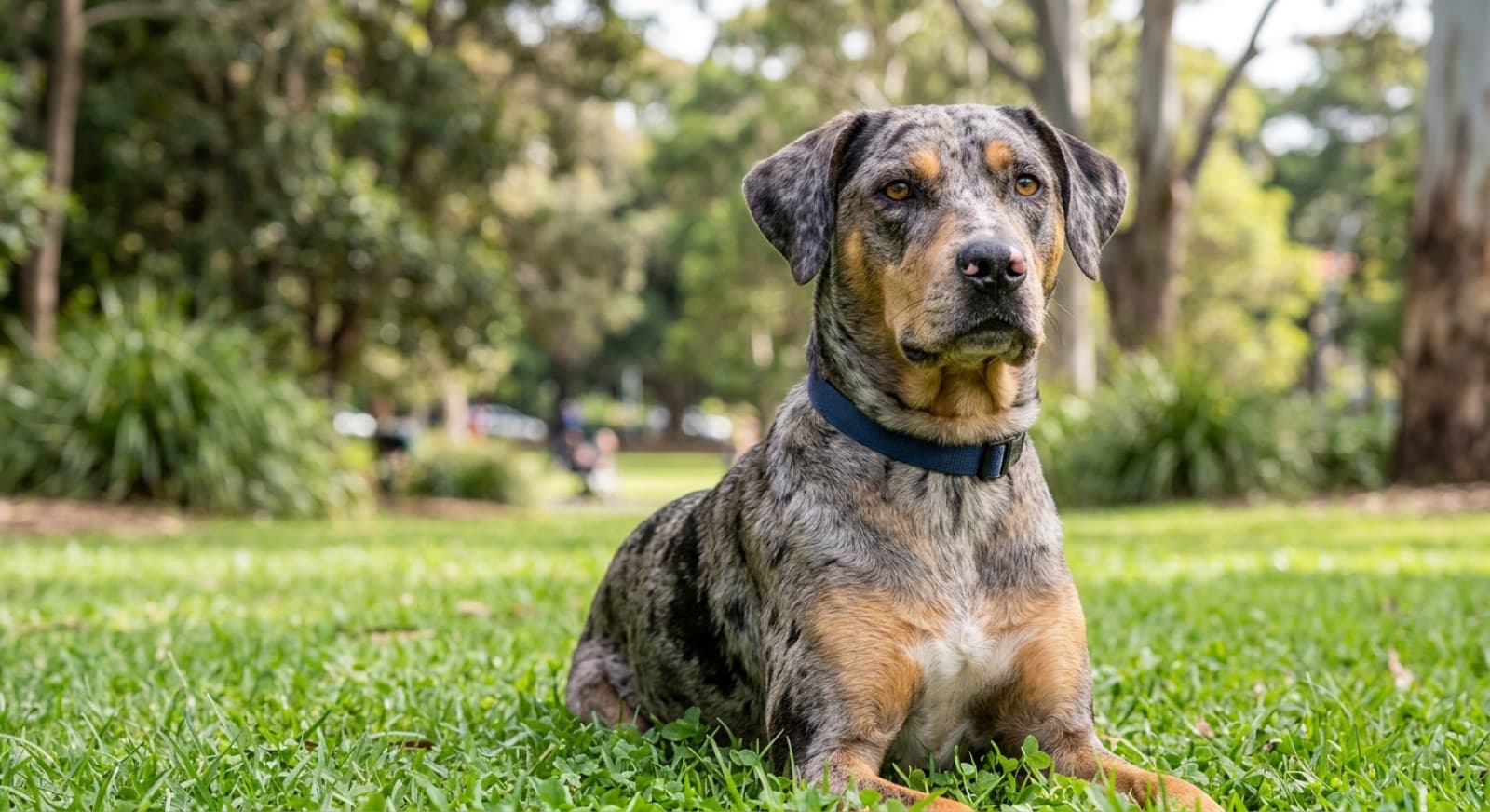
If there is one health theme that defines the Catahoula, it is the link between its coat and its hearing. That gorgeous mottled, marbled, leopard-spotted colour is the merle pattern, and merle is more than a paint job. The gene works by reducing pigment in patches across the coat, and the same pigment cells it affects are also needed for the inner ear to develop and work properly. Where those cells are missing near the ear, hearing can be lost. So a merle Catahoula can be born deaf in one ear or in both.
This is congenital, meaning present from birth, not something the dog catches or that creeps in with age. A dog that is deaf in only one ear often behaves completely normally, hears you fine, and you would never know without a test. Bilateral deafness, in both ears, is more obvious and shapes how you live with and train the dog. Because it can be subtle, a vet can arrange a specialised hearing test, often called a BAER test, which checks each ear separately. It is the reliable way to know a dog's true hearing status.
The genetics are simple enough to explain. One copy of the merle gene gives the classic mottled coat with a modest deafness risk. Two copies, from breeding merle to merle, is where the trouble multiplies, and responsible breeders avoid that pairing for exactly this reason. A rescue Catahoula often arrives with an unknown history, so its parentage may be a mystery. That is not a reason to worry, it is a reason to ask the rescue what is known and to have a vet assess hearing if there is any doubt. Broad welfare and dog-care guidance is available from the RSPCA Australia Knowledgebase.
Double-merle dogs and eye defects
The double-merle is where the merle story turns serious. A double-merle Catahoula inherited the gene from both parents, and these dogs are often mostly white with striking blue eyes. Two copies of the gene strip far more pigment than one, which is linked to a high rate of deafness, in one ear or both, and to eye defects that can affect sight. That is why merle-to-merle breeding is considered unethical, and why double-merle dogs so often end up in rescue.
The eye problems seen more often in double-merles include microphthalmia, meaning abnormally small or underdeveloped eyes, colobomas, which are gaps or holes in the structures of the eye, and other structural malformations. Some dogs have reduced vision, some are blind, and some have eyes that look unusual but function reasonably. On top of that, Catahoulas in general can carry other inherited eye conditions. The practical point for an owner is straightforward. Any painful, red, cloudy or weepy eye, or a dog that bumps into things or is hesitant in dim light, is a reason to see a vet, because sore eyes need attention and vision loss changes how you keep a dog safe.
None of this makes a double-merle a bad dog. Many are affectionate, adaptable and thrive with owners who understand them. If you are drawn to a mostly white, blue-eyed Catahoula in rescue, simply ask what is known about its hearing and sight, and book a vet assessment of both so you start from a clear picture.
Emergency: bloat (GDV) in a deep-chested Catahoula
This is the one Catahoula emergency every owner must know. Bloat, or gastric dilatation and volvulus (GDV), is where the stomach fills with gas and can twist on itself, cutting off blood flow. It is rapidly life-threatening, and deep-chested larger breeds like the Catahoula carry some risk. Get to a vet or a 24/7 hospital immediately if your Catahoula has a swollen or hard belly, is trying to retch or vomit but bringing nothing up, is drooling, pacing and restless, or collapses. Minutes matter, so do not wait to see if it settles. Phone ahead so the team is ready, and if it is out of hours head to a 24/7 hospital such as SASH, which offers round-the-clock emergency care in Sydney. To lower the risk, feed smaller meals, avoid vigorous exercise right after eating, use a slow feeder if your dog gulps, and ask your vet about a gastropexy at desexing.
Hip dysplasia and orthopaedic care
As a large, athletic breed built for hard work, the Catahoula can develop hip dysplasia, where the hip joint does not fit together smoothly and wears unevenly over time, leading to arthritis and pain. The signs are stiffness after rest, a reluctance to jump, climb stairs or get up, a bunny-hopping run, limping, and slowing down on walks. It can affect a young dog as well as an older one, because the joint problem is present early even if the pain builds later.
Keeping the dog lean is one of the best things you can do for its joints, along with sensible, steady exercise rather than repetitive high-impact pounding on hard ground, especially while a pup is still growing. Let a young Catahoula build fitness gradually and avoid forced long runs on concrete before the joints have matured. A vet can assess sore joints, confirm what is going on with imaging, and advise on management, which ranges from weight and exercise through to medication and, in some cases, surgery. A good rescue will note if a dog already moves stiffly, so you know what you are taking on.
Skin, allergies and thyroid
Some Catahoulas develop skin and allergy issues, which show up as itching, scratching, licking or chewing at the paws, red or inflamed skin, recurring ear infections, and hair loss from the constant irritation. Allergies in dogs can be triggered by fleas, by things in the environment like pollens and grasses, or by food, and Sydney's warm, humid summers can make skin flare-ups worse. This is a picture for your vet to work through, because the cause guides the fix, and consistent flea prevention is part of keeping an itchy dog comfortable. Do not reach for human medications at home.
Catahoulas can also develop hypothyroidism, an underactive thyroid gland that slows the body's metabolism. The classic signs are weight gain despite no change in food, low energy and lethargy, and coat and skin changes such as thinning hair, a dull coat and dry or flaky skin. The good news is that hypothyroidism is diagnosed with a blood test and, once picked up, is one of the more manageable conditions with ongoing care from your vet. If your Catahoula is putting on weight, slowing down or losing coat quality, mention it at your next visit rather than putting it down to age.
The coat and Sydney heat
The Catahoula wears a short to medium single coat, so it is not a heavy double-coated breed struggling under its own fur. The bigger heat point is that this is a high-energy working dog that wants to run, and a keen Catahoula will push itself hard even on a hot day. That makes heat management about the activity as much as the coat. Walk and exercise in the cooler parts of the day, keep water and shade available, and never leave a dog in a car even for a few minutes.
Sydney summers bring occasional very hot, humid days, and a dog that overheats can go downhill fast. On those days, dial the exercise back to early morning or evening and keep it light. A pale or short-coated Catahoula, and especially a mostly white double-merle, can also be prone to sunburn on thin-haired areas, so avoid the harshest midday sun. If your dog is panting heavily, distressed, wobbly or collapsing in the heat, treat it as an emergency and get to a vet at once.
Why adopting a Catahoula is not a health disadvantage
People sometimes worry that a rescue dog is a health gamble next to a breeder puppy. For a Catahoula the picture is more balanced than that. A Catahoula adopted through a reputable Sydney rescue arrives desexed, vaccinated, microchipped, treated for parasites and vet-checked, with all of it included in the fee. You are not taking on an unassessed animal.
Adopting also means the things that matter most in this breed are often known upfront. Because deafness is common enough that carers pay attention to it, a good rescue will usually flag a dog's hearing status where known, along with any eye concerns, joint stiffness or skin trouble, either on the listing or through the foster carer. A carer who has lived with the dog can tell you how it responds, how it moves, and whether its eyes look right, which a puppy simply cannot offer. If you are weighing it up, our Catahoula adoption guide for Sydney covers where to look and what it costs, and the Catahoula working drive and exercise guide covers the exercise and hand-signal training a deaf or high-drive dog needs. Sydney rescues worth watching include RSPCA NSW, AWL NSW, Sydney Dogs and Cats Home and Monika's Doggie Rescue.
Keeping a Catahoula healthy: the checklist
Most of what keeps a Catahoula well is routine, and knowing the early signs of the breed's conditions is the rest. The habits below do the heavy lifting.
- Check hearing and sight. For any merle or mostly white blue-eyed dog, have a vet assess hearing (a BAER test where available) and eyes, so you can manage safety from the start.
- Feed to lower bloat risk. Smaller meals rather than one big one, a slow feeder if your dog gulps, and no vigorous exercise right after eating. Ask your vet about a gastropexy at desexing.
- Learn the bloat signs. A swollen hard belly, unproductive retching, drooling, restlessness or collapse is a get-to-a-vet-now emergency.
- Keep the dog lean and moving. A lean weight protects the hips, and steady exercise beats repetitive high-impact pounding, especially in a growing pup.
- Watch the skin. Itching, licking paws, red skin or recurring ear infections point to allergies your vet can work through.
- Mind the thyroid. Weight gain despite normal food, low energy or coat changes are worth a blood test.
- Manage the heat. Exercise in the cooler hours, provide water and shade, never leave the dog in a car, and protect thin-haired skin from harsh midday sun.
- Stay on year-round tick prevention. Use a vet-recommended product every month without a gap, because the paralysis tick on the NSW coast is a fatal risk.
The Sydney paralysis tick point
One health risk has nothing to do with the breed and everything to do with where you live. The paralysis tick is native to the east coast of Australia, including the coastal and bushland areas around Sydney, and its bite releases a toxin that causes an ascending paralysis which is fatal without veterinary treatment. It is a year-round risk here, not just a summer one, though numbers peak through the warmer months. An active Catahoula that loves exploring bush trails is exactly the kind of dog that meets ticks.
The response is straightforward. Keep your Catahoula on a vet-recommended tick prevention product every single month with no gaps, and after any walk through bush or long grass run your hands slowly over the whole dog, feeling for a lump. Check under and inside the ear flaps, around the face, under the collar, in the armpits and between the toes, parting the fur as you go. If your dog develops a wobbly back end, a changed or weak bark, gagging or heavy breathing, treat it as an emergency and get to a vet at once. Your own vet can advise on the right prevention product for your dog.
Browse adoptable Catahoulas in Sydney
Adopting an adult lets you learn a dog's hearing status and health history directly, with a vet check already done and known issues flagged. Browse live NSW listings and set an alert so you hear the moment a Catahoula comes in.
See Available Catahoulas →When to see the vet urgently
Most Catahoula health issues are managed at a normal appointment. A few need a faster response. Get to a vet immediately, including out of hours, if you see any of these:
- A swollen or hard belly with unproductive retching, drooling, pacing or collapse (possible bloat, which is life-threatening within hours).
- A red, painful, cloudy or suddenly sore eye (always an urgent eye problem, and more likely in a merle dog).
- Heavy panting, distress, wobbliness or collapse in the heat (possible heatstroke in an over-driven active dog).
- A wobbly back end together with a changed or weak bark, gagging or heavy breathing (possible paralysis tick).
For the everyday things, such as itchy skin, stiffness in the joints, weight gain despite normal food, or a dog that seems to be losing sight, book a normal vet visit soon rather than waiting. Catching those early gives your Catahoula the best outcome. When in doubt, phone your vet or a 24/7 hospital and describe what you are seeing. They would far rather you called and it was nothing than the other way around. For more on exercise and hand-signal training, see our Catahoula working drive and exercise guide, or browse the full Sydney adoption resources hub. To find a local vet, the Australian Veterinary Association can help.
Frequently Asked Questions
What health problems are Catahoulas prone to?
Catahoulas are a generally hardy, moderately long-lived working breed, but they carry one distinctive concern tied to their striking coat. The mottled, leopard-spotted colour many Catahoulas wear is the merle pattern, and merle is linked to congenital deafness, which can affect one ear or both. Dogs bred from two merle parents, known as double-merles, are at high risk of both deafness and eye defects such as abnormally small or malformed eyes. Beyond that merle story the breed can also develop hip dysplasia as a large active dog, some skin and allergy issues, and an underactive thyroid. Like other deep-chested larger dogs, the Catahoula has some risk of bloat, a life-threatening stomach emergency worth learning the signs of. Most Catahoulas live around 10 to 14 years, and much of what keeps them well is keeping them lean, active, on year-round tick prevention, and seen by a vet at the first sign of trouble.
Why are Catahoulas prone to deafness?
Catahoulas are prone to deafness because of the merle gene, the same gene that creates their beautiful mottled, marbled leopard coat. The merle pattern works by reducing pigment in patches, and the cells that make pigment are also needed for the inner ear to develop and work properly. Where those pigment cells are missing near the ear, hearing can be affected, so a merle Catahoula can be born deaf in one ear or both. It is congenital, meaning present from birth, rather than something the dog catches or that develops with age. Responsible breeding avoids pairing two merle dogs, which sharply raises the risk. A rescue may not know a dog's parentage, so if hearing is in question a vet can arrange a specialised hearing test, sometimes called a BAER test, to check each ear. A one-ear-deaf dog often behaves completely normally day to day.
What is a double-merle Catahoula?
A double-merle Catahoula is a dog that inherited the merle gene from both parents, which happens when two merle dogs are bred together. These dogs are often mostly white with striking blue eyes, and they are at high risk of serious problems. Two copies of the merle gene strip far more pigment than one, and that is linked to a high rate of deafness in one or both ears and to eye defects, including abnormally small eyes, gaps in the structures of the eye, and other malformations that can affect vision. This is exactly why ethical breeders never pair two merles. Double-merle dogs turn up in rescue because they were bred carelessly, and many go on to live happy lives with owners who manage their needs. If you adopt a mostly white, blue-eyed Catahoula, ask the rescue what is known about its hearing and sight, and have a vet assess both.
Can a deaf Catahoula be a good pet?
Yes, a deaf Catahoula can be a wonderful, affectionate and trainable pet, and plenty of Sydney families live happily with one. Dogs rely far more on scent and body language than we tend to assume, so a deaf dog learns hand signals in place of voice cues and often responds beautifully. The training simply uses visual markers, a torch or a gentle vibration for attention, and consistent hand signs, and a deaf Catahoula can learn everything a hearing one can. The real difference is safety management. A deaf dog cannot hear a car, a bike or a called recall, so it should never be off-lead near roads or in unfenced open space, and a securely fenced yard matters. Many deaf dogs are also very bonded and attentive because they watch their person closely. For the training and exercise side in detail, see our Catahoula working drive and exercise guide.
Can Catahoulas get bloat?
Yes, and it is the emergency every Catahoula owner should understand. Bloat, also called gastric dilatation and volvulus or GDV, is where the stomach fills with gas and can twist on itself, cutting off blood flow. It is rapidly life-threatening, not something to watch overnight, and deep-chested larger breeds like the Catahoula carry some risk. The signs are a swollen or hard belly, trying to vomit or retch but bringing nothing up, drooling, pacing and restlessness, and collapse. If you see these, get to a vet or a 24/7 emergency hospital immediately, because minutes matter. To lower the risk you can feed smaller meals rather than one large one, avoid vigorous exercise right after eating, use a slow feeder if your dog gulps its food, and ask your vet about a preventive stomach-tacking surgery called a gastropexy, which is sometimes done at the same time as desexing.
How long do Catahoulas live?
Catahoulas usually live around 10 to 14 years, which is a good span for a large, athletic working breed. As with most active dogs, quality of life across those years depends heavily on management. A Catahoula kept lean, well exercised, with its joints, skin, thyroid and eyes looked after and regular vet checks booked, has the best chance of comfortable senior years. Because the merle-linked concerns are present from birth rather than developing later, knowing a dog's hearing and sight status early lets you set it up well for life. Ask about health history when you adopt, keep up year-round paralysis tick prevention, and learn the bloat emergency signs so you can act fast if it ever happens.
Do rescue Catahoulas come health checked?
Yes. A Catahoula adopted through a reputable Sydney rescue arrives desexed, vaccinated, microchipped, treated for worms and fleas, and given a vet check before it is listed, with all of that included in the fee. A good rescue also notes any known issues, and for this breed that often includes hearing status where it is known, because deafness is common enough that carers pay attention to it. If a dog is deaf in one or both ears, or has any eye concerns, that is usually flagged on the listing or shared by the foster carer, so you adopt knowing what you are taking on. A carer who has lived with the dog can tell you how it responds, how it moves, and how its coat and eyes look, which is a real advantage over an unassessed puppy.
How do I keep my Catahoula healthy in Sydney?
Keep a Catahoula healthy by keeping it lean and well exercised to protect its joints, feeding smaller meals to lower bloat risk, watching the skin and eyes, and staying on top of vet checks and year-round tick prevention. If your dog is a merle or a mostly white double-merle, have its hearing and sight assessed so you can manage safety, using hand signals and secure fencing for a deaf dog. The Sydney-specific points are heat and ticks. The Catahoula is an active dog with a short to medium coat, so on hot days walk in the cooler hours, always have water and shade, and never leave the dog in a car. Keep up a vet-recommended paralysis tick product every month with no gaps, and run your hands over the whole dog after any bushwalk. Book annual vet checks that become twice yearly for a senior, and learn the bloat emergency signs so you can act within minutes.
Keep reading
Adoptable Catahoulas in Sydney
Live listings of Catahoulas across Sydney and NSW rescues.
Catahoula Adoption in Sydney
Where to adopt a Catahoula, why they end up in rescue, and what adoption costs against a breeder.
Catahoula Working Drive & Exercise
What this high-drive working breed needs day to day, plus hand-signal training for a deaf dog.
All Sydney Adoption Guides
Browse every breed and how-to guide for adopting a rescue dog in Sydney.