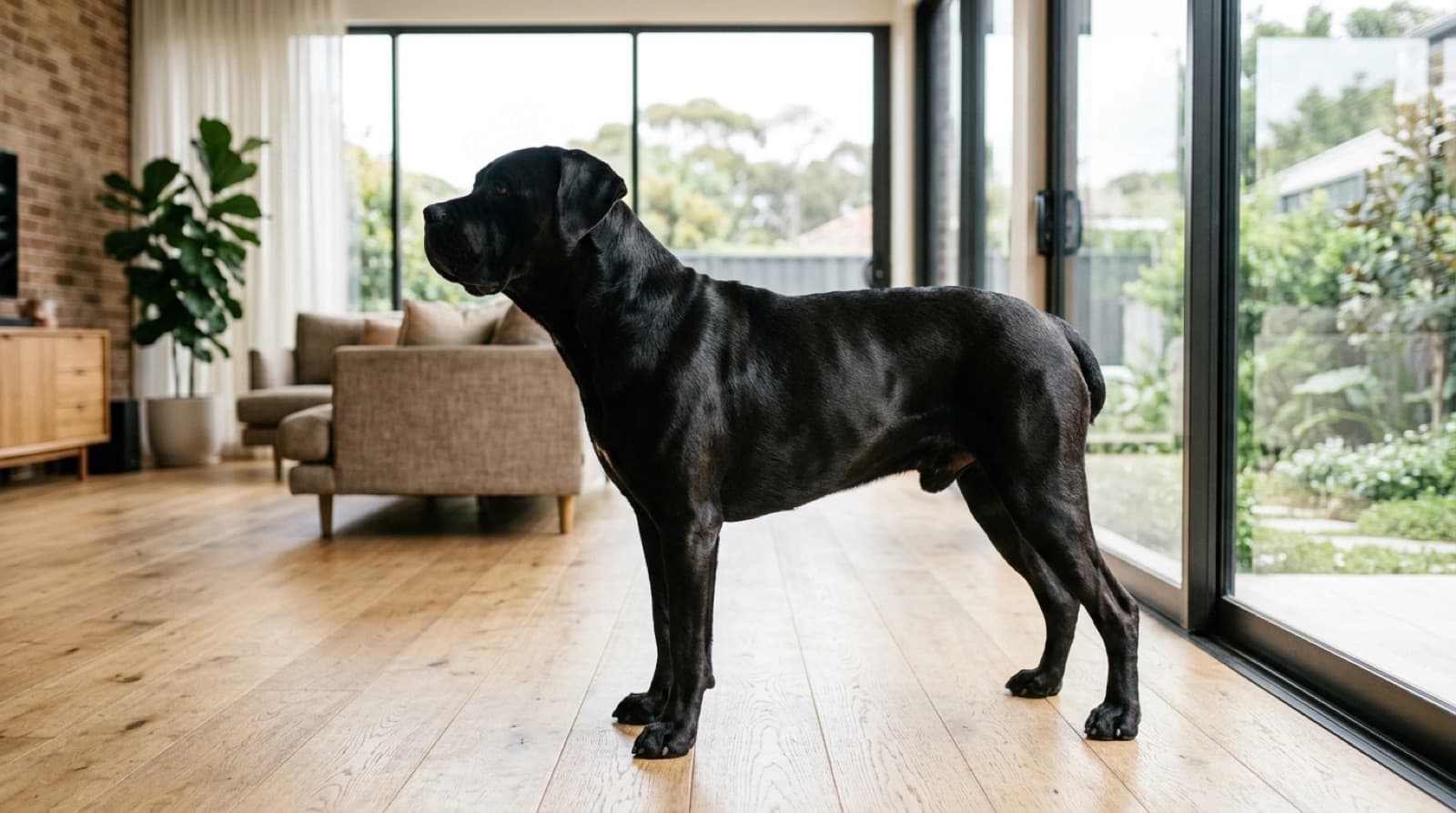
The short answer
The Cane Corso is a large, deep-chested breed, so joint disease and bloat are the main risks, and the lifespan is short for a dog at about 9 to 12 years. Hip and elbow dysplasia come with being big and fast-growing, and bloat (GDV) is the deep-chest emergency where the stomach fills with gas and twists. The breed is also prone to eyelid conditions, some heart disease, and a few minor issues. Most of it is manageable with a lean weight, a sensible feeding routine, and a good vet. If your Corso has a swollen belly and is retching without bringing anything up, treat it as an emergency and get to a vet immediately.
Hip and elbow dysplasia: the joint risk of a big breed
The Cane Corso is a large, heavy, powerfully built dog that grows fast, and that combination puts real strain on the joints. Hip and elbow dysplasia are the two conditions to understand, and they are among the most common health issues in big breeds like this one. Getting ahead of them starts before you even bring a dog home, and continues through the whole of the dog's life.
What dysplasia actually is. Dysplasia means the joint has not formed smoothly. In hip dysplasia the ball and socket of the hip do not fit together neatly, and in elbow dysplasia the parts of the elbow joint do not line up as they should. Because the joint is a poor fit, it grinds and wears over time, which leads to pain and arthritis. It has a strong genetic side, which is why breeding matters, but the load a joint carries also affects how bad it gets.
The signs to watch for. Stiffness, especially after rest or on cold mornings. A limp, which may come and go. A bunny-hopping run where the back legs move together. Reluctance to exercise, jump into the car, or climb stairs. Trouble rising after lying down. A dog that used to bound around and now hangs back is telling you something. If you see these, a vet can examine the joints, image them, and talk through the options, which range from weight and exercise management to medication and, in some cases, surgery.
How growth and weight change the outcome. Two things are within your control and they matter enormously. The first is protecting a growing puppy. A Cane Corso puppy piles on size in a matter of months, and while the bones and joints are still developing they are more vulnerable than a finished adult's. High-impact activity, long runs, repeated jumping, and hard play on slippery floors all stress joints that are not ready for it. Gentle, moderate exercise on good footing is the safer path while a Corso is still growing. The second is keeping an adult lean. Every extra kilo adds strain to a joint that already does not fit well, so a healthy weight is one of the best things you can do for the hips and elbows of a big dog.
Screening and buying well. Reputable breeders screen the hips and elbows of the parent dogs before breeding, which lowers the odds of passing dysplasia on. If you are looking at a puppy, asking about that screening is a fair and important question. The RSPCA Australia Knowledgebase has good general guidance on responsible breeding and on the joint conditions large breeds face. For an adopter, the picture is often simpler, as covered further down.
Bloat (GDV): the deep-chest emergency
If there is one emergency every Cane Corso owner should be able to recognise cold, it is bloat. The Corso is a classic deep-chested breed, and that body shape puts it at real risk. Knowing the signs and acting fast is genuinely the difference between life and death.
Bloat has a proper medical name, gastric dilatation-volvulus, usually shortened to GDV. It happens in two stages. First the stomach fills with gas and swells (the dilatation). Then it twists on itself (the volvulus), which seals off both ends and cuts off its own blood supply. A twisted stomach dies, the dog goes into shock, and it all happens fast. This is not a stomach ache that passes. It is a race against the clock.
Why the deep chest matters. The Cane Corso has a tall, deep chest rather than a round one, which gives the stomach more room to move and rotate inside the body. That extra room is exactly what lets the stomach flip, and it is why deep-chested breeds sit at the top of the risk list for bloat. It is a matter of the body shape the breed is built with, not of anything an owner did wrong.
The signs to know cold. The classic picture is a swollen, hard, distended belly together with unproductive retching, meaning the dog is trying to vomit but nothing comes up. Alongside that you may see restlessness and pacing, heavy drooling, and obvious distress or discomfort. A dog in the early stages of bloat often cannot settle and looks anxious. If you see these, do not wait to see if they pass. The callout below is the one to memorise.
Emergency: bloat (GDV) is life-threatening, act now
If your Cane Corso has a swollen, hard belly and is retching without bringing anything up, is pacing and restless, drooling and distressed, treat it as a life-threatening emergency and get to a vet immediately, day or night. Minutes matter with a twisted stomach. Do not wait to see if it passes, and do not try home remedies. Phone ahead to your vet or a 24/7 hospital so the team is ready, and go straight in. Sydney has round-the-clock emergency and specialty hospitals such as SASH. When it comes to bloat, fast beats everything.
Reducing the risk. You cannot remove the risk entirely, but some habits help, and they are worth setting up with your vet from day one. Feed smaller meals more often instead of one big daily feed, avoid heavy exercise right around meal times, and use a slow-feeder bowl if your Corso bolts its food, since gulping air is thought to contribute. Many deep-chested-breed owners also choose a preventive surgery called a gastropexy, where the stomach is tacked to the body wall so it cannot twist. It is often done at the same time as desexing, and it is a real conversation to have with your vet. Your own vet and the Australian Veterinary Association can point you to the right advice for a large, deep-chested dog.
None of this should scare you off a wonderful dog. It is meant to make one point stick: with a Cane Corso, bloat is the emergency you prepare for on purpose, and the owner who knows the signs is the one who saves the dog.
Eyelid and eye conditions
The Cane Corso is prone to a few eyelid problems, and they are worth knowing because they can be uncomfortable and sometimes need surgery to fix. The good news is that they are visible, so an owner who is paying attention tends to catch them.
Entropion and ectropion. These are the two sides of the same coin. Entropion is where the eyelid rolls inward, so the lashes and hair rub against the surface of the eye. That constant rubbing is painful and can damage the eye over time. Ectropion is the opposite, where the lower lid rolls outward and sags away from the eye, leaving it exposed and prone to irritation and infection. Both are seen in the breed, and both may need surgical correction to set the eyelid in its proper position.
Cherry eye. Dogs have a third eyelid with a tear gland behind it. In cherry eye that gland slips out of place and shows up as a red, fleshy lump in the inner corner of the eye. It looks dramatic and is easy to spot. It usually needs surgery to tuck the gland back where it belongs, and it is better treated than left, because the gland does an important job keeping the eye moist.
The signs of eye trouble. Redness, discharge or weeping, squinting, holding an eye shut, pawing or rubbing at the face, and a cloudy look are all reasons to see a vet. Eyes can go downhill quickly, so an eye that looks sore today deserves a call rather than a wait-and-see. Your vet can work out which condition is in play and whether it needs surgery or simpler treatment.
Other issues: heart, skin, head tremors, and the short lifespan
Heart disease, including DCM. Like a number of large breeds, the Cane Corso can be affected by heart conditions, including dilated cardiomyopathy or DCM, a disease of the heart muscle where the walls stretch, thin and weaken so the heart cannot pump as it should. It can build quietly before it shows. When signs do appear, watch for a dog that tires quickly, coughs, breathes faster or with more effort, faints or collapses, or develops a swollen belly from fluid. Collapse, fainting or laboured breathing is an emergency, so treat it like bloat and get to a vet at once. Because the heart can be checked before symptoms appear, it is worth asking your vet whether cardiac screening makes sense for your dog.
Demodectic mange. Some young Cane Corsos develop demodectic mange, a skin condition caused by a mite that lives naturally on dogs but overgrows when a young dog's immune system is still maturing. It shows as patchy hair loss, often around the face and legs, sometimes with red or flaky skin. It is not the contagious, itchy kind of mange and it often settles as the dog matures, but it should still be seen by a vet, who can confirm what it is and manage it properly.
Idiopathic head tremors. This one alarms owners more than it should. Idiopathic head tremors are episodes of head bobbing or shaking, up and down or side to side, while the dog is otherwise alert, responsive, and unbothered. “Idiopathic” means there is no known cause, and the episodes are generally considered harmless and pass on their own. They can look frightening the first time, so it is genuinely worth having a vet check your dog to rule out other causes and put your mind at rest, but a benign head tremor is not the emergency it appears to be.
The short lifespan, honestly. Cane Corsos typically live about 9 to 12 years, short compared with a small dog. Large, heavy breeds generally live shorter lives, and the Corso follows that pattern. It is an honest thing to sit with before you adopt, because it shapes the commitment. Good care helps you get the best years possible: a lean weight, protected joints, a feeding routine that lowers bloat risk, and steady vet care. The years are fewer, but people who love the breed will tell you they are very good ones.
Why adopting a Cane Corso is not a health disadvantage
People sometimes worry that a rescue dog is a health gamble next to a breeder puppy. For a Cane Corso the picture is more balanced than that, and in some ways it is better. A Corso adopted through a reputable Sydney rescue such as RSPCA NSW or AWL NSW arrives desexed, vaccinated, microchipped, treated for parasites and vet-checked, with all of it included in the fee. You are not taking on an unassessed animal.
The bigger point is specific to large breeds. An adult rescue Corso is past the risky fast-growth stage, so the joints have already developed and you are not steering a puppy through the months where over-exercise or the wrong feeding can cause lasting harm. You can also see the finished dog: how it moves, whether it is stiff or sound, and what its temperament is really like. A good rescue or foster carer can tell you the history and whether any health issues have shown up. A rescue Cane Corso is not a leap in the dark. With a big breed you often know more, not less. If you are weighing it up, our Cane Corso adoption guide for Sydney covers where to look and what it costs.
Keeping a Cane Corso healthy: the checklist
Most of what keeps a Cane Corso well is routine, and the weight and the feeding sit at the top of the list. The habits below do the heavy lifting.
- Keep the dog lean. Feed to a healthy weight and go easy on treats. Extra weight strains the hips, elbows and heart, and matters even more in a dog this size.
- Protect a growing puppy. Favour gentle, moderate exercise on good footing while a Corso is still growing, and avoid long runs, repeated jumping, and hard play on slippery floors that stress developing joints.
- Feed to reduce bloat risk. Split meals into smaller portions, avoid hard exercise right around feeding, and use a slow-feeder if your Corso bolts its food. Ask your vet about gastropexy for a deep-chested breed, and learn the emergency signs of bloat so you act fast.
- Book regular vet checks. Annually while the dog is adult, then twice yearly once it is a senior, so joint, heart, eye and other problems get caught before they are advanced.
- Stay on year-round tick and parasite prevention. Use a vet-recommended product every month without a gap, because the paralysis tick on the NSW coast is a fatal risk and prevention is far safer than treatment.
- Look after the teeth and the joints. Regular tooth brushing and dental checks prevent painful disease, and soft, supportive bedding helps protect big joints from hard floors.
The Sydney paralysis tick point
One health risk has nothing to do with the breed and everything to do with where you live. The paralysis tick is native to the east coast of Australia, including the coastal and bushland areas around Sydney, and its bite releases a toxin that causes an ascending paralysis which is fatal without veterinary treatment. It is a year-round risk here, not just a summer one.
The response is straightforward. Keep your Cane Corso on a vet-recommended tick prevention product every single month with no gaps, and after any walk through bush or long grass run your hands slowly over the whole dog, including inside the ears, around the face, under the collar and between the toes, feeling for a lump. On a big, powerful dog that takes a couple of minutes, so make it part of the routine. If your dog develops a wobbly back end, a changed or weak bark, gagging or heavy breathing, treat it as an emergency and get to a vet at once. Sydney's heat is the other seasonal watch-point: on hot, humid days walk your Corso in the cooler hours, carry water, and never leave a dog in a car.
Browse adoptable Cane Corsos in Sydney
Adopting an adult means the risky growth stage is behind the dog and a vet check is already done, so you can see how it moves and ask about its history. Browse live NSW listings and set an alert so you hear the moment a Cane Corso or Corso cross comes in.
See Available Cane Corsos →When to see the vet urgently
Most Cane Corso health issues are managed at a normal appointment. A few are emergencies where minutes and hours matter, and the stomach and the heart are the main reasons. Get to a vet immediately, including out of hours, if you see any of these:
- A swollen, hard belly with unproductive retching, pacing, drooling and distress (possible bloat, a true emergency).
- Collapse, fainting, or laboured or heavy breathing (possible heart trouble).
- A wobbly back end together with a changed or weak bark, gagging or heavy breathing (possible paralysis tick).
- A red, painful or suddenly cloudy eye, or an eye held shut (an eye problem can worsen fast).
For the gradual things, such as stiffness after rest, a limp, a bunny-hopping run, or patchy hair loss, book a normal vet visit soon rather than waiting. Catching those early gives your Cane Corso the best outcome. When in doubt, phone your vet or a 24/7 hospital and describe what you are seeing. They would far rather you called and it was nothing. For the bigger picture of living with the breed, see our Cane Corso temperament and ownership guide or the full Sydney adoption resources hub.
Frequently Asked Questions
What health problems do Cane Corsos have?
The main ones come with being a large, heavy, deep-chested breed. Hip and elbow dysplasia are the joint conditions to know, because the Corso is big and grows fast, and bloat (GDV) is the deep-chest emergency where the stomach fills with gas and twists. Beyond those, the breed is prone to eyelid conditions like entropion and ectropion, cherry eye, heart disease including dilated cardiomyopathy, and demodectic mange in some young dogs. You may also see idiopathic head tremors, which look alarming but are usually harmless. The lifespan is short for a dog, often about 9 to 12 years. Most of this is manageable with a good vet, a lean weight, joint-safe growth as a puppy, and quick action when something looks wrong.
Are Cane Corsos prone to hip dysplasia?
Yes. As a large, heavy, fast-growing breed the Cane Corso carries a real risk of hip and elbow dysplasia, where the joint does not form smoothly and wears down into arthritis over time. The signs are stiffness, limping, a bunny-hopping run, reluctance to exercise or to rise after rest, and trouble on stairs. Two things help a lot. Keep your Corso lean, because every extra kilo strains a joint that already does not fit well, and protect a growing puppy from over-exercise while the bones are still developing. Reputable breeders screen the hips and elbows of the parents. If your dog shows these signs, a vet can assess the joints and talk through management.
What is bloat and why are Cane Corsos at risk?
Bloat, properly called gastric dilatation-volvulus or GDV, is when the stomach fills with gas and then twists on itself, sealing off both ends and cutting off its own blood supply. It becomes life-threatening within a short time. Cane Corsos are at real risk because they are a deep-chested breed: the tall, narrow chest gives the stomach room to move and rotate. The signs are a swollen, hard, distended belly, unproductive retching (trying to be sick but bringing nothing up), pacing and restlessness, drooling, and obvious distress. This is a true emergency. If you see it, go straight to a vet, because minutes matter and a twisted stomach kills quickly.
How do I reduce my Cane Corso's risk of bloat?
There is no way to remove the risk entirely, but a few habits help and are worth setting up with your vet. Feed smaller meals more often rather than one big daily feed, avoid heavy exercise right around meal times, and use a slow-feeder bowl if your Corso bolts its food. Many owners of deep-chested breeds also choose a preventive surgery called gastropexy, where the stomach is tacked to the body wall so it cannot twist. It is often done at the same time as desexing, and it is a genuine conversation to have with your vet. Whatever routine you settle on, the single most valuable thing is learning the emergency signs so you can act fast if bloat ever happens.
How long do Cane Corsos live?
Cane Corsos typically live about 9 to 12 years, which is short compared with a small dog that might reach 15 or 16. Large and heavy breeds generally live shorter lives, and the Corso sits in that giant-breed pattern. It is an honest thing to sit with before you adopt, because it shapes the commitment. Good care helps you get the best years possible: keeping your Corso at a lean weight, protecting the joints, feeding to reduce bloat risk, and staying on top of vet checks all matter. The years may be fewer than with a small dog, but people who love the breed will tell you they are very good years with a devoted, protective companion.
Do Cane Corsos have eye problems?
Yes, eyelid conditions are seen in the breed. Entropion is where the eyelid rolls inward so the lashes rub the eye, and ectropion is where the lower lid rolls outward and sags, both of which irritate the eye and can need surgical correction. Cherry eye, where a tear gland pops out and shows as a red lump in the corner of the eye, is also seen and is usually fixed with surgery. The general signs of eye trouble are redness, discharge, squinting, pawing or rubbing at the face, and a cloudy or weepy eye. Any of these should be checked by a vet rather than left, because eye problems can worsen and become painful quickly.
Do rescue Cane Corsos come health checked?
Yes. A Cane Corso adopted through a reputable Sydney rescue is desexed, vaccinated, microchipped, treated for worms and fleas, and given a vet check before it is listed, with the fee covering all of that. Adopting an adult also has a real advantage with a large breed: the dog is past the risky fast-growth stage, so the joints have already developed and you can see how the dog actually moves and holds up. A good rescue or foster carer can tell you the dog's history, how it copes with exercise, and whether any health issues have shown up. A rescue Corso is not a health gamble compared with a puppy. In several ways you know more, not less.
How do I keep my Cane Corso healthy?
Keep the dog lean, feed sensibly to reduce bloat risk, and stay on top of routine vet care. Split meals into smaller portions, avoid hard exercise right around feeding, and ask your vet about a slow-feeder and about gastropexy for a deep-chested breed. Protect a growing puppy from over-exercise while the joints are still forming, and give steady, moderate activity rather than high-impact running and jumping. Stay on year-round paralysis tick and parasite prevention with a vet-recommended product, because the tick is a fatal risk on the NSW coast. Look after the teeth, provide soft, supportive bedding for the big joints, book annual vet checks, and learn the emergency signs of bloat so you can act fast.
Keep reading
Adoptable Cane Corsos in Sydney
Live listings of Cane Corsos and Corso crosses across Sydney and NSW rescues.
Cane Corso Adoption in Sydney
Where to adopt a Cane Corso, why they end up in rescue, and what adoption costs against a breeder.
Cane Corso Temperament and Ownership
What it really takes to live with a Cane Corso in Sydney: guarding instinct, training, exercise and daily life.
All Sydney Adoption Guides
Browse every breed and how-to guide for adopting a rescue dog in Sydney.