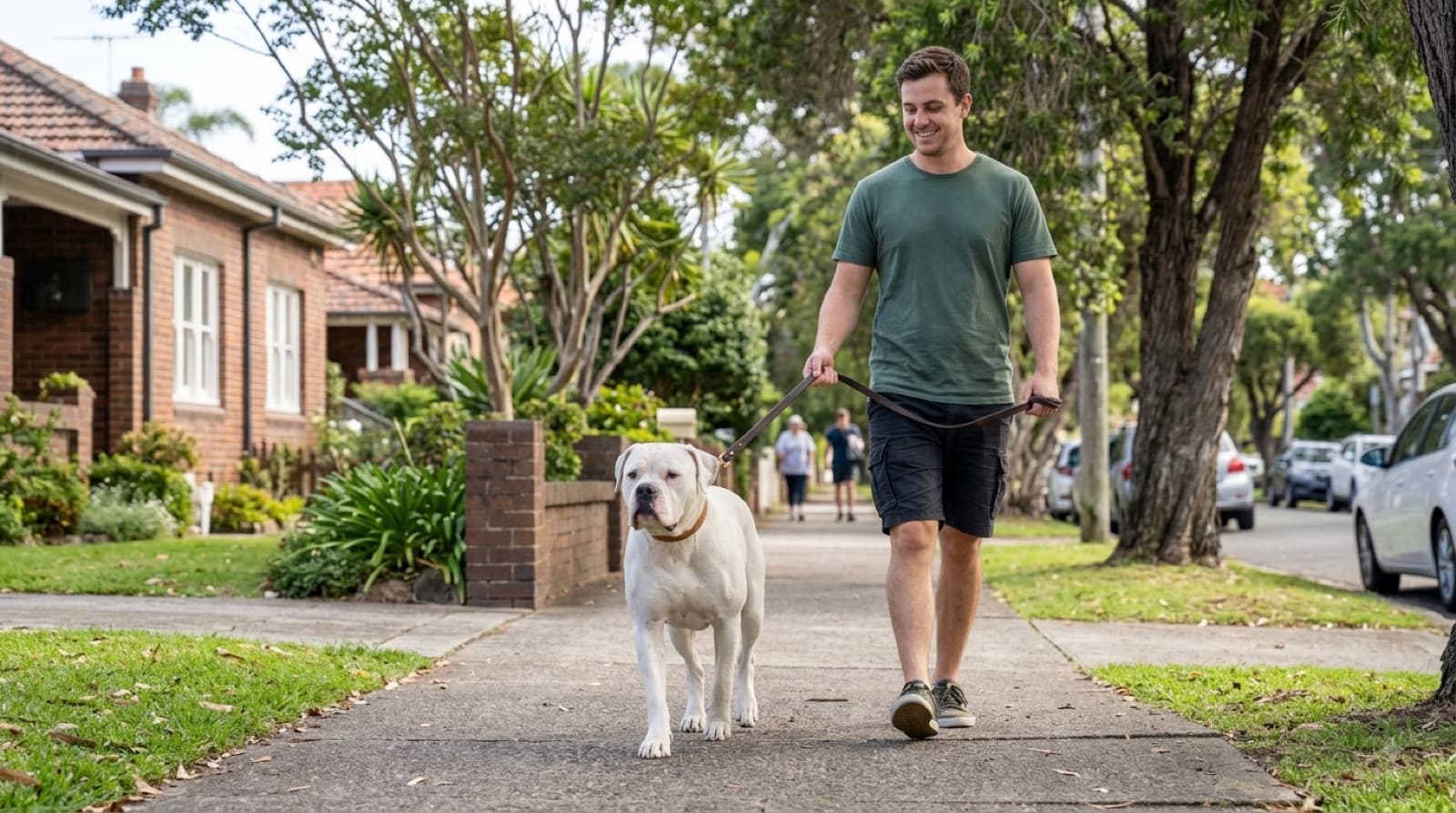
The short answer
The American Bulldog is not a restricted breed in NSW. It is legal to own and rehome, and only five breeds sit on the restricted list, none of which is the American Bulldog. The catch is that a stocky, muscular bully-type dog is often mistaken for a restricted pit-bull type by landlords, strata schemes and occasionally councils, and that misidentification, combined with the breed's size, drives the rental and strata knock-backs that fill rescue. The fix is responsible ownership: keep the dog registered and microchipped, approach renting and strata head-on with a pet resume and honesty, insure the dog, provide secure high fencing, and invest in training and socialisation. Done properly, an American Bulldog lives well in Sydney.
Not restricted, but often mistaken for one
Start with the law, because it is clear and it is the foundation for everything else. The American Bulldog is not on the NSW restricted-breed list. Under the NSW Office of Local Government, only five breeds are restricted under the Companion Animals Act 1998: the American Pit Bull Terrier, Dogo Argentino, Japanese Tosa, Fila Brasileiro and Perro de Presa Canario. A declared restricted dog cannot legally be sold or given away in NSW, which is exactly why those breeds never appear on adoption lists and the American Bulldog does.
The real challenge is not the law, it is perception. An American Bulldog is a large, muscular, bully-type dog, so a landlord, a strata committee or even a council officer going on looks can wrongly assume it is a restricted pit-bull type. That misidentification does not change the dog's legal status, but it can absolutely cost you a rental or start an awkward conversation. This is why the American Bulldog is a housing story as much as a dog story, and why doing everything by the book protects you.
Renting with an American Bulldog in Sydney
Renting is where the misidentification bites hardest, and it is one of the most common reasons the breed ends up in rescue in Sydney. Many landlords and agents are cautious about large bully-type breeds, and some decline on the label alone. The answer is not to hide the dog, because an undisclosed dog discovered later is a far worse position and can cost you the lease. The answer is to be the most organised, responsible applicant the agent sees.
- Build a pet resume: desexing, vaccination, microchip and registration records, plus a photo and a short description of the dog.
- Get references: a previous landlord, your vet, or a trainer who can vouch that the dog is calm and well-managed.
- Offer a meet: invite the agent to meet the dog so they see a steady, well-mannered animal rather than a stereotype.
- Be upfront about the breed: honesty up front beats a discovery later, every time.
It is more work than renting with a small dog, but plenty of American Bulldogs live happily in Sydney rentals with owners who approached it this way.
Strata and apartment living
Strata is a harder fit for this breed, and honesty helps here. Strata schemes in NSW generally cannot impose a blanket no-pets ban, but they can set reasonable conditions, and you must check the building's by-laws and get written approval before you commit. The bigger issue is practical: an American Bulldog needs a good hour or more of exercise a day and real space to burn energy, which is genuinely hard to provide from a unit without serious commitment to daily walks and outings.
If you do live in strata, follow the by-laws, keep the dog well-exercised and well-mannered, manage noise, and be a considerate neighbour, because a big dog draws more attention when something goes wrong. For most American Bulldogs, though, a house with a secure yard suits the breed far better than apartment living, and it is worth weighing that honestly before you adopt.
Browse adoptable American Bulldogs in Sydney
If you can offer the right housing, secure fencing and steady training, an American Bulldog is a loyal, devoted companion. Browse live NSW listings and set an alert.
See Available American Bulldogs →Insurance for a powerful dog
There is no legal requirement in NSW to hold special insurance for an American Bulldog, because the breed is not restricted; the strict insurance and containment rules apply only to declared restricted or dangerous dogs. Two kinds of cover are still worth thinking about, though.
First, pet health insurance is a sensible decision for a large breed with real risks like joint disease, cruciate injury and bloat. Enrol while the dog is young and healthy, before anything becomes a pre-existing exclusion, and compare Australian providers on the annual limit, the excess and hereditary cover. Second, check whether your home and contents or landlord policy covers dog-related third-party liability, and consider it seriously, because a powerful dog carries more risk if something ever goes wrong. Being well-insured is part of responsible ownership of a strong dog, even though the law here does not force it.
Fencing, training and secure containment
Secure containment is a safety essential with a strong, athletic dog, not a nice-to-have. A low or flimsy suburban fence is no real barrier to a determined American Bulldog, especially when something on the other side triggers a chase. Aim for a tall, solid fence in good repair with no gaps, gates that latch securely and cannot be nosed open, and attention to any dig spots along the base. Never rely on an invisible or electronic boundary for a powerful, driven dog. Good fencing protects your dog from roads and trouble, and it protects you, because an owner is responsible for a dog that gets out. If your yard is not up to it, budget to fix it before the dog comes home.
Training and socialisation are the other half of responsible ownership. Give a dog early, positive exposure to varied people, friendly dogs, places and sounds, because a large, confident guarding breed with poor social skills is a real problem while a well-socialised one is a pleasure. Use reward-based, force-free training and be consistent; harsh methods backfire with strong, sensitive dogs. Prioritise lead manners, reliable recall, calm greetings and impulse control, and bring in a good force-free trainer, especially if you adopt an adult whose history is unknown. Keep socialisation and training going through the dog's life, not just in puppyhood. The RSPCA Knowledgebase has sound general guidance on training and responsible ownership.
Exercise, energy and being a good NSW owner
An American Bulldog is an athletic working breed and needs a good hour or more of real activity a day, plus mental work to settle it indoors. Long walks, secure running, training and scent games all help. In a Sydney summer, exercise in the cool of the early morning or evening, carry water, and keep year-round paralysis tick prevention up if you walk in bushland or coastal areas. Off-leash time is safest in fully fenced areas given the breed's size and drive; on-lead is the sensible default everywhere else.
On the legal basics, the same duties apply to every dog in NSW and they matter more with a powerful breed. Microchip and register the dog on the NSW Pet Registry, keep it under effective control on a lead in public except in designated off-leash areas, provide secure containment, and pick up after it. Desexing is worth doing for behaviour and health as well as the lower registration fee. Keep your records in order, be a visibly responsible owner, and you give the breed the best possible defence against being misjudged. For the wider picture, see our American Bulldog adoption guide and the health guide.
Frequently Asked Questions
Are American Bulldogs a restricted breed in NSW?
No. The American Bulldog is not on the NSW restricted-breed list and is legal to own and rehome normally. Only five breeds are restricted under the Companion Animals Act 1998: the American Pit Bull Terrier, Dogo Argentino, Japanese Tosa, Fila Brasileiro and Perro de Presa Canario. A declared restricted dog cannot be sold or given away in NSW, which is why those breeds never appear on adoption lists, and the American Bulldog does. Like any dog in NSW it must be microchipped and registered on the NSW Pet Registry, and desexing lowers the lifetime registration fee. The only real complication is that a stocky, muscular American Bulldog can be mistaken for a restricted pit-bull type on looks, so responsible ownership and good records matter.
Can an American Bulldog be mistaken for a restricted breed?
Yes, and this is the single most important thing to understand about owning one in Sydney. American Bulldogs are large, muscular, bully-type dogs, so a landlord, a strata scheme or even a council officer going on appearance can wrongly assume the dog is a restricted pit-bull type. That is a practical problem rather than a legal ban, because the breed is genuinely not restricted, but it can still cost you a rental or trigger a difficult conversation with a council. The way to protect yourself is to be organised: keep the dog registered and microchipped, keep desexing and vaccination records handy, be a visibly responsible owner, and if a question ever arises, engage calmly and get proper advice rather than ignoring it. The NSW Office of Local Government is the authority on how breed identification and any dispute is handled.
Can I rent with an American Bulldog in Sydney?
You can, but it takes more work than with a small dog, so plan ahead. Many Sydney landlords and agents are cautious about large bully-type breeds, and some decline on the breed label alone, which is a big reason American Bulldogs end up in rescue when a lease changes. Approach it head-on: apply as a responsible pet owner with a pet resume that includes the dog's desexing, vaccination, microchip and registration records, a reference from a previous landlord or your vet, and evidence of training. Offer to meet the agent with the dog so they see a calm, well-managed animal rather than a stereotype. Be honest about the breed rather than hiding it, because an undisclosed dog discovered later is a far worse position. It is more effort, but plenty of American Bulldogs live happily in Sydney rentals.
Can I keep an American Bulldog in a strata apartment?
Sometimes, but a large, active bully-type dog is a harder fit for strata than a small quiet breed, and you must check the building's rules first. Strata schemes in NSW generally cannot impose a blanket no-pets ban, but they can set reasonable conditions, and a big dog in a unit raises real practical questions about exercise, noise and shared spaces. Be realistic: an American Bulldog needs a good hour or more of daily exercise and space to burn energy, which is hard to provide from an apartment without serious commitment to walks and outings. If you do go this route, get written approval, follow the by-laws, keep the dog well-exercised and well-mannered, and be a considerate neighbour. For most American Bulldogs, a house with a secure yard suits the breed far better than unit living.
Do I need special insurance for an American Bulldog?
There is no legal requirement in NSW to hold special insurance for an American Bulldog, because the breed is not restricted; the strict insurance and containment rules apply only to declared restricted or dangerous dogs. That said, two kinds of cover are worth thinking about. Pet health insurance is genuinely sensible for a large breed with real risks like joint disease, cruciate injury and bloat, so enrol while the dog is young and compare Australian providers on the annual limit, excess and hereditary cover. Separately, check whether your home and contents or landlord policy covers dog-related third-party liability, and consider it, because a powerful dog carries more risk if something goes wrong. Being well-insured is part of responsible ownership of a strong dog, even though the law does not force it here.
What kind of fencing does an American Bulldog need?
Secure, high, solid fencing that a strong, athletic dog cannot jump, push through or dig under. An American Bulldog is powerful and determined, so a low or flimsy suburban fence is no real barrier, especially if something on the other side triggers a chase. Aim for a tall fence in good repair with no gaps or weak panels, gates that latch securely and cannot be nosed open, and attention to any dig spots along the base. Never rely on an invisible or electronic fence for a driven, powerful dog. Good containment protects your dog from roads and from trouble with wildlife or neighbours, and it protects you legally too, because an owner is responsible for a dog that gets out. Rescues will ask about your fencing, so sorting it before you adopt makes your application stronger.
How much training and socialisation does an American Bulldog need?
A lot, and it is not optional for a dog this powerful. Start with early, positive socialisation to a wide range of people, friendly dogs, places and situations, because a large, confident guarding breed with poor social skills is a genuine problem, while a well-socialised one is a pleasure. Use reward-based, force-free training and be consistent, because harsh, heavy-handed methods backfire badly with strong, sensitive dogs and damage trust. Focus on solid lead manners, reliable recall, calm greetings and impulse control, and get a good force-free trainer involved, especially if you adopt an adult whose history is unknown. Ongoing socialisation and training through the dog's life, not just as a puppy, is one of the most responsible things you can do for the breed and everyone the dog meets.
What are my responsibilities as an American Bulldog owner in NSW?
The same core duties apply to every dog in NSW, and they matter more with a powerful breed. Microchip and register the dog on the NSW Pet Registry, keep it under effective control on a lead in public except in designated off-leash areas, provide secure containment at home, and pick up after it. Beyond the letter of the law, responsible ownership of a strong dog means proper socialisation and training, secure fencing, and being a considerate, visible member of your neighbourhood, which also happens to be the best defence against the breed being misjudged. Desexing is worth doing for behaviour and health as well as the lower registration fee. The NSW Office of Local Government sets out the full legal responsibilities of dog ownership in the state.
What happens if a council thinks my American Bulldog is a restricted breed?
Because the American Bulldog is not a restricted breed, this should not arise, but if a council ever raises a concern based on appearance, take it seriously and get proper advice rather than ignoring it. Councils in NSW administer the Companion Animals Act and there are processes around breed identification and any declaration, including avenues to have a decision reviewed, and the NSW Office of Local Government is the authority on how that works. Keep your records in order (registration, microchip, desexing and vaccination), stay calm and cooperative, and consider getting advice from your vet or a professional if a dispute develops. Good records and a visibly responsible ownership history are your best protection, which is another reason to do everything properly from the day you adopt.
Keep reading
Adoptable American Bulldogs in Sydney
Live listings of American Bulldogs and AB crosses across Sydney and NSW rescues.
American Bulldog Adoption in Sydney
Where to adopt, why they end up in rescue, and what it costs against a breeder.
American Bulldog Health Issues in Sydney
Hips and elbows, cruciate injury, bloat, ichthyosis and NCL, plus Sydney heat and tick care.
All Sydney Adoption Guides
Browse every breed and how-to guide for adopting a rescue dog in Sydney.