The short answer
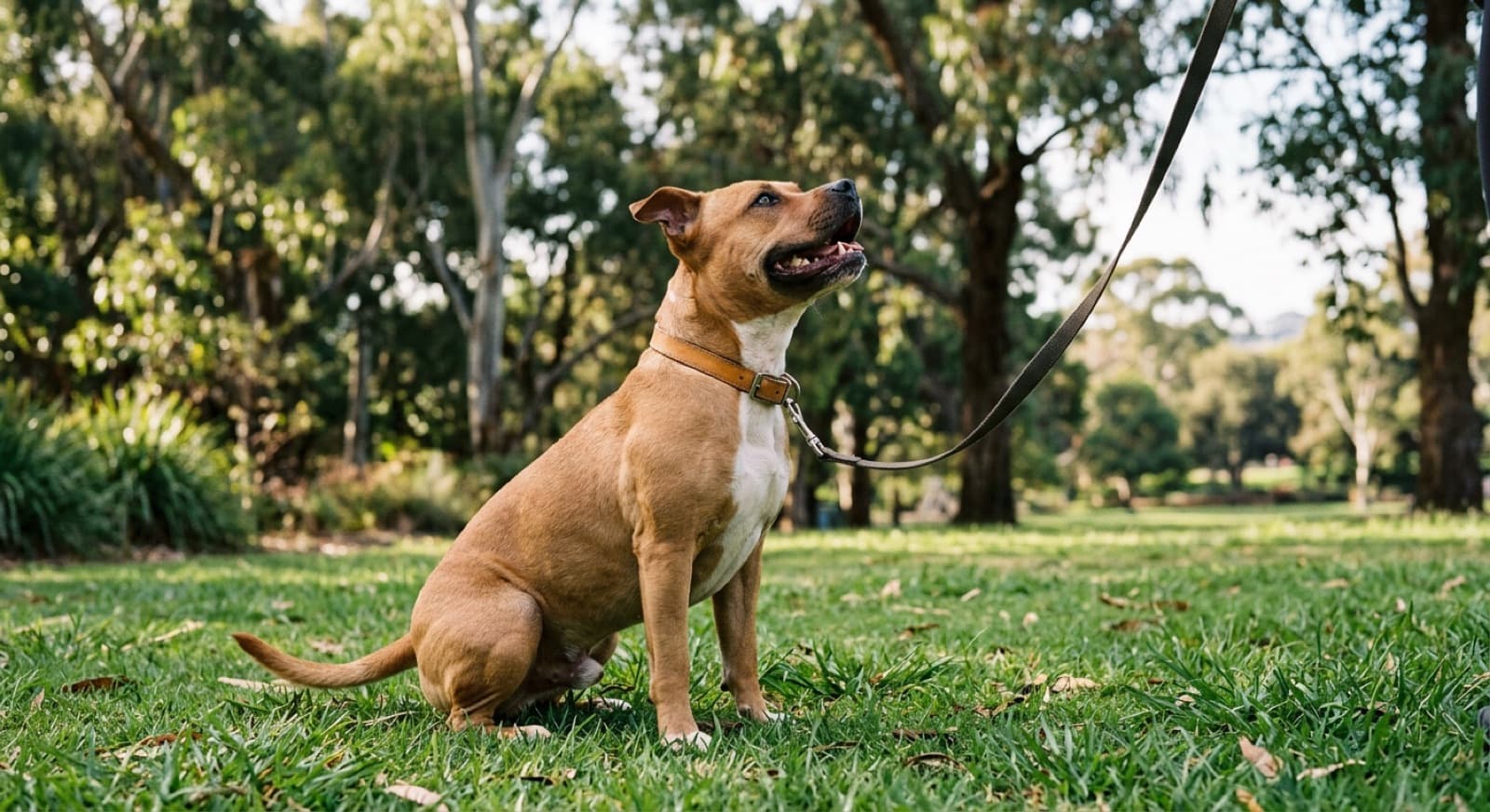
A Staffordshire Bull Terrier is affectionate, clownish and intensely people-focused, and human aggression is not typical of a well-raised one; its bad reputation owes more to appearance and misuse than to its nature. The honest caveats are that some Staffies are dog-selective (compatibility with other dogs varies by the individual), and that the “nanny dog” label is a myth, because no dog of any breed should be left unsupervised with young children. A Staffy is NOT a restricted breed in WA. Train with reward-based, force-free methods, socialise early, give it real daily exercise and company, and a rescue Staffy is one of the easiest, most loving dogs you can own. This is general information; a foster carer's notes tell you about the individual dog.
The nanny-dog myth, honestly
Staffies are often called “nanny dogs”, a nickname born of the breed's genuine gentleness and patience with the children it lives with. There is a real truth underneath it: Staffies are famously soft, tolerant and affectionate with their families. But the label itself is a myth that welfare organisations actively warn against, because it encourages people to trust a dog around children in a way no dog of any breed should be trusted.
The safe position is simple and applies to every breed: never leave a dog unsupervised with young children, supervise every interaction actively, teach children to be calm and gentle and to leave the dog alone when it is eating, sleeping or resting, and give the dog its own safe space to retreat to. A well-socialised Staffy that a rescue has assessed around children can be a wonderful family dog on exactly those terms. The RSPCA Knowledgebase has good guidance on dogs and children that is worth reading whatever breed you adopt.
People versus other dogs
The most useful thing to understand about the breed is the difference between how a Staffy tends to feel about people and how it tends to feel about other dogs. Toward people, the Staffordshire Bull Terrier is one of the most human-oriented breeds going, bred as a companion and rarely showing human aggression when it is well raised and socialised. The failure mode of an under-exercised or lonely Staffy is not aggression; it is chewing, digging and noise from a dog that cannot cope with being bored or alone.
Other dogs are a different question. As a terrier breed, some Staffies are dog-social and happy at the dog park, while others are dog-selective or dog-reactive and do best as an only dog or with careful, managed introductions. This varies enormously by the individual, and it is not a mark against the dog; it is simply a trait to know and manage. It is also exactly the kind of thing a foster carer who has lived with a rescue Staffy can tell you, which is one of the biggest advantages of adopting through a foster-based rescue.
The legal facts: not a restricted breed
The single most common thing that stops Perth adopters is the fear that Staffies are restricted. They are not. Under Western Australia's Dog Act 1976, the five restricted breeds are the American Pit Bull Terrier, Dogo Argentino, Fila Brasileiro, Japanese Tosa and Perro de Presa Canario. The Staffordshire Bull Terrier is none of these, and neither is the American Staffordshire Terrier. A Staffy is legal to own, register and rehome normally through any WA council.
The confusion comes from the American Pit Bull Terrier, which is a different, larger breed and is restricted. The Staffordshire Bull Terrier is a smaller English breed, and the two are treated very differently under the law. What can still get in the way of a Staffy adoption is not the law but a landlord or a strata scheme, so if you rent, settle any pet permission with your property manager or body corporate before you apply, present yourself as a responsible owner, and be ready to show that the dog is desexed, microchipped and registered. That is a conversation to have first, not after.
Browse Staffies available in Perth rescue
Staffies are the most common dog in Perth rescue, so you can usually compare several and choose on temperament. Foster carer notes describe how each dog is with people, children and other dogs before you apply.
See Available Staffies →Training a Staffy well
Staffies train beautifully with the right approach, which is reward-based and force-free. The breed is intelligent, food-motivated and eager to please its people, so it thrives on positive reinforcement and does badly under harsh or aversive handling, which can create the very fear or reactivity people wrongly assume is in the breed. The essentials:
- Socialise early and often, to people, other dogs, handling, and a range of places and situations, so the dog grows up confident.
- Enrol in a reward-based class, and build reliable recall and lead manners, which matter for a strong, muscular dog even at a modest size.
- Manage the dog-dog side thoughtfully. Calm, controlled introductions, reading the dog's signals, and not forcing interactions with dogs it is unsure about.
- Meet the exercise and enrichment needs. Real daily exercise plus mental work keeps a Staffy balanced; a bored one gets into trouble.
- Secure the yard and build alone-time gradually, since a people-focused breed can find long days alone hard.
Being a good ambassador
Because the breed carries an unfair reputation, every well-trained, well-managed Staffy in the community quietly changes minds, and every under-socialised or poorly-managed one reinforces the stereotype. Adopting a Staffy and doing right by it, with training, socialisation, secure containment and responsible handling in public, is not just good for your dog; it is part of shifting how a misunderstood breed is seen. For most Perth families that means a loyal, affectionate, easy housemate, and a small part in giving the breed the reputation it actually deserves.
Frequently Asked Questions
Are Staffies good with kids?
Staffies are famously affectionate, people-focused dogs, and many are gentle and patient with the children they live with, which is where the old 'nanny dog' nickname comes from. But that label is a myth worth retiring: welfare bodies are clear that no dog of any breed should ever be left unsupervised with young children, and that supervising every interaction, teaching children to be calm and respectful, and giving the dog its own safe space is what keeps everyone safe. A well-socialised Staffy from a rescue that has assessed it around children can be a wonderful family dog, but the supervision rule applies to every breed, including this one.
Are Staffies aggressive?
Not toward people, as a rule. The Staffordshire Bull Terrier is one of the most human-oriented breeds there is, bred to be a companion, and human aggression is not typical of a well-raised, well-socialised Staffy; the breed's reputation owes more to appearance and misuse by some owners than to its actual nature. The honest caveat is about other dogs, not people: as a terrier breed, some Staffies are dog-selective or dog-reactive, and compatibility with other dogs varies a lot by the individual. That is a management and training matter, and it is exactly what a foster carer's assessment of a rescue Staffy tells you.
Are Staffies restricted in Western Australia?
No. The Staffordshire Bull Terrier is not a restricted breed in WA, and neither is the American Staffordshire Terrier. Under the Dog Act 1976 the five restricted breeds are the American Pit Bull Terrier, Dogo Argentino, Fila Brasileiro, Japanese Tosa and Perro de Presa Canario. A Staffy is none of those, and it is legal to own, register and rehome normally through any WA council. The Staffordshire Bull Terrier and the American Pit Bull Terrier are different breeds treated very differently under the law, which is worth knowing, because the confusion between them is what scares off many would-be adopters.
How do you train a Staffy?
With reward-based, force-free methods, which suit the breed perfectly. Staffies are intelligent, food-motivated and eager to please their people, so they respond very well to positive reinforcement and poorly to harsh handling, which can create fear or reactivity. Start early with socialisation to people, dogs, places and handling, enrol in a reward-based training class, and build reliable recall and lead manners for a strong, muscular dog. Because some Staffies are dog-selective, calm, controlled introductions and good management around other dogs matter. A rescue Staffy that arrives with some rough edges usually responds quickly to kind, consistent training.
Do Staffies need a lot of exercise?
A fair amount, yes. Staffies are athletic, strong and energetic, and they need real daily exercise plus mental enrichment to be balanced, typically a good walk or two, some play, and something to keep the brain busy. They are also intensely people-focused and can struggle with being left alone for long days, which shows up as chewing, digging or noise rather than as any aggression, so a home that is around, or that builds alone-time gradually, suits the breed. Meet the exercise and company needs and a Staffy is an easy, affectionate housemate; neglect them and a bored Staffy invents its own entertainment.
Keep reading
Staffy Adoption in Perth
Where to find a rescue Staffy, real costs, and the restricted-breed myth.
Staffy Health Issues
Skin allergies, the DNA-testable conditions, lumps, joints and the heat.
Adoptable Staffies in Perth
Live listings with foster carer notes on how each dog is with people and other dogs.
Perth Adoption Resources
Guides on adopting, costs, council rules and settling a rescue dog in Perth.