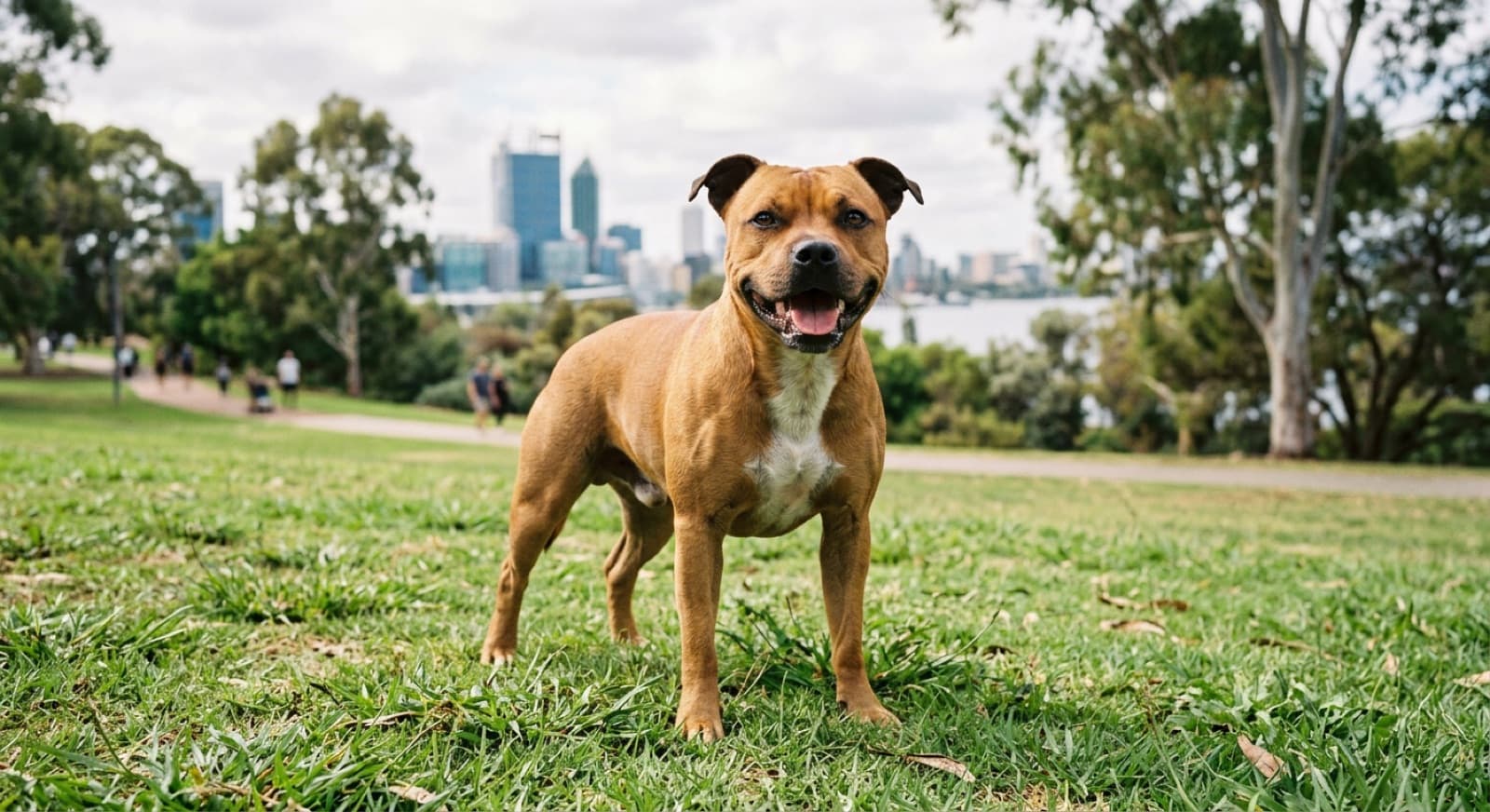
The short answer
The Staffordshire Bull Terrier is a sturdy, generally healthy breed that often lives twelve to fourteen years. The things to know are skin allergies (common, and often lifelong to manage), three breed-specific genetic conditions that responsible breeders DNA-test for (hereditary cataract, L-2-HGA and PHPV), mast cell tumours (so check new lumps), and ordinary joint wear. A short-coated athletic dog handles the Perth heat better than a heavy-coated breed but still needs cool-hour exercise and shade. Keep the dog lean, control fleas, see a vet early for itching or lumps, and insure it young. A rescue Staffy arrives vet-checked. This is general information, not veterinary advice.
A robust breed, overall
It is worth starting with the reassuring part. The Staffordshire Bull Terrier was bred as a compact, powerful working dog with a moderate build and no exaggerated features, the kind of extreme conformation that causes so many problems in some other popular breeds. As a result, a Staffy is generally a healthy, hardy dog, and many live long active lives with little more than routine care. The health points below are things to be aware of, not a warning against the breed, and a rescue Staffy arrives already desexed, vaccinated, microchipped and vet-checked.
Skin allergies: the most common issue
If a Staffy has an ongoing health issue, it is most often the skin. The breed is prone to atopic dermatitis, an allergic skin condition triggered by environmental allergens (grasses, pollens, dust mites) or sometimes food, and it shows as itching, licking and chewing, red or inflamed skin, recurring ear infections and hot spots. It is frequently a lifelong management condition rather than a one-off, and the Perth environment can be a trigger. Flea allergy is a common contributor, so year-round flea control is part of the picture.
Persistent itching, redness or a smelly coat is a vet conversation rather than a home remedy, because allergies usually need a proper diagnosis and an ongoing plan that might involve diet, medication or managing the environment. The good news is that with the right plan, most allergic Staffies are kept comfortable, so it is a manageable issue rather than a dealbreaker.
Three breed-specific genetic conditions
The Staffy has three inherited conditions that responsible breeders DNA-test their breeding dogs for:
- Hereditary cataract (HC). A clouding of the lens that can develop in young dogs and lead to vision loss. A DNA test identifies carriers, which is why good breeders screen.
- L-2-hydroxyglutaric aciduria (L-2-HGA). A rare metabolic disorder affecting the nervous system, which can cause tremors, wobbliness, seizures and behaviour changes, usually appearing in young dogs. It also has a DNA test.
- Persistent hyperplastic primary vitreous (PHPV). An eye condition, present from birth, that can affect vision to varying degrees, also DNA-testable.
A rescue Staffy will not come with a breeding DNA history, so a baseline vet check after adoption is worthwhile. Any seizures, unsteadiness, tremors or vision changes are an immediate veterinary matter rather than something to watch and wait on.
Lumps, joints and weight
Like many breeds, Staffies can develop mast cell tumours, a type of skin cancer that can look deceptively like an ordinary lump, which is exactly why any new lump should be checked by a vet. Most lumps are benign, but the ones that matter are far more treatable when caught early, so run your hands over your dog regularly and get anything new, growing or changing looked at; a quick needle test in the clinic often gives a fast answer. On the joints, Staffies can carry hip and elbow issues and patellar (kneecap) problems like many breeds, and the single most protective thing an owner controls is weight. A Staffy is a stocky, food-loving dog that gains weight easily, so measured meals and keeping the dog lean protect the joints and general health, and organisations such as the Orthopedic Foundation for Animals maintain the joint-screening standards breeders use.
Browse Staffies available in Perth rescue
Staffies are the most common dog in Perth rescue, so there is usually genuine choice. A rescue Staffy arrives desexed, vaccinated, microchipped and vet-checked, with foster carer notes on temperament and any known health needs.
See Available Staffies →The Perth heat and parasites
A Staffy's short, single coat is an advantage in the Perth summer, since it copes with heat far better than a double-coated or heavy breed. But short-coated does not mean heat-proof: on the long runs of 35-to-40-degree days Perth gets, exercise only in the cool of early morning or evening, provide shade and constant water, never leave the dog in a parked car, and test hot pavement with the back of your hand before a walk. The pale skin on a Staffy's nose and belly can also sunburn, so watch sun exposure on very fair dogs. Watch for heat-stress signs (heavy panting, drooling, wobbliness, bright red gums, collapse) and cool the dog and reach a vet urgently if you see them.
On parasites, one WA upside is that the paralysis tick is an eastern-seaboard species and is not established in Western Australia, so the local paralysis-tick risk is low; the time to think about it is before travelling east with your dog. At home, keep fleas, intestinal worms and heartworm prevention going year-round, which matters extra for an allergy-prone breed where fleas can set off the skin. General guidance from the RSPCA Knowledgebase and the Australian Veterinary Association is useful background, but your vet sets the plan for your dog.
Frequently Asked Questions
Are Staffies a healthy breed?
On the whole, yes. The Staffordshire Bull Terrier is a sturdy, muscular breed with no extreme features, and many live to twelve to fourteen years in good health. The things to know are a tendency to skin allergies, three breed-specific genetic conditions that responsible breeders DNA-test for, a risk of mast cell tumours like many breeds, and ordinary joint wear. A short-coated athletic dog also copes better with the Perth heat than a heavy-coated breed, though it still needs sensible summer management. None of this makes a Staffy a high-maintenance dog, but keeping it lean, insuring it young and seeing a vet early for anything unusual all help.
What genetic conditions do Staffies have DNA tests for?
Three, and reputable breeders test for all of them: hereditary cataract (HC), which can cause vision loss; L-2-hydroxyglutaric aciduria (L-2-HGA), a rare metabolic disorder affecting the nervous system that can cause tremors, wobbliness and behaviour changes, usually appearing in young dogs; and persistent hyperplastic primary vitreous (PHPV), an eye condition. A rescue Staffy will not come with a breeding DNA history, so a baseline vet check after adoption is worthwhile, and any seizures, unsteadiness or vision changes are an immediate veterinary matter rather than something to watch and wait on.
Why does my Staffy have itchy skin?
Skin allergies (atopic dermatitis) are one of the more common issues in the breed, caused by a reaction to environmental or food allergens and showing as itching, licking, red or inflamed skin, recurring ear infections and hot spots. It is often a lifelong management condition rather than a one-off, and the Perth environment, with its grasses, pollens and dust, can trigger it. Persistent itching, redness or a smelly coat is a vet conversation rather than a home remedy, because allergies usually need a proper diagnosis and an ongoing plan. Keeping fleas under control matters too, since flea allergy is a common trigger.
Should I worry about lumps on my Staffy?
Check any new lump, but do not panic over every one. Like many breeds, Staffies can develop mast cell tumours, a type of skin cancer that can look deceptively like a harmless lump, which is exactly why a vet should assess anything new. Most lumps turn out to be benign, but the ones that matter are far more treatable when caught early, so run your hands over your dog regularly and get a vet to look at anything that is new, growing, changing or bothering the dog. A quick needle test in the clinic often gives an answer.
Should I get pet insurance for a rescue Staffy?
It is worth it, taken out while the dog is young and healthy so nothing is later excluded as pre-existing. Staffies are generally robust, but skin allergy management, a mast cell tumour removal or a joint problem can each add up, and insurance turns an unpredictable cost into a manageable premium. Compare policies on their exclusions, waiting periods and annual limits rather than on price alone, and read the product disclosure statement. Insurance works alongside the everyday basics: keeping the dog lean, controlling fleas, and staying up to date on vet checks.
Keep reading
Staffy Adoption in Perth
Where to find a rescue Staffy, real costs, and the restricted-breed myth.
Staffy Temperament and Training
The nanny-dog myth, dog-dog compatibility, and being a good ambassador for the breed.
Adoptable Staffies in Perth
Live listings with foster carer notes on temperament and health needs.
Perth Adoption Resources
Guides on adopting, costs, council rules and settling a rescue dog in Perth.