The short answer
Most Beagles cannot be trusted off-lead in open ground, and that is instinct, not a training failure. A Beagle was bred to follow a scent for hours with its ears switched off, so in a smell-rich place the nose wins. The safe setup in Perth is simple: a securely fenced, dig-proof yard for off-lead freedom, and a lead or long-line everywhere that is not fully fenced. Build a real recall for everyday use but never bet the dog's life on it near a road or bush. WA bushland adds two reasons to keep a nose-led dog contained: snakes in the warmer months and 1080 poison baiting in many reserves. Keep your microchip details current with the registry so a lost Beagle gets home. Get containment right and the rest of the breed is a joy.
Why a Beagle's recall fails
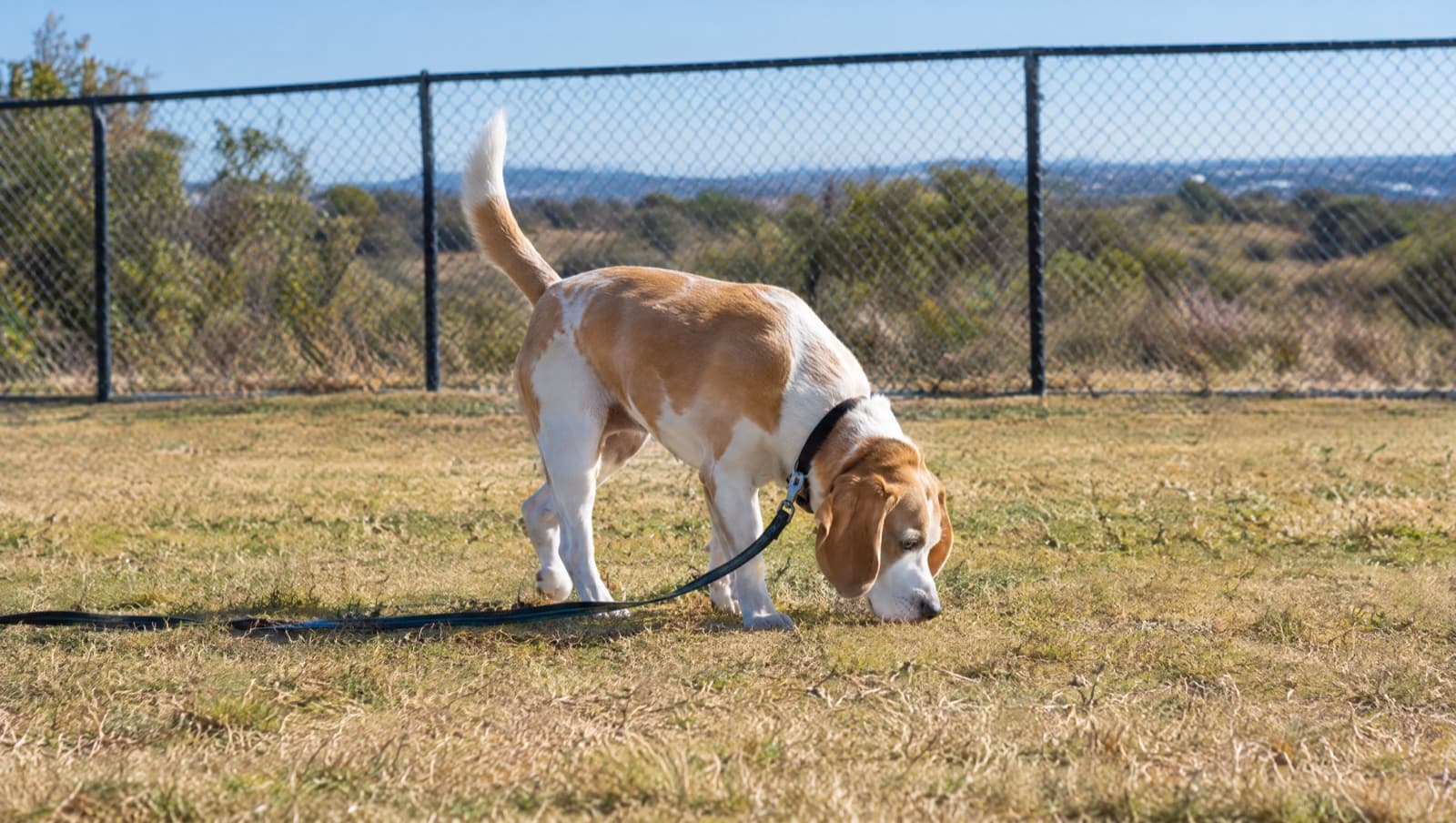
To manage the escape risk you have to understand it, because it is not a behaviour problem you can train away. The Beagle is a scent hound, developed over centuries to trail hares across country, nose down, following a scent independently of any handler and staying on it for as long as it takes. That is the whole job, and the breed is extraordinarily good at it.
The practical consequence is that when a Beagle locks onto a strong scent, it enters a state where the rest of the world, including your voice, effectively drops away. This is hardwired. It is not the dog choosing to defy you, and it is not evidence that you have failed at training. A Beagle with a nose full of a fresh trail is doing exactly what generations of breeding designed it to do. Owners who take an escape personally, or who believe a bit more training will fix it, are the ones who end up with a lost dog.
Perth makes this sharper than many places. The bushland reserves, the wetlands, the Swan and Canning river foreshores and the Perth Hills on the city's edges, and even suburban gardens, are dense with the scent of native wildlife. For a Beagle, that is an irresistible map, and some of that ground also carries the snake and 1080 hazards covered below. Accept the instinct, and you manage the dog well. Fight it, and you lose.
What recall training can and cannot do
None of this means you skip recall training. A solid everyday recall is genuinely useful: for coming in from the yard, for turning away from a mild distraction, for the hundred small moments of daily life. It is worth building well. What it will not do is override a strong scent near a road, and you must plan around that gap rather than pretend training closes it.
Build recall the way that works with the breed, not against it. Use reward-based training with genuinely high-value food, because a Beagle is far more motivated by food than by praise. A whistle cue can cut through better than a voice for some dogs. Practise on a long-line first, so the dog never learns that ignoring you and running off is an option, and never call the dog for something it dislikes, which teaches it that coming back is a bad deal. Punishment-based methods backfire badly with this breed and make recall worse. The RSPCA Knowledgebase has sound, reward-based training guidance to start from, and the Australian Veterinary Association can point you to accredited behaviour help if you want it.
Here is the honest bottom line that experienced Beagle people will tell you: even a well-trained Beagle should be treated as having no reliable recall in a scent-rich, unfenced space. Many long-time owners simply never let their Beagle off-lead outside a fenced area, and their dogs live full, happy, well-exercised lives on a long-line and in enclosed dog parks. That is not depriving the dog. It is respecting what the dog is.
Building a fence a Beagle cannot beat
A securely fenced yard is what gives a Beagle off-lead freedom safely, so it is worth getting right. The good news is that Beagles are not serious jumpers, so extreme height is rarely the issue. A standard 1.5 to 1.8 metre fence is usually tall enough. The failure points are almost always low down and around the edges.
Walk your fence line slowly, thinking like a determined dog looking for a way out, and check for four things:
- Gaps and weak panels. Any gap a Beagle can push its head and shoulders through, it will eventually get the rest of itself through. Close them. Check behind sheds, along garden beds and where fences meet the house.
- The dig line. Beagles dig. Block the base of the fence so the dog cannot tunnel under: a concrete footing, buried galvanised mesh angled outward, or a run of paving slabs laid tight against the fence line.
- Gates. Every gate must self-latch, sit flush to the ground with no gap underneath, and be checked regularly because latches loosen. A gate left ajar by a visitor or a delivery is the classic escape.
- Climb aids. Firewood stacks, bins, garden furniture, kennels and low retaining walls next to the fence give a boost. Move anything the dog could use as a step.
If you rent or live under a strata scheme and cannot modify the fencing, a long-line and supervised yard time solve it in the meantime, and it is a fair question to ask a rescue about when you apply, since foster carers often know how escape-prone a particular dog is.
Where off-leash is actually safe in Perth
For a Beagle, the only truly safe off-lead spaces are securely fenced or reliably enclosed ones. WA off-lead areas are set by each local council rather than by one Perth-wide authority, so there is no single index. Check your own council's dog exercise areas page for the fenced options near you, for example the City of Stirling list, which includes council-listed off-lead areas and the Peasholm Dog Beach at Scarborough. A securely fenced off-leash dog park is where a Beagle can run and sniff safely, and those are the places to seek out.
Be careful with the in-between options. Many designated off-leash areas are open, not fenced, so a scent-driven Beagle can still leave. Whether you use them off-lead is a judgement call about that individual dog, and for many Beagles the answer is a long-line rather than true off-lead. Bushland reserves, wetland and river tracks, beaches and Perth Hills trails are lead-only for a Beagle regardless of what the signs permit, because they are saturated with exactly the wildlife scent that makes the breed disappear.
Two WA hazards make that lead-only rule a safety matter, not just a convenience. In the warmer months, roughly September to April, snakes (mainly dugites, gwardars and tiger snakes near water) are active across Perth's bushland corridors, wetlands and river foreshores, and a Beagle that disturbs one can be bitten and needs an emergency vet immediately. And many WA reserves and bushland areas are baited with 1080 fox and feral-cat poison under the state Western Shield program, signposted with “1080 POISON” warnings. The WA Government advises treating every baited area as dangerous to pet dogs at all times, because 1080 is lethal to dogs including through eating a poisoned carcass. A scent-led dog with its nose in the undergrowth is the one most likely to find a snake or a bait, which is exactly why containment and a lead matter more for a Beagle in Perth than almost anywhere. Know your nearest 24/7 emergency hospital before you go bush: options include Perth Vet Emergency at Cannington, the Animal Hospital at Murdoch University, and WAVES at Success.
A long-line, a light 5 to 10 metre lead attached to a harness, is the tool that bridges the gap. It gives the dog freedom to range and sniff, which is what a Beagle needs mentally, while keeping you in control. Used well, a long-line delivers most of the benefit of off-lead time without the risk.
Thinking about adopting a Beagle?
Rescue Beagles are friendly, food-driven and brilliant with families once the fencing and lead habits are sorted. Browse live listings across Perth and WA.
See Available Beagles →If your Beagle bolts: what to do in the moment
If a Beagle slips the lead or gets through a gate, the first few seconds matter. The instinct to chase is the wrong one. Chasing turns escape into a chase game, pushes the dog faster and further, and often drives it toward traffic.
Instead, do the opposite of what feels natural. Get low, turn side-on rather than facing the dog, and call in a bright, happy, excited voice as though the best thing in the world is about to happen. Better still, run away from the dog so it chases you, since a Beagle will often turn and follow a moving person. A squeaky toy or a bag of high-value food shaken loudly can pull a dog back at the edge of its scent focus. If the dog is already locked on a trail and gone, stop, note the exact direction it went, and switch to a calm, methodical search rather than a frantic one.
Recovering a lost Beagle in Perth
If your Beagle is genuinely lost, work several channels at once and move quickly. Most lost dogs are found close to home in the first day, so start local and thorough.
- Confirm your microchip details are current. A microchip only reunites you if the contact details are right. Check and update the details held on the registry your chip is recorded with, because that is the database a vet or council scans against. Under the Dog Act 1976, every WA dog must be microchipped by 3 months of age and before it is sold or transferred.
- Ring and physically check your council pound and nearby vets. Found dogs are handed in to pounds and clinics, and each Perth local council manages its own lost and found dogs. Do not rely on a phone call alone; go and look, and keep checking daily because pound holding periods are limited.
- Search the immediate neighbourhood on foot. Call calmly, ask neighbours, and check under decks, in bushes and in quiet corners where a tired or spooked dog hides.
- Post to local lost-pet and community groups. A clear recent photo, the location last seen and your contact number, shared to suburb Facebook groups and lost-pet pages, mobilises a lot of eyes fast.
- Leave home accessible and familiar. Many dogs circle back to where they escaped. Leave the gate open if it is safe to, and put out bedding or a worn item with your scent.
This is also the strongest argument for keeping your registration and microchip details up to date the day you adopt, not later. For the wider adoption picture and everyday life with the breed, see our companion guides, Beagle Adoption in Perth and Beagle Health Issues in Perth.
Frequently Asked Questions
Can a Beagle ever be trained to have reliable off-leash recall?
Honestly, for most Beagles, no, not to the standard you would trust near a road or wildlife. The breed was built to follow a scent independently of the handler for hours, so when a strong smell takes over, the nose beats the recall almost every time. You can build a good recall for everyday use, and it is well worth doing, but treat it as a strong habit rather than a guarantee. The safe plan in Perth is a securely fenced yard for off-lead freedom and a lead or long-line everywhere that is not fully fenced. Plenty of experienced Beagle owners never let their dog off-lead in open ground, and that is a responsible choice, not a failure.
Why does my Beagle ignore me the moment it smells something?
Because that is precisely what the breed was developed to do. A Beagle is a scent hound bred to lock onto a trail and follow it single-mindedly, tuning out distractions including your voice. When the nose engages, the part of the brain that would normally respond to a recall cue is effectively switched off. It is not stubbornness or disobedience or a training failure on your part. Understanding this changes how you manage the dog: you stop relying on recall in scent-rich environments and you manage the situation with a lead, a long-line and secure fencing instead.
How high does a fence need to be for a Beagle?
Height matters less than the bottom and the gaps. Beagles are not big jumpers, so a standard 1.5 to 1.8 metre fence is usually tall enough, but they are determined diggers and squeezers, so the failure point is almost always underneath or through. Check the entire fence line for gaps a determined dog could push through, block or bury the base so the dog cannot dig out (a concrete footing, buried mesh, or paving slabs along the line), and make sure every gate self-latches and sits flush to the ground. Walk the perimeter as if you were the dog looking for a way out, because that is exactly what a bored Beagle will do.
Where can I safely let my Beagle off-leash in Perth?
Only in securely fenced or reliably enclosed off-leash areas, never in open bush or unfenced parkland. Fully fenced off-leash dog parks are the gold standard. WA off-lead areas are set by each local council, so check your council's dog exercise areas index for the fenced options near you. Some designated off-leash zones are not fully fenced, so a scent-driven Beagle can still leave, and you have to judge that individually. Bushland reserves, wetland and river tracks and beaches are lead-only territory for a Beagle no matter what the signage allows, both because the ground is saturated with wildlife scent and because of the snake and 1080-baiting risks in WA reserves.
Are snakes and 1080 baiting a real risk for an off-lead Beagle in Perth?
Yes, and they are a big reason a Beagle should stay leashed in bushland. In the warmer months, roughly September to April, dugites, gwardars and tiger snakes are active around Perth's bushland corridors, wetlands and river foreshores, and a dog that noses into one can be bitten and needs an emergency vet immediately. Separately, many WA reserves and bushland areas are baited with 1080 poison under the state Western Shield program, signposted with 1080 poison warnings, and 1080 is lethal to dogs including through eating a poisoned carcass. A scent-led breed that follows its nose into undergrowth is exactly the dog at risk, which is why secure containment and a lead in reserves matter even more for a Beagle here than in most places.
What should I do the instant my Beagle escapes or slips the lead?
Do not chase, because chasing turns it into a game and pushes the dog further away and often toward a road. Instead, get low, turn side-on, and call in a happy, excited voice, or run in the opposite direction so the dog chases you. A familiar high-value food or a squeaky toy can work. If the dog is fixed on a scent and gone, note the direction it went and start a calm, systematic search of that area rather than a panicked one. Most escaped dogs are found close to home within the first day, so search the immediate neighbourhood thoroughly before assuming the dog has travelled far.
My Beagle is lost in Perth. What are the steps to get it back?
Move fast and cover several channels at once. Search the immediate area on foot calling calmly. Make sure the contact details on your dog's microchip are current with the registry it is recorded on, because that is what a vet or council uses to reunite you. Ring and physically check your local council pound and nearby vet clinics, since found dogs are handed in there. Post on local community and lost-pet Facebook groups with a clear recent photo and the location last seen. Notify neighbours and leave your gate and a familiar-smelling item out at home, as many dogs return to where they escaped. Keep checking the pound daily, because holding periods are limited.
Does a GPS tracker work for a Beagle?
A GPS tracker on the collar is a genuinely useful backup for an escape-prone breed, because it lets you locate a bolted dog quickly, and the first hour matters most. It is a supplement, not a substitute, for a secure fence, a good lead and a registered microchip. A tracker cannot stop the dog leaving and it relies on battery and signal, so do not let it lull you into off-lead complacency. Think of the layers in order: secure containment and a lead prevent the escape, the microchip and up-to-date registry details get the dog home, and the tracker helps you find the dog fast in between.
How do I stop my Beagle bolting out the front door?
Door-dashing is a common Beagle escape route, especially in the first weeks with a new rescue dog. Manage it with layers: a baby gate or a second internal door between the living area and the front door, a rule that the dog is behind that barrier or on a lead before anyone opens the door, and training a solid "wait" at thresholds using food. Be extra careful with deliveries and visitors, which is when doors get left open. A house-lead left on during the settling-in period gives you something to grab. Prevention through management is far more reliable than hoping the recall holds at an open door.
Is a new rescue Beagle more likely to escape in the first few weeks?
Yes, markedly. A newly adopted dog has no bond to your home yet, is often anxious, and will take any gap to bolt, sometimes trying to get back to a former territory. This is the highest-risk escape window. Treat containment as non-negotiable from day one: secure the yard before the dog arrives, keep the dog on-lead outside any fenced area even briefly, use a well-fitted harness or martingale that a panicking dog cannot back out of, and manage doors and gates carefully. The risk drops as the dog settles and bonds over the first few weeks, but the first fortnight is when most new-dog escapes happen.
Is a harness or a collar better for walking a Beagle?
A well-fitted harness, or a martingale collar, is safer than a flat collar for a scent hound that lunges and pulls toward smells. A determined Beagle can back out of a flat collar mid-lunge and be gone, and a hard pull on a flat collar strains the neck and throat. A Y-front harness spreads the pressure and is much harder to escape from, and a martingale tightens just enough to prevent slip-outs without choking. Whatever you use, clip the lead so that if one point fails the other still holds, and keep the lead on until you are inside a securely fenced area.
Keep reading
Beagle Adoption in Perth
Where to adopt, what it costs, and the full scent-hound reality of living with the breed.
Beagle Health Issues in Perth
Obesity, ears, backs, eyes and epilepsy, plus WA summer heat, snakes and 1080.
Adoptable Beagles in Perth
Live listings of Beagles and Beagle crosses, with filters for age, size and compatibility.
Perth Adoption Resources
Guides on adopting, costs, council rules and settling a rescue dog in Perth.