The short answer
Beagles are hardy and long-lived, and most of their health risk is preventable or manageable. Obesity is the master problem: keep your Beagle lean and you avoid or delay much of the back, joint and metabolic trouble that follows. Beyond weight, plan for chronic ear infections (those drop ears), back problems (IVDD), epilepsy, hypothyroidism and a few eye conditions, plus a rare breed-specific disorder, Musladin-Lueke syndrome. The Perth essentials are different from the east coast: manage the summer heat, learn snake awareness for the warmer months, and watch for 1080 poison signage in bushland. Paralysis ticks are not established in WA, so routine flea, worm and heartworm cover is the parasite priority rather than year-round tick prevention. None of this should put you off the breed. An annual vet check and a lean body weight handle the large majority of it. This is general information, not veterinary advice.
A note on this guide. This is general breed information to help you plan, not veterinary advice. It is written for adopters and reviewed against the RSPCA Knowledgebase and Australian Veterinary Association guidance. Every dog is different. Always see your own vet for diagnosis, treatment and any decision about your Beagle's care, and never medicate a dog based on an article.
Obesity: the master risk
If you plan for one thing, plan for weight. Beagles are ruled by their stomachs. The breed was developed to work all day and eat what it could, and the result is a dog with a powerful appetite and very little natural off-switch. In a modern home with a full bowl and a soft couch, that combination turns into obesity fast, and obesity is the single biggest driver of the breed's other problems.
Extra weight loads the long Beagle spine and raises the risk of disc disease. It stresses the joints. It worsens heat tolerance in the Perth summer, strains the heart, and shortens life. Almost every serious Beagle health conversation eventually comes back to body condition.
The management is unglamorous and it works. Feed measured meals rather than leaving food down. Weigh or measure the portion instead of eyeballing it. Count every treat into the daily ration, and use part of the daily food for training and scatter-feeding so the dog earns it. Keep bins secured and benches clear, because a Beagle will help itself. Ask your vet to score your dog's body condition at each visit, and adjust from there. A lean Beagle you can feel the ribs on, but not see them, is the goal.
Ears: chronic infections
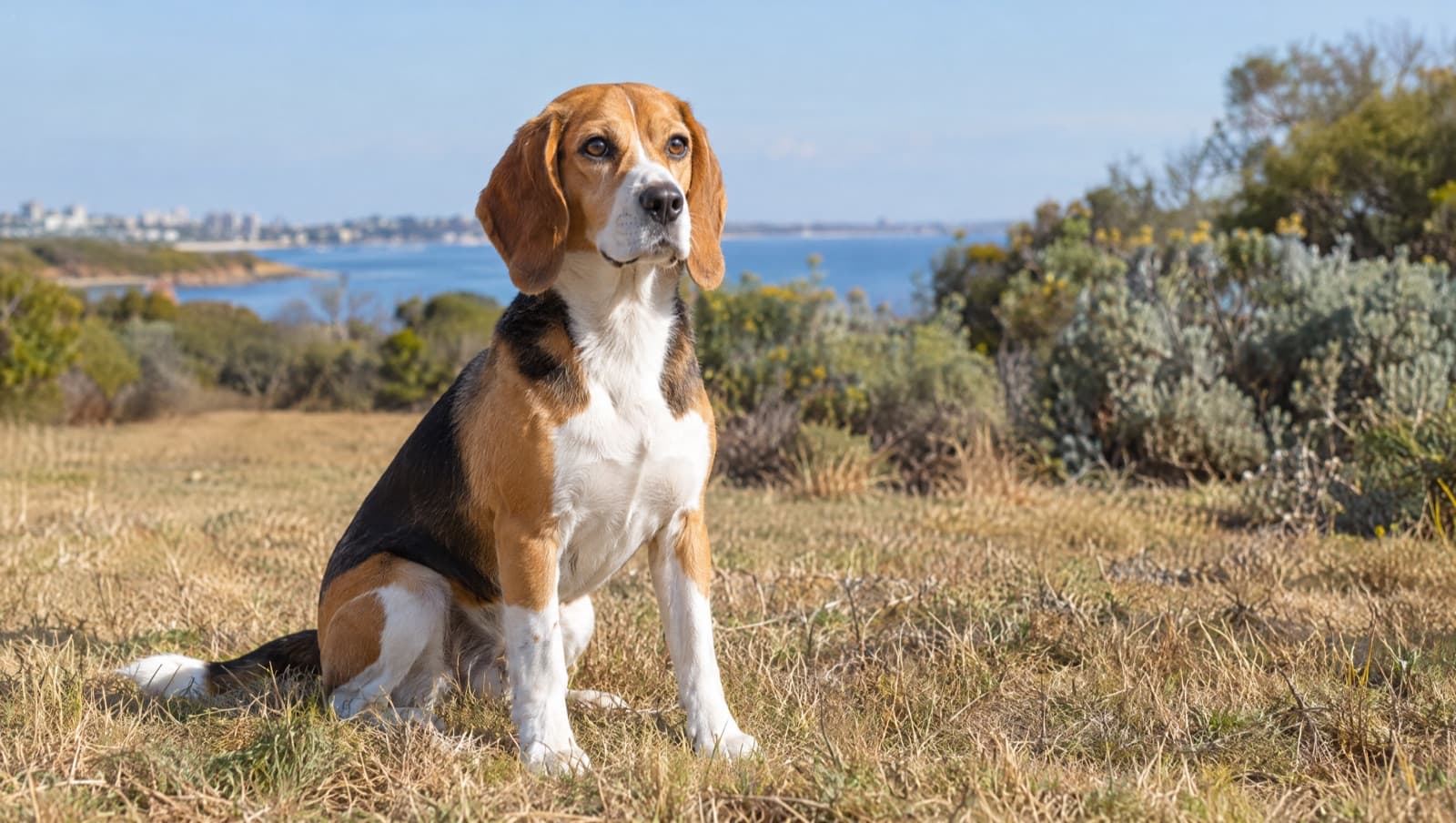
The long, low-set drop ears are part of what makes a Beagle a Beagle, and they are also a design that traps moisture, warmth and debris against the ear canal. Airflow is poor, and yeast and bacteria thrive. Add a dog that swims, digs and pushes its head through undergrowth on every walk, and recurrent ear infections become one of the most common reasons Beagle owners visit the vet.
Build a weekly routine of lifting the ear, looking inside, and cleaning with a vet-recommended cleaner. Learn what your dog's healthy ear looks and smells like so you notice when it changes. Redness, a yeasty odour, dark discharge, head-shaking or scratching at the ear all mean a vet visit, and sooner rather than later, because a neglected infection becomes painful, damages the canal, and turns into a chronic problem that is far harder to resolve than an early one.
The back: intervertebral disc disease (IVDD)
Beagles carry a long back on relatively short legs, and that build raises the risk of intervertebral disc disease, in which the cushioning discs between the vertebrae bulge or rupture and press on the spinal cord. It causes pain, and in more serious cases weakness or paralysis in the back legs. Obesity makes it worse, and so does repeated high-impact jumping on and off furniture and out of the car.
You reduce the risk with the same lever as everything else, weight, plus a few habits: provide a ramp or steps for the couch and the car, discourage repeated leaping onto hard surfaces, and keep exercise regular rather than weekend-warrior intense. Sudden reluctance to jump, a hunched posture, yelping when picked up, or wobbliness and dragging in the back legs are a same-day veterinary problem. Early treatment makes a real difference to the outcome, and advanced imaging and spinal surgery, if it comes to that, happen at a Perth specialist referral hospital. After-hours and weekend emergencies in Perth are handled by hospitals such as Perth Vet Emergency (24/7 at Cannington), the Animal Hospital at Murdoch University (24/7 at Murdoch), and WAVES (24/7 at Success).
Epilepsy, eyes, thyroid and a rare breed disorder
Epilepsy. Idiopathic epilepsy is over-represented in the breed and usually first shows in young to middle-aged dogs. A seizure is distressing to witness but a single short one is not usually an emergency in itself. Keep the dog safe from stairs and furniture, do not put anything in the mouth, time the seizure, and call your vet. Diagnosis is made by ruling out other causes, and the condition is managed long-term under veterinary care. It is not something to treat yourself.
Eyes. Cherry eye, a prolapse of the third-eyelid gland that appears as a red lump in the inner corner, is common in Beagles and usually corrected with minor surgery. The breed is also predisposed to primary glaucoma, a painful rise in eye pressure that can threaten sight and needs prompt attention, and to progressive retinal atrophy, an inherited condition that slowly reduces vision. Any squinting, redness, cloudiness or apparent change in sight is a vet visit, not a wait-and-see.
Hypothyroidism tends to appear in middle age, with signs like weight gain, lethargy and coat changes, and is diagnosed on bloodwork and managed with a daily tablet. Beagles also carry a small number of rarer inherited conditions, including Musladin-Lueke syndrome, a connective-tissue disorder specific to the breed that affects skin, joints and bone and has a DNA test responsible breeders use. It is uncommon, and a rescue Beagle is very unlikely to have it, but it belongs in the full picture. A responsible rescue will flag anything known, and your vet is the person to raise concerns with if signs appear. Breed health screening schemes for heritable conditions are described by the Orthopedic Foundation for Animals.
Meet an adoptable Beagle in Perth
Rescue Beagles arrive already desexed, vaccinated, microchipped and vet-checked. Browse live listings from rescues across Perth and WA.
See Available Beagles →The Perth essentials: heat, snakes and 1080 (not ticks)
These are not breed-specific, but they are the environmental risks that matter for any dog in Perth, and a Beagle's nose-led habits make the outdoor ones more relevant. Note what is missing: year-round paralysis-tick prevention. The Australian paralysis tick is an eastern-seaboard species and is not established in WA, so Perth's paralysis-tick risk is low. Keep routine flea, worm and heartworm prevention going, and only think about tick prevention if you are travelling east with your dog. Do not carry over the year-round-tick routine you might read on a Queensland or coastal-NSW page.
Summer heat. Perth summers are hot and dry, with long runs of mid-30s to 40-degree days, and Beagles feel it. Walk in the early morning or the evening, never the middle of a hot day, and test the footpath or sand with the back of your hand first, because hot ground burns paws. Carry water on every summer outing, and never leave a dog in a parked car, even briefly, even with a window down. Heavy panting, drooling, weakness, vomiting or a bright red tongue are signs of heat stress and a veterinary emergency. Shade, water and timing prevent nearly all of it. The Australian Veterinary Association publishes seasonal heat-safety guidance each summer.
Snakes. In the warmer months, roughly September to April, dugites, gwardars and tiger snakes are active around Perth's bushland corridors, wetlands and river foreshores. These are highly venomous, and a scent-driven Beagle that noses into one can be bitten and needs an emergency vet immediately. Keep your dog leashed and close on bush and reserve walks, avoid long grass in the warmer months, and if you suspect a bite (sudden collapse, weakness, vomiting, dilated pupils, laboured breathing) treat it as a dash-to-the-vet emergency. The RSPCA Knowledgebase has plain-language guidance on keeping pets safe around snakes.
1080 baiting. Many WA reserves, forests and bushland areas are baited with 1080 fox and feral-cat poison under the state Western Shield program, signposted with “1080 POISON” warnings. 1080 is lethal to dogs, including through eating a poisoned carcass, and the WA Government advises treating every baited area as dangerous to pet dogs at all times. Check for 1080 signage before a bushland walk, keep your dog leashed and under control in reserves, and know your nearest 24/7 emergency hospital. For a Beagle that follows its nose into the undergrowth, this is a real and specific risk, not a theoretical one.
Budgeting and insurance
Routine yearly costs for a healthy adult Beagle in Perth (food, an annual check and vaccination, dental care, flea, worm and heartworm prevention, registration) sit in the range of $1,500 to $2,500. The costs that catch people out are the one-off big ones: an IVDD episode that needs advanced imaging or surgery, a course of specialist eye or neurology care, or a snakebite or 1080 admission. Any of those can run well into four figures at a Perth referral hospital.
That is the case for pet insurance with this breed. Enrol while your Beagle is young and healthy, before any issue becomes a pre-existing condition that a policy will exclude. Compare a few Australian providers on what they cover for chronic and hereditary conditions, the annual limit and the excess, and read the product disclosure statement rather than just the headline price. Insurance is not a substitute for an emergency fund, but for a breed with predictable and occasionally expensive problems, it usually earns its keep across a lifetime.
Adopting and health history
A Beagle adopted through a Perth rescue comes desexed, vaccinated, microchipped, wormed and vet-checked, and shelter-based rescues add a behavioural assessment. What a rescue often cannot provide is a complete genetic or family health history, especially for an owner-surrendered or stray dog. That is not a reason to avoid adoption. It is a reason to treat the first month as a health baseline: book your own vet, establish records, check the ears, confirm the microchip is registered to you, start flea, worm and heartworm prevention, and score body condition so you have a starting point.
For the full picture of where to adopt, what it costs and what the breed is like to live with, read our companion guide, Beagle Adoption in Perth, and the dedicated recall and escape guide.
Frequently Asked Questions
What are the most common Beagle health problems?
Obesity is the single biggest one, and it drives several others. Beagles are famously food-driven and gain weight easily, and extra weight worsens the breed's long-backed spine and its joints. After weight, the common issues are chronic ear infections (from the long drop ears), intervertebral disc disease in the back, epilepsy, hypothyroidism, and a handful of eye conditions including cherry eye and, less often, glaucoma. The breed also carries a rare inherited connective-tissue disorder, Musladin-Lueke syndrome. Most Beagles live 12 to 15 years, and the majority of these problems are manageable when caught early, which is why an annual vet check and a lean body weight matter so much. This is general information, not veterinary advice.
How do I stop my Beagle getting fat?
Treat it as a daily discipline rather than an afterthought, because a Beagle will overeat given any chance. Feed measured meals rather than free-feeding, weigh or measure the food, count every treat into the daily total, and enforce a firm no-table-scraps and secure-bin rule across the whole household. Use part of the daily food ration for training and scatter-feeding so the dog works for it. Ask your vet to score your Beagle's body condition at each visit and adjust portions from there. Keeping a Beagle lean is the single most protective thing you can do for its back, joints and lifespan.
Why do Beagles get so many ear infections?
The long, heavy drop ears that make a Beagle so appealing also trap moisture and warmth and limit airflow to the ear canal, which is the perfect environment for yeast and bacteria. Add a dog that loves swimming and pushing its head through grass and undergrowth, and infections become common. Weekly ear checks and cleaning with a vet-recommended cleaner are part of Beagle ownership. Watch for redness, odour, head-shaking or scratching, and see your vet early, because a neglected ear infection becomes painful and can turn chronic.
What is IVDD and are Beagles prone to it?
IVDD is intervertebral disc disease, where the cushioning discs between the vertebrae degenerate or rupture and press on the spinal cord, causing pain, weakness or in severe cases paralysis. Beagles have a longer back relative to their legs, which puts them at higher risk, and obesity and repeated jumping on and off furniture make it worse. You reduce the risk by keeping your Beagle lean, using ramps or steps for the couch and car, and avoiding activities that repeatedly twist or jar the spine. Sudden back pain, a reluctance to jump, or wobbliness in the back legs is a same-day vet visit.
Do Beagles get epilepsy?
Idiopathic epilepsy is over-represented in Beagles, usually first appearing in young to middle-aged dogs. A seizure is frightening to watch but is not usually an emergency in itself unless it is prolonged or repeated. If your dog has a seizure, keep them safe from furniture and stairs, do not put anything in their mouth, time it, and contact your vet. Epilepsy is diagnosed after other causes are ruled out and is typically managed long-term with veterinary treatment. Never medicate a dog yourself; this is a condition to manage with your vet, not from the internet.
What eye problems do Beagles have?
The common one is cherry eye, a prolapse of the gland of the third eyelid that shows as a red lump in the corner of the eye and is usually corrected with minor surgery. Beagles are also a breed predisposed to primary glaucoma, a painful rise in pressure inside the eye that can threaten sight and needs prompt veterinary attention, and to progressive retinal atrophy, an inherited condition that gradually reduces vision. Any redness, cloudiness, squinting or apparent vision change warrants a vet check rather than a wait-and-see.
What is Musladin-Lueke syndrome in a Beagle?
Musladin-Lueke syndrome (MLS) is a rare inherited connective-tissue disorder specific to the Beagle, affecting the skin, joints and bone and giving affected dogs a characteristic tight skin and stiff, upright gait. There is a DNA test for the gene involved, which responsible breeders use to avoid producing affected puppies. It is uncommon, and a rescue Beagle is very unlikely to have it, but it is part of the full breed health picture. If you ever notice unusual stiffness, a stilted gait or tight, thickened skin, raise it with your vet, who can advise whether testing or investigation is warranted.
Do Beagles in Perth need paralysis tick prevention?
Not in the year-round way east-coast dogs do. The Australian paralysis tick is an eastern-seaboard species and is not established in WA, so local paralysis-tick risk in Perth is low. The parasite priorities here are routine flea, worm and heartworm prevention, which your vet will set up. The main time to think about paralysis ticks is before you travel east with your dog, to Queensland, New South Wales or Victoria's eastern coast, when you should ask your vet about tick prevention for the trip. Do not import the year-round-tick routine you might read on a Queensland site; it does not fit Perth.
How do I keep my Beagle safe in the Perth summer?
Perth summers are hot and dry, often in the mid-30s to 40 degrees, and Beagles feel the heat. Walk in the cool of the early morning or the evening, never in the middle of a hot day, and check the footpath or sand with your hand first because hot ground burns paws. Always carry water, and never leave a dog in a parked car even for a few minutes. Watch for heavy panting, drooling, weakness or a bright red tongue, which are signs of heat stress and a veterinary emergency. Shade, water and timing solve almost all of it.
Should I get pet insurance for a Beagle?
It is genuinely worth considering for this breed. Beagles carry documented ear, back and eye risks, and a single IVDD episode or a course of specialist eye or neurology care can run into the thousands at a Perth referral hospital. Enrol while the dog is young and healthy, before anything becomes a pre-existing condition that policies exclude. Compare a few Australian providers on what they cover for chronic and hereditary conditions, the annual limit, and the excess. Insurance does not replace an emergency fund, but for a breed with predictable, sometimes expensive issues it usually pays for itself over a lifetime.
Does a rescue Beagle come with health checks?
Yes. A Beagle adopted through a Perth rescue arrives already desexed, vaccinated, microchipped, wormed and vet-checked, and shelter-based rescues also do a behavioural assessment. What a rescue cannot always give you is a full genetic or family history, so treat the first month as a baseline-building period: visit your own vet to establish records, check the ears, confirm the microchip is registered to you, set up flea, worm and heartworm prevention, and score body condition. From there, an annual check and a lean weight cover most of the breed's risk.
Keep reading
Beagle Adoption in Perth
Where to adopt, what it costs, and the scent-hound reality of recall, fences and baying.
Beagle Recall and Escape in Perth
Why the nose beats the recall, secure fencing, and the WA snake and 1080 risks.
Adoptable Beagles in Perth
Live listings of Beagles and Beagle crosses, with filters for age, size and compatibility.
Perth Adoption Resources
Guides on adopting, costs, council rules and settling a rescue dog in Perth.