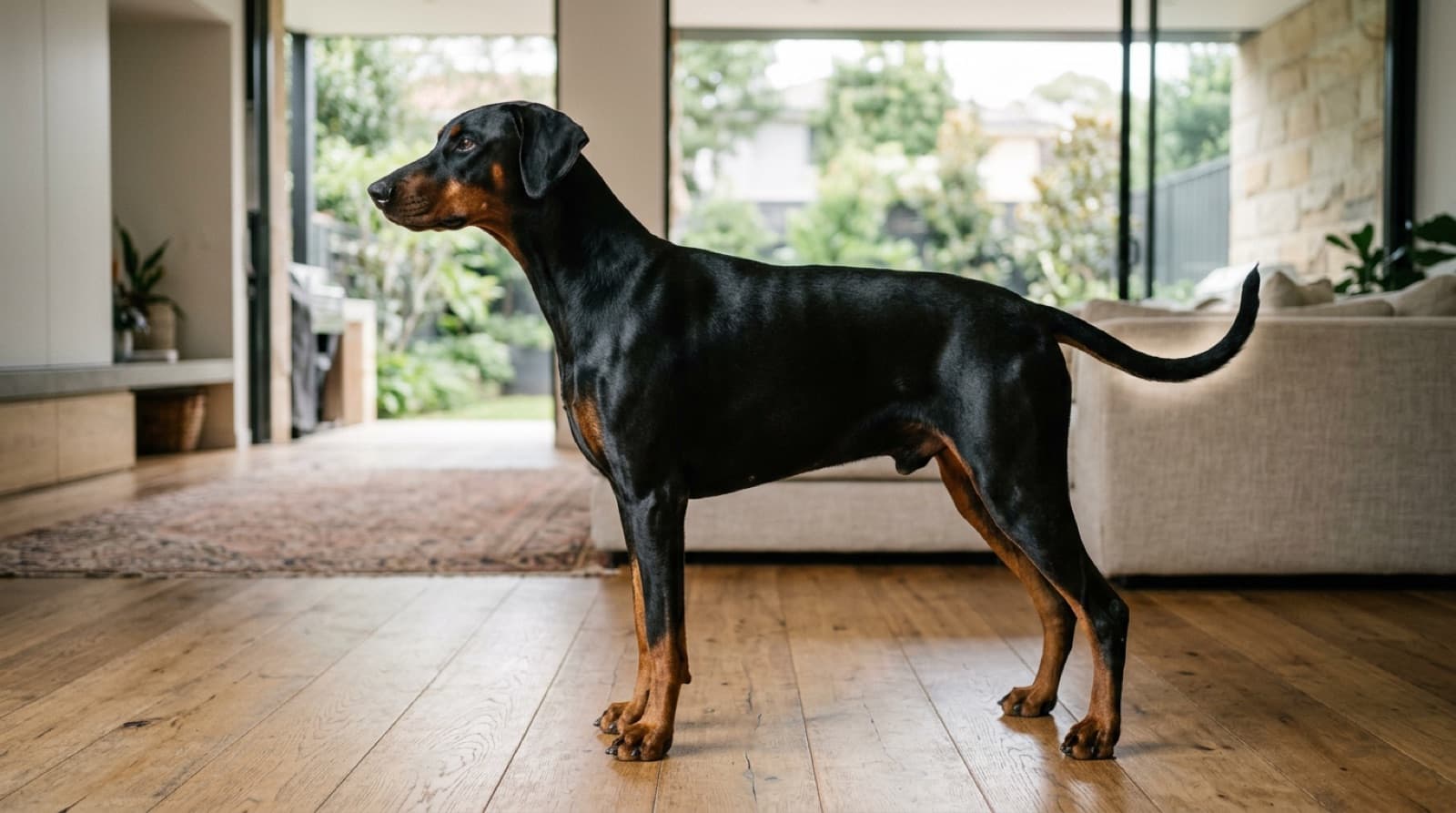
The short answer
The Doberman's defining health issue is dilated cardiomyopathy (DCM), a serious inherited heart disease and one of the leading causes of death in the breed, which is why regular heart screening matters. The breed is also prone to von Willebrand disease (a bleeding disorder), to bloat (GDV) because it is deep-chested, to Wobbler syndrome (a neck condition), to hip dysplasia and to hypothyroidism. In Melbourne, paralysis ticks are a low local risk, so the parasite priorities are fleas, worms and heartworm, plus tick prevention before trips to tick country. A good vet, heart screening, sensible feeding and early insurance are the essentials. This is general information, not veterinary advice.
The heart: dilated cardiomyopathy
The most important thing to understand about Doberman health is the heart. Dilated cardiomyopathy (DCM) is a disease in which the heart muscle weakens and the chambers enlarge, so the heart pumps less effectively over time. The Doberman is one of the breeds most strongly affected, and part of what makes DCM so serious is that it can progress silently for years, sometimes causing heart failure or sudden death before any obvious sign appears.
The lever an owner has is early detection. A Holter monitor, a wearable device that records the heart rhythm over 24 hours, can catch the abnormal beats that often come first, and an echocardiogram (heart ultrasound) can show changes in the heart muscle. The Orthopedic Foundation for Animals keeps cardiac screening records alongside its hip and elbow databases, and responsible breeders screen their dogs. If you adopt a Doberman, ask your vet about a heart-screening plan suited to the dog's age, and see a vet promptly about coughing, tiring easily, faster or laboured breathing at rest, fainting or a swollen belly. Melbourne has specialist cardiology through referral hospitals, and your vet will refer you if needed.
Von Willebrand disease
Von Willebrand disease (vWD) is the most common inherited bleeding disorder in dogs, and the Doberman is one of the breeds it affects. It reduces the blood's ability to clot, so an affected dog can bleed more than expected from an injury, or during surgery or a dental procedure. A DNA test exists, and responsible breeders screen their dogs for it.
For an owner the steps are straightforward. Tell your vet your dog is a Doberman before any surgery or dental work, ask whether testing is worthwhile for your dog, and see your vet about unusual or prolonged bleeding, easy bruising, nosebleeds, or blood in the urine or stool. Many dogs with vWD live entirely normal lives once the condition is known and managed.
Bloat (GDV): a deep-chested breed emergency
As a large, deep-chested breed, the Doberman is at risk of gastric dilatation-volvulus (GDV), or bloat. The stomach fills with gas and can twist on itself, cutting off its blood supply, and it can kill within hours. Know the signs: a swollen, hard belly, retching or trying to vomit with nothing coming up, restlessness and pacing, drooling, and obvious distress. If you see them, go to an emergency vet immediately.
You can reduce the risk. Feed two or more smaller meals a day rather than one big one, avoid vigorous exercise in the hour before and after eating, and slow a fast eater with a slow-feeder bowl. Ask your vet about bloat and about a preventive stomach-tacking procedure (gastropexy). Know your nearest 24-hour hospital before you need it: Melbourne options include the Animal Referral Hospital at Essendon Fields and the Animal Emergency Centre at Mount Waverley, Advanced Vetcare at Kensington, and the University of Melbourne veterinary hospital at Werribee.
Browse Dobermans available in Melbourne rescue
A rescue Doberman arrives desexed, vaccinated, microchipped and vet-checked, with known health issues disclosed. Browse current listings from Victorian shelters and rescues.
See Available Dobermans →Wobbler syndrome, joints and thyroid
Wobbler syndrome. Cervical vertebral instability, commonly called Wobbler syndrome, is a condition of the neck vertebrae and spinal cord seen in the breed. It can cause a wobbly, uncoordinated gait (often most obvious in the back legs), neck pain and weakness. It varies in severity and needs a veterinary diagnosis, so any developing unsteadiness or neck stiffness is a reason to see your vet.
Joints. Like most large breeds, Dobermans can develop hip dysplasia, an inherited condition where the hip does not form correctly and arthritis follows. Keeping the dog lean protects the joints, and that matters more in a cold, damp Melbourne winter, when stiff joints feel worse. A warm, padded bed off a cold floor helps an older dog.
Thyroid. Hypothyroidism, an underactive thyroid, is relatively common in the breed and can cause weight gain, lethargy, and coat and skin changes. It is diagnosed with a blood test and managed with ongoing treatment your vet prescribes, so it is something to watch for rather than fear. Dilute-coloured (blue or fawn) Dobermans can also be prone to colour dilution alopecia, a condition affecting the skin and hair.
Melbourne's climate and parasites
Melbourne is cooler and more changeable than Sydney or Brisbane, and that shapes Doberman care. The breed has a short, single coat and little body fat, so it feels the cold on wet winter mornings. A dog coat for early walks, a warm indoor bed and drying off after rain all help. Summer is mostly mild, but heatwave days above 40°C do arrive, and an athletic Doberman will keep going when it should stop, so walk early or late, carry water, provide shade and watch for heat stress.
On parasites, Melbourne differs from the east-coast cities. The eastern paralysis tick does not establish in metropolitan Melbourne, so it is a low local risk; the time to think about ticks is before a trip to East Gippsland or the New South Wales coast, when your vet can advise on prevention. The year-round priorities here are fleas, intestinal worms and heartworm, which is spread by mosquitoes and is present in Victoria. Your vet can recommend suitable products, and the RSPCA Knowledgebase and the Australian Veterinary Association have current general guidance.
The vet budget, and why a rescue Doberman is a good start
Put together, the Doberman's profile means you should plan for the real possibility of significant vet costs, above all around the heart, and insure early. That is the honest reality of a breed with an inherited heart risk, and it is exactly why cheap, unscreened puppies from backyard breeders are a false economy.
A rescue Doberman starts you ahead. It arrives desexed, vaccinated, microchipped and vet-checked, and the rescue can tell you what the in-care assessment found. Ask specifically about the heart, any history of bleeding, the gait and the weight. Book your own baseline vet visit in the first week and discuss a heart-screening plan, set up flea, worm and heartworm prevention, feed sensibly to reduce bloat risk, and take out insurance straight away while the dog is healthy. For where to find one and what adoption costs, see the Doberman adoption guide for Melbourne. None of this replaces veterinary advice on your individual dog.
Frequently Asked Questions
What are the main health problems in Dobermans?
The defining one is dilated cardiomyopathy (DCM), a serious inherited heart disease the breed is strongly predisposed to and one of its leading causes of death. Dobermans are also prone to von Willebrand disease (an inherited bleeding disorder), to bloat (gastric dilatation-volvulus) because they are deep-chested, to a neck condition called Wobbler syndrome, to hip dysplasia and to hypothyroidism. None of this means a Doberman is a doomed dog, and many live long, happy lives. It does mean this is a breed where a good vet, heart screening and pet insurance taken out early really matter. Always talk to your vet about an individual dog.
What is DCM in Dobermans and can it be screened for?
Dilated cardiomyopathy (DCM) is a disease in which the heart muscle weakens and the heart enlarges, so it pumps less effectively, and the Doberman is one of the breeds most affected. It can progress silently for a long time before causing heart failure or, in some dogs, sudden death. The good news is that screening exists: a Holter monitor (a wearable heart-rhythm recorder) and an echocardiogram (heart ultrasound) can pick up changes early, and regular cardiac screening is recommended for the breed. If you adopt a Doberman, ask your vet about a screening plan, and see a vet promptly about coughing, tiring easily, faster breathing at rest, fainting or a swollen belly.
What is von Willebrand disease?
Von Willebrand disease (vWD) is the most common inherited bleeding disorder in dogs, and the Doberman is one of the breeds it affects. It reduces the blood's ability to clot, so an affected dog can bleed more than expected from an injury or during surgery. A DNA test exists and responsible breeders screen for it. For an owner the practical steps are simple: tell your vet your dog is a Doberman before any surgery or dental procedure, and see your vet about unusual or prolonged bleeding, easy bruising, or blood in the urine or stool. Many affected dogs live normal lives once the condition is known and managed.
Are Dobermans prone to bloat, and how do I reduce the risk?
Yes. As a large, deep-chested breed, the Doberman is at risk of gastric dilatation-volvulus (GDV), or bloat, a sudden emergency in which the stomach fills with gas and can twist. Signs include a swollen, hard belly, retching with nothing coming up, restlessness, drooling and distress, and it needs emergency veterinary treatment straight away because it can kill within hours. To lower the risk, feed two or more smaller meals a day, avoid vigorous exercise around mealtimes, and slow down a fast eater. Ask your vet whether a preventive stomach-tacking procedure (gastropexy) is worth considering, sometimes done at the same time as desexing.
Do Melbourne Dobermans need paralysis tick prevention?
Paralysis ticks are a low risk in metropolitan Melbourne, unlike the Sydney and Brisbane coastlines, because the eastern paralysis tick does not establish in Melbourne's climate. The risk returns if you travel: a trip to East Gippsland or the New South Wales coast can bring a tick home, so ask your vet about prevention before you go and check the coat by hand afterwards. The year-round local priorities for a Melbourne Doberman are flea and intestinal worm prevention and heartworm prevention, since heartworm is spread by mosquitoes and is present in Victoria. Your vet can recommend suitable products.
Should I get pet insurance for a rescue Doberman?
For this breed, strongly yes, and as early as possible. Dobermans carry a real risk of serious, expensive conditions, above all heart disease, and cardiac care or bloat surgery can each run to a large bill. Insurance taken out while the dog is young and healthy means conditions are less likely to be excluded later as pre-existing, which is the whole point of insuring early, and it matters even more for a rescue dog whose history you may not fully know. Compare policies on exclusions, waiting periods and annual limits rather than price alone, and read the product disclosure statement carefully.
Keep reading
Doberman Adoption in Melbourne
Where to find a rescue Doberman, real costs vs a breeder, and why they reach rescue.
Doberman Temperament & Training
The guardian instinct, socialisation, exercise, the velcro nature, and reward-based training.
Adoptable Dobermans in Melbourne
Current listings with shelter and foster notes on temperament and known health needs.
Melbourne Adoption Resources
Guides on adopting, costs, council registration and settling a rescue dog in Melbourne.