The short answer
Persians are gentle, healthy-enough cats with a set of predictable problems from the flat face: harder breathing, watery and stained eyes, and crowded teeth. The main internal disease to know is PKD, an inherited kidney condition that a DNA test can screen for. In Melbourne, protect a Persian from heatwave days above 40 degrees, while paralysis ticks are low risk locally. Groom and wipe the eyes daily, keep the cat indoors and lean, and see the vet at least yearly.
Persian health issues at a glance
| Issue | Why Persians get it | What you can do |
|---|---|---|
| Breathing difficulty | Shortened skull, narrowed nostrils and airways | Keep cool and lean; vet check for noisy or laboured breathing |
| Eye and tear problems | Tear ducts do not drain properly | Daily wipe; vet for squinting, cloudiness or discharge |
| Dental disease | Crowded, misaligned teeth in a short jaw | Dental checks every visit; home care as your vet advises |
| PKD (kidney cysts) | Inherited, occurs most often in Persians | Ask about DNA testing; watch for increased thirst |
| Heatstroke | Flat face plus a heavy coat | Indoors and cool on heatwave days; emergency vet if affected |
| Matting and skin sores | Dense coat traps loose hair and moisture | Daily combing; groomer for tight mats |
This guide is general information, not veterinary advice. It names no medications or doses on purpose. Diagnosis and treatment for any of these conditions should come from your own vet.
The flat face: the defining Persian health concern
The Persian is a brachycephalic breed, the word for a cat or dog with a shortened, pushed-in face. That look is what people love, and it is also where most of the breed's health problems start. When the skull is shortened, everything inside it is squeezed: the airway, the teeth and the tear ducts.
The RSPCA Australia Knowledgebase names Persians among the flat-faced breeds with welfare problems from exaggerated features. It describes narrowed nostrils and airways and a longer than normal soft palate, which make breathing harder and can mean a cat tires quickly and plays only briefly. It also describes abnormal tear drainage leading to watery, inflamed eyes, and dental problems that can last a lifetime. The Australian Veterinary Association has raised welfare concerns about breeding for exaggerated features, including flat faces.
For an adopter, the useful part is that not every Persian is equally affected. The modern peke-face type, with the nose set high between the eyes, tends to have the most trouble. The traditional doll-face Persian, with a visible nose and a more moderate muzzle, usually breathes and drains tears more easily. Many long-haired rescue cats with Persian in their background are somewhere in between. When you meet a cat, watch it breathe at rest and ask the rescue about snoring, eye discharge or past dental work.
Breathing: what is normal and what is not
A flat-faced cat may snore or breathe a little audibly while resting, and many owners learn their cat's normal sounds. What matters is change and effort. Watch for:
- Breathing that is fast, laboured or noisy while the cat is resting.
- Open-mouth breathing or panting, which is never normal in a cat.
- Tiring very quickly after a short play session.
- Blue or pale gums, or a cat that cannot settle and keeps changing position.
Keeping a Persian lean helps, because extra weight makes breathing harder, and keeping it cool matters even more. Any of the signs above, especially open-mouth breathing, means a vet visit straight away.
Eye problems and tear-staining
Because the flat face changes the shape of the eye socket and the tear ducts, tears overflow onto the face rather than draining away. That is why so many Persians have damp, reddish-brown staining below the inner corner of each eye. The staining is not dirt and is not usually painful on its own, but the damp skin folds need daily cleaning to stay healthy.
Flat-faced cats are also more prone to eye inflammation such as conjunctivitis, and some develop more serious problems such as eyelids that roll inward and rub the eye, or corneal ulcers, a painful sore on the surface of the eye. None of these are things to guess at or treat at home.
Wipe the eye area once a day with a soft cloth dampened in warm water, a fresh section for each eye. See a vet promptly for squinting, an eye held shut, pawing at the face, cloudiness, redness, swelling or thick yellow-green discharge. The daily routine is covered in our Persian grooming and care guide.
Dental crowding
A short, flat jaw leaves less room for teeth, so they crowd and sit at odd angles. That traps food and plaque and speeds up dental disease, which is painful in cats and often hidden. Watch for bad breath, drooling, pawing at the mouth, chewing on one side or dropping food. Ask your vet to check the teeth at every visit and to recommend home dental care. Because anaesthesia in a flat-faced cat needs extra care, plan any dental procedure with your vet rather than putting it off until it becomes urgent.
PKD: the kidney disease to understand
If the flat face is the outside story, polycystic kidney disease (PKD) is the inside one. The Cornell Feline Health Center describes PKD as an inherited disorder that occurs most frequently in Persian cats, where small fluid-filled cysts form in the kidneys and multiply and grow over time. Eventually they can overwhelm normal kidney tissue and lead to kidney failure.
PKD is often silent for years. When signs do appear they look like any kidney problem: drinking and urinating more, losing weight, eating less, vomiting and low energy. A DNA test can show whether a cat carries the gene, and responsible breeders test breeding cats so it is not passed on. A gene test does not tell you how severely a cat is affected, which is why vets also use ultrasound to look at the kidneys.
For an adopter, the plan is simple. Ask the rescue whether the cat has had any kidney tests, then raise PKD with your own vet at the first visit. If you ever notice your cat drinking or peeing much more than usual, book a vet visit. Kidney disease of any kind is far easier to manage when it is caught early, and treatment must be tailored to the individual cat by your vet.
Heat is the Melbourne danger for a Persian
Melbourne's summers are usually mild to warm, but the Bureau of Meteorology records heatwave days above 40 degrees, and the weather can swing sharply within a day. That unpredictability is exactly what catches owners out. A Persian is one of the least heat-tolerant cats you can own: the flat face makes cooling by breathing less effective, and the heavy coat holds warmth in.
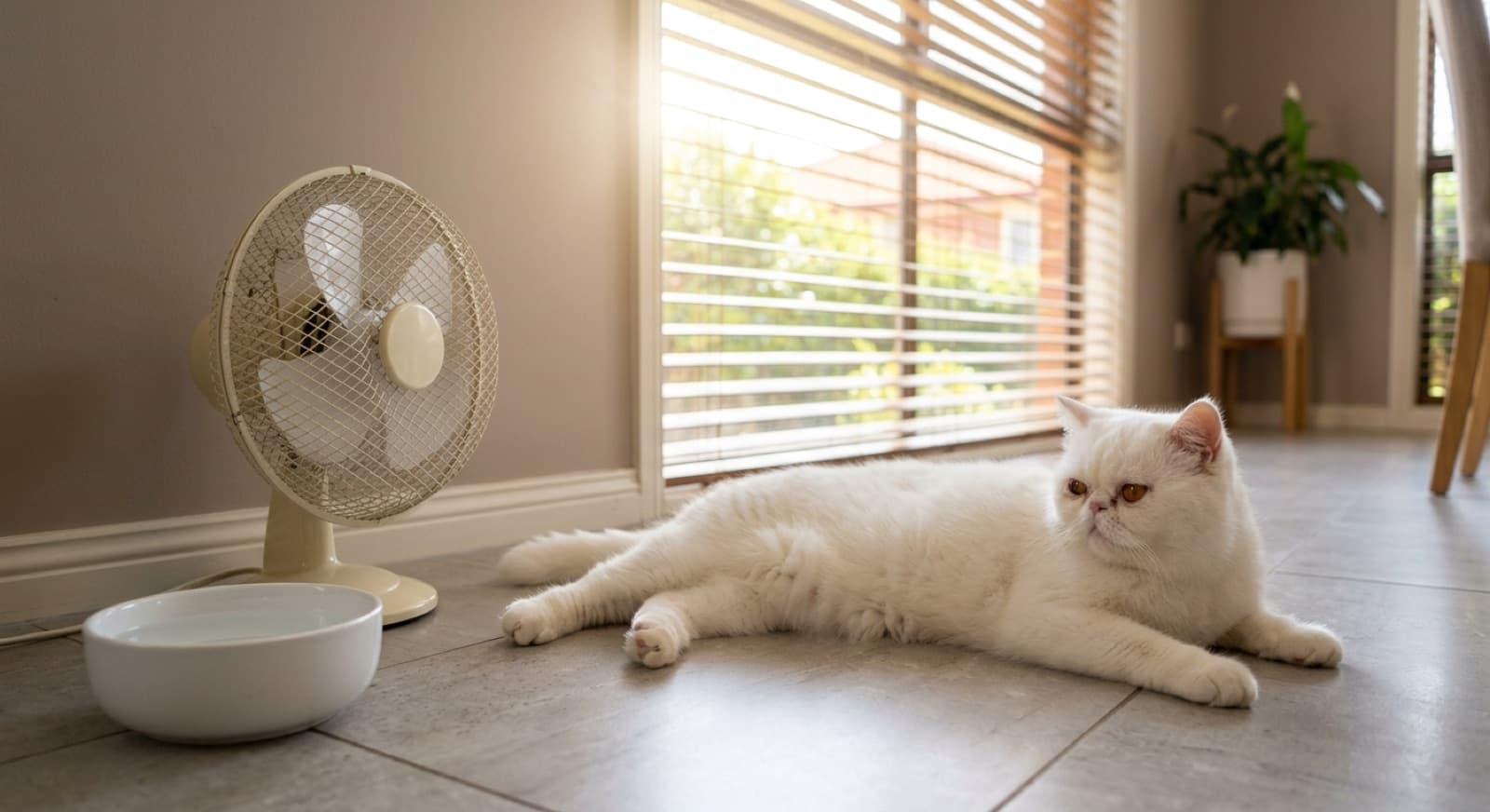
- Plan ahead when a hot day is forecast. Keep the cat inside in the coolest room, with blinds down, water bowls in several places, and a fan or air-conditioning running.
- Never leave a Persian in a car, a sunroom, a closed-up apartment or an enclosed balcony, even briefly.
- Keep the coat combed and mat-free so air can move through it. Ask your vet or groomer before shaving for summer.
- Watch older and overweight Persians closely, as they cope worst.
Emergency: a flat-faced cat in the heat
Overheating is life-threatening, and a Persian is at high risk on a Melbourne heatwave day. Warning signs include panting or open-mouth breathing, heavy drooling, restlessness, a bright red tongue or gums, wobbliness, vomiting or collapse.
Move the cat somewhere cool, offer water, and get to a vet immediately, ringing ahead on the way. Melbourne's 24/7 options include the Animal Referral Hospital at Essendon Fields and the Animal Emergency Centre at Mount Waverley, and Lort Smith runs an emergency department in North Melbourne open 365 days a year. With heat and breathing distress, minutes matter.
Ticks, fleas and heartworm in Melbourne
If you have read Persian advice written for the New South Wales or Queensland coast, you may have seen urgent warnings about paralysis ticks. That risk is low in metropolitan Melbourne. The paralysis tick is an eastern-seaboard species that does not establish in Melbourne's climate. The time to think about it is travel: if you take your cat to coastal New South Wales or East Gippsland, ask your vet about a cat-safe tick product before you go.
Fleas and intestinal worms are year-round concerns, and heartworm, which mosquitoes spread, is present in Victoria, so ask your vet about prevention. One rule never changes: some flea and tick products made for dogs are toxic to cats, so never use a dog product on your Persian.
Other conditions to know
Heart disease. Hypertrophic cardiomyopathy (HCM), a thickening of the heart muscle, is the most common heart disease in cats generally and can affect Persians too. It is often silent, and a vet may first hear a murmur at a routine check. The most serious complication is a blood clot that blocks blood flow to the back legs. Sudden back-leg weakness or paralysis, crying out, cold paws or fast breathing is an emergency.
Skin folds and coat sores. The facial folds trap tears and debris, and a matted coat can hide sores and infection. Daily face wiping and combing prevent most of this.
Urinary problems. Persians, like all cats, can develop bladder and urethra problems, and extra weight and low water intake raise the risk. Watch for straining in the litter tray, frequent small visits, blood in the urine or crying while toileting.
Emergency: a straining male cat may be blocked
A male cat straining in the litter tray but passing little or no urine may have a urinary blockage, which can become fatal quickly. Other signs include repeated trips to the tray, crying, a painful belly, restlessness and vomiting. Get to a vet immediately, day or night.
Why adopting is not a health gamble
Every cat adopted through a Melbourne rescue is desexed, vaccinated, microchipped, FIV tested, wormed, flea treated and vet checked before going home. For a Persian, that check covers the eyes, breathing and coat, and the foster notes add what the carer has seen day to day.
Many rescue Persian-type cats are adults, so their breathing, eyes and temperament are known rather than guessed, and a doll-face or long-haired cross may have fewer extreme flat-face problems than a young peke-face kitten. A standard rescue check does not usually include a PKD DNA test or a heart ultrasound, so ask what has been done and raise those with your vet. Across the Melbourne rescues we aggregate, purebred Persians almost never appear, so most adopters will be choosing a long-haired domestic or cross, and the same health questions still apply. Our Persian adoption guide for Melbourne covers where to look.
Browse adoptable Persian cats in Melbourne
A rescue cat comes vet checked, desexed and microchipped, with foster notes on temperament, breathing and eyes. Purebreds are rare, so set an alert and consider long-haired crosses too.
See Available Persians →Keeping a Persian healthy in Melbourne
- Groom and wipe the eyes daily to prevent painful mats, tear-staining and skin infection.
- Keep it cool on hot days and warm on cold nights, especially after a clip.
- Keep it indoors or contained. See our indoor versus outdoor cats guide, and check your local council for any cat curfew.
- Watch the breathing, and treat open-mouth breathing as an emergency.
- Book regular vet checks, at least yearly for adults and more often for seniors, and raise PKD, the heart and the teeth.
- Feed for a lean body, which helps breathing, joints and the urinary system.
- Keep parasite prevention going with a cat-safe, vet-recommended product, never a dog product.
Budget for this too. A Persian is more likely than an average cat to need extra vet care over its life, so look at our Melbourne cat costs guide and consider insuring the cat while it is young.
When to see the vet urgently
- Panting, open-mouth or laboured breathing, or any sign of overheating.
- Sudden back-leg weakness or paralysis, crying out, or cold paws.
- A male cat straining to urinate with little or nothing passing.
- A painful, cloudy, red or swollen eye, or one held shut.
- Collapse, sudden lethargy, or a cat that will not eat or drink.
For anything less dramatic, such as increased thirst, weight loss, bad breath, mild eye discharge or litter tray changes, book a normal appointment soon rather than waiting. Your vet is the right person to diagnose and treat each of these, and kidney, heart, eye and dental care must be tailored to the individual cat.
Frequently Asked Questions
What health problems do Persian cats have?
Most come from the flat face: narrowed airways that make breathing harder, crowded and misaligned teeth, and eyes that water constantly because tears do not drain normally, which can lead to staining, inflammation and other eye problems. The flatter the face, the worse these tend to be. Persians are also strongly linked to polycystic kidney disease (PKD), an inherited condition with a DNA test. Heart disease, dental disease and urinary problems can occur as in other cats. In Melbourne, heatwave days are a real danger for a flat-faced, long-coated cat. Talk to your vet about screening for your individual cat.
Do Persian cats have breathing problems?
Often, yes. Persians are brachycephalic, meaning the face and nose are shortened, and the RSPCA Australia Knowledgebase describes narrowed nostrils and airways and a longer soft palate in flat-faced cats, which makes breathing harder. That can show up as noisy breathing, snoring, snorting and tiring quickly. Doll-face Persians with a more moderate muzzle usually breathe more easily than extreme peke-face cats. Open-mouth breathing or struggling for breath at rest is never normal in a cat. Treat it as urgent and see a vet straight away.
What is PKD in Persian cats?
PKD is polycystic kidney disease, an inherited condition that occurs most often in Persians, where fluid-filled cysts form in the kidneys and grow over time, gradually reducing kidney function. Early on there are often no signs. Later signs include drinking and urinating more, weight loss, a poor appetite, vomiting and low energy. A DNA test can show whether a cat carries the gene, and responsible breeders test breeding cats. Ultrasound is used to look at the kidneys directly. If your cat starts drinking or peeing more, book a vet visit for kidney checks.
Should I get my adopted Persian tested for PKD?
It is worth raising with your vet at the first visit. A standard rescue vet check does not usually include a PKD DNA test or a kidney ultrasound, so ask the rescue what has been done. Your vet can advise whether a DNA test, blood and urine tests or an ultrasound makes sense for your cat's age and history. Knowing early does not cure PKD, but it means kidney function can be monitored and care adjusted before problems become serious. A cross or long-haired domestic may carry a different risk from a purebred, so the conversation is individual.
Why do Persian cats have watery eyes and tear stains?
The flat face changes the shape of the tear ducts, so tears overflow onto the face instead of draining away. That leaves wet, reddish-brown staining below the inner corners of the eyes and damp skin folds. Flat-faced cats are also more prone to inflammation such as conjunctivitis, and some develop more serious problems like eyelids rolling inward or corneal ulcers. A gentle daily wipe with a damp cloth keeps the area clean. Squinting, pawing at the eye, cloudiness, redness or thick discharge need a vet promptly.
Are Persian cats in danger on hot Melbourne days?
Yes. Melbourne summers can spike above 40 degrees, and a Persian has two problems in the heat: a flat face that makes breathing and cooling harder, and a long, dense coat that traps warmth. On heatwave days keep your Persian indoors in the coolest room with fresh water, shade and airflow or air-conditioning, and never leave it in a car, sunroom or closed-up room. Panting, open-mouth breathing, drooling, a bright red tongue, wobbliness or collapse can mean heatstroke. That is an emergency, so get to a vet immediately.
Are paralysis ticks a risk for Persian cats in Melbourne?
Paralysis ticks are low risk in metropolitan Melbourne. They are mainly an eastern-seaboard tick, common along the New South Wales and Queensland coast and down into East Gippsland, and they do not establish in Melbourne itself. The risk rises if you take your cat to those areas, so ask your vet about a cat-safe tick product before travelling. Never use a tick or flea product made for dogs on a cat, because some are toxic to cats. Year-round flea and worm prevention still matters, and ask your vet about heartworm.
How long do Persian cats live?
Many Persians live into their mid-teens when they are kept indoors, kept lean, groomed daily and checked by a vet regularly. Lifespan varies a lot between individual cats, so treat any single figure with caution. Flat-face problems, kidney disease and dental disease can shorten life if they are ignored, which is why attentive care matters more for this breed than for a sturdier cat. Regular checks that catch kidney or heart problems early are one of the biggest things you can do. Indoor living also removes traffic and fight injuries.
Do Persian cats have dental problems?
Yes, more than most cats. The RSPCA Australia Knowledgebase notes that the skull shape of flat-faced cats can cause abnormal teeth, with dental problems throughout life and trouble eating. In a short, flat jaw the teeth are crowded and often misaligned, which traps food and speeds up dental disease. Watch for bad breath, drooling, pawing at the mouth, chewing on one side or dropping food. Have the teeth checked at every vet visit and ask your vet about home dental care. Dental work in a flat-faced cat should be planned with your vet.
Do rescue Persians come health checked?
Yes. Melbourne rescues desex, vaccinate, microchip, FIV test, worm and flea treat cats and give them a vet check before adoption, and for a Persian that check covers the eyes, breathing and coat. What it does not usually include is a PKD DNA test or a heart ultrasound, so ask the rescue what has been done and raise PKD, the heart, breathing and eyes with your own vet at the first visit. An adult or doll-face Persian may have fewer extreme flat-face problems than a young, very flat-faced kitten, and its health is a known quantity.
Is pet insurance worth it for a Persian?
For many owners it is worth serious thought, because a Persian is more likely than an average cat to need ongoing eye, dental, breathing or kidney care. Insurance is cheapest and most useful when taken out on a young, healthy cat, since conditions that already exist are usually excluded. Read the policy closely for breed-related and hereditary exclusions before you buy. If you would rather self-insure, set money aside each month into a dedicated vet fund. Either way, plan for higher-than-average vet costs over a Persian's life.
When should I take my Persian to an emergency vet?
Go immediately for open-mouth or laboured breathing, signs of overheating, sudden back-leg weakness or paralysis, a male cat straining to urinate with little or nothing coming out, a painful or cloudy eye held shut, collapse, or a cat that will not eat or drink. Melbourne has 24/7 emergency hospitals, including the Animal Referral Hospital at Essendon Fields and the Animal Emergency Centre at Mount Waverley, and Lort Smith's emergency department in North Melbourne is open every day from 8am to 10pm. Ring ahead on the way so the team is ready.
Keep reading
Adoptable Persians in Melbourne
Live listings of Persians and long-haired crosses from Melbourne rescues.
Persian Adoption in Melbourne
Where to look, what it costs, and how to check a private seller in Victoria.
Persian Grooming and Care
The daily coat, eye and face routine that keeps a Persian comfortable.
Melbourne Cat Adoption Guide
How adoption works in Melbourne, from application to the first week at home.