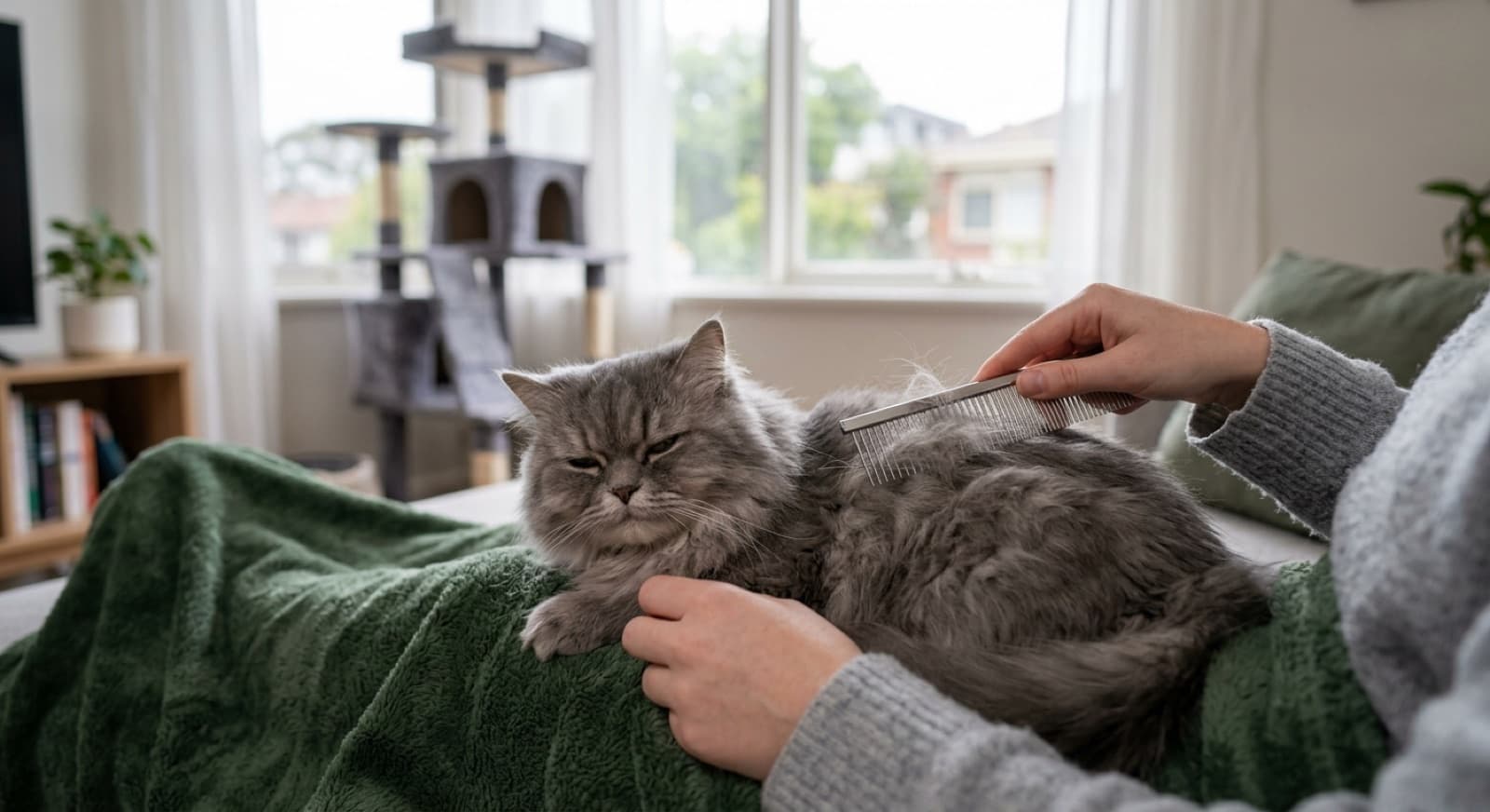
The short answer
Comb a Persian every day with a steel comb and slicker brush, right down to the skin, paying extra attention to the ears, armpits, belly, britches and tail. Wipe the eye folds daily. Never cut a mat out with scissors; a groomer can clip it safely. Many owners keep a Persian in a shorter clip, which is a fine choice. In Melbourne, heat is the summer risk, so keep the cat indoors and cool on heatwave days, and give a clipped cat a warm bed in winter.
Why the Persian coat mats so fast
A Persian carries the most demanding coat of any common cat. It is long, very fine and extremely dense, with a thick layer of soft undercoat beneath the outer hairs. In a short-haired cat, loose hairs fall away or come out when the cat washes. In a Persian they cannot escape. They stay trapped in the coat and twist together, and within a day or two a small tangle has started.
Left alone, a tangle felts into a mat, a hard lump of hair pressed against the skin. A tight mat pulls on the skin with every movement, which hurts, and it traps moisture and dirt underneath so sores can develop out of sight. In bad cases the coat felts into a solid sheet and the whole thing has to be clipped off. The RSPCA Australia Knowledgebase covers regular grooming as part of caring for long-haired cats, and the Persian sits at the top of that scale.
This is also the single most common reason Persians are surrendered. The grooming slips, the coat mats, brushing starts to hurt, the cat fights the comb, and the owner gives up. Many Persians that reach Melbourne rescue arrive matted or already clipped short because of it.
The tools you actually need
| Tool | What it is for |
|---|---|
| Wide-tooth stainless-steel comb | The main tool. Reaches the undercoat where mats start, and tells you when an area is clear. |
| Fine-tooth steel comb | For the face, feet and finishing a section once the wide comb runs clean. |
| Slicker brush | Lifts the coat and removes loose hair. Use a light touch, as cat skin is thin. |
| Soft cloth or cotton pads | Daily eye and face wipes with plain warm water. |
| Cat nail clippers | A trim every couple of weeks, so nails do not overgrow or snag in the coat. |
| Cat-specific shampoo | For the occasional bath. Never a human or dog product. |
Notice what is missing: scissors. A soft brush alone is also not enough, because it glides over the top coat and misses the tangles forming underneath.
The daily grooming routine
Once the coat is in good condition, a daily session is short, often five to ten minutes. Consistency beats marathon sessions. A little every day is easier on you and the cat than a long, stressful detangle once a week.
- Settle the cat. Same time, same quiet spot, ideally when the cat is relaxed after a meal.
- Work in sections. Part the coat and comb small areas right down to the skin rather than skimming the surface.
- Do the hot-spots on purpose. Behind the ears, the armpits, the belly, the groin, the britches and under the tail mat first. Comb them every day.
- Finish with the comb. If the comb runs from skin to tip without catching, that area is clear. A snag is a tangle to tease out now.
- Wipe the eyes and face. A damp cloth under and around each eye, a fresh section for each side.
- Check the back end. Look for anything caught in the britches and clean gently.
Reward with a treat or end with a meal so grooming becomes something the cat expects rather than dreads. A Persian that has learned to lie on your lap for a comb is far easier to care for over the next fifteen years.
Dealing with mats safely
For a small, loose tangle, hold the hair at its base near the skin so you are not tugging the cat, then work it apart from the outside edge with your fingers and the end of the comb. A pinch of cornflour helps the fibres slide. Take breaks if the cat is unhappy.
The rule that prevents injuries: never cut a mat out with scissors. Cat skin is thin and loose, and it tents up into the base of a mat, so it is easy to slice the skin while you think you are cutting hair. If a mat is tight against the skin, or you find several, stop and book a professional groomer. They use electric clippers that sit flat against the skin and can remove it safely.
When a coat is badly matted overall, a full clip is the kind fix. It removes the discomfort straight away and gives you a clean coat to keep on top of as it grows back. If the skin under a mat looks red, broken or smells, that is a vet visit as well as a groom.
Should you keep a Persian clipped?
A shorter clip is a legitimate choice, not a failure. A shorter coat mats far less, stays cleaner and is much easier day to day. It suits an older cat that tires of long sessions, a cat that genuinely hates the comb, or an owner who is honest that daily full-coat care will not happen. A groomer trims or clips with proper clippers, usually every four to six weeks, and you keep the rest of the routine going between visits.
Some things do not change with a clip. You still wipe the face daily, comb whatever length is left, and keep the back end trimmed. A clipped cat also has less insulation and less sun protection, which matters in Melbourne in both directions, as the next section explains.
Coat care through Melbourne's seasons
Melbourne's climate is famously changeable, with mild to warm summers that spike into heatwave days above 40 degrees and cool, damp winters, as the Bureau of Meteorology records. Each season asks something different of a Persian owner:
- Heatwave days. A flat-faced cat in a heavy coat cannot cool itself well. Keep it indoors in the coolest room with water, shade and airflow or air-conditioning. A mat-free coat lets air move, so stay on top of the combing in summer. Do not rely on a clip alone, and ask your vet or groomer before a summer shave. The Persian health guide lists the overheating warning signs.
- Spring and autumn. Shedding often picks up as the days change. Comb a little longer and empty the comb often.
- Cool winters. A full coat copes well indoors. A freshly clipped Persian will want a warm, draught-free bed, and any bath needs a thorough dry so the cat is not left damp on a cold day.
- Ticks. Paralysis ticks are low risk in metropolitan Melbourne, unlike the New South Wales coast. If you travel with your cat to coastal New South Wales or East Gippsland, ask your vet about a cat-safe tick product first, and never use a product made for dogs.
Daily face and eye care
The flat face is the second half of the job. The short muzzle changes the shape of the tear ducts, so a Persian's eyes water almost constantly and the tears run into the skin folds below. Left there, they stain pale fur a rusty brown and keep the folds damp, which can irritate the skin.
A gentle daily wipe fixes most of it. Use a soft cloth or cotton pad with plain warm water, clean under and around each eye with a fresh section for each side, and pat the folds dry. It takes less than a minute.
Know where grooming ends. Light tearing and staining is routine. Redness, swelling, squinting, cloudiness, thick or coloured discharge, or the cat pawing at an eye need a vet promptly, because flat-faced cats are prone to eye problems such as ulcers. Never medicate a cat's eye yourself. The Australian Veterinary Association can help you find a local vet if you do not have one yet.
Hygiene at the back end
Nobody mentions this before you adopt a Persian, but it matters. Long fur around the britches and under the tail catches litter and faeces, which smells, mats quickly and is uncomfortable for the cat. Keep that area trimmed short with a sanitary trim, either by a groomer or carefully at home with proper clippers, check it daily, and keep the litter tray very clean so there is less to catch.
Bathing a Persian
Most cats never need a bath. Persians are an exception, because the dense coat holds grease, dander and litter dust that combing alone does not lift. Every few weeks to a couple of months is a common rhythm. Comb the coat out fully first, because water shrinks any tangle into a hard knot. Use a cat-specific shampoo, rinse thoroughly, and dry the coat right down to the skin. Introduce it slowly with a rescue cat that may never have been bathed, and hand the job to a groomer if it turns into a battle.
Shedding and the hypoallergenic myth
Persians shed all year, and long hairs show up everywhere. Every loose hair you catch on the comb is one that does not land on the couch or twist into a mat, so daily combing does double duty.
Persians are not hypoallergenic, and no cat truly is. The main allergen is a protein in saliva and skin dander, not the hair, and a heavy coat spreads dander widely. If someone in your home has a cat allergy, spend real time with a Persian before committing, because the coat can make reactions worse rather than better.
Grooming a nervous rescue Persian
Many Persians that come through rescue were surrendered with matted coats, so to them a comb can mean pain. Patience matters more than getting the whole cat done on day one.
- Start small. One or two minutes on easy areas like the back and shoulders, then stop while the cat is still calm.
- Pair it with good things. A treat, a meal, or gentle chin scratches between strokes.
- Add the hard spots gradually. The belly, armpits and britches come last, over days or weeks.
- Use a clip as a reset. If the coat is already badly matted, a groomer's clip removes the pain so you can build the habit on a short coat.
- Read the foster notes. They often describe how the cat handles grooming and what has worked.
Browse adoptable Persian cats in Melbourne
Purebred Persians rarely reach Melbourne rescue, but long-haired cats with a calm nature come up often, and some arrive freshly clipped and ready for a fresh grooming start.
See Available Persians →The rest of weekly care
Coat and face dominate, but a Persian needs the same basics as any cat. Trim nails every couple of weeks. Look after the teeth, since the crowded flat jaw makes dental disease more likely, and ask your vet about tooth brushing and dental checks. Look in the ears when you groom and clean them only as your vet advises. Keep year-round flea and worm prevention going with a cat-safe, vet-recommended product, and ask your vet about heartworm, which is spread by mosquitoes and is present in Victoria.
Living with a Persian in Melbourne
For all the grooming, a Persian is one of the easiest cats to live with. They are calm, quiet and low-activity, happy in an apartment or a peaceful house, and that placid nature is why daily combing is manageable at all. A busy, high-energy breed would never sit still for it.
Indoor or contained living suits a Persian and protects its coat from burrs, dirt and weather. Many Victorian councils set cat curfews or containment rules, so check your local council. Our indoor versus outdoor cats guide covers setting up a safe indoor home with window perches and enrichment.
Is a Persian right for you?
A Persian is a good fit only if you will genuinely comb daily and wipe the face daily, or budget for a groomer every four to six weeks and keep a manageable clip. A neglected Persian ends up matted, in pain and sometimes back in rescue. If the routine sounds fine and a calm lap cat is what you want, the effort is repaid many times over. If it will not happen, a short-haired rescue cat is the kinder choice for both of you.
For where to find one, read the Persian adoption guide for Melbourne. For costs, the Melbourne cat costs guide, and for the process, the cat adoption guide.
When a coat, skin or eye problem needs a vet
- Mats tight against the skin, or matting over a large area: book a groomer, and a vet if the skin underneath is sore.
- Red, weeping or smelly skin, or any sore or scab you find while grooming.
- Bald patches or a cat pulling its own fur out, which can point to stress, allergy, parasites or pain.
- Eye redness, swelling, squinting, cloudiness, coloured discharge, or pawing at an eye.
- Panting, open-mouth breathing or wobbliness on a hot day, which is an emergency.
For the legal side, cats in Victoria must be registered with your local council from three months of age. Your rescue Persian arrives microchipped, so make sure the record is in your name. Find more on council registration at Agriculture Victoria.
Frequently Asked Questions
How often should I groom a Persian cat?
Every day. The Persian coat is long, fine and dense, and it starts to tangle within a day or two if you leave it. A short daily session with a wide-tooth steel comb and a slicker brush, often five to ten minutes once the coat is in good shape, keeps it mat-free and lets you catch a knot while it is small. Pair it with a quick wipe around the eyes. If you cannot commit to daily coat care yourself, book a professional groomer every four to six weeks and keep the cat in a shorter clip between visits.
Where do Persian cats mat first?
In the high-friction spots where the coat rubs as the cat moves. The usual hot-spots are behind the ears, under the front legs in the armpits, across the belly, the groin, the britches on the back legs and along the underside of the tail. These are also the places cats like being handled least, which is why owners skip them and why mats start there. Comb every one of these areas every day, right down to the skin, even if you only give the back and sides a lighter pass.
How do I get a mat out of a Persian's coat safely?
For a small, loose tangle, hold the fur at the base near the skin so you are not pulling, then tease the mat apart from the outer edge with your fingers and the tip of a steel comb. A little cornflour worked in helps the hairs slide. Never cut a mat out with scissors. Cat skin is thin and lifts up into the mat, so it is easy to cut the skin by accident, and that is a common home-grooming injury. If a mat is tight against the skin or there are several, book a professional groomer who can clip it out with electric clippers.
Should I keep my Persian clipped short?
Many owners do, and it is a sensible welfare choice rather than a cosmetic one. A shorter clip, or a body clip often called a lion cut, mats far less and stays cleaner, which suits an older cat, a cat that hates long grooming sessions, or a busy household. Have a groomer do it with proper clippers, never scissors at home. You still need to comb whatever coat is left, wipe the face daily and keep the back end trimmed. In Melbourne, give a freshly clipped cat a warm bed in winter and keep it out of direct summer sun.
How do I clean a Persian cat's eyes?
Gently wipe under and around each eye once a day with a soft cloth or cotton pad dampened with plain warm water, using a fresh section for each eye. The flat face stops tears draining normally, so they spill onto the fur, stain it a rusty brown and keep the skin folds damp. Daily wiping keeps the area clean and dry. Redness, swelling, squinting, cloudiness, thick or coloured discharge, or pawing at an eye are not grooming jobs. See a vet, and never put a human eye product in a cat's eye.
Do Persian cats need baths?
Occasionally, and more than most cats. The dense coat holds grease, dander and litter dust that brushing alone does not fully clear, so a bath every few weeks to a couple of months is a common rhythm. Use a cat-specific shampoo, never a human or dog product. Comb the coat out completely first, because water tightens any tangle into a solid knot. Dry the coat right down to the skin, since a damp undercoat mats and can chill the cat on a cool Melbourne day. If bathing is a battle, a groomer can wash and dry the coat for you.
Should I shave my Persian for a Melbourne summer?
Not as a reflex. A clip can make a matted or very thick coat easier to manage, and many Persians live comfortably in a shorter groomer's clip all year. But clipping is not the main heat defence. On 40-degree heatwave days the real protection is keeping a flat-faced Persian indoors in the coolest room with water, shade and airflow or air-conditioning. A well-combed, mat-free coat also helps air move. If you are thinking about a summer clip, ask your groomer or vet first, and keep a clipped cat out of direct sun.
Are Persian cats high maintenance?
For grooming, yes, more than almost any other cat. The coat needs daily combing, the face and eyes need a daily wipe, the back end needs trimming, and nails and teeth need the usual care. In personality they are the opposite: calm, quiet lap cats that ask for little activity. So the work is almost all coat and face care. If you can commit to that routine, or pay a groomer regularly and keep a manageable clip, a Persian is a wonderful companion. If you want a wash-and-go cat, choose a short-haired rescue cat.
Do Persian cats shed a lot, and are they good for allergies?
They shed steadily all year, and the long hairs show up on furniture and clothes. Persians are not hypoallergenic. No cat is, because the main allergen is a protein in saliva and skin dander rather than the hair itself, and a heavy coat can spread dander widely. Daily combing removes loose hair before it lands on the couch. If anyone in your home has a cat allergy, spend real time with a Persian before adopting, because the thick coat can make symptoms worse rather than better.
My rescue Persian hates being brushed. What do I do?
Go slowly and keep sessions short. Many rescue Persians arrive having been matted, so a comb may mean pain to them. Start with a minute or two on the easy areas like the back, pair it with treats or a meal, and stop before the cat gets upset. Build up over days and weeks, adding the harder spots gradually. If the coat is already matted, a professional clip gives you a clean start. Read the foster notes, which often describe how the cat handles grooming, and ask the rescue what has worked for them.
How often does a Persian need a professional groomer?
If you comb daily at home, a groomer visit every so often for a bath, a tidy and a sanitary trim may be all you need. If you keep the cat in a shorter clip or cannot manage daily combing, a visit every four to six weeks is common. A groomer is also the right call whenever mats are tight to the skin, because they can clip them out safely. Ask a groomer whether they are experienced with long-haired, flat-faced cats, and book a quiet appointment time for a nervous cat.
Keep reading
Adoptable Persian Cats in Melbourne
Live listings of Persians and long-haired crosses from Melbourne rescues.
Persian Adoption in Melbourne
Where to look, adopt versus buy, and the Pet Exchange Register check.
Persian Health Issues in Melbourne
Breathing, eyes, PKD and the heatwave risk for a flat-faced cat.
New Kitten Guide for Melbourne
The first weeks with a kitten, including starting good handling and grooming habits early.