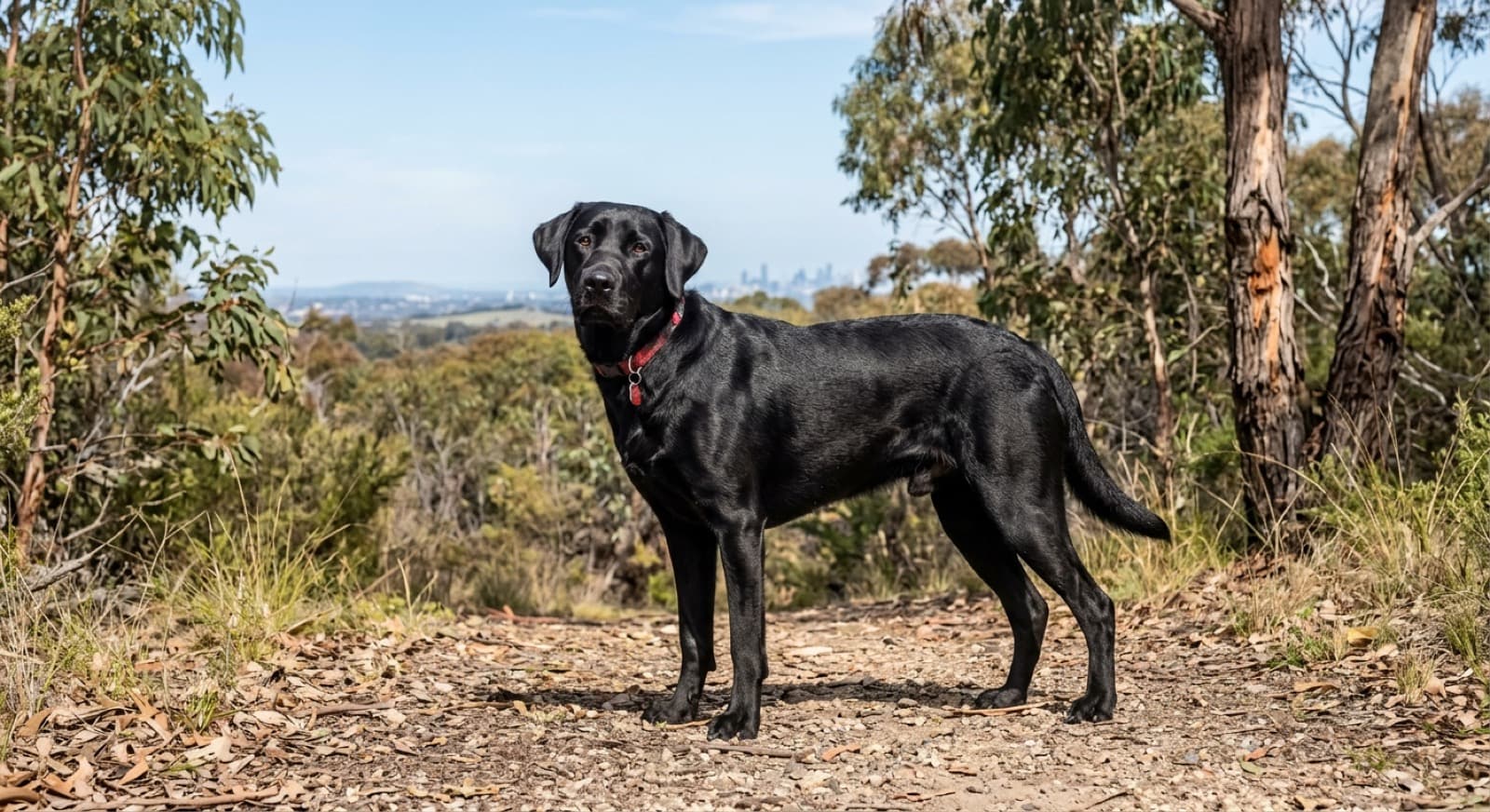
The short answer
The Labrador's main health issues are hip and elbow dysplasia, a strong genetic and behavioural predisposition to obesity that makes weight control the owner's single most important job, and ear infections from the breed's drop ears (worse in Brisbane's humidity and in a dog that swims). The breed is also prone to cruciate ligament injury, exercise-induced collapse in some lines, hereditary eye disease and cancer with age. Keeping the dog lean, keeping the ears clean and dry, keeping parasite prevention continuous and year-round for paralysis tick in SEQ, exercising in the cool hours, and insuring early are the things that most protect a Lab. This is general information, not veterinary advice.
Weight: the issue that drives all the others
The most important health fact about a Labrador is that it gains weight easily, and that excess weight makes almost every other problem worse. It is partly behaviour, because Labs are famously food-obsessed, and partly genetics: research has identified a variant in the POMC gene that is more common in Labradors and is linked to greater food interest and a tendency to gain weight. Put that appetite together with an owner who free-feeds or over-treats and you have the most common health problem in the breed.
Carrying extra kilos accelerates hip and elbow arthritis, raises the risk of cruciate ligament injury, strains the heart, and shortens life. The fix is entirely in the owner's hands: measured meals rather than free-feeding, treats counted into the daily total, and a regular body-condition check where you should be able to feel the ribs easily under a light layer. Because it is the defining owner job for this breed, it has its own guide, our Labrador weight management guide for Brisbane.
Hips, elbows and joints
Hip and elbow dysplasia are the breed's main orthopaedic concerns: inherited developmental conditions where the joint does not form correctly, leading to arthritis and pain over time. Reputable breeders screen their breeding dogs through hip and elbow scoring schemes, and organisations such as the Orthopedic Foundation for Animals maintain the evaluation standards used internationally.
Cruciate ligament rupture is the other big joint problem in Labs, an injury to the knee that often needs surgery and is one of the more common orthopaedic operations in the breed. Weight is again the everyday lever: a lean Lab carries far less load through those joints. A rescue Lab may already show early signs, so ask what the in-care vet assessment found, watch for stiffness, limping or a reluctance to jump into the car, and raise it with your vet early rather than waiting. A large-breed puppy also benefits from controlled growth on an appropriate diet, so ask your vet about feeding a young Lab.
Ears and skin: the Brisbane climate problem
This is where a Brisbane Lab guide differs from a southern-states one. Labradors have drop ears that trap warmth and moisture, creating the ideal environment for the yeast and bacteria behind ear infections (otitis). Brisbane compounds it on two counts: the subtropical humidity keeps the ear canal damp, and the breed's love of water means a swimming Lab is repeatedly wetting its ears. Ear infections are one of the most common reasons a Lab here ends up at the vet.
Keeping the ears clean and dry is part of routine care in this climate, particularly after any swim. Watch for head-shaking, scratching at the ears, redness, odour or discharge, and see your vet rather than pouring in a home remedy, because an untreated infection can become chronic and painful and sometimes points to an underlying allergy. The humidity also makes hot spots (moist patches of inflamed skin) more common, so keeping the coat brushed and the skin able to breathe helps.
Exercise-induced collapse, eyes and cancer
Exercise-induced collapse (EIC) is an inherited condition in some Labrador lines where the dog collapses in the hind limbs after intense exercise and usually recovers within minutes to half an hour. A DNA test exists and responsible breeders screen for it. A rescue Lab will not come with that history, so if your dog ever wobbles or collapses after hard exercise, stop, let it rest, and see your vet, which matters all the more in the Brisbane heat where a collapse could be heat stress instead.
On the eyes, Labradors can carry hereditary conditions including progressive retinal atrophy (a gradual loss of vision) and cataracts, which is why breeding dogs should hold a current eye certificate. Like most breeds, Labs are also prone to cancer with age. A rescue Lab will not come with a breeding health history, so a baseline vet check after adoption is worthwhile, and any change in vision, a new lump, or unexplained weight loss or lethargy is a conversation to have with your vet promptly.
Heat and parasites in SEQ
A Lab's short double coat copes with the Brisbane heat better than a heavy-coated breed, and the dog's love of water helps, but heat stress is still a real risk in a driven dog that will push itself. Exercise only in the cool of the early morning or evening, always carry water, provide shade and a cool indoor surface, and use water play to give exercise without the heat load. Watch for heavy panting, drooling, wobbliness or vomiting on a hot day and treat it as a heat-stress emergency.
Parasites are the other SEQ factor. The Australian paralysis tick is a genuine, effectively year-round danger along the Brisbane seaboard and can be fatal, so keep a year-round vet-recommended tick-prevention product in place and search the coat by hand after any bushland, creek or long-grass outing. Fleas, intestinal worms and mosquito-borne heartworm also stay active close to year-round here, so keep prevention continuous. The RSPCA Knowledgebase and the Australian Veterinary Association have current guidance, and after-hours emergencies in Brisbane are handled by hospitals such as Animal Emergency Service at Jindalee and Underwood.
Browse Labradors available in Brisbane rescue
A rescue Lab arrives desexed, vaccinated, microchipped and vet-checked, so its early health has already had professional eyes on it. Live listings with foster carer notes on temperament and any known health needs.
See Available Labs →The vet budget, and why a rescue Lab is a good start
Put together, the breed's profile means you should budget for higher-than-average vet care across a Lab's life, particularly for joints and ears, and insure early. That is not a mark against a wonderful family dog so much as the honest cost of one with some heritable vulnerabilities and a big appetite.
A rescue Lab actually starts you ahead. It arrives desexed, vaccinated, microchipped and vet-checked, so a professional has already looked it over and the rescue can tell you what the in-care assessment found. Ask specifically about joints, ears, weight and any lumps, book your own baseline vet visit in the first week, set up year-round parasite prevention, keep the dog lean, and take out insurance straight away while it is healthy. Do that and you have given a rescue Lab the best possible run at a long life.
Frequently Asked Questions
What are the main health problems in Labradors?
The big ones are hip and elbow dysplasia (inherited joint conditions leading to arthritis), a strong predisposition to obesity that then worsens everything else, and ear infections from the breed's drop ears. Labradors are also prone to cruciate ligament injury, exercise-induced collapse in some lines, hereditary eye disease, and, like most breeds, cancer with age. None of this means a Lab is an unhealthy dog; it means an owner should keep the dog lean, keep up parasite and ear care, insure early, and see the vet promptly about stiffness, lumps or changes. Always speak to your vet about an individual dog.
Why are Labradors so prone to putting on weight?
Partly behaviour and partly genetics. Labradors are famously food-obsessed, and research has identified a genetic variant (in the POMC gene) that is more common in Labradors and is associated with greater interest in food and a tendency to gain weight. Combine that appetite with a dog that will happily eat well past need and an owner who free-feeds or over-treats, and obesity follows. Weight is the single most important thing an owner controls, because carrying extra kilos accelerates joint disease, strains the heart and shortens life. Measured meals, counted treats and regular body-condition checks are the fix.
Why do Labradors get ear infections, and is it worse in Brisbane?
Labs have drop ears that trap warmth and moisture, the ideal environment for the yeast and bacteria behind otitis, and they love water, so a swimming Lab is repeatedly wetting the ears. Brisbane compounds it because the subtropical humidity keeps the ear canal damp. Keeping the ears clean and dry is part of routine care here, especially after any swim. If you see head-shaking, scratching, redness, odour or discharge, see your vet rather than reaching for a home remedy, because an untreated infection can become chronic and painful and sometimes points to an underlying allergy.
What is exercise-induced collapse in Labradors?
Exercise-induced collapse (EIC) is an inherited condition seen in some Labrador lines where a dog collapses in the hind limbs after intense exercise, then usually recovers within minutes to half an hour. A DNA test exists, and responsible breeders test their breeding dogs. A rescue Lab will not come with that history, so if your dog ever wobbles or collapses after hard exercise, stop the activity, let it rest, and see your vet, who can advise on testing and on managing exercise safely, which matters even more in the Brisbane heat.
Should I get pet insurance for a rescue Labrador?
For this breed, yes, and as early as possible. Labradors combine joint disease, a real risk of cruciate ligament surgery, ear problems and cancer with age, and any one of those can run into four or five figures. Insurance taken out while the dog is young and healthy means conditions are not later excluded as pre-existing, which is the whole point of insuring early. Compare policies on their exclusions, waiting periods and annual limits rather than on price alone, and read the product disclosure statement carefully.
Keep reading
Labrador Adoption in Brisbane
Where to find a rescue Lab, real costs vs a breeder, and what to expect.
Labrador Weight Management
The obesity risk, the food-motivation trap, and keeping a Lab lean in Brisbane.
Adoptable Labradors in Brisbane
Live listings with foster carer notes on temperament and health needs.
Brisbane Adoption Resources
Guides on adopting, costs, council rules and settling a rescue dog in Brisbane.