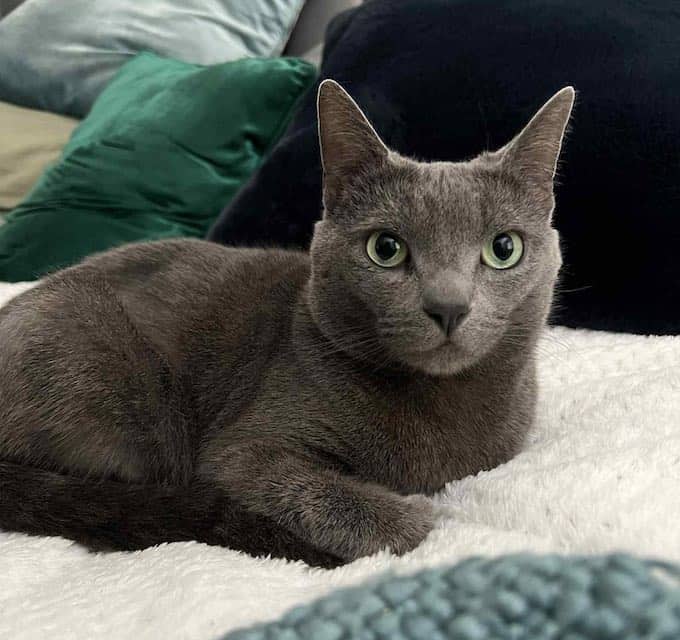
How many Russian Blues are available for adoption in Queensland?
As of November 2026, Russian Blues are uncommon in Queensland rescue, only 1 is listed right now across 1 rescue on LocalPetFinder. They are usually adopted quickly, so it is worth applying early or setting an alert.
Where can I adopt a Russian Blue near me in Queensland?
LocalPetFinder lists Russian Blues available for adoption from rescues across Queensland and Queensland. Every listing links straight to the rescue that has the cat, and the application is handled by them, not by us.
How long do Russian Blues live?
Russian Blues typically live 15 to 20 years.
How much exercise does a Russian Blue need?
Adult Russian Blues need about 25 minutes of daily exercise. Adolescent cats (under 2 years) typically need 30 minutes, more than mature adults.
What are common health concerns for Russian Blues?
Breed-associated conditions to ask the rescue about include Urinary stones, Dental disease. See the citations in the health section above for authoritative information on each. This is an editorial summary, not medical advice, so check with your vet for individual guidance.
How much does it cost to adopt a Russian Blue in Australia?
Adoption fees for a Russian Blue from an Australian rescue typically range $150 to $350 for adults, with kittens usually $200 to $400. That fee normally covers desexing, core vaccinations, microchipping, worming, and a veterinary health check before placement. The exact number varies by rescue and the cat's age, medical history, and how long they have been in care, and the live amount shows on each rescue profile.
Are these Russian Blue cats for sale in Queensland?
Not for sale, for adoption, which is usually the better deal. Every Russian Blue here comes from an Australian rescue or shelter, not a breeder, pet shop, or classified seller. Adoption fees are typically $150 to $350, with kittens at $200 to $400 and already include vaccinations, worming, microchipping and desexing when age-appropriate, versus roughly $1,000 to $3,000 or more to buy a Russian Blue from a breeder. If you searched "russian blue for sale queensland" or "russian blue kittens for sale", adopting gets you a healthy, vetted cat for a fraction of the price.
Where can I buy a Russian Blue in Queensland, and should I?
You can buy from a registered breeder, but it is worth weighing against adoption first. A reputable Russian Blue breeder typically charges $1,000 to $3,000 or more and often has a waitlist, while a rescue Russian Blue costs $150 to $350, with kittens at $200 to $400 fully vetted and may be available now. Be cautious of cheap russian blue-for-sale ads on Gumtree and Facebook Marketplace, which are frequently backyard breeders or kitten-farm resellers with unvetted, sometimes sick animals and no health guarantee. If you do buy, insist on seeing where the kittens were raised and getting vet records, and check the breeder against your state's pet-sale rules. For most families in Queensland, adopting a rescue Russian Blue is cheaper, faster, and gives a cat in need a home.
Are there free Russian Blue cats in Queensland, or russian blues under $500?
Adoption is the closest honest answer, and it is not free. A rescue Russian Blue in Queensland typically costs $150 to $350, with kittens at $200 to $400, which is comfortably under the "$500" people search for. What the fee buys is work already done, the vaccinations, worming, microchipping and desexing, which would cost more than the fee itself if you arranged it yourself, and it is still far below breeder prices. Be wary of genuinely free russian blue listings. An animal advertised free to a good home has usually not been vetted, and free rehoming ads are the route flippers and unregistered breeders use to move animals with no health guarantee and no recourse. Paying a rescue fee buys you a cat someone has already examined, treated, and been honest with you about.
Are there Russian Blue kittens in Queensland, or only adults?
Both, but adults far outnumber kittens, and it is worth knowing that before you start looking. Most Russian Blues arriving in Queensland rescue are adolescents and adults, because that is the age at which first homes tend to give up. Kittens do come through, usually as accidental litters or with a surrendered mother, and they are typically spoken for quickly. Setting an alert beats refreshing the page. It is also worth asking whether you actually want one: an adult arrives with a temperament a foster has already observed and described, where a Russian Blue kitten is a prediction, and for this breed in particular knowing what you are getting is the more useful thing.
Where can I find a Russian Blue near me in Queensland?
Start with the listings on this page, which pull from Queensland rescues and shelters and are refreshed regularly, so what you see is what is genuinely available rather than a stale directory. If nothing suits today, that is normal for this breed: rescue intake is intermittent rather than steady, and a breed with none listed this week often has several next month. Setting an alert beats checking back, and it is worth widening to nearby suburbs and towns, since most rescues serving Queensland will adopt out across a reasonable driving distance rather than only inside one council area.
Are Russian Blues common in Brisbane rescue?
No. Across the Queensland rescues we aggregate, a purebred Russian Blue is listed only now and then and is adopted quickly, while grey domestic shorthairs and Russian Blue crosses with a similar calm temperament are far more common. Set an alert on this page for the breed, and browse the grey cats on the Domestic Shorthair page for the look and the nature without the wait.
Are Russian Blues hypoallergenic?
No cat is allergy-free, because the main cat allergen comes from saliva and skin rather than fur. Many people with mild allergies report reacting less to Russian Blues, but it is not guaranteed and it varies between individual cats. Before you adopt, spend an hour or two with the specific cat, ideally in a closed room, and see how you react.
How does a Russian Blue cope with the Brisbane climate?
Well indoors, with a little care in summer. The dense double coat that suits a cold climate works harder in humid heat, so give the cat a cool room, fans or air conditioning on the worst days and water in more than one place. Keep it indoors or in a secure catio, which also keeps it away from the paralysis ticks that are active close to year round here, and use a cat-safe tick product, never a dog one.