The short answer
Persians are affectionate but the flat face brings real health issues, breathing, eyes and heat, and the breed carries the inherited kidney disease PKD. The shortened skull can cause noisy or laboured breathing and dental crowding, and it stops tears draining, which gives Persians their heavy tear-staining and sometimes ulcers or inward-rolling eyelids. A long-coated, flat-faced cat overheats easily in a hot, humid Brisbane summer, so keeping it cool matters more here than in a cool climate. PKD is the main internal disease to know, and a DNA test screens for it. Daily grooming and eye care, indoor living and regular vet checks cover most of it.
The flat face: the defining Persian health concern
If you read one section here, make it this one. The Persian is a brachycephalic breed, which is the word for a cat (or dog) with a flattened, pushed-in face and a very short nose. That look is what people love about the breed, and it is also the source of most of its health problems. When you shorten the skull, everything inside it gets crowded: the airway, the teeth, and the tear ducts.
The airway is the first thing affected. A narrowed nose and shortened air passages can make a Persian breathe noisily, snore, snort or tire quickly, and they cope poorly with heat and exertion, which matters in a Brisbane climate. The teeth are the next problem. There is simply less room in a flat jaw, so teeth become crowded and misaligned (a bite problem vets call malocclusion), which traps food and speeds up dental disease. The RSPCA Australia Knowledgebase and the Australian Veterinary Association both raise welfare concerns about extreme flat-faced breeding for exactly these reasons.
Here is the useful part for an adopter: not all Persians are equally affected. The trait sits on a spectrum. The modern show-style “peke-face” Persian, with an extremely flat face and the nose set high between the eyes, tends to have the worst breathing, eye and dental trouble. The older “doll-face” or traditional Persian, with a more moderate muzzle, usually breathes and drains tears far more easily, and copes better with the heat. Many rescue Persians are doll-face or somewhere in between, so an adopted adult can be a healthier, easier cat than a very flat-faced kitten. When you meet a Persian, watch how it breathes at rest and ask the rescue about any snoring, eye discharge or dental work.
Persian eye problems and tear-staining
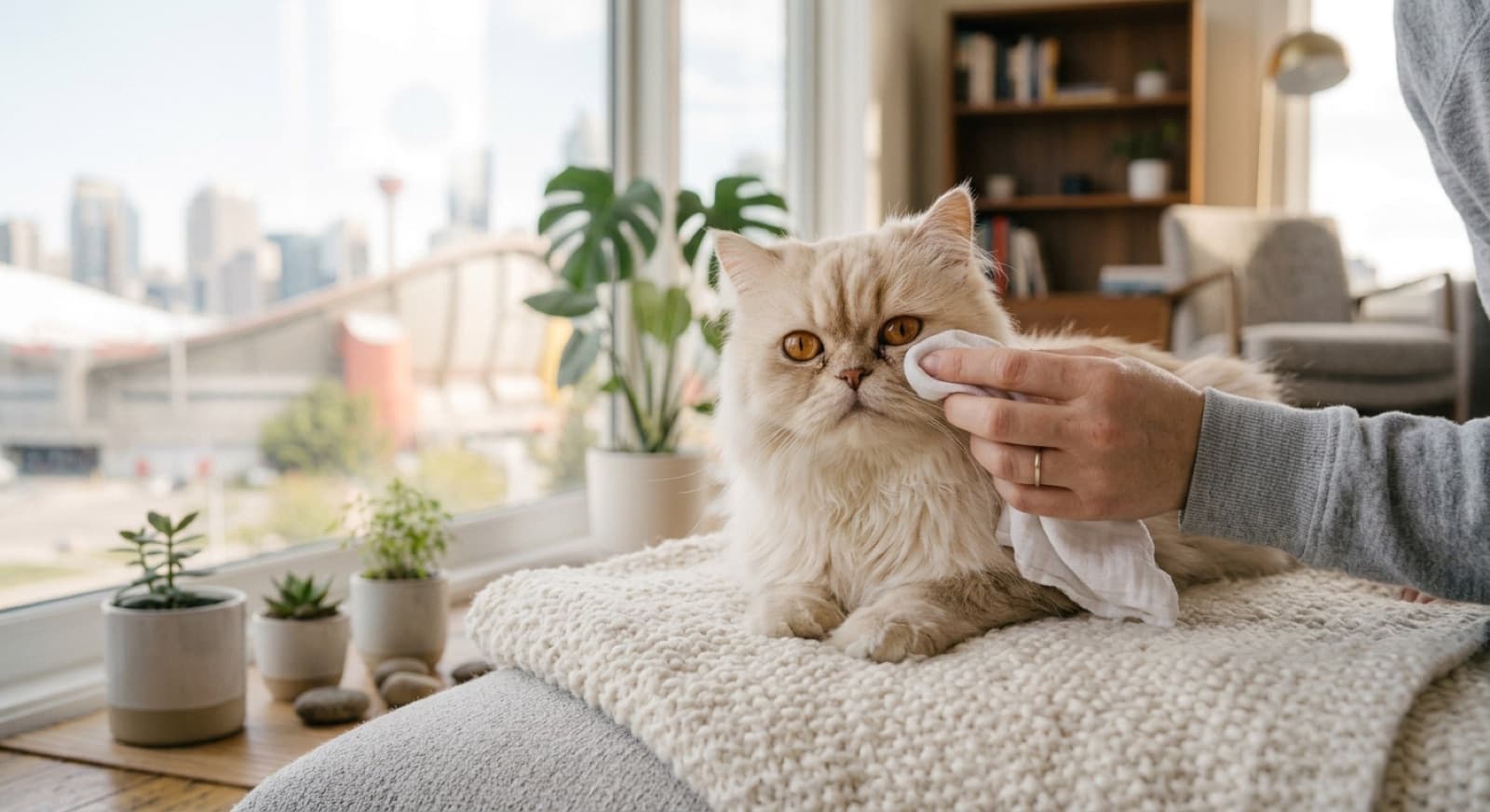
Persian eyes need daily attention, and it is a job you will do for the life of the cat. The flat face changes the shape of the eye socket and the drainage system, so tears do not run away down the ducts the way they should. Instead they overflow onto the face. That is why so many Persians have permanently wet, reddish-brown stained fur below the inner corner of each eye. It is not dirt and it is not usually painful on its own, but it needs managing to keep the skin underneath healthy.
A few specific eye conditions turn up more in the breed. Blocked tear ducts make the overflow worse. Some Persians have entropion, where the eyelid rolls inward so the lashes and fur rub against the surface of the eye, which is irritating and can damage it. The eyes can also be more exposed and prone to corneal ulcers, a painful graze or sore on the surface of the eye. None of these are things to guess at or treat yourself.
Daily care is simple. Wipe the area under and around the eyes gently with a clean, damp cloth or a vet-approved eye wipe, using a fresh section for each eye, and keep the fur trimmed if your vet or groomer suggests it. What matters is knowing when routine tearing has become a problem. Squinting, holding an eye shut, pawing or rubbing at the face, cloudiness, redness, swelling or thick yellow-green discharge all mean a vet visit, not a wait-and-see. Our companion guide on Persian grooming and care covers the daily eye and coat routine in detail.
Heat is dangerous for a Persian in Brisbane
This is a Brisbane-specific warning that deserves its own section. A Persian is one of the least heat-tolerant cats you can own, and it is not close. It has two problems stacked on top of each other: a flat face that makes breathing and cooling harder, and a long, dense coat that holds heat in. Cats already cool themselves far less efficiently than people do, and a brachycephalic cat is worse again. Brisbane summers are hot and humid, and high humidity makes it even harder for a cat to shed heat, so a hot, still room can be genuinely dangerous for this breed.
On hot days, keep your Persian indoors in the coolest part of the home, with shade, fresh water and airflow or air-conditioning. Never leave it anywhere that can heat up fast, like a car, a laundry, a sunroom or an enclosed balcony. Keeping the coat well groomed and free of mats helps a little, and many Brisbane owners keep a Persian in a shorter clip through summer, but do not shave a Persian without veterinary advice, as the coat also offers some protection. Daily grooming and coat management are covered in the grooming guide linked above.
Emergency: a flat-faced cat in the heat
Overheating is a life-threatening emergency, and a flat-faced Persian is at high risk on a hot, humid Brisbane day. Warning signs include panting or open-mouth breathing, heavy drooling, restlessness, a bright red tongue or gums, wobbliness, vomiting, or collapse. A cat breathing with its mouth open is never normal and always serious.
If you see these signs, move the cat somewhere cool, offer water, and get to a vet immediately, day or night. Ring ahead on the way. In Brisbane, the Animal Emergency Service runs 24-hour hospitals at Jindalee and Underwood. Do not wait to see if the cat settles. With heat and breathing distress, minutes matter.
PKD: the kidney disease to understand
If the flat face is the outside health story, PKD is the inside one, and it is the most important internal disease to know about in this breed. PKD stands for polycystic kidney disease. It is an inherited condition, strongly associated with Persians and Persian-cross cats, where fluid-filled cysts form in the kidneys. Over months and years those cysts can grow and gradually reduce how well the kidneys work, which can eventually lead to kidney failure.
The tricky part is that PKD is usually silent for a long time. A young cat can carry it with no signs at all. The signs that do appear later are the classic ones of kidney trouble: drinking much more water than usual, urinating more, losing weight, eating less, and low energy. Because it is inherited, a DNA test for the gene exists, and reputable breeders screen their breeding cats so they do not pass it on. A known history is one more reason a cat with paperwork or an honest rescue assessment is worth having.
For an adopter, the plan is straightforward. Ask the rescue whether the cat has been DNA tested or had kidney bloods, then raise PKD with your own vet at the first visit. If you ever notice your cat drinking or urinating much more than usual, book a vet visit, because a simple blood and urine test, and sometimes an ultrasound, can check kidney health. Kidney disease of any kind is far more manageable when it is caught early, so routine checks are the point. This article names no medications on purpose, because managing kidney disease must be tailored to the individual cat by your vet.
Other health issues to know
A few more conditions turn up in the breed. None should put you off a Persian. They are simply things to be aware of so you can act early.
HCM (heart disease). Hypertrophic cardiomyopathy, where the heart muscle grows abnormally thick, is the most common heart disease in cats and is seen in Persians among other breeds. It is often silent early, and a vet may pick up a murmur on a routine check, with a cardiac ultrasound confirming it. The most serious complication is a blood clot that lodges in the back legs. Sudden hind-leg weakness or paralysis, crying out, cold paws or pale foot pads, along with fast or open-mouth breathing, is a life-threatening emergency that means a vet immediately.
PRA (an eye disease). Progressive retinal atrophy is an inherited condition where the retina slowly degenerates, leading to gradual vision loss over time. Cats cope with fading sight remarkably well in a familiar indoor home, but any change in your cat's vision or eyes is worth raising with your vet.
Dental and skin-fold issues. The crowded flat jaw makes dental disease more likely, so watch for bad breath, drooling, pawing at the mouth or eating on one side, and have the mouth checked at every visit. The facial skin folds can also trap moisture and debris, which matters more in Brisbane's humid air, so keeping the face clean and dry is part of the daily routine.
Urinary problems and the blocked-male emergency
Persians, like all cats, can develop feline lower urinary tract disease (FLUTD), a group of bladder and urethra problems. Being overweight and not drinking enough both raise the risk, which is one more reason to keep your cat lean and its water fresh, and to make sure fresh water is always available through a hot Brisbane summer. Watch for straining in the litter tray, frequent small visits, blood in the urine, crying while toileting, and over-grooming the belly or back end. Litter tray changes are often the first clue that something is wrong.
Emergency: a straining male cat may be blocked
A male cat who is straining in the litter tray but passing little or no urine may have a urinary blockage. This is a true emergency that can become fatal within about a day. Signs include repeated trips to the tray with nothing to show, crying, a hard or painful belly, restlessness, and vomiting. If you see this, get to a vet immediately, day or night. Do not wait to see if it clears on its own.
Why adopting is not a health disadvantage
Some people assume a rescue Persian is a gamble on health. With this breed it can actually be the safer bet. Every cat adopted through a Brisbane rescue is desexed, vaccinated, microchipped, FIV tested, wormed, flea treated and given a vet check before it goes home. For a Persian, that check will note the eyes, the breathing and the coat condition, and the rescue passes on what the foster carer has seen, because a good match is the whole point.
There are two extra advantages. First, many rescue Persians are adults, so their breathing, eyes and temperament are a known quantity rather than a guess, and an adult doll-face Persian may have far fewer extreme flat-face problems than a young peke-face kitten. Second, a standard rescue check does not always include a DNA test for PKD or a cardiac ultrasound, so the smart move is to ask what has been done and then raise PKD, the heart, the breathing and the eyes with your own vet at the first visit. Compare that with buying a kitten privately, where none of the vet work is done and the history can be thin. For where to look and what a Persian adoption involves, see our Persian adoption guide for Brisbane.
Browse adoptable Persian cats in Brisbane
A rescue Persian comes vet checked, desexed and microchipped, and the foster notes tell you about temperament, breathing, the eyes and any health history. Browse the ones available now across Brisbane and Queensland rescues.
See Available Persians →Keeping a Persian healthy in Brisbane
A Persian is a higher-maintenance cat than most, but the care is all routine once it is a habit. None of it is complicated, and all of it helps a flat-faced cat live a long, comfortable life.
- Groom and wipe the eyes daily. Brush the coat every day to prevent painful matting, and wipe the eye area with a clean, damp cloth to control tear-staining and skin infection.
- Keep them cool. A flat-faced, long-coated cat overheats easily in a hot, humid Brisbane summer. Keep it indoors in the coolest part of the home with shade, water and airflow, and never anywhere that can heat up.
- Keep them indoors or contained. Indoor cats avoid traffic, cat fights, cane toads and ticks, and they live longer. See our indoor versus outdoor cats guide.
- Watch the breathing. Noisy breathing at rest, open-mouth breathing or heat intolerance is a reason to see the vet, not something to accept as normal.
- Regular vet checks. Once a year for adults, twice a year for seniors. This is how PKD, HCM, dental disease and eye problems get caught early.
- Year-round parasite and tick prevention. Use a cat-safe, vet-recommended product every month, all year. Never use a product made for dogs, as some are fatal to cats.
- Feed for a healthy weight. Measured meals and a good-quality diet keep a cat lean, which protects the joints, urinary system and heart.
The Brisbane paralysis tick point
One South East Queensland risk deserves its own note. The paralysis tick is present year-round across the Brisbane region and along the coast, and it can be fatal to cats. Even indoor cats are not fully out of reach if you live near bushland or take your cat outside, so year-round prevention matters here more than in many places.
The critical safety rule is to use a product made and dosed for cats. Several tick and flea products designed for dogs are toxic, even fatal, to cats, so never share a dog's product or guess. Ask your vet for a cat-safe option and the right routine for where you live. If you ever find a tick, or your cat becomes wobbly, weak in the back legs, or starts breathing oddly, treat it as an emergency and get to a vet straight away.
When to see the vet urgently
Most Persian health issues are manageable when caught early, but a few signs mean you should not wait. Get to a vet or emergency clinic immediately if you see any of the following:
- Panting, open-mouth or laboured breathing, or any sign of overheating on a hot day.
- Sudden weakness or paralysis in the back legs, crying, or cold paws (a possible clot from HCM).
- A male cat straining in the litter tray but passing little or no urine (a possible blockage).
- A painful, squinting, cloudy, red or swollen eye, or one held shut (a possible ulcer or injury).
- Collapse, sudden lethargy, or a cat that will not eat or drink.
- Signs of a tick, especially wobbliness, weakness or a changed voice.
For anything less dramatic, like increased thirst, weight change, bad breath, mild eye discharge or a few litter tray misses, book a normal vet appointment soon rather than waiting for it to worsen. Your vet is the right person to diagnose and treat these conditions, and this article names no medications on purpose, because heart, kidney, eye and urinary care must be tailored to the individual cat.
Frequently Asked Questions
What health problems do Persian cats have?
The defining ones come from the flat face: breathing difficulty, dental crowding, and eye problems including heavy tearing, tear-staining, blocked tear ducts and sometimes eyelids that roll inward. The more extreme the flat peke-face look, the worse these tend to be. Persians also carry a strong link to the inherited kidney disease PKD, which a DNA test can screen for. Other issues seen in the breed include the heart disease HCM, the eye disease PRA, and dental disease with age. Heat is a real danger for a flat-faced, long-coated cat in a hot, humid Brisbane summer. Most Persians live into their mid-teens with good, attentive care.
Do Persian cats have breathing problems?
Often, yes, and it comes down to the shape of the skull. Persians are brachycephalic, meaning the face and nose are pushed in and shortened, which narrows the airway. That can cause noisy or laboured breathing, snoring, snorting and poor tolerance of exercise and heat. The flatter the face, the more affected the cat usually is. Older doll-face or traditional Persians, whose faces are less extreme, tend to breathe far more easily than modern peke-face cats. If your Persian is breathing hard at rest, breathing with its mouth open, or struggling in the heat, treat it as urgent and see a vet, because open-mouth breathing in a cat is never normal.
What is PKD in Persian cats?
PKD stands for polycystic kidney disease, an inherited condition strongly associated with Persians, where fluid-filled cysts form in the kidneys and can slowly reduce kidney function over years. Early on there are usually no signs at all. Later ones include drinking and urinating much more than usual, weight loss and a poor appetite. A DNA test for the gene exists, and reputable breeders screen their breeding cats, which is why a known history helps. For an adopter, the practical step is simple: if your cat starts drinking or peeing a lot more, book a vet visit, because a blood and urine test can check kidney health and early care makes a real difference.
Why do Persian cats have eye and tear-staining problems?
The flat face changes the shape of the eye socket and the tear ducts, so tears do not drain normally and spill down the face instead. That is why so many Persians have wet, stained fur below the inner corners of the eyes, often a reddish-brown tear-staining. The same facial shape can leave the eyes more exposed and prone to blocked tear ducts, and some Persians develop entropion, where the eyelid rolls inward and the lashes rub the eye, or corneal ulcers. Gentle daily eye wiping with a clean, damp cloth helps keep the area clean. Any squinting, pawing at the eye, cloudiness, redness or thick discharge is a reason to see your vet, not something to wait out.
How long do Persian cats live?
Many Persians live into their mid-teens when they are kept indoors, kept at a healthy weight, groomed daily and seen by a vet regularly. Lifespan varies a lot from cat to cat, so treat any single number with caution. The flat-faced traits, kidney disease and dental problems can shorten life if they are ignored, which is exactly why attentive care matters more for this breed than for a sturdier cat. Indoor living helps, because it removes the traffic, cat fights, cane toads and paralysis tick risks that cut outdoor cats' lives short in Brisbane. Regular checks that catch kidney or heart problems early are one of the biggest levers you have.
Are Persian cats sensitive to heat?
Yes, and in Brisbane it is one of the most important things to manage. A Persian has two strikes against it in the heat: a flat face that makes breathing and cooling harder, and a long, dense coat that traps warmth. Cats cool themselves far less efficiently than people do, a brachycephalic cat is worse again, and Brisbane's high summer humidity makes shedding heat harder still. On hot Brisbane days, keep your Persian indoors in the coolest part of the home, provide shade, fresh water and airflow, and never leave it anywhere that can heat up, like a car or a sunroom. A cat that is panting, drooling, breathing with its mouth open, wobbly or collapsed may be overheating, and that is an emergency needing a vet straight away.
Do rescue Persian cats come health checked?
Yes. Brisbane rescues desex, vaccinate, microchip, FIV test, worm and flea treat every cat and give it a vet check before adoption, and for a Persian that check will note the eyes, breathing and coat condition. What a standard rescue check does not always include is a DNA test for PKD or a full cardiac ultrasound, so the smart move is to ask the rescue what has been done and raise PKD, breathing and the eyes with your own vet at the first visit. An adult or doll-face rescue Persian may actually have fewer extreme flat-face problems than a young peke-face kitten. Adopting gives you a vetted cat and an honest history.
How do I keep my Persian healthy?
Keep them indoors and cool, groom and wipe the eyes daily, and book regular vet checks, once a year for adults and twice a year for seniors. Daily coat brushing prevents painful matting, and a quick wipe of the eye area keeps tear-staining and skin infection down. Watch the breathing and never let a flat-faced cat overheat in a Brisbane summer. Feed a measured, good-quality diet to avoid extra weight, and use a cat-safe, vet-recommended parasite and paralysis tick product all year, never one made for dogs, as some are fatal to cats. Raise PKD, the heart and any breathing, eye or toileting changes with your vet early.
Keep reading
Adoptable Persians in Brisbane
Live listings of Persians and Persian crosses across Brisbane and Queensland rescues.
Persian Adoption in Brisbane
Where to adopt a Persian, what it costs, and how to spot a genuine rescue over a scam.
Persian Grooming and Care
The daily coat, eye and face routine that keeps a Persian comfortable and healthy.
All Cat Adoption Resources
Guides on adopting, settling in and caring for a rescue cat in Brisbane and Queensland.