The short answer
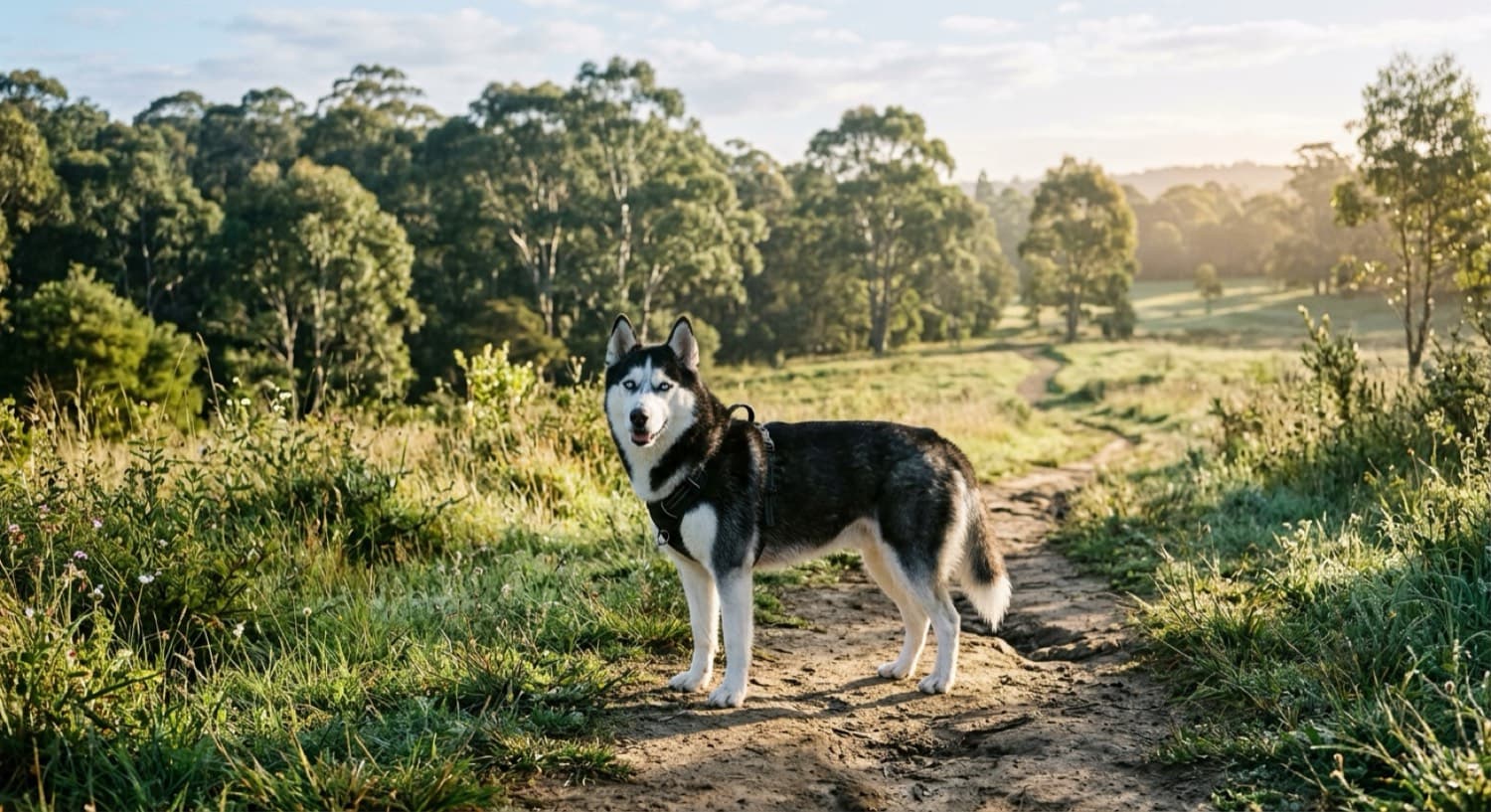
Huskies come up through Wollongong City Council's own adoptions, the RSPCA NSW Illawarra Shelter at Unanderra and Shellharbour City Council's dog adoptions. RSPCA NSW lists $500 for an adult dog, and councils set their own fees. The catch is the commitment. A Husky is a working sled dog that needs one to two hours of exercise a day, a securely fenced yard and plenty of mental work, or it becomes destructive, vocal and a talented escaper. Prey drive makes cats and small pets a real question. On the humid coast, summer means cool-hour walks and never a clipper, and paralysis tick prevention runs all year. It is not a first dog for most people.
Why Huskies end up in rescue
Understanding why Huskies are surrendered is the best preparation for adopting one, because almost every reason is a mismatch with the owner rather than a fault in the dog.
Underestimated energy. This is the big one. A Husky is a sled breed built to run for hours, and people who choose the looks are often unprepared for the exercise. An under-exercised Husky becomes destructive, noisy and restless, and an overwhelmed household gives up.
Escaping. Huskies climb, dig and bolt, and a loose Husky runs and does not look back. Owners who did not escape-proof the yard lose the dog repeatedly and give up. This is hardwired wanderlust, not naughtiness, which is why secure fencing is non-negotiable.
The coat and the climate. Huskies shed year-round and blow their entire undercoat twice a year. On the warm NSW coast, some owners also find the summer heat management harder than they expected.
Prey drive. The strong instinct to chase makes many Huskies a poor match for homes with cats, rabbits or backyard chickens, and a problem with a resident small animal sometimes ends in a surrender.
The dogs themselves are almost always friendly, sociable and sound. When you read a surrender note, ask how much exercise the dog has been getting, how it copes with being alone, and whether it has a history of escaping.
Where to look in the Illawarra
In the Illawarra two councils rehome dogs directly, which is different from most of Sydney. Watch these regularly and be patient about the match:
- Wollongong City Council. The council rehomes dogs and cats from its Find a Pet page, with animals boarded at regional kennels the council contracts. Its adoption questions page explains the process: register interest on the pet's profile, answer some follow-up questions, then meet the dog before the adoption is finalised. That meet and greet is the time to ask about escaping and energy.
- RSPCA NSW Illawarra Shelter. At Unanderra, rehoming dogs alongside many other animals. See its shelter page. It takes in injured strays only; an uninjured lost dog goes to the council.
- Shellharbour City Council. Its dog adoptions run through a contracted impound facility, with meet and greets typically held at Warilla Dog Park and a 7-day cooling-off period, which is useful with a breed this demanding.
- Rescues elsewhere in NSW. Breed-specific rescues exist in NSW. Before you apply, check the group is registered as a rehoming organisation, has a real address and a current list of dogs, before you send money.
Our Wollongong rescue guide covers each local option. Browse the current Huskies and Husky crosses on the Wollongong Husky listings, which update regularly from the shelters and rescues we track.
What Husky adoption costs
RSPCA NSW lists $500 for an adult dog and $620 for a puppy. NSW rescue fees for adult dogs generally sit around $400 to $650, and Wollongong and Shellharbour councils set their own fees, so check the listing. The fee normally includes desexing, vaccination and microchipping.
Registration is the easy part. A desexed dog from an eligible council pound, shelter or approved rehoming organisation registers for life on the NSW Pet Registry for $0, against $84 otherwise for a desexed dog. Our Wollongong registration guide has the detail. The costs particular to a Husky are containment and coat care: fencing it cannot climb or dig under, a strong harness and long-line, and a good de-shedding brush. Ongoing costs are food, routine vet care, year-round paralysis tick, flea, worm and heartworm prevention, and pet insurance if you choose it.
Browse adoptable Huskies around Wollongong
Huskies come into NSW rescue steadily. Browse current listings and check back so you can apply when the right dog appears.
See Available Huskies →The Husky reality, in brief
A Husky needs one to two hours of real exercise a day and a securely fenced, escape-proof yard, because the breed climbs, digs and bolts and has an unreliable recall. It sheds heavily and blows its coat twice a year. On the Illawarra coast the summer heat and humidity call for shade, water and cool-hour walks, never a clipper. The strong prey drive makes cats and small pets a real consideration.
None of this makes a Husky a bad dog; it makes it a demanding one that rewards the right home. We cover exercise, containment and escape-proofing in our Husky exercise and escape guide, and the coat, heat, ticks and medical picture in our Husky health guide.
What a Husky is like to live with
In the right home a Husky is a wonderful dog. They are friendly, sociable and pack-oriented, usually great with people and other dogs, playful and comical, and famously talkative, howling and “chatting” more than barking. They are not guard dogs; a Husky is more likely to greet an intruder than challenge one.
The other side is that a Husky is independent rather than eager to please, so training takes patience and reward-based methods, and the prey drive means care around small animals. This is a dog for an active household that enjoys the outdoors, has a secure yard, and wants a spirited companion rather than an easy one.
Heat, ticks and the law on the NSW coast
Heat. The Illawarra has a humid coastal climate with hot summer days. A double-coated dog heats up fast, and humid air makes panting less effective. Through summer, walk early and late, keep shade, water and a cool indoor space available, and never leave a Husky in a parked car. The RSPCA heatstroke guide lists the warning signs.
Paralysis ticks. The tick lives along the whole NSW coast, and the escarpment bushland is typical habitat. The risk runs all year, peaking from about August to February. Keep prevention going and search the thick coat down to the skin after bush walks.
Emergencies. During business hours, call your regular vet. After hours, the Animal Referral Hospital Wollongong at Fairy Meadow runs an after-hours emergency service for the Illawarra and South Coast.
The law. The Husky is not a restricted breed under the Companion Animals Act 1998. On scams, a cheap or free Husky with a story about a deposit or transport fee is the classic setup Scamwatch warns about. Match the microchip number to the dog in person before paying anything.
Frequently Asked Questions
Where can I adopt a Husky near me in Wollongong?
Start with Wollongong City Council, which rehomes dogs itself through its Find a Pet page, the RSPCA NSW Illawarra Shelter at Unanderra, and Shellharbour City Council's dog adoptions. Huskies and Husky crosses come through because the breed is so often surrendered. Breed-specific rescues also exist in NSW; before you apply, check the group is registered as a rehoming organisation. Watch the listings regularly, but do not rush: a careful match to an active home is what stops a Husky being surrendered again.
Why are so many Huskies in rescue?
Because people adopt the look and underestimate the dog. A Husky is a high-energy sled breed that needs hours of exercise, a secure escape-proof yard and a lot of mental work, and without them it becomes destructive, vocal and a determined escaper. The classic pattern is a striking puppy that grows into a demanding adult the household cannot keep up with. Add the heavy shedding and a strong prey drive that makes cats and small pets difficult, and Huskies end up given up far more often than their friendly nature deserves.
How much does it cost to adopt a Husky in Wollongong?
RSPCA NSW lists $500 for an adult dog and $620 for a puppy, and NSW rescue fees for adult dogs generally sit around $400 to $650. Wollongong City Council and Shellharbour City Council set their own fees, so check the dog's listing. The fee normally covers desexing, vaccination and microchipping, and a desexed dog from an eligible council pound, shelter or approved rehoming organisation registers for $0 on the NSW Pet Registry. Budget separately for secure fencing, often the biggest first cost for this breed.
Are Huskies good for first-time dog owners?
For most first-time owners, no. Huskies are high-energy, strong-willed, independent escape artists that need experienced handling, serious daily exercise and secure containment. A committed first-time owner who has researched the breed, lives an active life, has a securely fenced yard and can give one to two hours of exercise a day can succeed, but it is an honest challenge. If this is your first dog and you are unsure, talk it through with the shelter or rescue before you fall for a face.
Are Huskies good with children and other pets?
With people and other dogs, usually yes. Huskies are friendly, social, pack-oriented dogs that are typically good with children and get on well with other dogs. The serious caution is prey drive: Huskies have a strong instinct to chase, so cats, rabbits, chickens and other small animals are often a poor match, even when the dog was raised with them. If you have small pets, discuss it frankly with the shelter and be guided by the individual dog's assessment.
Can a Husky cope with the humid Illawarra summer?
Yes, with management, but it is the part of Husky ownership that needs the most planning on the NSW coast. The double coat insulates against heat as well as cold, so never shave it. Humid air makes panting less effective, so a Husky can overheat on a day that does not feel extreme. Exercise only in the early morning or late evening through summer, keep shade, water and a cool indoor space available, and treat heavy panting, thick drool, weakness or collapse as an emergency.
Do Huskies need paralysis tick prevention in Wollongong?
Yes. The Australian paralysis tick lives along the whole NSW coast, and the bushland of the Illawarra escarpment is typical habitat. The risk runs all year, with a peak from about August to February, and the toxin can be fatal without veterinary treatment. Keep a vet-recommended prevention product going all year, and part the thick Husky coat down to the skin to check for ticks after bush walks, because the coat hides them well.
Can a Husky be off-lead in Wollongong?
Only in a fully fenced space, and only where the council allows dogs off-lead. Huskies have a powerful drive to run and a notoriously unreliable recall, so a loose Husky keeps going and is a real danger near roads. Each Illawarra council declares its own off-lead areas, so check Wollongong, Shellharbour or Kiama council lists, and treat any unfenced area as long-line territory. Our Husky exercise and escape guide covers containment in detail.
Should I adopt a Husky puppy or an adult?
For most households, an adult. A Husky puppy is a huge amount of work and gives you no reliable read on adult energy or temperament, and Husky adolescence stacks energy, escaping, chewing and independence all at once. An adult has a settled temperament the shelter can assess, known habits and a known medical history, and you can see whether this individual dog suits your home. Senior Huskies are often calmer and suit an active owner who no longer wants a whirlwind.
Are Huskies restricted in NSW?
No. The five restricted breeds in NSW are the American Pit Bull Terrier, Dogo Argentino, Japanese Tosa, Fila Brasileiro and Perro de Presa Canario. The Siberian Husky is not on that list and is legal to own and rehome normally. Like any NSW dog, it must be microchipped by 12 weeks and registered for life on the NSW Pet Registry by 6 months.
Keep reading
Adoptable Huskies in Wollongong
Current listings of Huskies and Husky crosses, with filters for age and household fit.
Husky Exercise & Escape in Wollongong
The exercise needs, the escape-artist reality, and how to escape-proof an Illawarra yard.
Husky Health Issues in Wollongong
Eyes, skin and thyroid, the coat, coastal heat and paralysis ticks.
Dog Rescues in Wollongong
Council adoptions, the RSPCA Illawarra Shelter and how each one works.
Wollongong Dog Guides
Registration, desexing, off-lead areas and more for Illawarra dog owners.
Dog Adoption in Wollongong
Every adoptable dog we track from Illawarra and NSW shelters and rescues.