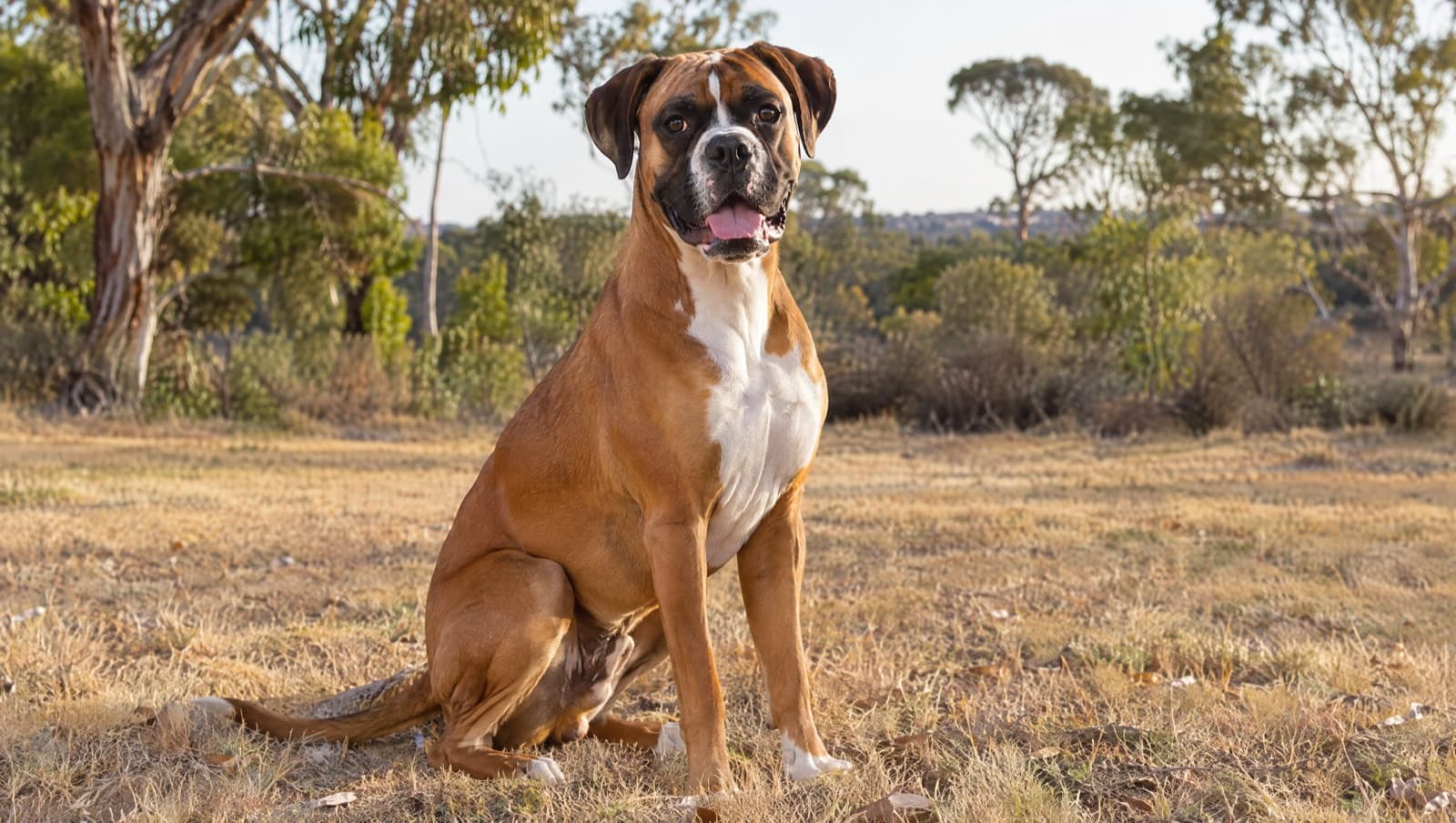
The short answer
Look first at Wollongong City Council's Find a Pet page, the RSPCA NSW Illawarra Shelter at Unanderra and Shellharbour City Council's dog adoptions. RSPCA NSW lists $500 for an adult dog and $620 for a puppy, and councils set their own fees. Most rescue Boxers are one to seven years old. They need around 90 minutes of exercise a day, pet insurance from day one, and a home ready for a big, affectionate, bouncy dog. On the Illawarra coast the seasonal risks are hot, humid summer days and paralysis ticks, which are a year-round concern near the escarpment bushland.
Why Boxers end up in rescue
Boxers are a popular family breed in Australia, and that popularity feeds a steady flow into rescue. Most surrenders come down to the wrong home rather than a problem dog.
Energy and bounce were underestimated.
A Boxer puppy looks calm in photos. An adolescent Boxer (eight months to three years) is a 25 to 35 kg dog that jumps on visitors, sprints laps of the house and leans on everyone it loves. Families who expected a settled dog from day one often give up during this stage. Most Boxers grow into much calmer adults by three or four.
The dog outgrew the household.
A young Boxer can drag a teenager down the footpath and knock a toddler over with pure enthusiasm. Homes with small children or smaller adults sometimes find the dog overwhelming once it reaches full size, even when its temperament is lovely.
Life changed.
Separation, a new baby, illness, a move, and older owners who can no longer manage a strong dog all bring adult Boxers into rescue. These dogs are often well loved and well trained, and simply need a second home.
Where to look in the Illawarra
The Illawarra works a little differently from Sydney, because two local councils rehome dogs directly. Check these regularly, since a good Boxer is often adopted soon after it is listed:
- Wollongong City Council. The council rehomes dogs and cats from its Find a Pet page. Since 2024 its animals have been boarded at regional kennels the council contracts rather than one dedicated shelter. According to its adoption questions page, you register interest on the pet's profile, answer some follow-up questions, then meet the dog before the adoption is finalised.
- RSPCA NSW Illawarra Shelter. Based at Unanderra, it rehomes dogs along with cats and other animals. Browse its shelter page. It takes in injured strays only, so it is not the council pound.
- Shellharbour City Council. Its dog adoptions run through a contracted impound facility, with meet and greets typically held at Warilla Dog Park and a 7-day cooling-off period after you take a dog home.
- Rescues elsewhere in NSW. Breed-specific rescues exist in NSW. Before you apply, check the group is registered as a rehoming organisation and has a real, current list of dogs.
Do not skip Boxer crosses (Boxer and Staffy, Boxer and Mastiff types) when you search. A cross often shares the Boxer's clownish, people-loving personality. Our Wollongong rescue guide covers every local option in more detail, and the Wollongong Boxer listings collect current Boxers from the shelters and rescues we track.
The cost comparison
Rescue comes out well ahead. How the first-year costs compare:
| First-year cost | Rescue Boxer | Breeder Boxer |
|---|---|---|
| Adoption fee or purchase price | About $400 to $650 for an adult (RSPCA NSW $500) | Far higher |
| Desexing | Included | Paid separately |
| Microchipping | Included | Usually done by the breeder |
| First vaccinations and vet check | Included | Paid separately |
| NSW lifetime registration (desexed dog) | $0 from an eligible pound, shelter or rehoming organisation | $84 |
| Food (large breed) | Same either way | Same either way |
| Paralysis tick, flea, worm and heartworm prevention | Same either way | Same either way |
| Initial gear (large bed, lead, crate, bowls) | Same either way | Same either way |
| Reward-based training class | Same either way | Same either way |
| Pet insurance (genuinely recommended) | Same either way | Same either way |
Rescue saves money up front because the purchase price is far higher and the rescue has already paid for desexing, vaccinations and the first vet check. Food, parasite prevention, gear, training and insurance cost the same either way, so get current quotes before you budget. Fees change, so check the current figures on the dog's listing and on the NSW Pet Registry. Pet insurance is worth it for this breed, because heart conditions and cancers are more common in Boxers. Our Boxer health guide covers what to plan for.
Browse Boxers available around Wollongong
Current listings from Illawarra and NSW shelters and rescues. Shelter and carer notes describe energy and family fit before you apply.
See Available Boxers →White Boxers and deafness
White Boxers are born regularly in the breed. The white coat comes from the same gene that produces flashy white markings on fawn and brindle Boxers, taken to its extreme. That coat pattern is linked with a higher rate of congenital deafness, so a white Boxer is more likely to be deaf in one or both ears than a coloured one. Most still hear normally.
- Hearing is checked and noted. Rescues flag known deafness on the listing, and your vet can assess it.
- Deaf Boxers make fine pets. Reward-based training with hand signals works well, and deaf dogs tend to watch their people closely.
- Sun protection matters on the coast. White Boxers can burn on the nose, ears and belly, so keep them in shade through the middle of a summer day.
- Otherwise a normal Boxer. Same temperament, same energy, same breed health risks.
What to expect from a rescue Boxer
- One to seven years old. Young adults (one to three) are the most common, from energy-mismatch surrenders.
- 25 to 35 kg as an adult. Males usually sit at the heavier end.
- Mostly house-trained. Some need a refresher in a new home.
- Lead-trained, with variable manners. Many young Boxers pull; reward-based training sorts this out within weeks.
- Friendly with people. Most are confident and social. Dogs with reactivity are flagged in listings.
- Variable with other dogs. Many Boxers love dog company, but some are selective, especially with same-sex dogs. Read the notes.
- Clownish. The defining Boxer trait, and it usually survives even a rough start in life.
Expect a quiet first fortnight while the dog decompresses, then the real Boxer arrives. The 3-3-3 rule is a useful guide: three days to decompress, three weeks to start showing personality, three months to fully settle. If you adopt through Shellharbour City Council, its 7-day cooling-off period gives you a first week to see how the dog fits.
The first week home
Day 1:
- Bring the dog home in daylight
- Show them their bed, food and water straight away
- Boxer-proof the kitchen: food off benches, a bin lid that latches
- Skip visits from friends and extended family for now
- A short, calm walk around the block
Days 2 to 3:
- Two walks a day, 20 to 40 minutes each, in the cooler part of the day
- Set a meal routine with measured portions
- Start simple reward-based training (name, sit, recall on lead)
- Use a slow-feeder bowl, since Boxers gulp food and are a deep-chested breed
Days 4 to 7:
- Longer walks (30 to 45 minutes) morning and evening
- First vet visit: weight, heart listen, joint check, and a plan for paralysis tick, flea, worm and heartworm prevention
- Start short alone-time practice (5 to 30 minutes)
- Introduce other family members and family dogs slowly
Weeks 2 to 4:
- Build towards 90 minutes of exercise a day, split across morning and evening
- Join a reward-based training class; Boxers love training that feels like play
- Add mental work (puzzle feeders, scent games)
- Off-lead time only once recall is reliable, and only in a council-declared off-lead area
Boxers and Illawarra living
- House and yard. A Boxer is happiest with a yard and easy outdoor access. Apartments can work with serious daily exercise away from home.
- Hot, humid summer days. The shorter Boxer muzzle means the breed overheats faster than long-nosed dogs, and humid coastal air makes panting less effective. Walk at dawn or after dark on hot days, or skip the walk. Our Boxer exercise and heat guide has the full routine.
- Paralysis ticks. The Australian paralysis tick lives along the whole NSW coast, and the bushland of the Illawarra escarpment is typical habitat. It is a year-round risk with a peak from about August to February, so keep a vet-recommended prevention product going and check the dog after bush walks.
- Off-lead space. Each council declares its own off-lead areas. Wollongong City Council keeps its list on its off-leash dog parks page, and our Wollongong dog parks guide explains how the rules work.
- Renting. Check your lease and talk to your landlord before you adopt. NSW Fair Trading explains the rules for renting with a pet. In apartments, check strata by-laws too.
Registering your Boxer in NSW
Under the Companion Animals Act 1998, every dog in NSW must be microchipped by 12 weeks and registered by 6 months on the NSW Pet Registry. It is a one-time lifetime fee, not a yearly bill, and it is the same in Wollongong as anywhere else in the state. A desexed dog from an eligible council pound, shelter or approved rehoming organisation registers for $0. Our Wollongong dog registration guide walks through the steps.
Boxers are not a restricted breed in NSW. The restricted list covers five breeds, including the American Pit Bull Terrier, and the Boxer is not one of them.
If you buy from a breeder or a private seller
- Check the microchip. Ask for the microchip number and match it to the dog in front of you before you pay.
- Meet the puppy and its mother in person. A seller who avoids visits is hiding something.
- Ask for health testing on the parents. Heart screening matters most in Boxers, plus hip and elbow scoring.
- Be wary of “mini Boxers.” There is no recognised miniature Boxer; the label usually means a cross sold at a premium.
- Watch for scams. A cheap Boxer that needs a deposit or transport fee before you see it is the pattern Scamwatch warns about.
Frequently Asked Questions
Can you find a Boxer to adopt in Wollongong?
Yes, though not every week. Boxers and Boxer crosses come up through Wollongong City Council's own adoptions, the RSPCA NSW Illawarra Shelter at Unanderra and Shellharbour City Council's dog adoptions, as well as rescues elsewhere in NSW. Most are adolescents or adults whose household underestimated the breed's energy or size. Purebred Boxer puppies are uncommon in rescue. Check the listings often and be ready to apply when the right dog appears.
Why do Boxers end up in rescue?
Mostly a mismatch with the household, not a bad dog. People expect a calm family dog and get a bouncing adolescent that jumps, pulls and clears the coffee table with its tail. A young Boxer is strong enough to knock over a toddler or drag a smaller handler. Some owners also surrender when they meet the breed's vet costs, since heart conditions and cancers are more common in Boxers. In the right home the same dogs are devoted, funny companions.
How much does it cost to adopt a Boxer in Wollongong?
RSPCA NSW lists $500 for an adult dog and $620 for a puppy, and NSW rescue fees for adult dogs generally sit around $400 to $650. Wollongong City Council and Shellharbour City Council set their own fees, so check the dog's listing. Desexing, microchipping and vaccination are normally included. A desexed dog from an eligible council pound, shelter or approved rehoming organisation also registers for $0 on the NSW Pet Registry, against $84 otherwise for a desexed dog.
Are Boxers good family dogs?
Most Boxers are excellent with their own family and patient with children they know. The catch is physical: a young Boxer is boisterous and can flatten a small child by accident. Boxers aged four and over are usually calmer around young kids. Shelter and foster notes on each listing describe how the individual dog has gone with children, so read them closely and ask questions at the meet and greet.
Are white Boxers different from regular Boxers?
Only in coat and hearing risk. White Boxers are more likely than fawn or brindle Boxers to be deaf in one or both ears, but most hear normally and all share the same temperament. A deaf Boxer can be a wonderful pet with reward-based training using hand signals. White Boxers also burn easily on thin-coated skin, so keep them out of strong midday sun on Illawarra summer days.
Are Boxers a restricted breed in NSW?
No. The five restricted breeds in NSW are the American Pit Bull Terrier, Dogo Argentino, Japanese Tosa, Fila Brasileiro and Perro de Presa Canario. The Boxer is not on that list, so a Boxer or Boxer cross is adopted, registered and rehomed like any other dog.
Are Boxers good for first-time owners?
An adult Boxer, often yes. A young adolescent, often no. The breed is friendly and trainable, which helps a beginner, but a one-year-old Boxer is strong, high-energy and needs real daily exercise. An older, settled Boxer from rescue is a reasonable first dog for a committed owner. A high-drive 14-month-old is a stretch for anyone new to dogs.
How can I spot a Boxer scam online?
Be wary of a cheap or free Boxer whose seller is always out of town and wants a deposit or transport fee before you meet the dog. That is the pattern Scamwatch warns about. Ask for the microchip number and match it to the dog in person before any money changes hands. Adopting through the council, the RSPCA or a registered rehoming organisation avoids the problem entirely.
Keep reading
Adoptable Boxers in Wollongong
Current listings with shelter and carer notes on energy and family fit.
Boxer Health Issues
Heart conditions, cancers, hips, bloat, ticks and the insurance question.
Boxer Exercise and Illawarra Heat
The daily exercise plan and how to handle hot, humid coastal days.
Dog Rescues in Wollongong
Council adoptions, the RSPCA Illawarra Shelter and how each one works.
Wollongong Dog Guides
Registration, desexing, off-lead areas and more for Illawarra dog owners.
Dog Adoption in Wollongong
Every adoptable dog we track from Illawarra and NSW shelters and rescues.