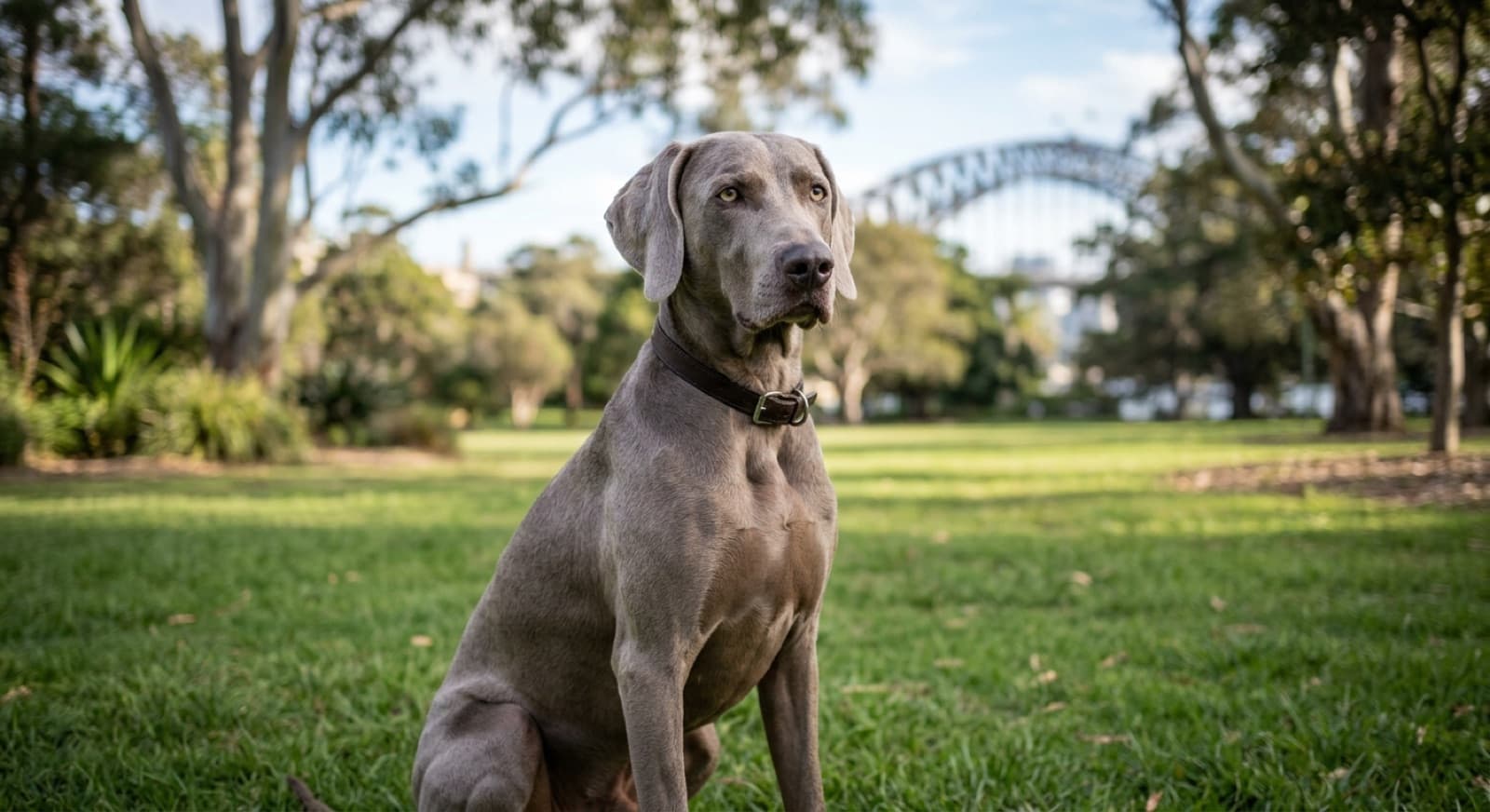
The short answer
Weimaraners are a generally healthy breed with one risk that towers over the others: bloat, also called gastric dilatation-volvulus or GDV. As a large, deep-chested dog the Weimaraner is among the higher-risk breeds, and GDV can be fatal within hours. Feed smaller meals, keep exercise calm around mealtimes, slow a fast eater, and ask your vet about a preventive gastropexy. Beyond bloat, plan for hip dysplasia, a few inherited eye conditions, sensitive skin, thyroid issues, and some clotting and anaesthetic sensitivity. Learn one thing above all: a swollen belly with unproductive retching is a bloat emergency. Get to a vet at once.
Bloat and GDV: the first thing to understand
Bloat is the health emergency every Weimaraner owner needs to know cold. In its simplest form the stomach fills with gas and swells. In the dangerous form the swollen stomach then twists on itself, sealing off both the exit for the gas and the blood supply to the organs. That twisting version is called gastric dilatation-volvulus, or GDV, and it can go from a normal evening to a fatal crisis within hours.
Weimaraners sit among the higher-risk breeds for one reason: their shape. They are large and deep-chested, tall through the ribcage with plenty of room inside, and that is exactly the build that lets the stomach move and rotate. It is not something you did wrong. It is a structural risk that comes with the breed, which is why prevention and fast recognition matter so much. The RSPCA Australia Knowledgebase has general guidance on feeding and healthy weight that supports the prevention habits below.
The signs to act on. A swollen, hard or distended belly. Trying to vomit but bringing nothing up, or only froth. Heavy drooling. Restlessness, pacing, and an inability to settle or get comfortable. As it worsens, weakness, pale gums and collapse. If you see this picture, treat it as a life-threatening emergency and go straight to a vet. Do not wait to see if it passes, because with GDV minutes matter.
Emergency: a Weimaraner with a swollen belly and unproductive retching
This is the one Weimaraner emergency every owner must know. A swollen, hard or distended belly with unproductive retching, where the dog tries to vomit but nothing comes up, is a sign of bloat and possible GDV. Add drooling, restless pacing, an inability to lie down, or collapse, and it is an emergency. Go to a vet immediately, day or night. Do not wait to see if it clears on its own, because a twisted stomach becomes fatal fast and minutes count. Phone ahead so the team is ready, and if it is out of hours head to a 24/7 hospital such as SASH, which offers round-the-clock emergency care in Sydney.
How to lower the bloat risk
You cannot remove the risk entirely, because it comes with the breed's shape, but sensible daily habits genuinely help. These are general, not prescriptive, and your own vet can tailor them to your dog.
- Split the meals. Feed two or more smaller meals across the day rather than one big daily feed, so the stomach is never loaded up in a single sitting.
- Calm things around mealtimes. Avoid vigorous exercise for a stretch either side of a meal. Let the dog settle rather than tearing around on a full stomach.
- Slow a fast eater. If your Weimaraner bolts its food, a slow feeder bowl or a puzzle feeder slows it down and cuts how much air it gulps.
- Manage water. Keep fresh water available, but discourage gulping a huge volume all at once, especially right after exercise.
- Ask about a gastropexy. A preventive gastropexy is a surgery that tacks the stomach in place so it cannot twist. It is sometimes done at the same time as desexing in high-risk breeds. Discuss whether it suits your dog with your vet.
None of this replaces knowing the emergency signs. Prevention lowers the odds, but recognising bloat fast and getting to a vet is what saves the dog if it ever happens.
Hip dysplasia
As a large, athletic breed, the Weimaraner can develop hip dysplasia, where the hip joint does not sit together smoothly and wears unevenly, leading to arthritis and pain over time. The signs are stiffness after rest, a reluctance to jump or climb stairs, a bunny-hopping run, or slowing down and lagging on walks. It can show up in a young adult or creep in with age.
Keeping the dog lean is one of the best things you can do for its joints, along with sensible exercise rather than repetitive high-impact pounding on hard surfaces. A vet can assess sore hips, advise on management, and talk through options if it is significant. Reputable breeders screen the parents' hips, and a good rescue will note any known joint trouble it has seen. This is a high-energy breed that needs a lot of exercise, so channelling that energy into steady, varied activity rather than relentless hard running is better for the joints in the long run.
Inherited eye conditions
Weimaraners can inherit a few eye problems, so it pays to know what they look like. Entropion is when an eyelid rolls inward so the lashes rub on the surface of the eye. It causes irritation, weeping and squinting, and it usually needs a minor surgery to correct because constant rubbing damages the eye. Distichiasis is extra eyelashes growing from an abnormal spot along the lid, which can also rub and irritate depending on how they sit.
Progressive retinal atrophy is a gradual breakdown of the light-sensing cells in the retina, leading to fading vision and eventually blindness over time. It is often first noticed as a dog bumping into things, hesitating on stairs, or becoming nervous in dim light. If you see red, weepy or squinting eyes, pawing at the face, cloudiness, or a dog that seems to be losing its sight, book a vet visit rather than waiting. Reputable breeders screen the parents' eyes, and a good rescue will flag any known eye trouble on the listing.
Sensitive skin
Weimaraners can have sensitive skin and are prone to irritation and allergic itchiness. The breed's short, fine coat over a lean body means redness and hot spots show up quickly, and Sydney gives the skin plenty to react to, with a long warm growing season, humid summers, and grasses and pollens for much of the year.
The signs are a dog that scratches, licks or chews at itself, especially the paws, belly and armpits, along with red skin, recurring ear infections, and thinning coat where it has been worried at. Itchy skin is not something to leave, because a scratched raw patch turns into an infected hot spot fast in warm weather. A vet can work out what is driving it and talk through management, which might involve the environment, the diet, skin care and at times medication. This is a condition you manage well rather than cure, and catching flares early keeps the dog comfortable. Never leave a fine-coated dog exposed to strong summer sun for long, as thin coat over pale skin can burn.
Thyroid, clotting and anaesthetic notes
Hypothyroidism. Weimaraners can be prone to an underactive thyroid, which tends to show as weight gain despite normal food, low energy, and coat or skin changes. It is diagnosed with a blood test and managed well once it is picked up, so mention any of those changes to your vet rather than putting them down to age.
Clotting. The breed can carry clotting conditions such as von Willebrand disease, where the blood does not clot as it should and a dog may bleed more than expected from a cut or during surgery. Often it is silent until there is a bleed or an operation, which is why it matters most around planned procedures. If there is any concern, a vet can run a clotting check beforehand.
Anaesthetic and stress sensitivity. Weimaraners can be more sensitive to anaesthetic and more easily stressed than some breeds. This is directional, not a hard rule, and it does not mean surgery is dangerous. It means your vet may tailor the approach and monitor closely, and take the dog's anxious temperament into account. The practical step is simple. Tell your vet you have a Weimaraner and ask how they like to handle the breed for any procedure, including desexing or a dental, so you both go in with a plan.
Why adopting a Weimaraner is not a health disadvantage
People sometimes worry that a rescue dog is a health gamble next to a breeder puppy. For a Weimaraner the picture is more balanced than that. A Weimaraner adopted through a reputable Sydney rescue arrives desexed, vaccinated, microchipped, treated for parasites and vet-checked, with all of it included in the fee. You are not taking on an unassessed animal.
Adopting also means the things that matter most in this breed are often known upfront. A good rescue will tell you what the vet check found and what the foster carer has seen day to day, which for a Weimaraner often includes how the dog copes when left alone, since the breed is prone to separation anxiety, and any sign of skin, eye or joint trouble. A foster carer who has lived with the dog can tell you how it eats and settles, which a puppy cannot offer. If you are weighing it up, our Weimaraner adoption guide for Sydney covers where to look and what it costs, and our Weimaraner exercise and separation anxiety guide covers the breed's biggest behaviour need. Sydney rescues worth watching include RSPCA NSW, AWL NSW, Sydney Dogs and Cats Home, Monika's Doggie Rescue and Maggie's Rescue.
Keeping a Weimaraner healthy: the checklist
Most of what keeps a Weimaraner well is routine, and feeding habits sit right at the centre of it because of the bloat risk. The habits below do the heavy lifting.
- Feed smaller, split meals. Two or more feeds a day rather than one big one, with calm before and after, and a slow feeder for a fast eater. This is the main daily defence against bloat.
- Know the bloat emergency signs. A swollen belly with unproductive retching means get to a vet at once. Minutes matter.
- Keep the dog lean and moving. A lean weight protects the hips and joints, and steady, varied exercise beats repetitive high-impact pounding.
- Watch the eyes. Weeping, squinting or a dog losing its sight all warrant a vet visit.
- Mind the skin. Watch for scratching, redness and hot spots, and get flares seen early before they become infected.
- Note energy and weight changes. Weight gain despite normal food, or low energy and coat changes, can point to the thyroid and are worth a blood test.
- Flag clotting and anaesthetic before surgery. Tell your vet you have a Weimaraner and ask about their approach for any procedure.
- Meet the exercise and mental needs. This high-energy breed becomes destructive and anxious when under-exercised, so give it plenty to do.
- Book regular vet checks. Annually while adult, then twice yearly for a senior.
- Stay on year-round tick prevention. Use a vet-recommended product every month without a gap, because the paralysis tick on the NSW coast is a fatal risk.
The Sydney paralysis tick point
One health risk has nothing to do with the breed and everything to do with where you live. The paralysis tick is native to the east coast of Australia, including the coastal and bushland areas around Sydney, and its bite releases a toxin that causes an ascending paralysis which is fatal without veterinary treatment. It is a year-round risk here, not just a summer one. Sydney summer heat brings its own separate danger for an active breed like this, so walk your Weimaraner in the cooler hours and carry water, and never leave a dog in a car.
The response is straightforward. Keep your Weimaraner on a vet-recommended tick prevention product every single month with no gaps, and after any walk through bush or long grass run your hands slowly over the whole dog, feeling for a lump. The breed's short coat makes ticks a little easier to find than on a wiry dog, but check carefully anyway, under and inside the ear flaps, around the face, under the collar, in the armpits and between the toes. If your dog develops a wobbly back end, a changed or weak bark, gagging or heavy breathing, treat it as an emergency and get to a vet at once. Your own vet can advise on the right prevention product for your dog.
Browse adoptable Weimaraners in Sydney
Adopting an adult lets you learn a dog's health history and how it copes day to day directly, with a vet check already done. Browse live NSW listings and set an alert so you hear the moment a Weimaraner comes in.
See Available Weimaraners →When to see the vet urgently
Most Weimaraner health issues are managed at a normal appointment. A few need a faster response. Get to a vet immediately, including out of hours, if you see any of these:
- A swollen, hard or distended belly with unproductive retching, drooling, restless pacing or collapse (possible bloat or GDV, which is life-threatening within hours).
- A wobbly back end together with a changed or weak bark, gagging or heavy breathing (possible paralysis tick).
- Sudden collapse, laboured breathing, or fainting (possible serious problem).
- Heavy or prolonged bleeding that will not settle, especially in a dog with a known clotting issue.
For the everyday things, such as ongoing itchy skin, stiffness in the hips, weeping or squinting eyes, or weight gain despite normal food, book a normal vet visit soon rather than waiting. Catching those early gives your Weimaraner the best outcome. When in doubt, phone your vet or a 24/7 hospital and describe what you are seeing. They would far rather you called and it was nothing than the other way around. For more on meeting this athletic breed's energy and settling needs, see our Weimaraner exercise and separation anxiety guide, or browse the full Sydney adoption resources hub. To find a local vet, the Australian Veterinary Association can help.
Frequently Asked Questions
What health problems do Weimaraners have?
Weimaraners are a generally hardy breed, but they have a few concerns worth planning for. The big one is bloat, also called gastric dilatation-volvulus or GDV, because the Weimaraner is a large, deep-chested dog and those are the breeds most at risk. It is a sudden, life-threatening emergency. Beyond bloat, the breed can develop hip dysplasia as a large dog, some inherited eye conditions such as entropion, distichiasis and progressive retinal atrophy, a tendency to sensitive skin, an underactive thyroid, and occasionally clotting issues such as von Willebrand disease. The breed can also be sensitive to anaesthetic and to stress, which is worth discussing with your vet before any procedure. Most of this is managed well with sensible feeding, keeping the dog lean, and regular vet checks. Weimaraners often live around 11 to 13 years.
What is bloat and why are Weimaraners at risk?
Bloat is when the stomach fills with gas and swells, and in the dangerous form it then twists on itself, cutting off the blood supply and the exit for the gas. That twisting version is called gastric dilatation-volvulus, or GDV, and it is a true emergency that can kill within hours. Weimaraners are at higher risk because they are large and deep-chested, the exact build that leaves room for the stomach to move and rotate. The signs to act on are a swollen, hard or distended belly, trying to vomit but bringing nothing up, drooling, and pacing or restlessness, which can progress to collapse. If you see these, get to a vet immediately, day or night. Do not wait to see if it settles, because minutes matter with GDV.
How can I reduce my Weimaraner's bloat risk?
You cannot remove the risk entirely, but a few habits help. Feed two or more smaller meals a day rather than one large one, so the stomach is not loaded up in a single sitting. Avoid vigorous exercise for a stretch either side of a meal, and let the dog settle rather than tearing around on a full stomach. If your Weimaraner bolts its food, a slow feeder bowl or a puzzle feeder slows it down and cuts the amount of air swallowed. Keep fresh water available but discourage gulping a huge volume all at once. It is also worth asking your vet about a preventive gastropexy, a surgery that tacks the stomach in place so it cannot twist, which is sometimes done at the same time as desexing in high-risk breeds. Whatever you do, learn the emergency signs so you can act fast if it ever happens.
What eye problems do Weimaraners get?
Weimaraners can inherit a few eye conditions, so it is worth knowing the signs. Entropion is when an eyelid rolls inward and the lashes rub on the eye, which causes irritation, weeping and squinting and usually needs a minor surgery to correct. Distichiasis is extra lashes growing where they should not, which can also rub and irritate. Progressive retinal atrophy is a gradual loss of the light-sensing cells in the retina that leads to fading vision over time, often first noticed as bumping into things or nervousness in the dark. If you see red, weepy or squinting eyes, pawing at the face, or a dog that seems to be losing its sight, book a vet visit. Reputable breeders screen the parents' eyes, and a good rescue will note any known eye trouble on the listing.
Are Weimaraners sensitive to anaesthetic?
Weimaraners can be more sensitive to anaesthetic and to stress than some breeds, so it is a fair thing to raise with your vet before any planned procedure, including desexing or a dental. This does not mean surgery is dangerous, it means your vet may tailor the approach, monitor closely, and take the dog's temperament into account, since an anxious dog can be harder to settle. The breed's clotting can also matter here, because a dog with von Willebrand disease or another clotting issue may bleed more than expected. A vet can run a clotting check beforehand if there is any concern. The takeaway is simple. Tell your vet you have a Weimaraner and ask how they like to handle the breed for any procedure, so you go in with a plan.
Do rescue Weimaraners come health checked?
Yes. A Weimaraner adopted through a reputable Sydney rescue arrives desexed, vaccinated, microchipped, treated for worms and fleas, and given a vet check before it is listed, with all of that included in the fee. A good rescue also notes known issues, so anything picked up on the vet check, along with what the foster carer has seen day to day, is usually shared with you. For a Weimaraner that might include how the dog copes with being alone, since the breed is prone to separation anxiety, and any sign of skin, eye or joint trouble. You are not taking on an unassessed animal. A foster carer who has lived with the dog can tell you how it eats, settles and behaves, which is exactly the kind of thing you want to know in this breed before you commit.
How long do Weimaraners live?
Weimaraners often live around 11 to 13 years, a normal span for a large, athletic breed. Much of their common trouble is about management and quick action rather than being automatically life-shortening. Keeping the dog lean protects the hips and joints, sensible feeding habits lower the bloat risk, and staying on top of skin, eyes, teeth and thyroid keeps small problems small. The single biggest thing you can do for a Weimaraner's lifespan is learn the emergency signs of bloat and act on them at once, because GDV is fast and fatal if it is not treated in time. Regular vet checks, year-round tick prevention, and plenty of exercise for this high-energy breed all add up to a long, healthy life.
How do I keep my Weimaraner healthy?
Feed smaller meals rather than one big one, keep the dog lean, give plenty of exercise, and stay on top of vet care and tick prevention. Feeding habits are the centrepiece for this breed, because splitting meals, calming things down around mealtimes and slowing a fast eater all lower the bloat risk that a deep-chested dog carries. Watch the skin for itching and redness, the eyes for weeping or squinting, and the general energy and weight for any thyroid change. Give a Weimaraner the daily exercise and mental work it needs, since a bored, under-exercised dog of this breed becomes destructive and anxious. Book annual vet checks that become twice-yearly for a senior, keep up year-round paralysis tick prevention with a vet-recommended product, and above all learn the emergency signs of bloat.
Keep reading
Adoptable Weimaraners in Sydney
Live listings of Weimaraners across Sydney and NSW rescues.
Weimaraner Adoption in Sydney
Where to adopt a Weimaraner, why they end up in rescue, and what adoption costs against a breeder.
Weimaraner Exercise & Separation Anxiety
How much exercise a Weimaraner needs, and how to prevent the breed's biggest behaviour problem.
All Sydney Adoption Guides
Browse every breed and how-to guide for adopting a rescue dog in Sydney.