The short answer
The Shih Tzu has a long, dense double coat that grows continuously and mats easily, so grooming is the breed's one real commitment. If you keep the coat long, brush right down to the skin every day and get a professional groom every four to six weeks. If you keep the practical puppy cut, which most Sydney owners choose, brush a few times a week and clip every four to six weeks. Keep the hair tied up or trimmed off the eyes with a topknot, because hair rubbing those prominent eyes causes real problems. Clean the face and folds daily, care for the hairy ears, and bathe roughly every three to four weeks (brush out tangles first, dry thoroughly through the undercoat). A neglected coat mats painfully, so match the coat length to the brushing you will actually do.
Understanding the Shih Tzu coat
The Shih Tzu has a long, dense double coat: a soft insulating undercoat beneath a long, flowing topcoat. This is a different coat from a Maltese, which has a single silky coat with no undercoat, and different again from a Poodle, whose curly wool coat traps shed hair in tight curls. The Shih Tzu combines length, density and a hair type that keeps growing rather than shedding out, which is exactly the recipe for matting.
Because the coat grows continuously like human hair, it needs either regular brushing to stay tangle-free or regular clipping to keep it short. The loose undercoat that would normally drop away instead gets caught in the topcoat and knots, so a Shih Tzu that is not brushed to the skin or clipped short will mat, and it will mat fastest at the friction points: behind and inside the ears, the armpits, around the harness, the folds and the bottom. The key point either way is that a Shih Tzu coat is low-shedding but high-maintenance, and the maintenance is mostly about preventing mats.
Brushing and preventing matting
Brushing is the heart of Shih Tzu grooming, and the golden rule is to brush all the way down to the skin, not just over the surface. Surface brushing leaves the undercoat matting quietly underneath. Use a pin brush and a metal comb, work in sections, part the coat and brush from the skin out, and pay special attention to the friction points where tangles gather.
- Long coat: brush every day, or very close to it, right to the skin, to stay ahead of matting.
- Puppy cut: brush a few times a week, still down to the skin.
- Friction points: behind and inside the ears, the armpits, around the harness, the folds and the bottom need extra care.
- Tangles: work them out gently with fingers and the comb rather than dragging a brush through.
- Rescue dogs: start slowly and positively, with treats and short sessions, so the dog learns to enjoy it.
A few minutes every day beats a long battle once a week, both for the coat and for the dog's comfort. Keeping the coat clean and mat-free also protects the skin underneath and the paralysis-tick check, which links grooming straight to health (see our Shih Tzu health guide).
Browse adoptable Shih Tzus in Sydney
If you can keep up the coat, a Shih Tzu is a gentle, devoted companion. Browse live NSW listings, including many lovely seniors.
See Available Shih Tzus →The puppy cut, the long coat and the topknot
Puppy cut or long coat? For most pet owners the short puppy cut is the easier, kinder choice. It cuts brushing time and matting dramatically, is cooler in warm Sydney weather, and is simple to keep clean, while a long show coat is lovely but demands near-daily brushing to the skin and frequent grooming. Unlike a weather-resistant double coat such as a Husky's, which should never be shaved, a Shih Tzu coat is routinely clipped short with no harm to the dog. Choose the length that matches the brushing you will realistically do.
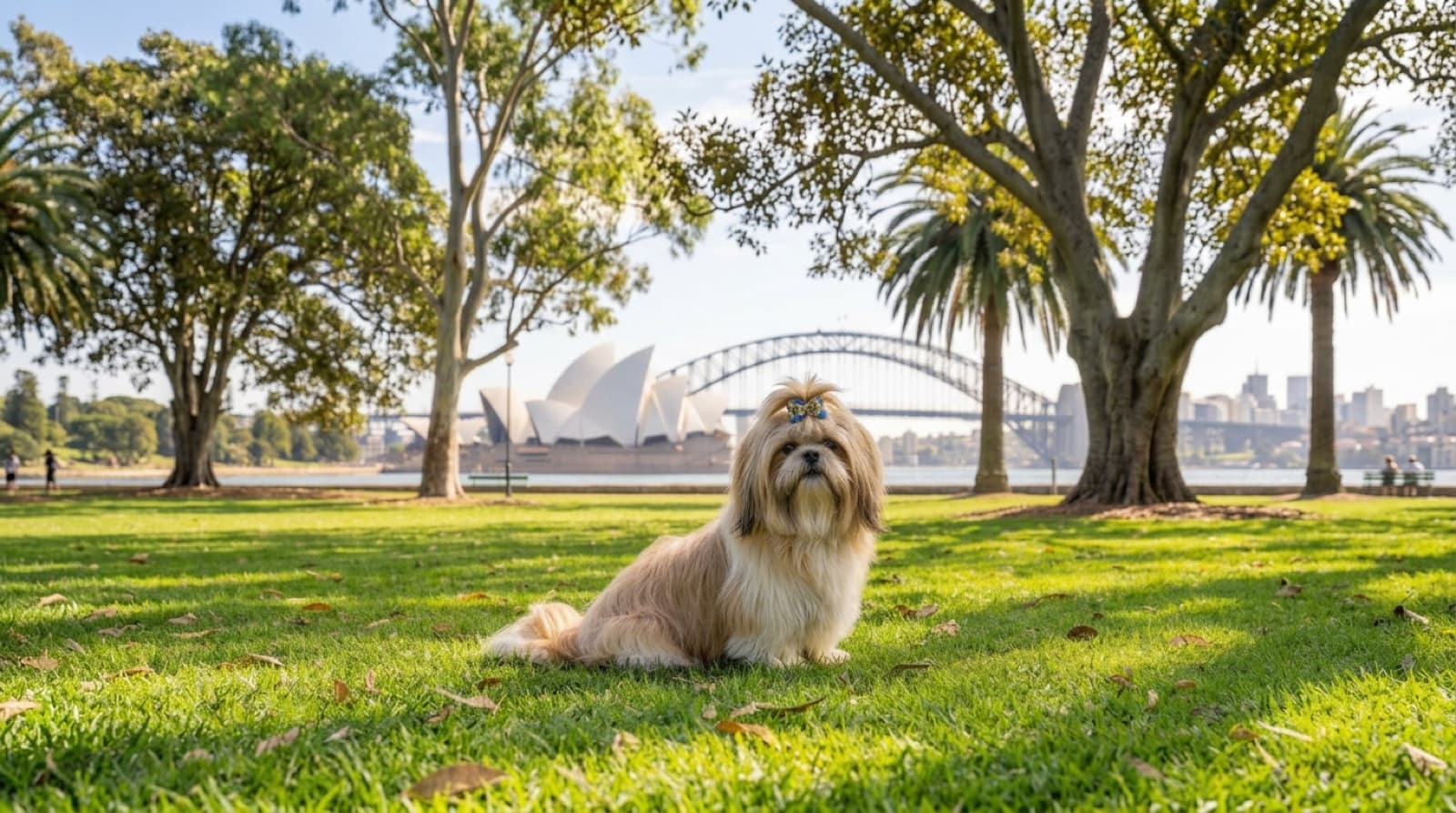
The topknot. Whether the coat is long or short, keeping the hair off the eyes is a health measure, not a style choice. A Shih Tzu has large, prominent eyes, and hair hanging into them rubs the surface, causes tearing and irritation, and raises the risk of corneal ulcers. If you keep the coat long, learn to tie a gentle topknot with a soft fabric band, never a tight elastic that pulls the skin. If you keep it short, ask the groomer to keep the hair above and around the eyes trimmed so nothing sits against them. This small habit protects the breed's most vulnerable feature.
Face, folds, eyes and ears
Face and eye area. Keep the face gently clean and dry every day. Wipe below the eyes and into the facial folds with a soft damp cloth or vet-recommended wipe, and keep the hair around the eyes and muzzle trimmed short. Tear staining, the reddish-brown mark below the eyes, shows clearly on a pale coat and is usually cosmetic and managed by this daily routine. If staining is heavy or sudden, or an eye looks red, cloudy or sore, have your vet check it, as it can signal a tear-duct, eye or dental issue.
Skin folds. The facial folds and the fold under the tail trap moisture and can become sore or infected. Wipe and dry them regularly as part of the grooming routine, which prevents the fold infections the breed is prone to.
Ears. The hairy, floppy ears trap warmth and moisture, so check them weekly, keep them clean and dry (especially after a bath), and use only a vet-recommended ear cleaner rather than cotton buds. If you see head shaking, scratching, a smell or discharge, see your vet. Ask your groomer or vet about any hair inside the ear canal, since advice varies and over-plucking can irritate.
Bathing and the summer clip
Bathing. Every three to four weeks, or when dirty, suits most Shih Tzus, with a gentle dog shampoo. Brush out tangles before the bath, because water tightens mats, and dry the coat thoroughly afterwards, right down through the dense undercoat, since a damp double coat mats and can irritate the skin. Keep water and shampoo out of the eyes and ears, clean and dry the folds afterwards, and do not over-bathe, which dries the skin.
The summer clip. A shorter clip through the hottest months helps a Shih Tzu cope with the Sydney heat, which matters more for this breed because the flat face makes cooling by panting less efficient. A short coat is cooler, easier to keep dry and far less prone to matting. It is part of sensible heat management, not a replacement for it, so still walk in cooler hours, keep the dog inside with cooling on hot days, provide shade and water, and never leave the dog in a car. Because the coat is clipped routinely anyway, a summer trim is a simple, safe comfort measure.
Home care and professional grooming
A sensible split works for most Sydney owners: do the daily brushing, face-cleaning and fold care yourself, and use a professional groomer every four to six weeks for the clip, tidying the face, feet, folds and bottom, cleaning the ears, and a proper bath and blow-dry. A good groomer keeps the clip even, keeps the hair off the eyes, and spots skin, ear or coat problems early, and the RSPCA Knowledgebase has sound general guidance on coat and grooming care. Budget for grooming as a regular, ongoing cost of Shih Tzu ownership.
If you adopt a Shih Tzu with a matted coat, do not try to brush out heavy matting yourself, as it pulls painfully; a groomer can start the dog fresh with a clip, and a simple routine keeps it comfortable from there. Whatever you choose, the daily brushing between grooms is the part that actually prevents matting, and it is the single most important habit of Shih Tzu coat care. For the full picture on the breed, see our Shih Tzu adoption guide.
Frequently Asked Questions
How often does a Shih Tzu need grooming?
It depends on how you keep the coat. If you keep it long, a Shih Tzu needs brushing every day, or very close to it, right down to the skin, plus a professional groom every four to six weeks. If you keep it in a short puppy cut, which most Sydney pet owners choose, brushing a few times a week and a professional clip every four to six weeks is usually enough. Either way, the face, eyes, ears, feet, folds and bottom need regular attention. The double coat grows continuously and mats readily, so grooming is the single biggest ongoing commitment of Shih Tzu ownership. Be honest about how much brushing you will realistically do before you choose a coat length.
Why does a Shih Tzu coat mat so easily?
Because it is a long, dense double coat: a soft insulating undercoat beneath a long topcoat, and hair that keeps growing rather than shedding out. That combination tangles far more readily than a single silky coat, and the loose undercoat that would normally fall away instead gets trapped in the topcoat and knots. Matting is worst at friction points: behind and inside the ears, under the legs (the armpits), around the collar or harness, on the bottom and around the folds. Moisture, dirt and trapped undercoat all speed it up. Once a mat forms it tightens against the skin and can become painful and hide skin problems. The fix is prevention: brush and comb right down to the skin regularly, or keep the coat in a short clip that mats far less.
What is a Shih Tzu puppy cut and should I get one?
The puppy cut is a short, even all-over clip that keeps the coat a couple of centimetres long, and it is what most Sydney pet owners choose over a long show coat. It dramatically cuts brushing time and matting, is far more comfortable in the Sydney heat, and is simple to keep clean. Unlike a weather-resistant double coat such as a Husky's, which should never be shaved, a Shih Tzu coat is routinely clipped short and it does the dog no harm; the coat is a continuously growing hair coat that a groomer trims like a haircut. For most homes the puppy cut is the kinder, more practical choice, especially if you cannot commit to daily brushing. A well-maintained short coat beats a neglected long one every time.
What is the Shih Tzu topknot and why does it matter?
The topknot is the long hair on top of the head tied up out of the eyes, either with a soft band into a little ponytail or clipped short. It is not just for looks. A Shih Tzu has large, prominent eyes, and hair hanging into them rubs the surface, causes irritation and tearing, and raises the risk of corneal ulcers and infection. Keeping the hair off the eyes protects them. If you keep the coat long, learn to tie a gentle topknot with a fabric band (never a tight elastic that pulls the skin). If you keep the coat short, ask the groomer to keep the face and the hair above the eyes trimmed short so nothing sits against the eye. Either way, hair off the eyes is a health measure, not a style choice.
How do I clean a Shih Tzu face and manage tear staining?
Keep the face gently clean and dry every day, because the flat face, the folds and the tearing all collect moisture and food. Wipe below the eyes and into the folds daily with a soft damp cloth or a vet-recommended wipe, and keep the hair around the eyes and muzzle trimmed short so it does not wick moisture or rub the eye. Tear staining, the reddish-brown discolouration below the eyes, shows clearly on a pale Shih Tzu and is usually cosmetic and managed by this simple daily routine. If the staining is heavy or sudden, or an eye looks red, cloudy or sore, see your vet, because excessive tearing can point to a blocked tear duct, an eye problem or a dental issue. Clean, dry folds also prevent the skin-fold infections the breed is prone to.
How do I look after a Shih Tzu ears?
Shih Tzus have hairy, floppy ears that trap warmth, moisture and hair, which invites ear infections, so ear care is part of the grooming routine. Check the ears weekly for redness, a smell or discharge, and keep them clean and dry, especially after a bath. Use only a vet-recommended ear cleaner, never cotton buds pushed down into the canal. Some Shih Tzus grow hair inside the ear canal; ask your groomer or vet whether it needs managing for your dog, as advice varies and over-plucking can irritate. If you see head shaking, scratching, a smell or discharge, see your vet, because a low-grade ear infection left alone can become chronic. Keeping the ears dry after bathing and swimming is the simplest prevention.
How often should I bathe a Shih Tzu, and how?
Roughly every three to four weeks suits most Shih Tzus, or when the dog is visibly dirty, using a gentle dog shampoo. The two rules that matter most with this coat are to brush out any tangles before the bath, because water tightens mats and makes them far harder to remove, and to dry the coat thoroughly afterwards, right down through the dense undercoat, since a damp double coat mats and can irritate the skin. Keep water and shampoo out of the eyes and ears, and clean and dry the facial folds after the bath. Over-bathing dries the skin, so keep to a regular but not excessive schedule. If the skin looks dry, red or irritated, check with your vet.
What happens if a Shih Tzu coat is neglected?
A neglected Shih Tzu coat mats badly, and matting is a genuine welfare problem, not just a cosmetic one. Mats tighten against the skin, pull painfully, trap moisture and dirt, hide skin infections and parasites (including hard-to-spot paralysis ticks), and in bad cases have to be shaved off entirely by a groomer or vet. Severely matted dogs are one of the sad and common reasons Shih Tzus come into Sydney rescue. The whole problem is preventable with regular brushing or a sensible short clip. If you adopt a Shih Tzu with a matted coat, do not try to brush out heavy matting yourself; a groomer can start the dog fresh with a clip, and a simple routine keeps it comfortable from there.
Should I keep my Shih Tzu in a shorter clip for the Sydney summer?
For most owners, yes. A shorter summer clip helps a Shih Tzu cope with Sydney heat, which matters more for this breed than for many because the flat face makes cooling by panting less efficient. A short clip is cooler, easier to keep clean and dry, and far less prone to matting. It does not replace sensible heat management (walk in the cool of the morning or evening, keep the dog inside with cooling on hot days, always provide shade and water, and never leave the dog in a car), but it is a useful part of it. Because a Shih Tzu coat is routinely clipped anyway, a summer trim is a simple, safe way to keep the dog more comfortable through the hottest months.
Keep reading
Adoptable Shih Tzus in Sydney
Live listings of Shih Tzus and Shih Tzu crosses, including many gentle seniors.
Shih Tzu Adoption in Sydney
Where to adopt, what it costs, and why so many (often seniors) end up in rescue.
Shih Tzu Health Issues in Sydney
Brachycephalic breathing and heat, the prominent eyes, dental disease, patella and back, plus tick care.
All Sydney Adoption Guides
Browse every breed and how-to guide for adopting a rescue dog in Sydney.