The short answer
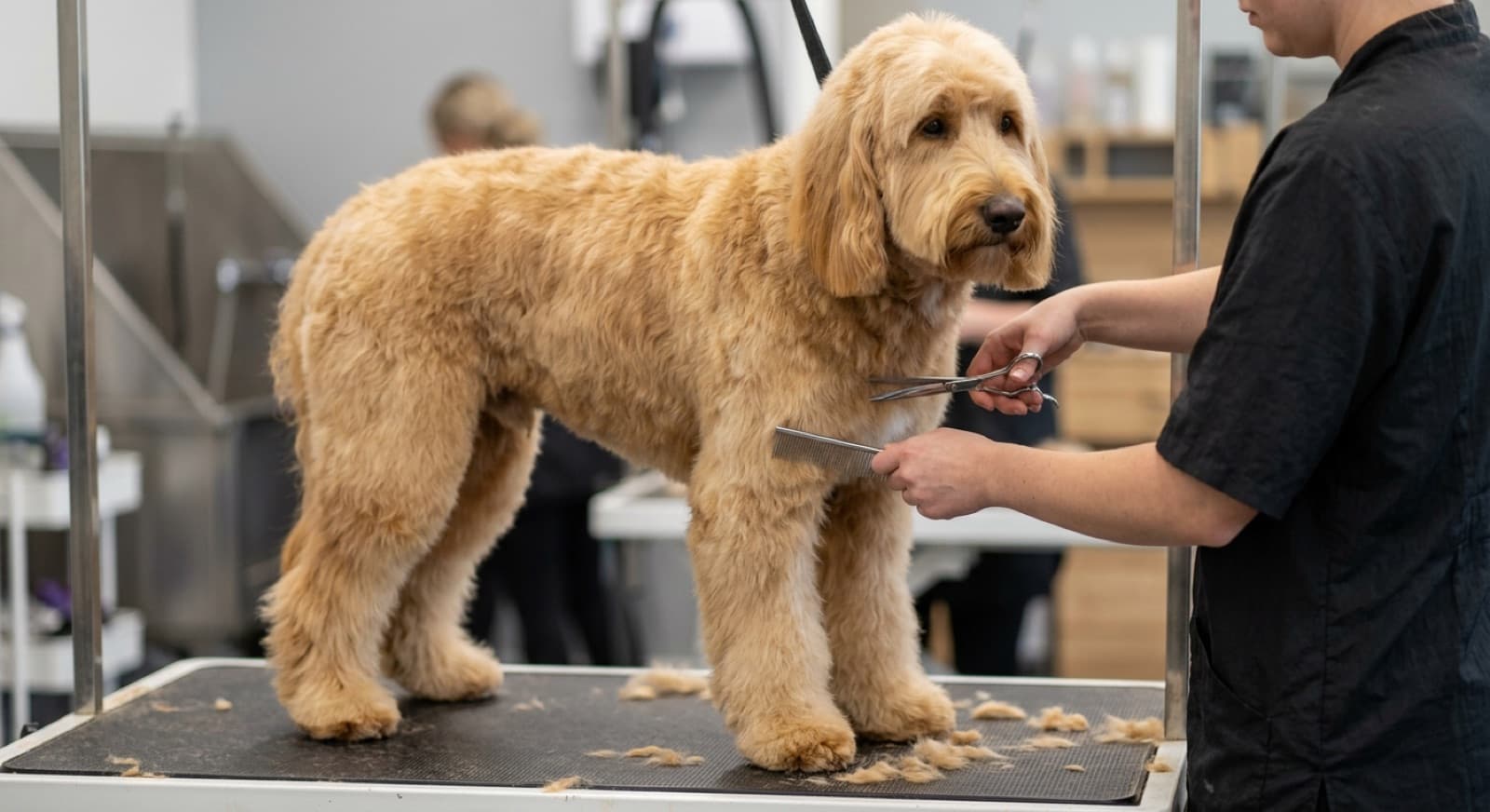
The Groodle coat is the real commitment, and a Groodle is a big Goldendoodle, so a big curly or wavy coat means more coat, more brushing, and a bigger, more expensive professional groom. Fleece and wool coats mat fast and need brushing several times a week plus a clip every 6 to 8 weeks, and lower-shedding means more grooming, not less. The floppy, hairy ears need routine checking, cleaning and drying to prevent infections. And under the coat sits a cross of two active breeds that needs real daily exercise, sniffing and company. Take on a Groodle only if you will do the grooming, or budget for a groomer.
A big dog with a big coat
A Groodle is a Golden Retriever crossed with a Poodle, the same cross that is often called a Goldendoodle. Most are large dogs, and that size is the thing to keep front of mind when you think about grooming. A big frame carries a big coat, so there is simply more of it to brush, more of it to mat, and a longer, pricier session on the groomer's table than a small doodle would need. If you have owned a smaller curly dog before, expect the workload to scale up with the dog.
The second thing to understand is that there is no single Groodle coat. A crossbreed does not inherit a fixed coat the way a purebred does, and two Groodles from the same litter can grow up with very different coats depending on which parent they take after. That is the crossbreed lottery, and it is why one owner swears their Groodle barely sheds while another is vacuuming daily. Groomers and breeders usually sort doodle coats into three rough types:
- Hair coat. The straighter, more Golden-like coat. It sheds more than the other two, feels coarser, and is the easiest of the three to maintain at home. Still needs regular tidy-ups.
- Fleece coat. Soft and wavy, the classic teddy-bear doodle look. It sheds less than a hair coat but mats fast, so it needs brushing several times a week right down to the skin.
- Wool coat. Tight and curly, the most Poodle-like coat. It sheds the least and is often the lowest-allergen, but it is also the highest-maintenance coat of the three and mats the quickest.
The pattern to notice is that the coats people want most, the low-shed fleece and wool, are the ones that need the most work. There is no low-shed, low-grooming version of a Groodle. If a Groodle drops very little hair, that hair is staying in the coat and turning into tangles instead, which is exactly why the grooming load goes up. When you adopt a Groodle from a Sydney rescue, ask the foster carer what the coat is actually like in the hand, because that tells you far more about the grooming ahead than the word Groodle on its own.
The grooming routine, and the matting risk
Matting is the single biggest thing Groodle owners underestimate, and it is a welfare issue, not just a cosmetic one. A tight mat pulls on the skin, traps moisture and dirt against it, and can lead to sore, inflamed skin underneath. Once a coat mats to the skin it cannot be brushed out, and a groomer or vet has to clip the whole coat off short to start again. A badly pelted Groodle sometimes has to be shaved right down, and that avoidable outcome is one of the reasons big doodles end up in rescue in the first place. On a large dog the problem is bigger too, because there is more coat to neglect and more of it against the skin.
A workable routine for a fleece or wool Groodle looks like this:
- Brush several times a week, right to the skin. Use a slicker brush and then a comb to check your work. If the comb snags, there is a tangle forming that the brush skated over. Brushing only the top of the coat is how mats hide underneath.
- Check the mat hot-spots. Behind and under the ears, the armpits, the chest, the collar line, the back legs and around the tail. These rub and move, so they tangle first.
- Comb through after walks and swims. Grass seeds, sand and burrs catch in the coat, and a wet coat left to dry unbrushed mats quickly.
- Book a professional groom every 6 to 8 weeks. The coat keeps growing, so regular clipping and tidying is part of owning the breed, not an extra. On a big Groodle each session takes longer and costs more, so plan for it.
- Consider a shorter practical clip. Many Groodle owners keep the dog in a shorter all-over clip. It is far easier to brush at home, much cooler in a Sydney summer, and still looks smart. You still need the groomer roughly as often, but the daily job gets much lighter.
That last point is worth sitting with. The long fluffy show-style coat is lovely in a photo, but it is a lot of work on a big dog in the Sydney climate. A shorter clip is a completely legitimate choice for a pet Groodle, keeps the dog comfortable in the heat, and cuts your brushing right down. Plenty of the happiest Groodle owners never let the coat get long in the first place.
The hypoallergenic myth
Groodles are often sold as hypoallergenic, and it is worth being clear-eyed about this before you adopt. No dog is truly hypoallergenic, and because the Groodle is a crossbreed, how much any individual sheds is a roll of the dice that depends on which parent the coat favours. A wool-coated Groodle may drop less hair and dander than a hair-coated one, but that is not the same as allergen-free, and there is no guarantee which coat a given dog will have.
Dog allergies are usually a reaction to dander and saliva as much as to hair, and a Groodle produces all of those like any dog. The important care point is the one people miss: the lower-shedding coats that are marketed as allergy-friendly are exactly the coats that need more grooming, not less. So choosing a Groodle for allergy reasons often means taking on more coat work, not a lighter load. If someone in your home has allergies, spend real time around the actual adult dog you are considering and see how they react, rather than trusting the hypoallergenic label. The RSPCA Australia Knowledgebase is a good general reference on coat care and what to expect from different coat types.
Ear care
A Groodle inherits floppy ears that hang down over hairy ear canals, and that combination traps warm moisture underneath. Warm and moist is exactly the environment ear infections love, so routine ear care matters more with a Groodle than with a prick-eared dog. The good news is the routine is simple once it is a habit.
Check the ears at least weekly. Lift each ear, look inside, and have a gentle sniff. A healthy ear looks pale and clean and smells of little. Wipe out any visible dirt, keep the hair around the opening of the canal managed so air can move, and above all keep the ears dry. Moisture is the enemy, and Sydney Groodles swim a lot, at the beach, the river and the backyard pool in summer, so dry the ears thoroughly after every swim and every bath.
Know the warning signs and act early. Redness, a bad smell, dark or waxy discharge, head-shaking, scratching at the ear, or a dog that flinches when you touch it all point to an infection, and that is a vet visit rather than a home job. We go into the medical side, including what causes recurring ear infections and when to worry, in the Groodle health issues guide.
Feet, eyes, nails and bathing
A few smaller jobs round out Groodle care. The feet grow long hair between the pads, which picks up grass seeds, mud and, in Sydney, the occasional bindii. Keep the pad hair trimmed and check between the toes after walks, especially in spring and summer when grass seeds are around and can burrow into the skin. Trim the nails regularly too, or ask the groomer to. On a big dog, overgrown nails change how the dog stands and moves, so do not let them get long.
The eye area on a Groodle grows hair that can drop into the eyes and cause irritation, so keep it trimmed and wipe away any gunk in the corners with a damp cloth as part of your routine. Groomers usually tidy the face at each visit. Dental care matters as well: brushing your dog's teeth with a dog toothpaste, plus vet-approved chews, helps head off the dental disease that is common in dogs, and your vet checks the teeth at the annual visit. If you ever see a red, sore, weepy or squinting eye, get it checked, as that is different from routine tidying.
Bathe a Groodle when it needs it rather than on a rigid schedule, and more often if it has rolled in something at the park. Use a dog shampoo, rinse thoroughly so no residue is left to irritate the skin, then, and this is the important bit, brush the coat out as it dries so the wet coat does not mat, and dry the ears properly. A doodle coat that is bathed and left to dry in a tangle is a mat waiting to happen. Over-bathing dries out the coat and skin, so let the dog's actual grubbiness guide you rather than washing for the sake of it.
The energy reality
It is easy to focus on the coat and forget what is under it. A Groodle is a cross of two active breeds, the Golden Retriever and the Poodle, and both are clever dogs bred to work with people all day. That means a Groodle is usually a medium-energy dog with stamina and a brain that wants a job. Care for the coat all you like, but if you do not meet the dog's energy needs you will have a problem.
Plan for a good daily walk plus play and some real mental work. Split it across a walk or two, add some off-lead running in a secure area, and make time for training and games. Most Groodles love water, so a swim where you can is a great outlet, just dry the ears afterwards. Then feed the brain. Training sessions, food puzzles, and scent games where you hide food or a toy and let the dog hunt it out all tire a Groodle far more than another lap of the block. Owners who add mental work to the daily walk almost always find the dog settles better than it does on exercise alone.
The flip side is what happens when a Groodle is bored and under-exercised. That energy does not disappear, it comes out sideways as barking, chewing, digging, restlessness and other problem behaviour. Groodles are also very people-focused and bond hard to their family, which is lovely but means they do not cope with long days alone. Left too often or too long, that can tip into separation-related behaviour. Build independence gently from the day you bring the dog home, keep a predictable routine, and make sure the dog is well exercised before you head out. If a dog shows real distress at being left rather than mild boredom, treat it as a welfare issue and get help from a vet or a qualified force-free trainer.
Groodles in Sydney
The Sydney climate shapes Groodle care in two ways. First, heat. A thick fleece or wool coat is warm, and on a big dog that is a lot of insulation, so do the harder exercise in the cool of early morning or the evening and go easy in the middle of a hot, humid summer day. Carry water on longer outings. Heat, not cold, is the real dog-safety risk in Sydney, and a shorter summer clip genuinely helps a Groodle stay comfortable. Never leave any dog in a parked car.
Second, paralysis ticks. These are a year-round danger across the whole Sydney region and they can be fatal, so keep your Groodle on a vet-recommended tick prevention product all year and do a physical tick check after any bushwalk. The catch with a Groodle is that a thick, curly coat is a perfect hiding spot for a tick, so a quick pat is not enough. Part the coat and feel right down to the skin, especially around the head, ears, neck and legs, and if you find one or notice any weakness, wobbliness or a change in your dog's bark or breathing, get to a vet straight away. Talk to your vet about the right prevention product for your dog. The Australian Veterinary Association has useful general guidance on parasite prevention.
On living space, a big Groodle does best with room to move and a household that is around a fair bit, though it can manage in a Sydney apartment as long as it gets its daily exercise, its grooming, and is not left alone for long stretches. The flat itself is rarely the problem, the exercise and company are what matter, and the grooming has to happen wherever you live. Check your building and strata rules on pets, and register your dog with your council as required under the Companion Animals Act, which you can do through the NSW Pet Registry. For where to adopt one and what to expect, our Groodle adoption guide goes into detail.
Browse adoptable Groodles in Sydney
A big doodle rewards an owner who keeps up the brushing, the ear care and the exercise. Browse live NSW listings and set an alert so you hear the moment one comes in.
See Available Groodles →Is a Groodle right for you?
Put it all together and the picture is clear. A Groodle is a clever, affectionate, genuinely lovely dog, and it is also a real commitment on the care front, more so than a smaller doodle because everything scales with the size. The coat, especially a fleece or wool one, needs brushing several times a week and a groomer every 6 to 8 weeks, and lower-shedding means more of that work, not less. The floppy hairy ears need routine checking, cleaning and drying. And the active cross underneath needs real daily exercise, sniffing and company. Take a Groodle on only if you will actually do the grooming and ear care, or you are happy to budget for a regular groom on a big dog.
For the household that fits, a Groodle is a wonderful family dog: friendly, up for a walk or a swim, and devoted to its people. If the daily coat routine and the size sound like too much, that is worth being honest about before you adopt rather than after, because a neglected Groodle coat and untreated ears are a real welfare problem. Rescues like RSPCA NSW, AWL NSW, Sydney Dogs and Cats Home, Monika's Doggie Rescue and Maggie's Rescue take in dogs of all breeds and crosses, know their dogs well, and can tell you honestly what a particular Groodle's coat and energy are really like. If you like the doodle idea but a big dog is more than you want, the smaller Labradoodle grooming guide covers the same coat questions on a more moderate frame.
Frequently Asked Questions
How often should I groom a Groodle?
Brush a fleece or wool Groodle several times a week at a minimum, and for a full coat daily is better. Those soft, wavy or curly coats tangle close to the skin and mat fast, and a Groodle is a big dog with a lot of coat, so there is more of it to work through than on a smaller doodle. On top of home brushing, most Groodles need a professional groom roughly every 6 to 8 weeks for clipping and tidying. Skip the brushing for a week or two and you end up with painful mats that often have to be clipped off, which is why staying on top of it matters.
Do Groodles need professional grooming?
Most Groodles do need professional grooming, usually every 6 to 8 weeks. The fleece and wool coats keep growing and mat easily, so a groomer clips, tidies the feet, face and ears, and keeps the whole coat manageable in a way that is hard to match at home on a large dog. Because a Groodle is big, the groom itself takes longer and usually costs more than for a small breed, so budget for it as a real ongoing cost of owning one. Plenty of Groodle owners keep the dog in a shorter practical clip to cut the daily work and stay cooler in a Sydney summer, but a regular groomer is still the norm.
Why does my Groodle's coat mat?
A Groodle coat mats because the fleece and wool coats are soft and dense and tangle close to the skin, and if the brushing does not reach the skin the tangles knit into mats. The worst spots are behind and under the ears, the armpits, the chest, the back legs and around the collar, anywhere that rubs and moves. Brushing only over the top of the coat while a mat forms underneath is the most common mistake. Moisture makes it worse, so a wet coat after a swim or bath that is not brushed out will mat quickly. Once a mat is tight to the skin it usually cannot be brushed out, and a badly matted coat sometimes has to be shaved right off, which is a common reason big doodles end up surrendered.
Do Groodles shed?
It depends on the coat, because a Groodle is a crossbreed and the coat varies. A hair-coated Groodle, the straighter type, sheds more, closer to a Golden Retriever. A fleece coat sheds less, and a wool coat, the curly Poodle-like type, sheds the least. Lower shedding does not mean lower maintenance though. The coats that shed least are the ones that mat most and need the most brushing and clipping. So a low-shed Groodle is more grooming work, not less. If you are picking a rescue Groodle partly to avoid hair on the couch, ask the rescue what the actual coat is like rather than assuming every Groodle is low-shed.
Are Groodles hypoallergenic?
No, hypoallergenic is not guaranteed with a Groodle. No dog truly is, and because the Groodle is a crossbreed the coat and how much it sheds vary a lot from dog to dog, depending on which parent the coat takes after. A wool-coated Groodle may shed and drop less dander than a hair-coated one, but that is not the same as allergen-free, and there are no guarantees. Allergies are usually a reaction to dander and saliva as much as to hair. If someone in your home has dog allergies, do not choose a Groodle on the assumption it will be safe. Spend real time around the actual adult dog you are considering and see how the allergic person reacts before you commit.
How do I care for my Groodle's ears?
Check your Groodle's ears at least weekly, keep them clean and dry, and dry them thoroughly after every swim and bath. The floppy, hairy ears hang down over the canals and trap warm moisture, and that is exactly what causes ear infections. Lift each ear, look inside and have a gentle sniff. A healthy ear looks pale and clean and smells of little. Wipe out visible dirt, keep the hair around the canal opening managed so air can move, and after any swim or bath dry the ears well. If you see redness, a bad smell, discharge, head-shaking or scratching, that is a vet visit, not a home job. Our health guide covers ear infections in detail.
How much exercise does a Groodle need?
A Groodle needs a good amount of daily exercise, usually a solid walk plus play and mental work each day. It is a cross of two active breeds, the Golden Retriever and the Poodle, so this is a medium-energy dog that needs a real outlet, not a low-key one. Give it a proper walk or two, some off-lead running in a secure area, a swim where you can, and add training and scent games because a doodle brain wants a job. The mental work matters as much as the walking. A bored, under-exercised Groodle gets restless and can turn to barking, chewing, digging and other problem behaviour, so plan for the exercise before you adopt.
Can a Groodle be left alone all day?
No, a Groodle does not cope well with being left alone for long stretches. These are affectionate, people-focused dogs that bond hard to their family, and long days alone can be genuinely hard for them, which may show up as barking, chewing, pacing or real distress. You lower the risk by building independence gently from the start, keeping a predictable routine, and making sure the dog is well exercised and mentally tired before you head out. A food puzzle or long-lasting chew to work on while you are gone helps too. If a dog shows real distress at being left, rather than mild boredom, treat that as a welfare issue and get help from a vet or a qualified force-free trainer.
Keep reading
Adoptable Groodles in Sydney
Live listings of Groodles and Goldendoodle crosses across Sydney and NSW rescues.
Groodle Adoption in Sydney
Where to adopt, why Groodles end up in rescue, and what adoption costs against a breeder.
Groodle Health Issues in Sydney
Ear infections, eyes, hips and the other health areas to know, plus Sydney heat and year-round tick prevention.
Labradoodle Grooming and Care in Sydney
The same doodle coat questions on a smaller frame, if a big Groodle is more than you want.