The short answer
A Golden Retriever is one of the best family and first dogs there is, and the gentle, patient, trainable reputation is earned. The honest part is the workload people underestimate. A Golden is an energetic sporting dog, not a couch dog, so it needs a good hour or more of exercise plus mental work every day, and adolescents especially need a real outlet. It sheds heavily and needs brushing two or three times a week (never shave the double coat). It does best with a yard, though an apartment can work with serious commitment to exercise. It is mouthy, loves to carry things, and does not cope left alone all day. It is great with kids and other pets with supervision and socialisation. Adopting a calm adult or senior skips the bouncy teenage phase and is a lovely place to start.
Why Goldens earn the family-dog reputation
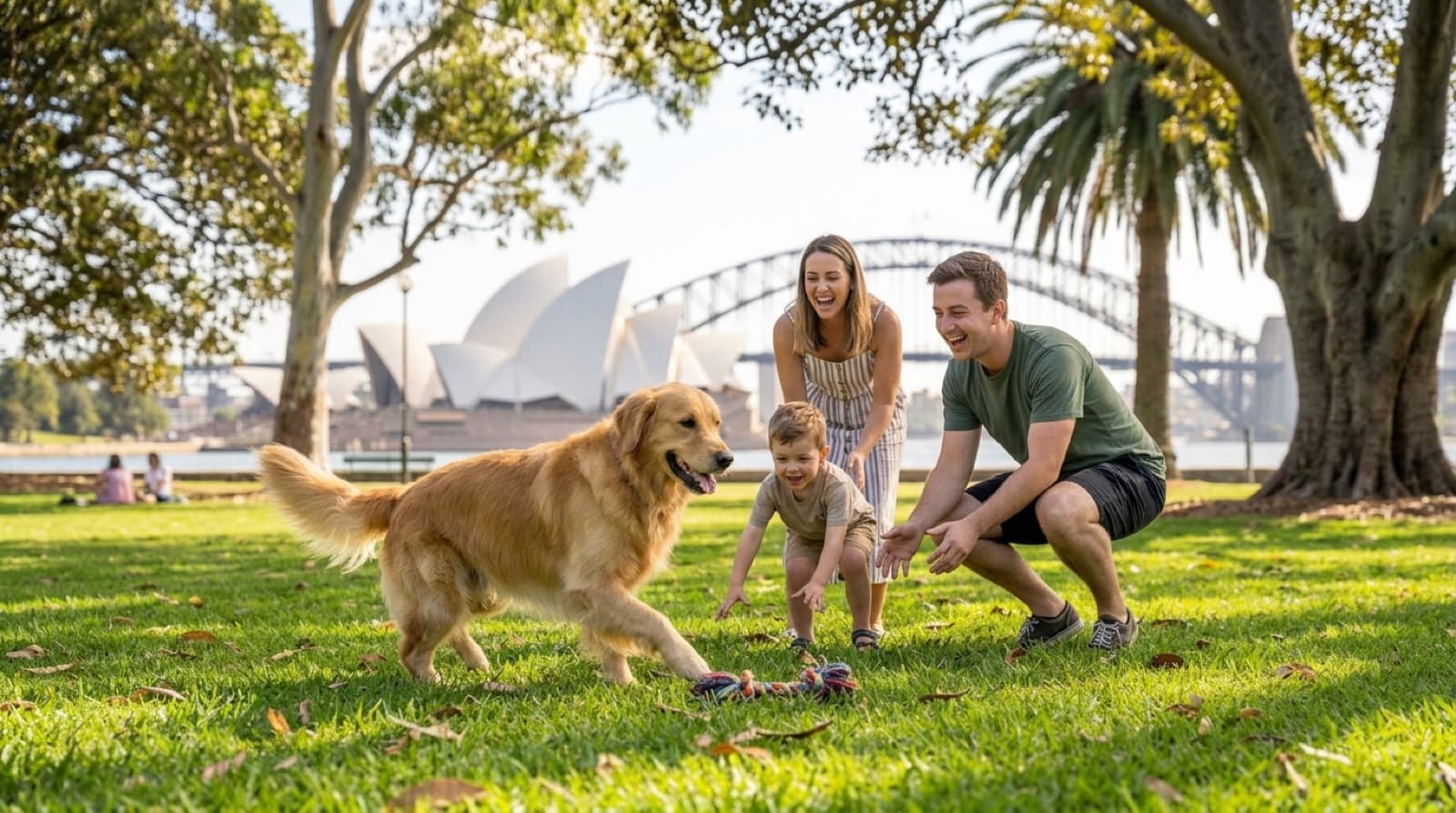
The reputation is not marketing. Golden Retrievers really are one of the gentlest, most people-focused breeds, and the traits that make them wonderful family dogs are consistent enough that rescue workers and vets see them again and again. A well-socialised Golden is patient with children, tolerant of noise and chaos, friendly with strangers and other dogs, and forgiving of the mistakes a first-time owner will inevitably make.
Two things drive it. First, temperament: Goldens were bred to work closely and cooperatively with people, so they are soft-natured, biddable and happiest when they are with their family rather than off doing their own thing. Second, trainability: the breed is clever and eager to please, and it responds beautifully to reward-based, force-free training, which is exactly the approach the RSPCA Knowledgebase recommends for all dogs. That combination of gentleness and trainability is why a Golden forgives a busy household and a new owner more than most large breeds do.
None of this makes a Golden a low-effort pet, though, and that is the part the reputation quietly hides. A gentle nature is not the same as an easy one. The rest of this guide is the honest other half: what the breed genuinely asks of you.
The exercise and mental work people underestimate
The single biggest surprise for new Golden owners is how active the breed is. The calm, dozing family dog people picture is the finished adult. A young Golden is a sporting dog built to work all day, and it needs a real outlet: plan on a good hour or more of exercise for a healthy adult, split into a walk plus active play, training games or a swim.
Physical exercise is only half of it. Goldens are clever and get bored, and a bored Golden becomes a mouthy, jumpy, destructive one. Add mental work every day: scent games, food puzzles, short training sessions, and jobs to do. Swimming deserves a special mention, because Goldens love water, it is superb low-impact exercise for a large breed, and Sydney has the beaches, harbour spots and rivers to make it easy. In summer, exercise in the cool of the early morning or evening and never push a heavy-coated dog in the heat.
Shedding, grooming and the double coat
Goldens shed, and they shed a lot. That thick, beautiful double coat drops hair year-round and blows out more heavily in spring and autumn, so a Golden home means hair on the floors, the furniture and your clothes, and a vacuum that earns its keep. If anyone in the household cannot tolerate dog hair, this is not the breed.
Grooming is an ongoing job, not an occasional one. Brush the coat two or three times a week, and more during the seasonal moults, to manage shedding, prevent matting and keep the skin healthy. Check and dry the floppy ears regularly, especially after a swim, to head off ear infections, and keep nails and teeth in order. Hold one rule firmly: never shave a Golden's double coat to keep it cool. The coat regulates temperature in heat as well as cold and protects the skin from sunburn, and shaving can damage how it regrows. Brush it out instead.
Space, mouthiness and being left alone
A Golden is a large, active dog, and it does best in a home with a securely fenced yard. An apartment can work, but only with serious commitment to daily exercise and company, because in a flat you are the dog's whole outlet. A yard is never a substitute for walks and interaction, but it gives a big dog room to be a big dog. If you rent or live in strata, confirm a dog of this size is allowed before you commit, because a housing knock-back is a genuine and avoidable path into rescue.
Two breed quirks are worth planning for. Goldens are mouthy: they were bred to carry things in a soft mouth, so a Golden that grabs a shoe, a toy or your sleeve is being a Golden, and the answer is to redirect that need onto toys and training rather than to punish it. And Goldens are deeply people-focused, so they do not cope well left alone all day. A household that is out from morning to night is not a good fit for the breed, and separation-related problems are common in Goldens left too long. Company, or at least a plan for the dog's day, matters.
Browse adoptable Golden Retrievers in Sydney
An adult or senior Golden from rescue has a known temperament, skips the bouncy teenage phase, and has usually been assessed with kids and other pets. Browse live NSW listings.
See Available Golden Retrievers →With children and other pets
This is where the breed shines. Most Goldens are patient and gentle with children and get on well with other dogs and cats, particularly when raised together or introduced slowly. The cautions are practical rather than temperamental. A boisterous young Golden can knock over a toddler in play without a scrap of bad intent, so supervise interactions with very small children, and teach kids to give the dog space and calm hands. Manage the mouthiness with training so an excited dog learns not to grab.
For multi-pet homes, adopting an adult from rescue is a real advantage: a Golden in foster or shelter care has usually been assessed with dogs, cats and children, and that note tells you far more about the individual dog than the breed reputation does. Introduce resident pets slowly, supervise the settling-in period, and let relationships build at the animals' pace.
The adolescence nobody warns you about
If there is one stage that catches people out, it is the teenage phase. From roughly six months to around two years, a Golden is physically big but mentally still a youngster: bouncy, mouthy, easily distracted, prone to jumping up, counter-surfing, chewing and pulling on the lead, and apt to seem to forget training it knew last week. This is normal, not a defect, and it is exactly when some Goldens are surrendered by owners who expected an instant calm family pet.
The way through is consistency and patience. Keep up reward-based training, give plenty of exercise and mental work to burn the energy, and consider a good Sydney force-free trainer or an adolescent class if you want structure and support. Most Goldens settle into their calmer adult selves by around two to three years. And here is the practical shortcut: adopting an adult or senior Golden skips this stage entirely, which is one more reason an older rescue dog is often the easier, kinder choice for a first-time owner.
Giving a Golden a good life in Sydney
Sydney genuinely suits the breed, mostly because Goldens love water and the city has so much of it. Fenced and designated off-leash areas like Sydney Park at St Peters, the timed zones in Centennial Parklands, Sirius Cove Reserve in Mosman and Bicentennial Park at Sydney Olympic Park give a Golden room to run and socialise, and dog-friendly beaches and harbour spots make swimming easy, which is superb low-impact exercise for a large dog. Always check your council's off-leash rules and times before you go, and build reliable recall before letting any dog off-lead.
Two Sydney-specific habits complete the picture. Manage the heat: a heavy double coat feels the summer, so exercise in the cool of early morning or evening, carry water, and never leave a dog in a car. And manage ticks: the paralysis tick is a year-round, potentially fatal risk across the Sydney region, so keep the dog on a vet-recommended monthly prevention product and check the coat down to the skin after every bush or coastal outing, drying the ears after a swim. We cover the medical side in full in our Golden Retriever health guide, and where to find one in our adoption guide.
Frequently Asked Questions
Are Golden Retrievers good family dogs?
Yes, and it is the main reason the breed is so loved. A well-socialised Golden Retriever is patient, gentle, tolerant and genuinely enjoys being part of a busy household, which makes it one of the best breeds for families with children. Goldens are people-focused, forgiving and eager to please, and they usually get on well with other dogs and even cats they are introduced to carefully. The honest cautions are size and energy rather than temperament: a boisterous young Golden can knock over a toddler in play, and the breed is mouthy and loves to carry and mouth things, so supervision around small children and early reward-based training both matter. A Golden also does not cope well left alone all day, so the best family fit is a home where the dog is included in daily life.
Is a Golden Retriever a good first dog?
Often yes, with eyes open. Goldens are gentle, trainable and forgiving, which makes them one of the more first-timer-friendly large breeds, and they respond beautifully to reward-based training. The catch that surprises new owners is that a Golden is an energetic sporting dog, not a couch dog, especially as an adolescent, so it needs a good hour or more of exercise plus mental work every day, along with regular grooming and a real budget for a large breed. If you can commit to that, a Golden is a wonderful first dog, and a calm adult or senior from rescue is an especially forgiving place to start. If your life is very busy or you want a low-effort pet, an older, lower-energy dog will suit you better, and being honest with the rescue helps them match you well.
How much exercise does a Golden Retriever actually need?
More than most people expect from a dog with such a gentle reputation. Plan on a good hour or more a day for a healthy adult, split into a walk plus active play, training games or a swim, and add mental work like scent games, food puzzles and short training sessions, because a bored Golden is a destructive Golden. This is a sporting breed built to work all day, and adolescents in particular need a real outlet or they become mouthy, jumpy and hard to settle. Swimming suits the breed and Sydney well and is easy on the joints. In summer, exercise in the cool of the early morning or evening and never push a heavy-coated dog in the heat. Older Goldens slow down and need less, but underestimating the exercise of a young one is one of the most common reasons people struggle with the breed.
Do Golden Retrievers shed a lot, and how much grooming do they need?
Yes, Goldens shed heavily, and grooming is a real, ongoing commitment, not an optional extra. They carry a thick double coat that sheds year-round and blows out more heavily in spring and autumn, so expect hair on floors, furniture and clothes, and plan to vacuum often. Brush the coat two or three times a week, and more during the seasonal moults, to manage shedding, prevent matting and keep the skin healthy. Check and dry the floppy ears regularly, especially after swimming, and keep nails and teeth in order. One firm rule: never shave a Golden's double coat to cool it down. The coat regulates temperature and protects the skin from sunburn, and shaving can damage how it regrows. If you or a family member cannot tolerate dog hair, a Golden is not the breed for you.
Can a Golden Retriever live in an apartment in Sydney?
It can be done, but a Golden is better suited to a home with a yard, and an apartment only works with real commitment to exercise. This is a large, active, shedding sporting dog, so in an apartment you are the dog's only outlet, which means daily walks, play and mental work without fail, plus company, because Goldens do not do well left alone for long stretches. If you have a securely fenced yard, that is a better fit, though a yard is never a substitute for walks and interaction. If you rent or live in a strata building, confirm a dog of this size is allowed before you apply or adopt, because being knocked back on housing after taking on a big dog is a genuine and avoidable path into rescue. Realistically, a busy Sydney apartment with an out-all-day household is not the right home for a young Golden.
Are Golden Retrievers good with other dogs and cats?
Generally very good, which is another reason the breed suits families and multi-pet homes. Most Goldens are sociable and non-confrontational with other dogs, and many live happily with cats, particularly when raised together or introduced slowly and carefully. As with any dog, it comes down to the individual and to socialisation, so early, positive exposure to other animals and calm, supervised introductions matter. A rescue is a real advantage here, because an adult Golden in foster or shelter care has usually been assessed with other dogs, cats and children, and that note tells you far more about the specific dog than the breed reputation does. Supervise the settling-in period, give resident pets space, and let relationships build at the animals' pace rather than forcing them.
What is Golden Retriever adolescence like, and when does it settle?
It is the stage that catches new owners off guard, because the gentle adult reputation hides a genuinely goofy, high-energy teenage phase. From roughly six months to around two years, a Golden is physically big but mentally still a youngster: bouncy, mouthy, easily distracted, prone to jumping up, counter-surfing, chewing and pulling on the lead, and it may seem to forget training it knew last week. This is normal, not a fault in the dog, and it is when many Goldens are surrendered by owners who expected an instant calm family pet. The way through is consistency: keep up reward-based training, give plenty of exercise and mental work to burn energy, be patient with the testing, and consider a good force-free trainer or a puppy or adolescent class. Most Goldens settle into their calmer adult selves by around two to three years. Adopting an adult skips this stage entirely.
How much time and money does a Golden Retriever really take?
A Golden is a significant commitment of both. On time, budget for a good hour or more of exercise plus training and play daily, grooming two or three times a week, and genuine company, because this is not a dog that thrives left alone all day. On money, it is a large breed, so food, grooming, bedding, parasite and tick prevention and council registration all cost more than for a small dog, and the breed's health risks (including an elevated cancer risk, joints, ears and skin) mean vet bills can be significant, which is why pet insurance taken out while the dog is young is a sensible move. Adoption keeps the up-front cost low, a few hundred dollars all-inclusive against thousands from a breeder, but the ongoing commitment is the same either way. Go in with a realistic picture of both the time and the budget, and a Golden repays it many times over.
Where can I exercise and swim a Golden Retriever in Sydney?
Sydney suits the breed well, because Goldens love water and there is plenty of it. Fenced and designated off-leash areas like Sydney Park at St Peters, the timed off-leash zones in Centennial Parklands, Sirius Cove Reserve in Mosman and Bicentennial Park at Sydney Olympic Park give a Golden room to run and play with other dogs, and several Sydney beaches and harbour spots have dog-friendly access where a Golden can swim, which is superb low-impact exercise for a large breed. Always check the specific council rules and off-leash times for your area before you go, keep recall reliable before letting a dog off-lead, and in summer stick to the cool of early morning or evening. After any bush or coastal outing, check the coat down to the skin for paralysis ticks and dry the ears after a swim to head off ear infections.
Keep reading
Adoptable Golden Retrievers in Sydney
Live listings of Golden Retrievers and Golden crosses across Sydney and NSW rescues.
Golden Retriever Adoption in Sydney
Where to adopt, why Goldens are uncommon in rescue, and what it costs against a breeder.
Golden Retriever Health Issues in Sydney
The elevated cancer risk, hips and elbows, ears, skin, heart and eyes, plus Sydney heat and tick care.
All Sydney Adoption Guides
Browse every breed and how-to guide for adopting a rescue dog in Sydney.