The short answer
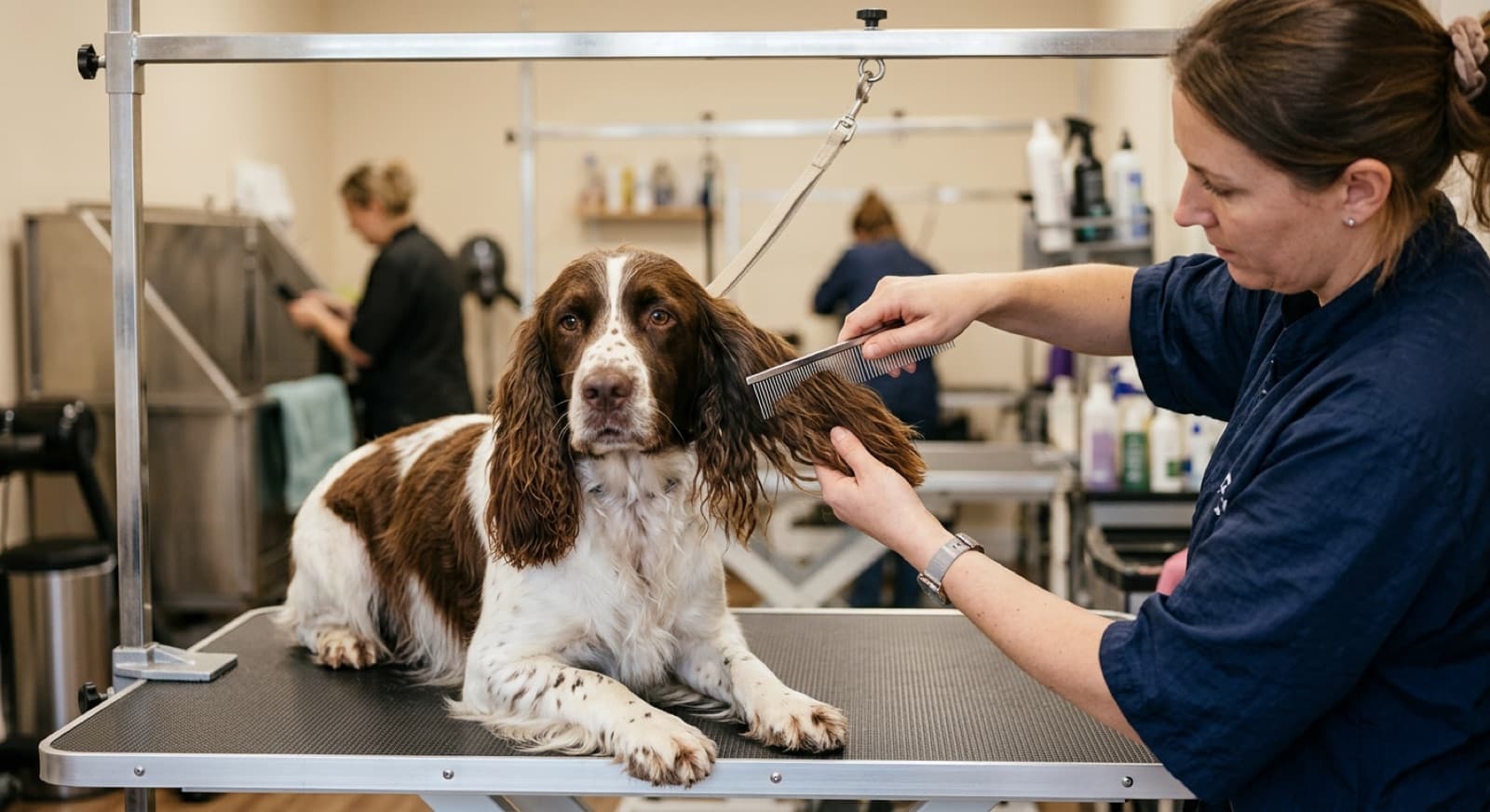
An English Springer Spaniel is not a low-maintenance coat. The medium double coat sheds all year and carries feathering on the ears, chest, legs, belly and tail that mats if you do not brush it several times a week, so plan on regular brushing plus a groomer tidy every 6 to 8 weeks. The ears are the standout care task. Those long, heavy, hairy drop ears hang over the canal and trap moisture, warmth and wax, which is why Springers are prone to recurring ear infections. Keep the ears dry after every swim and bath, keep the hair around them trimmed for airflow, check them weekly, and see a vet at the first sign of head-shaking or odour. In Sydney the humidity, the grass seeds and year-round paralysis ticks all make this a steady, ongoing job.
The feathered gundog coat
Start with the coat, because it shapes half the grooming job. An English Springer Spaniel has a medium-length double coat: a weather-resistant outer coat over a softer, insulating undercoat. On the body the coat is fairly short and easy. The character is in the feathering, meaning the longer, softer hair that hangs off the ears, the chest, the backs of the legs, the belly and the tail. That silky feathering is beautiful, and it is also where all the work is.
The feathering behaves very differently from the body coat. It grows long, it is soft, and soft hair tangles. Leave it and it knits into mats, usually behind the ears, in the armpits, on the trousers at the back of the legs and between the toes. Out on a Sydney walk that same feathering acts like a magnet for grass seeds, burrs, twigs and mud, all of which drive matting faster. So the day-to-day coat job is really about the feathering, not the body.
One useful distinction: working-line Springers, bred for the field, tend to carry a lighter, shorter coat with less feathering, while show-line Springers carry a heavier, more profuse coat that needs more work. Many rescued Springers are somewhere in between or from working lines, so the amount of grooming a particular dog needs varies. A rescue that has had the dog in foster care can usually tell you how heavy its coat runs.
Brushing, trimming and shedding
The home routine is brushing, and the more consistent you are, the easier every part of Springer care becomes. Aim to brush several times a week, ideally most days, and focus on the feathered areas rather than just running a brush over the back.
- Work through the feathering. Use a slicker brush and a comb on the ears, chest, trousers, belly and tail, right down to the skin, so you catch tangles before they become mats.
- Check the mat-prone spots. Behind the ears, the armpits, between the back legs and between the toes knot first. A quick daily check of those spots prevents most problems.
- Comb out after bush walks. Grass seeds and burrs come home in the feathering, so a comb-through after a walk in long grass clears them before they work in.
- Manage the shedding. Springers shed all year with heavier seasonal moults. Regular brushing lifts the loose hair out before it covers the house.
On top of the brushing, most pet Springers get a groomer tidy every 6 to 8 weeks. A groomer neatens the feathering, trims the hair around and under the feet, tidies the belly and rear, and trims the ear hair so the ears stay open and airy. Show Springers are hand-stripped and scissored to a precise outline, but for a pet a neat, practical tidy is all you need, and it is what most rescued Springers get. You can learn the feet and ear trimming at home, which is worth doing because those two jobs matter most for Sydney conditions.
To be clear on shedding, because people ask: Springers are not a low-shedding or hypoallergenic breed. They drop hair steadily and more heavily at moulting time. If a clean, hair-free house is a priority, or someone in the home has allergies, a Springer is not the easy answer, and no dog is truly hypoallergenic. Spend real time around the breed before you commit.
The ears: the single most important care job
If you take one thing from this guide, make it the ears. The Springer's long, heavy, hairy drop ears are the defining care challenge of the breed, and they are the reason so many Springers deal with recurring ear infections. It is simple physics. The ear flap hangs down and seals the ear canal off from the air. Warmth, wax and moisture build up in a dark, closed space, and that is exactly what yeast and bacteria want. Add Sydney's humidity and a dog that loves water, and you have a breed built to get ear infections unless you stay ahead of it.
The good news is that a steady routine prevents most of it. This is the ear-care checklist to build into your week:
- Check the ears weekly. Lift each flap, look inside and have a gentle sniff. A healthy ear looks pale and clean and smells of almost nothing. Redness, a yeasty or foul smell, dark or waxy discharge, or the dog rubbing and shaking its head all mean trouble.
- Keep them dry. Moisture is the enemy. Dry the ears thoroughly after every swim, every bath and every rainy or wet-grass walk. Wet ears left to sit are how most infections start.
- Keep the hair around the canal trimmed and clean. Managing the hair at the opening lets air move and moisture escape, which is half the battle. Your groomer can do this, or you can learn to.
- Use an ear cleaner only if your vet advises one. If your vet recommends a cleaner, use it as directed. Never poke a cotton bud down into the canal, which pushes debris in and can damage the ear.
- Act early. At the first sign of head-shaking, odour, redness or scratching, book the vet. Ear infections are far easier to clear early than once they are entrenched.
One more Springer-specific risk: grass seeds in the ear. A seed can travel down the canal and lodge deep, causing sudden violent head-shaking and pain. That is an emergency vet visit, not something to wait out. The treatment of an active ear infection, and the underlying skin allergies that make some Springers infection-prone, are medical questions, and we cover them properly in the Springer Spaniel health issues guide. This grooming routine is the prevention side; the vet handles the treatment side.
Feet, grass seeds, nails and teeth
The feet are the other feathered trouble spot, and in Sydney they matter more than people expect because of grass seeds. Springers grow hair between the toes and around the pads, and that hair traps seeds, burrs and mud on every walk. A grass seed lodged between the toes can burrow into the skin and cause a painful abscess that needs a vet to open and flush. So keep the feet tidy: trim or have the groomer trim the hair between and around the pads, and after any walk in long grass part the toes, check the pads and pick out anything caught. If your dog suddenly starts limping or obsessively licking one paw, look for a buried seed and get it checked.
Nails and teeth round out the routine. Trim the nails regularly, or have the groomer do it, so they do not click on the floor, catch or splay the toes. And do not skip the teeth. Dental disease is common in dogs, so brush the teeth with a dog toothpaste as often as you can manage and have your vet check them at the annual visit. The RSPCA Australia Knowledgebase has useful general guidance on grooming, ear care and dental care for dogs.
Bathing, and why drying matters most
Bathe a Springer when it is genuinely dirty rather than on a rigid schedule, which for most Sydney dogs means every few weeks or after a muddy park session. Use a dog shampoo, work it through the coat and the feathering, and rinse thoroughly so no residue is left to irritate the skin.
The step that matters most for a Springer is the drying. This is a water-loving breed with drop ears and heavy feathering, and both hold water. Towel the feathering well, and dry inside each ear flap, because wet ears are the number one cause of infection. If your dog tolerates a dryer on a cool or low setting, use it on the feathering and around the ears. Comb the feathering out as it dries so it does not mat. The same drying discipline applies after a swim at the beach, the river or the backyard pool, which Springers do a lot of over a Sydney summer. Dry the ears every single time.
Springer Spaniels in Sydney: heat, humidity and ticks
Sydney conditions shape Springer care in three specific ways. First, heat. The double coat is warm, so do the harder exercise in the cool of early morning or the evening, carry water, and go easy in the middle of a hot, humid summer day. Heat, not cold, is the real dog-safety risk in Sydney. A sensible summer tidy helps, but do not shave the double coat right back to the skin, as the coat protects against sun and heat. Ask your groomer for a practical summer length instead, and never leave any dog in a parked car.
Second, humidity. Sydney is humid, and humidity keeps those drop ears damp and warm, which is why the ear routine is a year-round job here rather than a summer one. Stay on top of the weekly checks and the drying through the humid months especially.
Third, paralysis ticks. These are a year-round danger across the whole Sydney region and they can be fatal, so keep your Springer on a vet-recommended tick prevention product all year and do a physical tick check after any bush walk. A Springer's feathering and heavy ear hair hide ticks well, so a quick pat is not enough. Part the coat and feel right down to the skin, working carefully through the feathering, around and inside the ear flaps, the neck and the legs. If you find a tick, or notice any weakness, wobbliness or a change in your dog's bark or breathing, get to a vet straight away. Talk to your vet about the right prevention product. The Australian Veterinary Association has general guidance on parasite prevention, and you can register your dog with your council as required under the Companion Animals Act through the NSW Pet Registry.
Browse adoptable Springer Spaniels in Sydney
A Springer rewards an owner who keeps up the brushing, the after-walk seed checks and the weekly ear routine. Browse live NSW listings and set an alert so you hear the moment one comes in.
See Available Springer Spaniels →Is the grooming commitment right for you?
Put it together and the picture is honest. An English Springer Spaniel is a wonderful, affectionate, energetic gundog, and its coat and ears are a genuine, ongoing commitment rather than a once-in-a-while chore. The feathering needs brushing several times a week and a groomer tidy every 6 to 8 weeks. The drop ears need a weekly check and religious drying to keep infections at bay. The feet need after-walk grass-seed checks. And all of that runs alongside the exercise and company this active breed needs. None of it is hard, but it is regular, and it does not stop.
For the household that will actually do the routine, a Springer is a brilliant companion: devoted, happy, up for any adventure, and endlessly good-natured. If the daily brushing, the ear drying and the every-6-to-8-week tidy sound like too much, that is worth being honest about before you adopt rather than after, because a matted coat and chronic untreated ear infections are a real welfare problem. Rescues like RSPCA NSW, AWL NSW, Sydney Dogs and Cats Home, Monika's Doggie Rescue and Maggie's Rescue take in dogs of all breeds and crosses, know their dogs from foster care, and can tell you honestly how heavy a particular Springer's coat runs and whether it has a history of ear trouble. Our Springer Spaniel adoption guide covers where to look and what adoption involves.
Frequently Asked Questions
How often should I groom a Springer Spaniel?
Brush an English Springer Spaniel several times a week, ideally most days, and book a tidy or trim with a groomer roughly every 6 to 8 weeks. The medium body coat is easy, but the feathering, meaning the longer soft hair on the ears, chest, legs, belly and tail, tangles and mats quickly if you skip the brushing. Those feathered areas also pick up grass seeds, burrs and mud on every walk, so a comb through after a bush walk saves a lot of grief. On top of the home brushing, most pet Springers get their coat tidied, the feet neatened and the ears trimmed by a groomer every couple of months. Show dogs are hand-stripped and scissored, but a neat pet trim is completely fine and is what most rescued Springers get.
How do I stop my Springer getting ear infections?
Keep the ears dry and airy, check them weekly, and see your vet at the first sign of trouble. The Springer's long, heavy, hairy drop ears hang down over the ear canal and trap moisture, warmth and wax, which is the classic recipe for recurring ear infections. The prevention routine is simple. Dry the ears thoroughly after every swim, bath and rainy walk. Keep the hair around the canal opening trimmed and clean so air can move. Look and smell inside each ear once a week. Only use an ear cleaner if your vet recommends one, and never push a cotton bud down into the canal. If you see head-shaking, redness, a bad smell, dark discharge or the dog rubbing its ear, that is a vet visit, not a home fix. Sydney's humidity makes this a year-round job, not just a summer one.
Do Springer Spaniels shed?
Yes, English Springer Spaniels shed moderately all year, with heavier seasonal drops, so they are not a low-shedding or hypoallergenic breed. The double coat sheds steadily, and you will find hair on the floor, the couch and your clothes, especially during the bigger seasonal moults. Regular brushing several times a week is the main way to manage it, because it lifts the loose hair out of the coat before it ends up around the house and keeps the feathering from matting at the same time. Do not choose a Springer expecting a clean, hair-free home the way you might with a Poodle or a Schnauzer. If someone in the household has allergies, spend real time around the breed first, because no dog is truly hypoallergenic and Springers shed more than many.
Do Springer Spaniels need professional grooming?
Most pet Springer Spaniels benefit from a professional groom every 6 to 8 weeks, though it is not as essential as it is for a coat that never sheds out. A groomer tidies the body coat, neatens the feathering, trims the hair around and under the feet, cleans up around the rear, and trims the ear hair so the ears stay airy. You can learn to do a lot at home with a brush, comb, scissors and clippers, and plenty of owners do, especially the ear and feet trimming that matters most for Sydney. Working-line Springers have lighter coats and need less; show-line dogs carry heavier feathering and need more. Either way the ear care and the after-walk grass-seed checks are on you between visits.
Should I shave my Springer Spaniel in summer?
No, do not shave a Springer's double coat right back to the skin, even in a Sydney summer. The coat gives the dog some protection from sun and heat, and shaving a double coat can damage how it grows back and expose the skin to sunburn. A better approach for the heat is a sensible tidy from your groomer, keeping the feathering shorter and neater, trimming the belly and the hair around the ears, and clearing the feet. That reduces the coat's bulk and makes the dog more comfortable without stripping its protection. The bigger summer risks in Sydney are heat and paralysis ticks, so walk in the cool of the morning or evening, carry water, and keep up year-round tick prevention rather than reaching for the clippers.
How do I get grass seeds out of my Springer’s coat?
Check the feathered areas and the feet by hand after every walk, and comb or pick the seeds out before they work into the skin. Grass seeds are a real Sydney bushland hazard, and a Springer's feathering on the ears, legs, belly and especially between the toes is exactly where they collect. A grass seed can burrow into the skin, into a paw, or into an ear and cause a painful abscess or infection that needs a vet to remove it. After a walk in long grass, run your hands and a comb through the feathering, part the hair between the toes and check the paw pads, and look and feel inside the ears. Keeping the feet and ear hair trimmed makes seeds far easier to spot and remove. If your dog suddenly starts limping, licking a paw, shaking its head or has a weepy swelling, get it checked, because a buried seed will not come out on its own.
How often should I bathe a Springer Spaniel?
Bathe a Springer when it is actually dirty rather than on a fixed schedule, which for most Sydney dogs means every few weeks or after a muddy or smelly adventure. Use a dog shampoo, rinse thoroughly so no residue is left to irritate the skin, and here is the part that matters most for a Springer: dry the dog properly afterwards, paying special attention to the ears and the feathering. Wet ears left to sit are how infections start, and damp feathering mats. Towel the feathering and use a dryer on a cool or low-heat setting if the dog tolerates it, and dry inside each ear flap. Over-bathing can dry the skin out, so let the dog's real grubbiness guide you rather than washing for the sake of it.
Do Springer Spaniels cope with the Sydney heat?
Springers cope reasonably well but need sensible summer care, because their double coat is warm and heat is the real dog-safety risk in Sydney. Walk in the cool of early morning or the evening on hot, humid days, always carry water, and never leave a dog in a parked car. A sensible summer tidy from your groomer helps, but do not shave the coat to the skin. Sydney's humidity also makes the ears more prone to infection year-round, so stay on top of the ear-drying routine through summer especially. And paralysis ticks are a year-round danger across Sydney that can be fatal, so keep your Springer on a vet-recommended tick prevention product all year and feel right down to the skin, including through the feathering and around the ears, when you do a tick check after any bush walk.
Keep reading
Adoptable Springer Spaniels in Sydney
Live listings of English Springer Spaniels and Springer crosses across Sydney and NSW rescues.
Springer Spaniel Adoption in Sydney
Where to adopt, why Springers end up in rescue, and what adoption costs against a breeder.
Springer Spaniel Health Issues in Sydney
Ear and skin problems, hips and eyes, plus Sydney heat and year-round tick prevention.
All Sydney Adoption Guides
Browse every breed and how-to guide for adopting a rescue dog in Sydney.