The short answer
The Chinese Crested is a genuinely long-lived toy breed that often reaches 13 to 15 years, so start from a place of reassurance. The condition to plan for first is dental disease, which is common in the breed and worse in the Hairless variety, because the same gene that removes the coat tends to leave incomplete or missing teeth. Beyond teeth, watch for a slipping kneecap, inherited eye conditions such as progressive retinal atrophy, and, in the Hairless variety, skin that needs a regular routine for acne, sun protection and dryness. Keep the dog lean, brush its teeth, and stay on year-round paralysis tick prevention.
A long-lived breed first
Before the list of conditions, the honest headline is a good one. The Chinese Crested is one of the longer-lived companion breeds you can own. It is a small dog with no extreme body shape, no flat face, no exaggerated build, so it sidesteps a lot of the problems that shorten the lives of bigger or heavily engineered breeds. Most Chinese Cresteds live around 13 to 15 years, and plenty carry on into their late teens as bright, affectionate little companions.
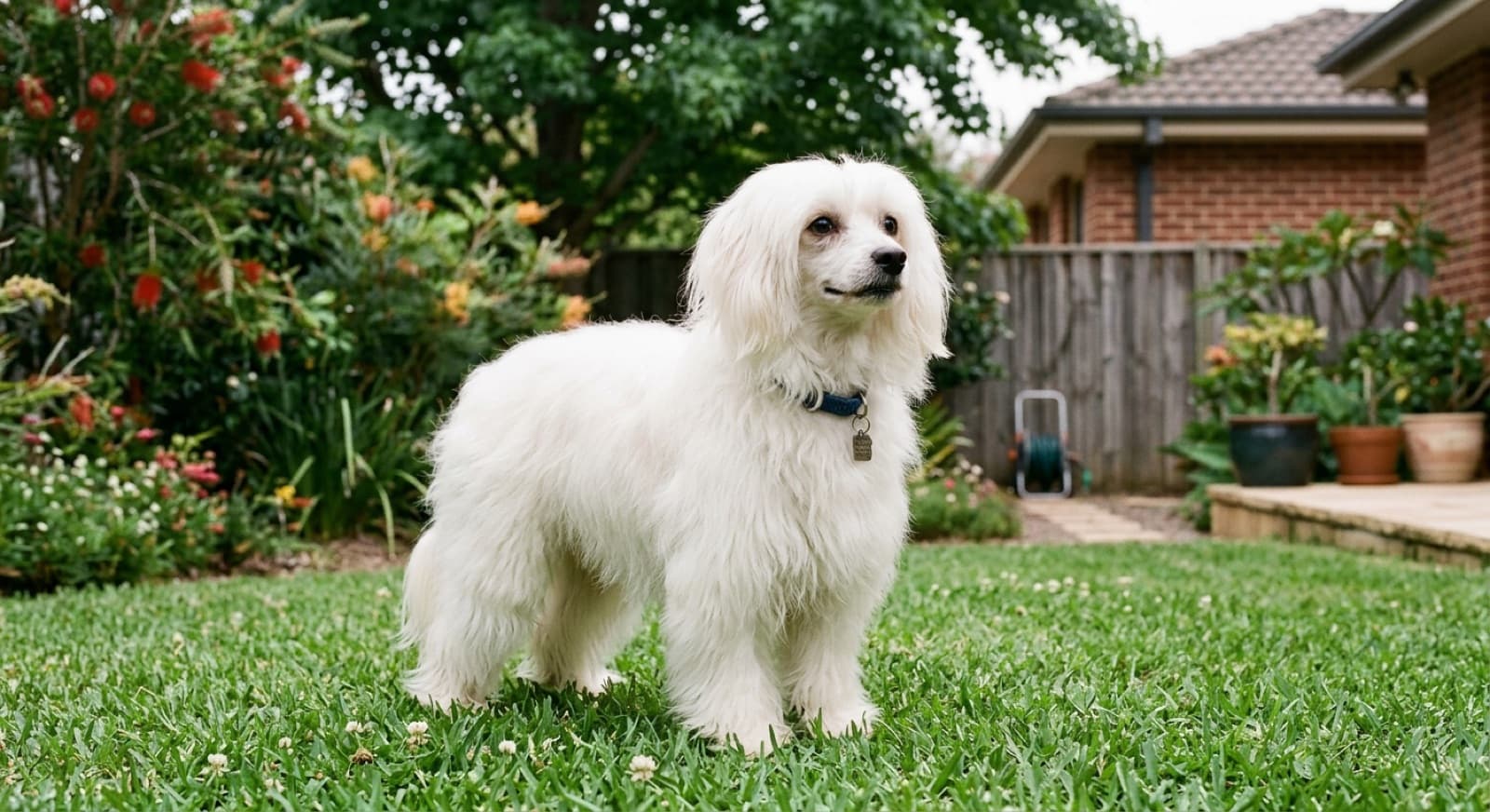
So this article is not a warning label. It is a plan. The breed comes in two varieties from the same litters: the Hairless, with smooth skin and tufts of hair on the head, feet and tail, and the Powderpuff, with a full soft coat. Most of the health picture is shared, but two things differ by variety, teeth and skin, and both are worse in the Hairless. Knowing the specifics lets you spot them early and act, while much of what keeps a Crested well is ordinary care: clean teeth, a lean weight, real exercise, and steady tick prevention. The RSPCA Australia Knowledgebase has good general guidance on preventative care and healthy weight that applies to any dog.
Dental disease: the one to plan for first
If there is one thing to understand about Chinese Crested health, it is the teeth. Dental disease is common across small breeds, because a small mouth crowds the teeth and traps plaque, but in the Chinese Crested there is an extra twist. The gene that gives the Hairless variety its bare skin is linked to abnormal tooth development, so a Hairless Crested often has incomplete or missing teeth, small pointed or peg-like teeth, and teeth that are more prone to decay and gum disease. The Powderpuff variety, with its full coat, usually has more normal teeth, though it still has a small toy-breed mouth.
What this means day to day. Dental care matters more in this breed than in most, and it pays to build the habit from the moment your Crested comes home. Left unattended, dental disease is not just cosmetic. It causes pain, tooth loss and gum infection, and the bacteria involved can affect the heart, liver and kidneys over time. The signs to watch for are bad breath, red or bleeding gums, reluctance to eat hard food, pawing at the mouth, and visible tartar on the teeth.
What to do. Regular tooth brushing with a pet toothpaste is the single most effective habit, backed up by dental chews and, when your vet advises, professional cleans under anaesthetic to remove tartar below the gumline. Because a Hairless Crested may have fewer or oddly shaped teeth to start with, ask your vet to chart the mouth at a check-up so you both know what is there and what needs watching. It is one of the easiest problems to stay ahead of and one of the most rewarding, because a comfortable mouth makes for a happier, longer-lived dog.
Eyes: progressive retinal atrophy and lens problems
The Chinese Crested can carry several inherited eye conditions, and the most significant is progressive retinal atrophy, usually shortened to PRA. It is a slow, painless degeneration of the light-sensing cells at the back of the eye, and it gradually reduces vision. The first sign owners often notice is poorer sight in dim light, a dog that hesitates on the stairs at dusk or bumps into things in a darkened room. Over time it can progress to fuller vision loss. There is currently no cure, which is exactly why responsible breeders use eye testing and DNA screening to keep it out of their lines.
The reassuring part is that dogs adapt to gradual vision loss far better than people expect, leaning on scent and memory and a familiar home. Cresteds can also have lens problems including lens luxation, where the lens slips out of its normal position and can be uncomfortable or affect eye pressure, along with cataracts, where the lens clouds so the pupil looks milky, and dry eye. The general rule for a Crested's eyes is simple: any slow cloudiness, night-time hesitancy or change in how an eye looks earns a routine check, and any red, painful or suddenly cloudy eye earns an urgent one.
Joints: kneecaps and Legg-Calve-Perthes
As a small, light dog the Chinese Crested can have a couple of the joint issues seen across toy breeds. Patellar luxation, where the kneecap slips out of its groove, is the common one and often looks like a brief skip or hop on a back leg that then rights itself as the kneecap pops back. Many dogs live comfortably with a mild version, while more serious cases cause ongoing lameness and are worth assessing with a vet, who can grade it and advise whether anything needs doing.
Legg-Calve-Perthes disease is one to know in small breeds specifically. It is a problem of the hip in young dogs where the top of the thigh bone loses its blood supply and begins to break down, causing pain and limping, usually in a dog under a year old. A young Chinese Crested that develops a persistent limp on a back leg should be seen by a vet, since these conditions are diagnosed with an examination and imaging and are very treatable when caught early. Keeping the dog lean takes strain off every joint and is the simplest thing you can do for its legs.
Skin: caring for the Hairless variety
The Hairless Chinese Crested is one of the few breeds where the skin itself needs a care routine, because so much of it is exposed. It is not a health crisis, just a bit of upkeep, and once you know the routine it takes only minutes.
Acne and blackheads. The bare skin, especially over the back and rump, can develop comedones, which are blackheads, and pimple-like breakouts. Gentle regular cleansing helps keep the pores clear, and your vet can advise if spots become inflamed or infected. Sunburn. With little coat to shield it, a Hairless Crested's skin burns easily, and the Sydney sun is strong. Limit exposure in the middle of the day, provide shade, and use a pet-safe sunscreen on exposed areas for longer stretches outdoors. Dryness. The skin can get dry and needs a suitable moisturiser to stay supple, while harsh human products should be avoided.
Because the skin does the coat's job of regulating temperature, a Hairless Crested also feels the cold and, in a Sydney summer, the heat. Our Chinese Crested skin and coat care guide walks through the full routine for both the Hairless and Powderpuff varieties, from cleansing and sun protection to grooming the coated Powderpuff.
Emergency: paralysis tick signs or a sudden collapse
Two situations mean get to a vet now, not later. The first is paralysis tick. If your dog develops a wobbly or weak back end, an unsteady walk, a changed or weaker bark, gagging, retching, vomiting or laboured breathing, treat it as an emergency, because the toxin causes an ascending paralysis that is fatal without veterinary treatment. The second is any sudden collapse, seizure or laboured breathing at rest. In both cases phone ahead so the team is ready and go straight in, including out of hours, to an emergency hospital such as SASH, which offers round-the-clock care in Sydney. With a tick or a collapse, minutes matter, so do not wait to see if it settles.
The Sydney paralysis tick point
One health risk has nothing to do with the breed and everything to do with where you live. The paralysis tick is native to the east coast of Australia, including the coastal and bushland areas around Sydney, and its bite releases a toxin that causes an ascending paralysis which is fatal without veterinary treatment. It is a year-round risk here, not just a summer one, which matters for any small dog that noses through gardens, parks and long grass.
The response is straightforward. Keep your Chinese Crested on a vet-recommended tick prevention product every single month with no gaps, and after any walk through bush or long grass run your hands slowly over the whole dog, feeling for a lump. A Hairless Crested's bare skin makes ticks easier to find than on a coated dog, which is a small silver lining, but a Powderpuff's full coat gives a tick good cover, so check carefully, under and inside the ear flaps, around the face and muzzle, under the collar, in the armpits and between the toes. If you see the emergency signs above, get to a vet at once. Ask your own vet which prevention product suits your dog.
Browse adoptable Chinese Cresteds in Sydney
Adopting an adult lets you learn a dog's health history directly, with a vet check and dental chart already done and any skin routine already understood by a foster carer. Chinese Cresteds reach rescue less often than mainstream breeds, so browse live NSW listings and set an alert to hear the moment one comes in.
See Available Chinese Cresteds →Is pet insurance worth it for a Chinese Crested?
For a long-lived toy breed the case for insurance is really a case for budgeting. The Chinese Crested is not a high-risk dog, but the conditions it does have, dental work, an eye assessment, a kneecap that needs surgery, tend to arrive as one-off bills rather than steady costs, and a dental procedure or knee operation can run into four figures. Insurance is one way to smooth those; a dedicated savings buffer is another. The key detail with any policy is that pre-existing conditions are excluded, so the time to insure is when the dog is young and well, before anything is on the record.
If you go the insurance route, compare a few Australian providers on what they actually cover for dental, and read the fine print on dental cover in particular, since it varies a lot between policies and is directly relevant to this breed. Names worth comparing include Bow Wow Meow and Petplan Australia, with many brand-name policies underwritten by PetSure. Whatever you choose, decide early rather than after a diagnosis, because that is when cover is broadest.
Why adopting a Chinese Crested is not a health disadvantage
People sometimes worry that a rescue dog is a health gamble next to a breeder puppy. For a small, sound breed like the Chinese Crested the picture is more balanced than that. A Crested adopted through a reputable Sydney rescue arrives desexed, vaccinated, microchipped, treated for parasites and vet-checked, with all of it included in the fee. You are not taking on an unassessed animal, and with this breed a vet check usually includes a look at the mouth, which is exactly where you want eyes.
Adopting also means the day-to-day picture is often known upfront. A foster carer who has lived with the dog can tell you how its teeth and skin have been, how it copes on walks, and whether it has any quirks, which is real information a puppy cannot offer. If you are weighing it up, our Chinese Crested adoption guide for Sydney covers where to look and what it costs. Sydney rescues worth watching include RSPCA NSW, AWL NSW, Sydney Dogs and Cats Home, Monika's Doggie Rescue and Maggie's Rescue.
Keeping a Chinese Crested healthy: the checklist
Most of what keeps a Chinese Crested well is routine. This is a long-lived breed, so the habits below do the heavy lifting.
- Look after the teeth. Regular tooth brushing, dental chews and professional cleans when your vet advises are the most important habit in this breed, especially for a Hairless Crested.
- Mind the skin, if hairless. Gentle cleansing for acne, pet-safe sunscreen and shade against the Sydney sun, and a moisturiser for dryness keep bare skin healthy.
- Watch the eyes. Note any night-time hesitancy, slow cloudiness or change in an eye, and treat any red, painful or suddenly cloudy eye as an emergency.
- Keep the dog lean. Measure meals to a visible waist and go easy on treats. A lean Crested carries less risk of joint trouble and tends to live longer.
- Give it real exercise. A daily walk plus play keeps a lively little dog fit and holds a healthy weight, walked in the cooler hours in summer.
- Book regular vet checks. Annually while adult, then twice yearly for a senior, so dental changes, eye changes or an early joint issue are caught early.
- Stay on year-round tick prevention. Use a vet-recommended product every month without a gap, because the paralysis tick on the NSW coast is a fatal risk.
When to see the vet urgently
Most Chinese Crested health issues are handled at a normal appointment. A few need a faster response. Get to a vet immediately, including out of hours, if you see any of these:
- A wobbly or weak back end together with a changed or weak bark, gagging, retching, vomiting or laboured breathing (possible paralysis tick).
- A red, painful, cloudy or bulging eye, or squinting and holding an eye shut (possible glaucoma or lens problem, which can cost the eye quickly).
- Sudden collapse, seizures, or laboured breathing at rest.
- Refusing to eat with obvious mouth pain, drooling or facial swelling (possible severe dental infection).
For the everyday things, such as bad breath or tartar, an intermittent skip on a back leg, a spot of acne on bare skin, night-time hesitancy, or steady weight gain, book a normal vet visit soon rather than waiting. Catching those early gives your Chinese Crested the best outcome. When in doubt, phone your vet or a 24/7 hospital and describe what you are seeing. They would far rather you called and it was nothing than the other way around. For a broader look at the breed before you commit, browse the full Sydney adoption resources hub, or talk to your own vet, whom the Australian Veterinary Association can help you find.
Frequently Asked Questions
Are Chinese Cresteds a healthy breed?
Yes, largely. The Chinese Crested is a small, generally long-lived toy breed that often reaches 13 to 15 years and sometimes older, and that longevity is part of the appeal. It is not free of health issues, though. The one to plan for first is dental disease, which is common in the breed and worse in the Hairless variety, because the same gene that removes the coat also tends to leave incomplete or missing teeth. Beyond teeth, the breed can have a slipping kneecap, inherited eye conditions, and, in the Hairless variety, skin that needs a real care routine. Most of it is manageable with routine vet care, good dental habits, a lean weight and year-round tick prevention. Start from reassurance, then learn the few specifics.
What health problems do Chinese Cresteds have?
The main ones are dental disease, patellar luxation, eye conditions and, in the Hairless variety, skin issues. Dental disease is the standout, because the gene behind the hairless coat is linked to abnormal, incomplete or missing teeth, so a Hairless Crested often has a mouth that needs extra attention. Patellar luxation is a slipping kneecap common in toy breeds and shows as a brief skip on a back leg. Eye conditions include progressive retinal atrophy, an inherited disease that slowly reduces vision, along with lens and other problems. Young dogs can also develop Legg-Calve-Perthes disease of the hip. The Hairless variety's bare skin is prone to acne and blackheads, sunburn and dryness. None of this is a reason to avoid the breed, but each is worth knowing so you can act early.
How long do Chinese Cresteds live?
Chinese Cresteds often live around 13 to 15 years, and some reach their late teens, which is a long life and one of the best things about the breed. As a small dog with no extreme body shape, it avoids many of the problems that shorten the lives of larger or heavily built breeds. The things that most affect a long life are within your control: staying on top of dental care, keeping the dog lean and fit, caring for the Hairless variety's skin, keeping up year-round paralysis tick prevention, and booking regular vet checks that become twice-yearly in old age. Ask about a dog's health history when you adopt, and learn the early signs of the breed's few distinctive conditions so nothing is missed.
Why do Chinese Cresteds have bad teeth?
Because the gene that gives the Hairless variety its bare skin is also linked to abnormal tooth development, so many Hairless Cresteds have incomplete or missing teeth, small pointed or peg-like teeth, and teeth that are more prone to decay and gum disease. The Powderpuff variety, which has a full coat, generally has more normal teeth, though small mouths in any toy breed crowd the teeth and trap plaque. The practical result is that dental care matters more in this breed than in most. Regular tooth brushing, dental chews, and professional cleans when your vet advises keep problems in check. Left alone, dental disease causes pain, tooth loss and infection that can affect the rest of the body, so it is worth staying ahead of from day one.
What eye problems affect Chinese Cresteds?
The breed can carry several inherited eye conditions, the most significant being progressive retinal atrophy, or PRA, which slowly destroys the light-sensing cells at the back of the eye and gradually reduces vision, often starting with poorer sight in dim light. It is not painful, and many dogs adjust remarkably well as it progresses, but there is currently no cure, which is why responsible breeders use eye testing and DNA screening to reduce it. Cresteds can also have lens problems including lens luxation, where the lens slips from its normal position, as well as cataracts and dry eye. Any slow cloudiness, bumping into things in low light, or a red, painful or suddenly cloudy eye deserves a vet check, and a sudden painful eye is an emergency.
Do Chinese Cresteds get knee or hip problems?
Some do. As a small dog the Chinese Crested can have patellar luxation, where the kneecap slips out of its groove and shows as a brief skip or hop on a back leg that then rights itself. Mild cases are common and many dogs cope well, while more serious cases cause ongoing lameness and are worth assessing with a vet. Young Cresteds can also develop Legg-Calve-Perthes disease, a hip condition where the top of the thigh bone loses its blood supply and starts to break down, causing pain and limping usually before a year of age. A young dog with a persistent limp on a back leg should be seen by a vet, since both are diagnosed with an examination and imaging and are very treatable when caught early. Keeping the dog lean takes strain off every joint.
How do I care for a hairless Chinese Crested’s skin?
The bare skin of a Hairless Chinese Crested needs a light, regular routine rather than anything complicated. The skin can develop acne and blackheads, especially over the back and rump, so gentle cleansing helps keep pores clear, and your vet can advise if breakouts become inflamed. Because the skin has little coat to protect it, sunburn is a real risk in the Sydney sun, so limit midday exposure and use a pet-safe sunscreen on exposed areas for time outdoors. The skin can also get dry, and a suitable moisturiser keeps it supple. Avoid harsh human products. Our dedicated Chinese Crested skin and coat care guide walks through the full routine for both the Hairless and Powderpuff varieties.
Do rescue Chinese Cresteds come health checked?
Yes. A Chinese Crested adopted through a reputable Sydney rescue arrives desexed, vaccinated, microchipped, treated for worms and fleas, and vet-checked before it is listed, with all of that included in the adoption fee. Any known issue, such as a dental problem, a skin condition or a slipping kneecap, is usually noted on the listing or shared by the foster carer. That is a real advantage, because a carer who has lived with the dog can tell you how its teeth and skin have been day to day, which a puppy from a listing cannot offer. An adult dog is also past the puppy stage where some conditions first appear. Chinese Cresteds reach rescue less often than mainstream breeds, so setting an alert is the practical way to hear when one comes in.
Keep reading
Adoptable Chinese Cresteds in Sydney
Live listings of Chinese Cresteds and Crested crosses across Sydney and NSW rescues.
Chinese Crested Adoption in Sydney
Where to adopt a Chinese Crested or Crested cross, the real costs, and what living with the breed is really like.
Chinese Crested Skin & Coat Care
The Hairless skin routine, sun protection in the Sydney sun, and grooming the coated Powderpuff.
All Sydney Adoption Guides
Browse every breed and how-to guide for adopting a rescue dog in Sydney.