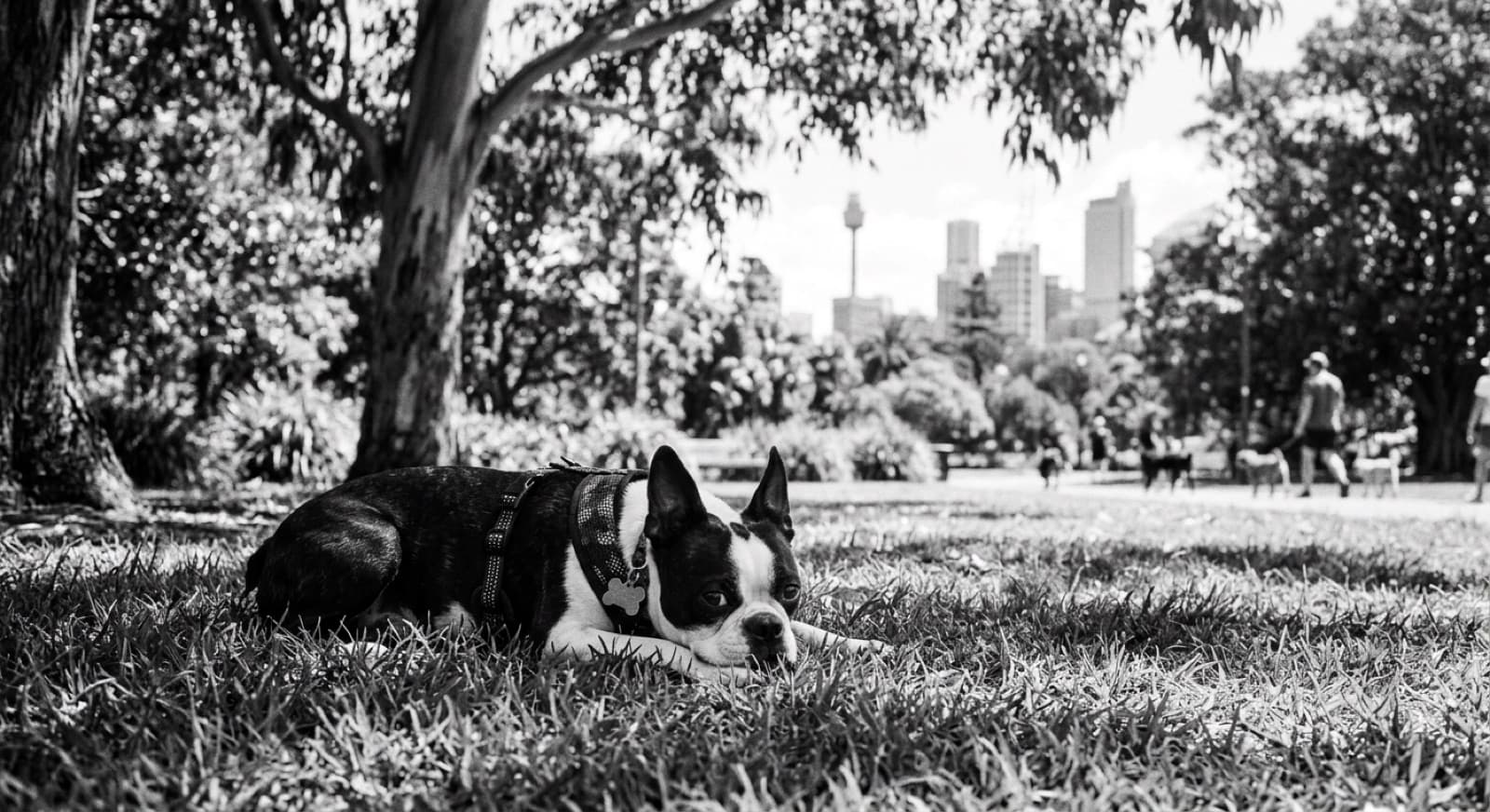
The short answer
A Boston Terrier is a brachycephalic, or flat-faced, breed. The shortened skull crowds the nose and throat, so the dog works harder to move air and cannot cool itself by panting the way a long-nosed dog does. Some snorting, snuffling and snoring is completely normal. Noisy laboured breathing at rest, blue or grey gums, gagging or easy collapse are not, and need a vet. The bigger day-to-day job in Sydney is heat. A Boston overheats fast, and heatstroke can be fatal, so exercise only in the cool of morning and evening, provide shade, water and air-conditioning on hot days, use a harness not a collar, keep the dog lean, and never leave it in a car. Manage the heat and the airway, and a Boston makes a wonderful, affectionate Sydney companion.
Why the flat face changes everything
Everything about caring for a Boston Terrier comes back to one piece of anatomy. A Boston is a brachycephalic breed, which simply means flat-faced, and that shortened skull is exactly what people love about the look. The trouble is that the bone got shorter but the soft tissue inside did not. So the nose, the soft palate and the throat are all crowded into a smaller space than they were designed for.
In practice that can mean narrow nostrils, an over-long soft palate at the back of the mouth, and in some dogs a narrower-than-normal windpipe. Air has to squeeze through a tighter path, so a Boston works harder for every breath than a long-nosed dog does. This is the root of both problems in this guide. It is why some Bostons have real breathing difficulty, and it is why every Boston struggles to keep cool.
Here is the part that catches Sydney owners out. Dogs do not sweat to cool down the way we do. They cool themselves mainly by panting, moving air fast over a wet tongue and airway to shed heat by evaporation. A flat-faced dog cannot pant efficiently, because the airway that is meant to do the cooling is the same crowded airway that is already working overtime. So a Boston Terrier is running its air-conditioning at half power in a climate that regularly hits the mid-thirties. That is the whole reason heat is the defining care challenge for this breed. The Boston Terrier breed page covers the temperament and the affectionate, people-loving side of the dog. This guide is about keeping that dog breathing easy and safe.
Normal breed noise versus a real warning sign
Boston Terriers are noisy breathers, and most of that noise is completely normal. Snorting when excited, snuffling around the yard, and snoring loud enough to wake the household are all standard issue for a flat-faced breed. A relaxed, comfortable Boston that snores on the couch is not in trouble. It is just being a Boston.
What matters is effort and change. The signs that cross from normal-breed-noise into needs-a-vet are:
- Noisy, laboured breathing when the dog is calm and resting, not just after exercise or excitement.
- Gums that turn blue, grey or purple, which signals the dog is not getting enough oxygen and is an emergency.
- Gagging, retching or bringing up foam, especially around eating or excitement.
- Collapse or fainting during or after exercise.
- Snoring or noisy breathing that is clearly getting worse over weeks or months.
If your dog shows the milder end of that list, book a vet check. If it shows blue gums or collapse, treat it as the emergency it is and get to a vet immediately. The honest picture is that in many Boston Terriers the breathing is mild and manageable, but in some it is a real condition, and surgery to open up the nostrils or shorten an over-long soft palate can genuinely improve the more affected dogs. A vet who knows brachycephalic breeds can assess where your dog sits and whether treatment is worthwhile. The RSPCA Australia Knowledgebase has good background on brachycephalic breathing and the welfare issues involved.
Managing the Sydney heat: the big one
This is the section that matters most for a Sydney Boston Terrier. Heat, not cold, is the dog-safety risk in this city. Summers here regularly reach the mid-thirties with real humidity, and a flat-faced dog that cannot pant efficiently is one of the breeds most likely to suffer heatstroke, which can be fatal. Managing the heat is not fussing. It is the core job of owning this breed.
The practical rules are straightforward once you build them into your routine:
- Exercise only in the cool of early morning and evening in summer. Never walk or play hard in the middle of a hot day.
- Avoid hot pavement. Hot bitumen burns paw pads and radiates heat straight up at a low dog. Check it with the back of your hand first, and stick to shade and grass.
- Always carry water, and offer it often on any outing.
- Provide shade, cool mats and air-conditioning on hot days, and give the dog somewhere genuinely cool to retreat to at home.
- Never leave your dog in a parked car, not even for a couple of minutes with the windows down. A car heats to lethal levels shockingly fast.
- Watch the humidity, not just the temperature. On a humid Sydney day panting works even less well, so a muggy 28 degrees can be more dangerous to a Boston than a dry 33.
Learn the warning signs of overheating and act the instant you see them. Early heat stress looks like frantic, loud, laboured panting, heavy drooling, and gums turning bright red. As it worsens the dog becomes wobbly and weak, the gums can shift from bright red to grey or blue, and it may collapse. If you see any of this, treat it as an emergency: move the dog into shade or air-conditioning, offer water, and cool it with cool (not ice-cold) water over the body, especially the belly, chest and paws. Ice-cold water can constrict the blood vessels and slow cooling, so cool is the goal, not freezing. Then get to a vet straight away, because heatstroke can kill a flat-faced dog quickly. Sydney has 24/7 specialty and emergency services such as the Small Animal Specialist Hospital (SASH) for after-hours emergencies, and the Australian Veterinary Association has general guidance on keeping dogs safe in hot weather.
Exercising a Boston the right way
None of this means a Boston Terrier should sit on the couch all day. Bostons are playful, clever and love a game, and they need moderate daily activity plus mental stimulation to stay happy and settled. The trick is matching the exercise to the airway. Keep it short and cool. Break activity into shorter sessions rather than one long slog, stay in the cool hours during summer, and let the dog set the pace and rest when it wants to.
Two specifics make a real difference for this breed. First, always use a harness rather than a neck collar. A dog that pulls against a collar presses on its own windpipe, and for a flat-faced dog that is already working to breathe, that pressure makes things noticeably worse. A harness spreads the load across the chest and takes the strain off the throat entirely. Second, swimming and paddling in cool water is excellent low-impact exercise that also helps a Boston cool down, but supervise closely, because flat-faced dogs tire quickly and can struggle to hold their head up in the water.
On the hottest, most humid Sydney days, skip the outdoor session entirely and do the work indoors. Training, scent games where the dog sniffs out hidden food, puzzle feeders and short trick sessions all tire a dog mentally without generating heat. A Boston that has had a good think is as content as one that has had a good walk, and on a scorcher that is exactly the trade you want to make.
Weight, travel and the small things that add up
Keeping a Boston Terrier lean matters more than most owners realise. Extra weight makes an already-compromised airway work harder and dramatically worsens heat tolerance, so a chunky Boston is a Boston at higher risk of both breathing trouble and heatstroke. It is one of the most useful things you can control. Feed to a healthy body condition, go easy on treats, and check with your vet if you are not sure what your dog should weigh. A trim dog breathes easier and copes with the Sydney summer far better.
Travel is the other place the flat face catches people out. Car trips are usually fine with air-conditioning, shade-and-water breaks and cooler-hour driving, and the same never-leave-the-dog-in-a-car rule applies with extra force. Flying is the real complication. Many airlines restrict or refuse brachycephalic breeds in cargo because a hot, stressful hold is genuinely dangerous for a dog that cannot cool itself. If you ever need to fly with a Boston, check the specific airline's brachycephalic policy well ahead of time and talk to your vet about whether the trip is a good idea at all. Planning around the airway and the heat, rather than assuming the dog will manage, is the whole mindset of this breed.
One more Sydney fact tied to all that outdoor time: paralysis ticks are a year-round danger across the region and can be fatal, so keep your Boston on a vet-recommended tick prevention product all year and do a physical tick check after any bushwalk. The short coat helps, because ticks are easier to find than on a shaggy dog, but still part the coat and feel down to the skin. The Boston Terrier health issues guide goes deeper on ticks, eyes and the other breed-specific health topics.
Browse adoptable Boston Terriers in Sydney
A Boston rewards an owner who plans around the heat and the airway. Browse live NSW listings and set an alert so you hear the moment one comes into rescue.
See Available Boston Terriers →Is a Boston Terrier right for your Sydney home?
Put it together and the picture is honest and manageable. A Boston Terrier is an affectionate, funny, people-loving little dog, and that is exactly why the breed is so loved. The catch is the flat face, which means you take on the job of protecting the airway and, above all, keeping the dog out of the Sydney heat. If you can commit to cool-hour exercise, air-conditioning on hot days, a harness, a lean body weight, and knowing the emergency signs of overheating, a Boston is a delightful adoption and a genuinely good city dog.
If your life runs on midday runs in summer, long hot outings, or a home with no way to keep a dog cool, be honest with yourself before you adopt. A flat-faced breed is a harder fit for that life than a robust long-nosed dog. Sydney and NSW rescues such as RSPCA NSW, AWL NSW, Sydney Dogs and Cats Home, Monika's Doggie Rescue and Maggie's Rescue assess their dogs in foster and shelter care, and can tell you honestly how a particular Boston or Boston cross is breathing and coping. If you go ahead, register your adopted dog with your council through the NSW Pet Registry as required under the Companion Animals Act.
Frequently Asked Questions
Can Boston Terriers cope with the Sydney heat?
They can, but only with active management, because a Boston Terrier is a flat-faced brachycephalic breed that overheats far faster than a long-nosed dog. Dogs cool themselves mainly by panting, and a Boston's shortened airway makes panting much less effective, so it cannot shed heat the way a Kelpie or a Labrador can. That does not mean a Boston cannot live happily in Sydney, plenty do, but it means you carry the responsibility of keeping it out of the worst heat. Exercise in the cool of early morning and evening, provide shade, water and air-conditioning or a cool mat on hot days, and never leave your dog in a parked car. On humid Sydney days be extra careful, because humidity makes panting even less effective and is as dangerous as raw temperature for a brachycephalic dog.
How do I know if my Boston Terrier is overheating?
The early signs are frantic, loud, laboured panting, heavy drooling, and gums that turn bright red, and this is an emergency the moment you see it. As overheating worsens the dog becomes wobbly and weak, the gums can shift from bright red to a grey or bluish colour, and it may collapse. Because a Boston already struggles to cool itself, heat stress can escalate to life-threatening heatstroke very quickly. If you see these signs, stop everything, move the dog into shade or air-conditioning, offer water, and cool it with cool (not icy) water over the body, then get to a vet straight away. Do not wait to see if it settles. Heatstroke can kill, and a flat-faced dog is one of the highest-risk breeds for it, so treat any episode as the emergency it is.
Do Boston Terriers have breathing problems?
Some do, to varying degrees, because the flat face that gives the breed its look also crowds the airway. A shortened skull can mean narrow nostrils, a long soft palate and in some dogs a narrow windpipe, which together make the dog work harder to move air. In many Boston Terriers this is mild and shows up only as snorting, snuffling and snoring, which is normal for the breed. In others it is more serious and causes noisy, laboured breathing even at rest. If your dog's breathing is consistently noisy when it is calm, if it gags or retches, tires very easily, or the snoring is getting worse over time, have a vet check it, because surgery can genuinely help the more affected dogs. Keeping the dog lean and out of the heat reduces the strain on the airway either way.
Should I walk my Boston Terrier in summer?
Yes, but keep summer walks short, gentle and strictly in the cool of early morning and evening, never in the midday heat. A Boston still needs daily activity and mental stimulation, and skipping exercise altogether creates its own problems, but a hot Sydney afternoon is genuinely dangerous for a flat-faced dog. Walk before the day heats up or after it cools down, stick to shade and grass where you can, and check the footpath with your hand first, because hot bitumen burns paw pads and radiates heat up at a low dog. Always carry water and let your dog set the pace and rest when it wants to. On the hottest, most humid days, swap the walk for indoor games and training instead. A missed walk is nothing; a heatstroke episode can be fatal.
Why does my Boston Terrier snore and snort so much?
Snoring, snorting and snuffling are normal for a Boston Terrier and come straight from the flat-faced build of the breed. The shortened skull crowds the nose and throat, so air moves more turbulently and noisily than it does through a long muzzle, and most Bostons snore when they sleep and snort when excited. That is usually nothing to worry about on its own. What matters is change and effort. Occasional snorting in a relaxed, comfortable dog is fine, but noisy, laboured breathing when the dog is resting and calm, snoring that is clearly getting worse, gagging, or easy exhaustion are different, and those are worth a vet check. If you are ever unsure whether your dog's breathing is normal-breed-noise or a real problem, a vet who knows brachycephalic breeds can tell you.
What kind of exercise is safe for a Boston Terrier?
Short, cool, moderate activity suits a Boston best, always on a harness rather than a neck collar, letting the dog set the pace. Boston Terriers are playful and love a game, and they need daily physical activity plus mental stimulation to stay happy, but their flat face means they cannot handle long, hard or hot exercise the way an athletic breed can. Break activity into shorter sessions, keep it to the cool hours in summer, and use a harness so nothing presses on the already-compromised airway. Gentle swimming or paddling in cool water is excellent low-impact exercise, but supervise closely, because flat-faced dogs tire quickly and can struggle to keep their head up in the water. Mix in training, scent games and puzzle feeders too, so the dog gets a mental workout without overheating.
Why should I use a harness instead of a collar on a Boston Terrier?
A harness spreads the pressure across the chest instead of pulling on the throat, which protects a Boston Terrier's already-narrow airway. Any dog that pulls against a neck collar puts pressure on its windpipe, but for a brachycephalic breed that is already working harder to breathe, that pressure matters much more and can make breathing noticeably worse. A well-fitted harness takes the strain off the neck entirely and gives you good, gentle control on walks. It is a small change that makes a real difference for a flat-faced dog. Pair it with short, cool-hour walks and always carry water, and you have taken most of the day-to-day pressure off your dog's breathing.
Can I fly with my Boston Terrier or take it on holiday?
Road trips are usually fine with the right care, but flying is the complication, because many airlines restrict or refuse brachycephalic breeds like Boston Terriers in cargo due to the breathing and heat risk. The same flat-faced build that makes Sydney summers a challenge makes a hot, stressful cargo hold genuinely dangerous, and airlines know it. If you need to fly with a Boston, check the specific airline's brachycephalic policy well ahead of time and talk to your vet about whether the trip is wise at all. For car travel, keep the air-conditioning going, never leave the dog in a parked car, take shade-and-water breaks, and travel in the cooler parts of the day. As with everything for this breed, plan around the heat and the airway rather than assuming the dog will cope.
Keep reading
Adoptable Boston Terriers in Sydney
Live listings of Boston Terriers and Boston crosses across Sydney and NSW rescues.
Boston Terrier Adoption in Sydney
Where to adopt, why Boston Terriers end up in rescue, and what adoption costs against a breeder.
Boston Terrier Health Issues in Sydney
Eye conditions, brachycephalic airway problems, patella issues and year-round tick prevention.
All Sydney Adoption Guides
Browse every breed and how-to guide for adopting a rescue dog in Sydney.