The short answer
The defining thing about a Bordoodle is that it carries a Border Collie brain inside a doodle body. It needs well over an hour of real physical exercise a day, and, just as importantly, daily mental work: training, scent games, puzzle feeders, a dog sport, an actual job. Physical exercise alone is not enough for a Collie-brained dog. Skimp on either and a Bordoodle gets bored, anxious and destructive, and that boredom is the number one reason they land in Sydney rescue. Train with reward-based, force-free methods only, because this is a sensitive, clever dog that harsh handling breaks rather than fixes. Manage the herding and chase instincts, build a solid recall, and only adopt one if you are active and have the time. Mentally tired plus physically tired equals a happy Bordoodle.
The myth versus the reality
Here is the honest thing almost nobody tells you before they hand over the puppy. A Bordoodle is a Border Collie crossed with a Poodle, and both of those are clever, driven working breeds. The doodle marketing sells a soft, cuddly, low-shedding family pet. What you actually take home is a working dog in a teddy-bear coat. That single gap, between what a Bordoodle looks like and what it is, is the reason so many end up in foster care and rescue across Sydney.
The story we hear again and again is the same. A family buys the cute doodle expecting an easy dog, and by six or eight months they have an athletic, whip-smart adolescent that is bouncing off the walls, chewing the house apart and never seems tired. They are not doing anything wrong as people. They just did not sign up for a Border Collie, and a Border Collie is essentially what they got. Reframe your expectations before you adopt and everything else in this guide falls into place.
None of this makes the Bordoodle a bad dog. In the right home it is a wonderful one: trainable, affectionate, endlessly game for the next thing. But it is a high-input dog, and the Bordoodle breed page exists partly to set that expectation honestly, because an informed adopter is the one who keeps the dog for life.
Physical exercise: an hour-plus, and it is not optional
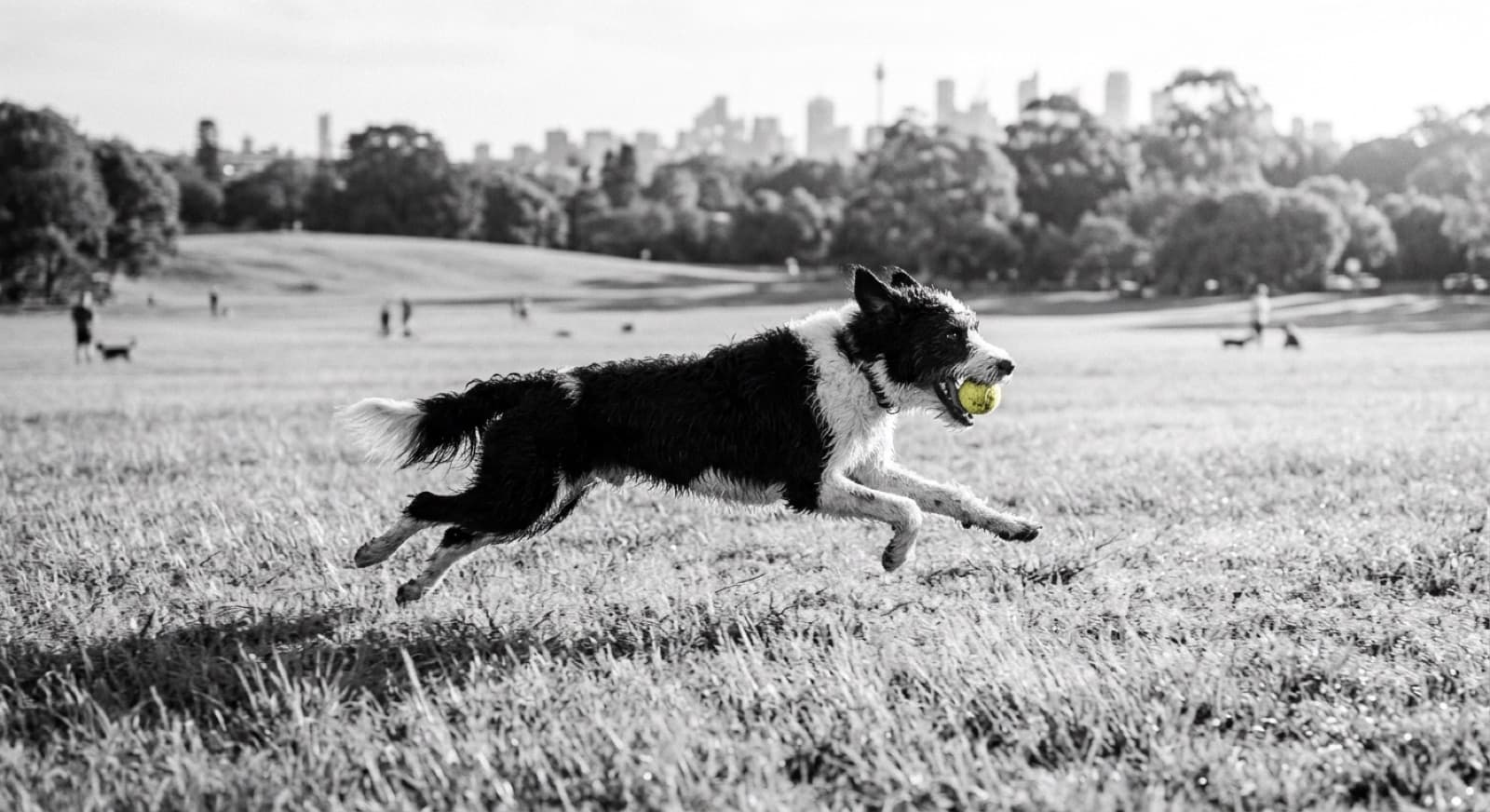
For a healthy adult Bordoodle, plan on well over an hour of real physical activity a day, and be happy to give more. “Real” is the key word. A slow amble on lead where the dog sniffs every fence post does not count. This dog needs sustained movement that actually gets the heart and legs working: brisk walks, running, fetch, and off-lead galloping where it is safe to do so.
A solid weekly routine for a Sydney Bordoodle usually looks like this:
- Two proper daily walks or runs. Not around-the-block strolls. Long, brisk walks, jogs, or a run once your dog is mature and your vet has given the go-ahead.
- Off-lead running where it is safe. A securely fenced off-lead area lets a Bordoodle open up and really burn energy. Check your council for where and when off-lead is allowed.
- Active play. Fetch, tug and a flirt pole give short, intense bursts that a working cross loves.
- Extra for a young adult in its prime, which will need more than an older dog winding down.
But do not stop at the physical, because this is where owners get caught out. You can walk a Bordoodle for two hours, come home exhausted yourself, and still have a dog that is pacing and looking for something to do. A Collie-brained dog that only gets its body tired but not its brain stays restless. Physical exercise is half the job. The other half, the part that actually settles this breed, is mental work. The RSPCA Australia Knowledgebase has good general guidance on why exercise and enrichment both matter for dog behaviour.
Mental stimulation: the part that actually settles them
If you take one thing from this guide, take this. A clever working cross needs a job and daily mental work, or it invents its own job, and the job it invents is never one you want. Left bored, a Bordoodle turns to destruction, obsessive habits, barking, spinning, and chasing shadows or light. Those self-invented behaviours are hard to fix once they take hold, so the smart move is to fill that busy brain before it fills itself.
The good news is that this breed makes enrichment easy and fun, because it is so willing and so quick to learn. Good daily brain work includes:
- Training and trick training. Short, upbeat sessions teaching new skills. A Bordoodle loves to learn and lights up when it gets it right.
- Scent and nose work. Hide food or a toy and let the dog find it. Using the nose is deeply satisfying work and tires a dog out more than you would expect.
- Puzzle feeders and food toys. Feed part of the daily meal out of a puzzle so the dog has to work for it, rather than inhaling it from a bowl.
- Dog sports. Agility, obedience and trick titles suit this brain beautifully. If you enjoy it, a Bordoodle will thrive on it.
- Teaching tasks and names. Naming toys, tidying them into a basket, fetching specific items. Real jobs that make the dog think.
The rule to remember is simple: a mentally tired Bordoodle is a happy one. A dog that has run, thought, learned something and been part of the family day is a dog that lies down and sleeps in the evening. That is the goal, and it is very achievable in the right home.
The herding instinct, and how to manage it
The Border Collie half of a Bordoodle can bring a herding instinct with it, and when it shows up it looks like chasing, circling and nipping at the heels of moving things. Running children, joggers, cyclists, other pets: anything that moves fast can trigger the urge to control it. This is not aggression. It is a hardwired working drive. But a nip at a child's ankle or a dog charging a jogger is still a real problem, so it needs managing rather than hoping it fades.
The approach is threefold. Do not let the dog rehearse the behaviour, because every successful chase makes the habit stronger. Redirect the drive onto appropriate outlets, like fetch, a flirt pole, or a sport that gives the dog a legitimate way to chase and control movement. And teach real impulse control and a reliable recall, so you can interrupt a chase before it starts and call the dog back out of it. Supervise young children and the dog together, and give the dog a settle spot to retreat to when the household gets loud and busy.
Two related traits are worth knowing. Bordoodles can be sensitive to movement and noise, and some develop noise phobias or fixations if the environment is chaotic. A calm, predictable home helps enormously. The more settled and structured daily life is, the less the herding and chasing drives spill over into problems.
Training: highly trainable, but sensitive
Bordoodles are among the most trainable dogs you will meet. Both parent breeds are famously smart and cooperative, so a Bordoodle learns fast, remembers well and genuinely wants to work with you. That is the upside. The catch is that this cleverness comes packaged with real sensitivity, and how you train makes all the difference.
Use reward-based, force-free methods only. This is not a soft preference, it is what actually works with this dog. Harsh corrections, yelling, jerking the lead or heavy-handed “dominance” methods backfire badly with a soft, clever cross. Instead of teaching the dog what to do, they teach it to be anxious, to shut down, or to fear you, and once you have created that fear in a sensitive dog it is slow and hard to undo. A Bordoodle trained with rewards and patience is confident and eager. The same dog handled roughly becomes nervous and unpredictable.
Keep training sessions short, varied and positive, so the dog stays keen and never gets drilled into boredom. Build a reliable recall early and keep practising it, because recall is your safety net for a dog with chase drive. Start socialisation as soon as your dog is settled into your home, exposing it calmly and positively to people, dogs, places and sounds, and keep it going through the dog's life. If you want help, look for a Sydney force-free or reward-based trainer who works with clever working breeds, rather than anyone who talks about dominance or corrections. The Australian Veterinary Association supports reward-based training and cautions against aversive methods for exactly these reasons.
Chase drive, secure fencing and off-lead work
A Bordoodle carries a real chase drive, and combined with athleticism and intelligence that makes for a talented escape artist when bored. Secure fencing at home is not optional. A bored, under-exercised Bordoodle will test gaps, dig under, or clear a low fence to go and find something more interesting to do. The best fence in the world is a well-exercised, mentally satisfied dog, but back that up with fencing that actually holds.
For recall and off-lead freedom, use a long-line while you build the behaviour. A long-line lets the dog range and run without the risk of it bolting after a bird or a jogger before the recall is solid. Only let a Bordoodle fully off-lead in genuinely secure, legal off-lead areas, and only once the recall is reliable in the face of distractions. Off-lead rules and times vary a lot between councils and parks across Sydney, so check your council before you unclip the lead. Sydney has some excellent securely fenced off-lead areas and reserves that suit a dog like this well.
Sydney specifics: heat, ticks and that coat
All that exercise happens in a Sydney climate, and heat, not cold, is the real dog-safety risk here. Summers can hit the mid-thirties with real humidity, and a working dog pushing itself on a hot, humid afternoon can go from fine to in trouble quickly. Do the hard exercise in the cool of early morning and evening, carry water and offer it often, and never leave your dog in a parked car. Watch for the warning signs of heat stress: heavy frantic panting, drooling, bright red gums, wobbliness or collapse. If you see them, stop, move to shade, offer water, cool the dog with cool (not icy) water over the body, and if it does not settle quickly get to a vet straight away, because heatstroke is a genuine emergency. On the hottest days, swap the run for a shorter walk plus indoor brain work, and let a swim do some of the load.
Paralysis ticks are a year-round danger across Sydney and can be fatal, so keep your Bordoodle on year-round tick prevention and ask your vet which product suits your dog, rather than choosing one off a shelf. Do a physical tick check by hand after any bushwalk, parting the coat and feeling down to the skin, which matters more on a curly doodle coat where ticks are harder to spot.
One quick coat note tied to all that swimming and outdoor time: doodle-type ears trap moisture, so check and dry your dog's ears after swimming to help prevent ear infections. The full grooming and coat-care picture belongs in a separate guide, but the after-swim ear check is worth building into your exercise routine.
Not the dog for a busy, out-all-day household
Put it plainly. A Bordoodle is not the dog for a sedentary home, and it is not the dog for a household where everyone is out all day. This is a smart, driven, people-focused cross that needs exercise, mental work and company, and it struggles badly when it does not get them. Long hours home alone with nothing to do produces the bored, destructive, barking dog that ends up surrendered.
Where a Bordoodle shines is with an active, engaged owner or family: someone who runs or hikes, who enjoys training and games, who is around enough to keep the dog company and involved in daily life. If that is you, a Bordoodle is one of the most rewarding dogs going, and adopting one is a wonderful thing to do. If it is not you, be honest about it before you adopt, because a calmer, lower-energy breed will make both of you far happier than a working cross in a home that cannot meet its needs. The rescue temperament assessment side of things, including what to expect from a rescued Bordoodle settling in, is covered in the Bordoodle adoption guide.
Browse adoptable Bordoodles in Sydney
A Bordoodle rewards an active owner who can meet the exercise, the mental work and the training it needs. Browse live NSW listings and set an alert so you hear the moment one comes into rescue.
See Available Bordoodles →Is a Bordoodle's energy right for you?
Put it all together and the picture is clear. A Bordoodle is a Border Collie brain in a doodle body. It needs well over an hour of real exercise a day, daily mental work on top, reward-based training, careful management of its herding and chase instincts, and an owner who is around and involved. Meet all that and you get a brilliant, loyal, trainable companion, one of the best dogs there is for an active person or family. Miss it, especially the mental side, and you get a stressed, destructive, barking dog and, all too often, another Bordoodle in rescue.
So the real question is not whether you like how a Bordoodle looks. It is whether your actual daily life has room for that much dog. If it does, a Bordoodle is a wonderful adoption. If it does not, a calmer breed will make both of you happier. Sydney and NSW rescues such as RSPCA NSW, AWL NSW, Sydney Dogs and Cats Home, Monika's Doggie Rescue and Maggie's Rescue assess their dogs in foster and shelter care, and can tell you honestly how much a particular Bordoodle or Border Collie cross needs and whether it suits your home. If you go ahead, register your adopted dog with your council through the NSW Pet Registry as required under the Companion Animals Act.
Frequently Asked Questions
How much exercise does a Bordoodle need?
Plan on well over an hour of real physical exercise a day for a healthy adult Bordoodle, and treat that as the floor rather than the target. This is a Border Collie crossed with a Poodle, both active working breeds, so a quick stroll around the block does not touch it. A good routine is a couple of proper walks or runs, plus off-lead running in a securely fenced area where you can, plus fetch or other active play. But here is the part people miss: physical exercise alone is not enough for a Collie-brained dog. It needs daily mental work on top of the walking, because a Bordoodle that gets tired legs but a bored brain is still a restless, frustrated dog. Match the amount to your individual dog, since a young adult in its prime needs more than an older one, but assume a big daily commitment before you adopt one.
Are Bordoodles easy to train?
Yes and no. Bordoodles are highly trainable and genuinely eager to please, because both parent breeds are among the smartest and most cooperative dogs going, so they learn fast and love having a job. The catch is that they are also sensitive, and that sensitivity means how you train matters enormously. Reward-based, force-free methods work brilliantly with this cross. Harsh corrections, yelling or heavy-handed methods backfire badly and can create a nervous, shut-down or anxious dog. Keep sessions short, varied and positive, build a reliable recall from early on, and start socialisation as soon as your dog is settled and keep it going. A clever dog trained kindly is a joy. The same clever dog handled roughly, or left with nothing to think about, becomes a problem fast, so the effort you put into good training pays off many times over.
Why is my Bordoodle destructive?
A destructive Bordoodle is almost always a bored, under-exercised or under-stimulated one, not a naughty one. This is a working cross with a busy brain, and when it does not get enough physical exercise and, just as importantly, enough mental work, that energy and drive have to go somewhere. It comes out as chewing, digging, non-stop barking, and sometimes obsessive behaviours like spinning, pacing or chasing shadows and light. Border Collie crosses are especially prone to inventing their own repetitive jobs when they are bored, and those habits are hard to undo once they set in. The fix is rarely more discipline. It is more of the right outlet: more real exercise, more enrichment, a proper daily routine, and an actual job to do like training, scent work or a dog sport. Get the outlet right and most of the destruction disappears, because it was never bad behaviour, it was an unmet need.
Do Bordoodles try to herd children?
Some do, because the Border Collie herding instinct can carry through the cross and it often shows up as chasing, circling and nipping at the heels of moving things, including running children, joggers, bikes and other pets. It is not aggression. It is a strong, hardwired urge to control movement, but it can frighten a small child or cause a nip, so it needs managing rather than ignoring. The approach is to not let the dog rehearse it, redirect the urge onto appropriate outlets like fetch or a flirt pole, and teach solid impulse control and a reliable recall so you can interrupt a chase before it starts. Supervise young children and the dog together, and give the dog a settle spot to go to when things get busy. Movement and noise can also wind these dogs up, and some develop noise sensitivities, so a calm, predictable home helps a lot. With good management the herding drive becomes a manageable quirk, not a daily problem.
Can a Bordoodle be left alone all day?
Not really, and a household where the dog is home alone for long stretches every day is one of the worst matches for this cross. Bordoodles are people-focused, highly intelligent and driven, and long hours alone with nothing to do is exactly the recipe for boredom, destruction, barking and separation distress. This is not a dog that happily sleeps the day away while you are at work. If your days are long, you need a real plan: a midday walk, a dog walker, doggy day care a few days a week, or a home where someone is around more often. Enrichment like puzzle feeders and safe chews helps fill the gaps, but it does not replace company and activity. Be honest with yourself about your daily routine before you adopt. A Bordoodle thrives with an engaged, active owner who is around and involved, and struggles in a home where it is left to its own devices.
What mental stimulation does a Bordoodle need?
A Bordoodle needs a real daily job for its brain, not just walks, because a clever working cross that is not given something to think about will invent its own work, and that usually means trouble. The best outlets play to the breed's strengths: reward-based training and trick training, scent or nose work where the dog uses its nose to find hidden food or toys, puzzle feeders and food-dispensing toys, and teaching tasks and the names of objects. Dog sports suit this brain especially well, so agility, obedience and trick titles are a brilliant fit if you enjoy them. Even everyday things like a food puzzle instead of a bowl, or a short training game before dinner, add up. The rule to remember is that a mentally tired Bordoodle is a happy, settled Bordoodle. Mix brain work through the day and you prevent most of the boredom-driven barking, chewing and obsessive habits the breed is known for.
Is a Bordoodle a good first dog?
For most first-time owners, honestly, no, unless you are genuinely active, have plenty of time, and are ready to put real work into training and enrichment. The problem is the mismatch between what a Bordoodle looks like and what it is. People see a soft, cuddly, low-shedding doodle and expect an easy family pet, then get a Border Collie cross with a working brain and high energy that needs far more exercise, mental work and training than they bargained for. That gap is the single biggest reason Bordoodles land in rescue. None of that makes it a bad dog. In the right home, an active person or family who wants a smart, trainable, involved companion and will do the work, a Bordoodle is fantastic. It is just not a plug-and-play beginner dog. If your life is busy, sedentary, or you are out of the house all day, a calmer, lower-energy breed is a kinder match for both of you.
Can I let my Bordoodle off-lead in Sydney?
Only in a securely fenced off-lead area and once your dog has a genuinely reliable recall, because a Bordoodle carries real chase drive and can take off after a bird, a ball, a jogger or another dog before you can react. Off-lead running is great exercise and worth working towards, so use designated off-lead areas where the rules allow it, and always check your council, since off-lead rules and times vary between councils and parks across Sydney. Until the recall is solid, use a long-line in open areas so the dog gets freedom to move without the risk of bolting. Secure fencing at home matters too, because a bored, athletic Bordoodle is a known escape artist that will find a gap or go over a low fence. Build the recall first, pick genuinely secure spaces, and do your off-lead running in the cool hours through summer so your dog does not overheat.
Keep reading
Adoptable Bordoodles in Sydney
Live listings of Bordoodles and Border Collie crosses across Sydney and NSW rescues.
Bordoodle Adoption in Sydney
Where to adopt, why Bordoodles end up in rescue, and what adoption costs against a breeder.
Bordoodle Health Issues in Sydney
The health conditions that come with each parent breed, coat and ear care, and year-round tick prevention.
All Sydney Adoption Guides
Browse every breed and how-to guide for adopting a rescue dog in Sydney.