The short answer
The Border Terrier coat is one of the easier ones to live with. The harsh, wiry double coat is low-shedding and naturally dirt-shedding, so a weekly comb and brush is most of the day-to-day work. The one real job is hand-stripping, which plucks the dead wiry coat out by hand a couple of times a year, when the coat casts, to keep its texture, colour and weather resistance. You can strip it at home or pay a groomer. Clipping is the easier alternative, but it softens and fades the coat and makes it less weatherproof over time, so the wiry look and function fade. Do not shave the coat off for summer heat, because the coat insulates and protects the skin. Keep it stripped and tidy so air moves through it, and check right down to the skin for grass seeds and paralysis ticks after every walk.
The wiry weather-resistant coat, and what makes it work
The Border Terrier coat is a working coat, and once you understand what it is for, everything about grooming it makes sense. It is a double coat with two layers doing two jobs. On top is a harsh, wiry, close-lying topcoat, the coarse outer hair that sheds rain, mud and dirt. Underneath is a dense, soft undercoat that insulates the dog against cold water, wind and weather. Together they make a genuinely weatherproof jacket, which is exactly what a terrier bred to work outdoors in all conditions needs.
That harsh outer texture is the whole point. It is not a fault to be smoothed away. It is what keeps the dog dry and lets mud flake off instead of soaking in. A Border Terrier that has rolled in the dirt at the park often looks a fright and then comes up clean once it dries and you brush the flaked mud out. The coat is doing its job. The grizzle, red, tan and blue-and-tan colours also live mostly in that wiry topcoat, which matters when you reach the hand-stripping question, because how you groom the coat decides how well the texture and colour hold over the years.
The face is the other signature. The Border Terrier has a broad, otter-shaped head with a short muzzle, small folded ears and a bit of natural whiskering. The face and legs carry slightly softer furnishings than the harsh body coat, but nothing like the long, high-maintenance beard and skirt of some other terriers. The look is meant to be natural and scruffy, not barbered into a shape, so most of the face just needs a light tidy rather than serious sculpting.
Hand-stripping versus clipping
This is the one real decision with a Border Terrier coat, and there is no wrong answer for a pet, so ignore anyone who insists on a single right way. The two options are hand-stripping and clipping, and they do genuinely different things to the coat.
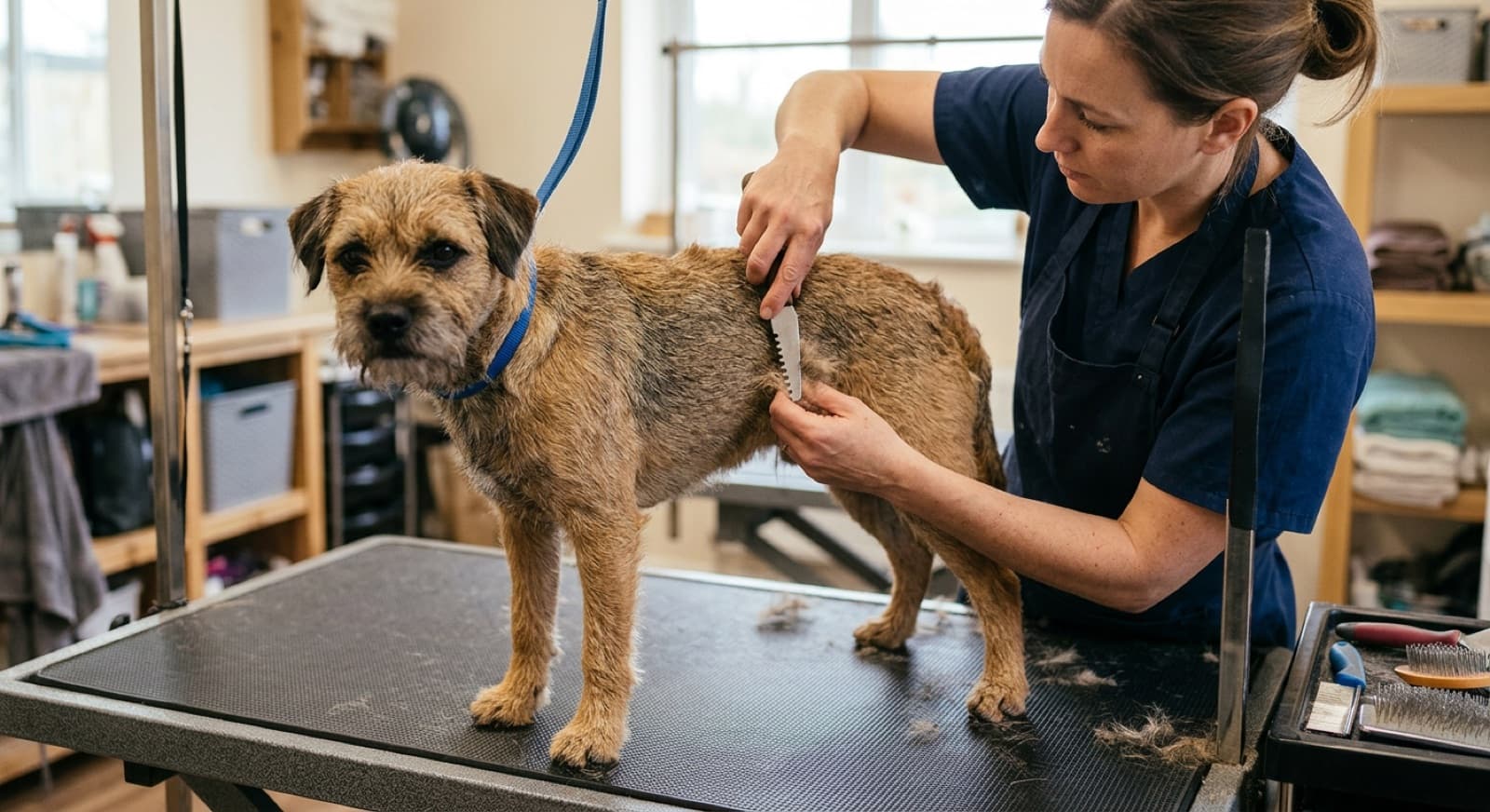
Hand-stripping is the traditional method, and it suits the wiry coat perfectly. When the coat casts, the dead wiry hairs loosen at the root and are ready to come out. A groomer, or you, plucks them out by hand, or with a stripping knife, a few at a time. Done on a coat that is ready, it does not hurt the dog, because you are only removing hair that is already loose. Stripping keeps the topcoat's harsh texture, its rich colour and its weather resistance, because it lets the proper wiry coat grow back in rather than cutting through it. It is what keeps a Border Terrier looking and working like a Border Terrier, which is why it is the method used for the show ring and by most serious owners. The trade-offs are that it takes patience, and if you pay a groomer it costs a little more than a clip and not every salon offers it.
Clipping shaves the coat down with electric clippers instead. It is quick, cheaper, pain-free, and every groomer can do it. The trade-off is texture, colour and function. Clipping cuts through the harsh topcoat rather than removing the dead hair at the root, so over months and years the coat grows back softer, woollier and often paler, as the wiry outer hair is repeatedly cut off and the soft undercoat takes over. A clipped grizzle Border Terrier often drifts towards a lighter, fluffier, less defined coat. That softer coat is also less weatherproof, so it holds more water and mud and dries slower, and some groomers feel a repeatedly clipped terrier coat suits the skin less well. None of that harms a happy pet, but it does undo the very things the wiry coat is for.
For a Border Terrier that spends a lot of time outdoors, on bush trails and at the beach, hand-stripping earns its keep, because the coat you are protecting is the coat that keeps the dog dry and comfortable. If your dog leads a gentler life and you would rather the easy option, clipping is not a crime and plenty of pet Border Terriers are clipped without issue. Pick based on the outdoor life your dog leads, the look you want, and the time and budget you have, not on what a breed purist tells you.
Between strips: the weekly job
Away from the couple of big strips a year, day-to-day Border Terrier grooming is light, which is one of the real pleasures of the breed. A weekly going-over does most of it:
- Comb and brush through once a week. Use a comb and a bristle or slicker brush to lift out loose and dead hair, keep the coat lying right, and stop the leg furnishings tangling.
- Check for grass seeds and ticks as you go. The weekly brush is the perfect moment to run your hands down to the skin, which matters far more in Sydney than the tidiness itself.
- Tidy the feet and face lightly. Trim the hair between the paw pads so it does not trap seeds and dirt, and neaten any stray furnishing on the face, without carving it into a shape.
- Keep on top of nails, ears and teeth. Covered below, and part of the routine rather than a separate event.
Remember that the wiry coat does not shed out on its own. If you skip the twice-a-year strip and just brush, the dead coat stays in, the colour dulls, and the texture slowly goes soft and woolly. Brushing keeps things tidy between strips, but it is not a substitute for stripping the dead coat out when it casts. That is the rhythm of the breed: light weekly upkeep, a proper strip a couple of times a year.
The otter-head and the natural look
The Border Terrier is meant to look natural, and that is a gift to the owner. Unlike terriers that are barbered into a fixed outline, the Border Terrier face is left mostly as it is: the broad otter-shaped head, the short muzzle, the small ears and the light whiskering all stay scruffy and workmanlike. Your job on the face is a light tidy, not a sculpt. Comb the muzzle and eyebrow area so nothing hangs into the eyes, neaten any obviously stray hairs, and leave the rest alone. Resist the urge to shape it. A Border Terrier that has been clippered and rounded into a soft teddy-bear head has lost the very look that makes the breed what it is.
The furnishings on the legs are softer than the body coat and will tangle a little if ignored, especially after walks when they pick up grass seeds and burrs, so comb the legs through with the weekly brush and check the feet. The tail is short and tapered and needs nothing special. Overall the Border Terrier asks for far less shaping than most terriers, and the goal at every step is to keep the dog looking like a slightly untidy, cheerful working terrier, because that is exactly what it is.
Ears, nails and dental care
The small folded ears need a weekly look. Check inside each one for redness, a bad smell or dark discharge, and keep the ears dry, especially after swims and baths, because trapped moisture leads to infections. Sydney dogs swim a lot in summer, so dry the ears thoroughly every time. A healthy ear looks pale and clean and smells of little. Redness, a strong smell, head-shaking or scratching all point to a problem, and that is a vet visit rather than a home fix.
Trim the nails regularly, or have the groomer do it, so they do not click on the floor or catch and tear. And do not skip the teeth. The Border Terrier has a fairly small mouth for its head, and like most small dogs it is prone to dental disease and tartar build-up, so brush the teeth with a dog toothpaste as often as you can manage and have your vet check them at the annual visit. The RSPCA Australia Knowledgebase has sound general guidance on grooming, ear care and dental care for dogs.
Bathing, and why less is more
Bathe a Border Terrier only when it genuinely needs it, not on a schedule, because the harsh coat is designed to clean itself. The wiry topcoat sheds mud and grime as it dries, so most of the time a filthy Border Terrier comes up clean once the dirt flakes off, with just a towel-down and a brush. That dirt-shedding quality is a feature, not a coincidence, and over-bathing works against it.
Frequent baths and softening or conditioning shampoos strip the coat's natural oils and soften the harsh texture, which reduces its weather resistance and, if you hand-strip, loosens the coat you are trying to keep in good order. So save the bath for when the dog is genuinely dirty or smelly, use a plain dog shampoo, rinse well, and let the coat dry. A working terrier that loves the outdoors will get muddy and wet often, and the good news is the weather-resistant coat is built for exactly that. A quick towel and a brush once it dries handles most adventures without a bath at all.
Border Terriers in the Sydney climate
The Sydney climate shapes coat care in a couple of ways, and the first is heat. The dense double coat is warm, so do the harder exercise in the cool of early morning or the evening on hot, humid days, carry water, and never leave a dog in a parked car. Heat, not cold, is the real dog-safety risk in Sydney. The key mistake to avoid is shaving the coat off for summer. It feels logical and it is wrong. The double coat insulates against heat as much as cold and protects the skin from sun, so shaving it can leave the dog worse off, and shaving a wiry coat can wreck its texture for good. Instead, keep the coat stripped and tidy rather than long and matted, so air can circulate through it, and speak to your vet if you think your dog is genuinely struggling in the heat.
The second is parasites, and this is the one that really matters. Paralysis ticks are a year-round danger across the whole Sydney region and they can be fatal, and a scruffy, wiry coat hides them beautifully, which is a problem. Keep your Border Terrier on a vet-recommended tick prevention product all year, and after any bush or park walk, part the coat and feel right down to the skin over the whole dog, especially around the head, ears, neck and shoulders. A quick pat is not enough on this coat. Grass seeds are the other coat hazard, catching in the wiry hair and the feathering on the legs and feet, then burrowing into the skin and causing painful abscesses, so check the feet, armpits, ears and belly on the same pass and pull out anything you find. If you ever find a tick, or notice weakness, wobbliness or a change in your dog's bark or breathing, get to a vet straight away. The Australian Veterinary Association has useful general guidance on parasite prevention. We cover the medical side in more depth in the Border Terrier health issues guide.
On living space, a Border Terrier suits a Sydney apartment or a house equally well as long as it gets its outdoor exercise, because this is an active working terrier that needs a proper walk and a chance to sniff and explore, not just a tidy coat. Check your building and strata rules on pets, and register your dog with your council as required under the Companion Animals Act, which you can do through the NSW Pet Registry.
Browse adoptable Border Terriers in Sydney
The wiry coat is one of the lower-fuss ones in the terrier world, and a Border Terrier rewards an owner who keeps it stripped and checks it for ticks. Browse live NSW listings and set an alert so you hear the moment one comes in.
See Available Border Terriers →Is the Border Terrier coat right for you?
Put it together and the coat is genuinely one of the Border Terrier's strengths. It is low-shedding, naturally dirt-shedding, weatherproof, and light on day-to-day work. The main commitment is the twice-a-year hand-strip, which you can learn to do yourself or pay a groomer for, plus a weekly comb and the usual nails, ears and teeth. Compared with a coat that needs clipping every six weeks or a beard that needs daily cleaning, that is an easy deal. The one thing to be clear on is that the coat does not shed out by itself, so if you clip for convenience you lose the harsh texture, the colour and the weather resistance over time.
For the active Sydney household that likes the outdoors, a Border Terrier is a brilliant, low-fuss companion whose scruffy, natural look is half the charm. If you want the true wiry coat, learn to strip it or find a terrier-savvy groomer, resist the urge to shave it in summer, and stay on top of the tick and grass-seed checks that come with a bushy coat in a Sydney climate. Rescues like RSPCA NSW, AWL NSW, Sydney Dogs and Cats Home, Monika's Doggie Rescue and Maggie's Rescue take in dogs of all breeds and crosses, know their dogs well, and can tell you honestly what a particular Border Terrier or Border cross's coat and energy are really like.
Frequently Asked Questions
How often should I groom a Border Terrier?
Comb and brush a Border Terrier through about once a week, and have the dead coat hand-stripped roughly twice a year, with a light tidy of the face and feet in between. The harsh, wiry coat is genuinely low-maintenance day to day. It sheds very little and is naturally dirt-shedding, so a weekly going-over with a comb and a bristle brush to lift out dead hair and check for grass seeds and ticks is most of the home job. The bigger job is the coat casting a couple of times a year, when the wiry topcoat is ready to come out. Left in the coat, that dead hair dulls the colour and can go woolly, so it gets stripped out by hand rather than shed on the carpet. Beyond that, keep the nails trimmed, the ears clean and dry, and the teeth brushed, and you are doing the lot.
Should I hand-strip or clip my Border Terrier?
Either is fine for a pet, so ignore anyone who says there is only one right way. Hand-stripping is the traditional method and it plucks the dead wiry hairs out by hand, which keeps the coat's harsh texture, its rich colour and its weather resistance, and lets the proper wiry coat grow back. Clipping shaves the coat down with clippers instead, which is quicker, cheaper and pain-free, but over months and years it softens the texture, fades and lightens the colour, makes the coat woollier and less waterproof, and some groomers feel it suits the skin less well. Neither is cruel and plenty of pet Border Terriers are clipped. The difference is that a Border Terrier is meant to look natural and workmanlike rather than sculpted, and hand-stripping is what keeps that harsh, weatherproof coat doing its job. Pick based on the look you want, the outdoor life your dog leads, and the time and budget you have.
Do Border Terriers shed?
Border Terriers are low-shedding, which is a big part of their appeal, but low-shedding does not mean no maintenance. The harsh wiry coat holds onto its dead hair rather than dropping it around the house, so you see very little loose hair on the couch or the floor. The catch is that a coat which does not shed out has to be stripped instead, or the dead hair simply stays in, dulls the colour and can turn the coat woolly. So the low shedding buys you a cleaner house and trades it for stripping the coat out a couple of times a year. Low-shedding also does not mean hypoallergenic. No dog is truly hypoallergenic, and allergies react to dander and saliva as much as to hair, so never choose a Border Terrier on the assumption it will be safe for an allergy sufferer without spending real time around the dog first.
Do Border Terriers need professional grooming?
Most Border Terriers do not need frequent grooming, but they do need the coat hand-stripped a couple of times a year, and many owners pay a groomer to do it. You can learn to hand-strip at home with a stripping knife and a bit of practice, and plenty of Border Terrier owners do exactly that, which saves money and lets you keep on top of the coat as it casts. If you would rather not, a groomer who is comfortable hand-stripping terriers is worth finding, because not every salon offers it. Between strips the home care is light: a weekly comb, the odd tidy of the feet and face, nails, ears and teeth. This is a low-cost breed to groom compared with a coat that needs clipping every six weeks, which is one of the quiet advantages of the wiry terrier coat.
Can I hand-strip a Border Terrier myself at home?
Yes, many Border Terrier owners learn to hand-strip their own dog, and it is one of the more approachable coats to do at home. Stripping means plucking out the dead, ready-to-shed hairs a few at a time, with your fingers or a stripping knife, when the coat is casting. Done on a coat that is ready, it does not hurt the dog, because you are only removing hair that is loose at the root. It takes patience and it is fiddly the first few times, so it helps to watch someone experienced or have a terrier-savvy groomer show you the technique on your dog once. Little and often works better than one marathon session. If the idea does not appeal, there is no shame in paying a groomer or choosing to clip instead.
How often should I bathe a Border Terrier?
Bathe a Border Terrier only when it genuinely needs it, not on a schedule, because the harsh coat is naturally dirt-shedding and over-bathing works against it. The wiry topcoat sheds mud and grime as it dries, so a Border Terrier that has had a filthy adventure often comes up clean once the dirt flakes off, with just a towel-down and a brush. Frequent baths and softening shampoos strip the natural oils and soften the harsh coat, which reduces its weather resistance, so most of the time a brush and a wipe-down is all you need. When a bath is warranted, use a plain dog shampoo, rinse well, and let the coat dry. If you hand-strip, avoid heavy conditioning products that soften the wiry texture you are trying to keep.
Do Border Terriers cope with the Sydney heat?
Border Terriers cope reasonably well but still need sensible summer care, because the dense double coat is warm and heat is the real dog-safety risk in Sydney. Do the harder exercise in the cool of early morning or the evening on hot, humid days, carry water, and never leave a dog in a parked car. The important thing is what not to do: do not shave the coat off. The double coat insulates against heat as well as cold and protects the skin from sun, so shaving it can leave the dog worse off and can ruin the coat's texture for good. Instead, keep the coat stripped and tidy rather than long and matted, so air can move through it, and talk to your groomer or vet if you are worried your dog is struggling in the heat.
How do I check a Border Terrier for grass seeds and ticks?
Run your hands and a comb right down to the skin over the whole dog after every bush or park walk, because the scruffy coat hides both grass seeds and paralysis ticks well. Grass seeds catch in the wiry coat and the feathering on the legs and between the toes, then work their way into the skin and cause painful abscesses, so check the feet, armpits, ears and belly and pull out any seeds you find. Paralysis ticks are a year-round danger across Sydney and can be fatal, and a scruffy coat makes them easy to miss, so a quick pat is not enough. Part the coat and feel for any lump, especially around the head, ears, neck and shoulders. Keep your dog on a vet-recommended tick prevention product all year, and if you find a tick or notice any weakness, wobbliness or a change in your dog's bark or breathing, get to a vet straight away.
Keep reading
Adoptable Border Terriers in Sydney
Live listings of Border Terriers and Border Terrier crosses across Sydney and NSW rescues.
Border Terrier Adoption in Sydney
Where to adopt, why Border Terriers end up in rescue, and what adoption costs against a breeder.
Border Terrier Health Issues in Sydney
CECS, hips, heart and eyes, plus Sydney heat and year-round tick prevention for a bushy coat.
All Sydney Adoption Guides
Browse every breed and how-to guide for adopting a rescue dog in Sydney.