The short answer
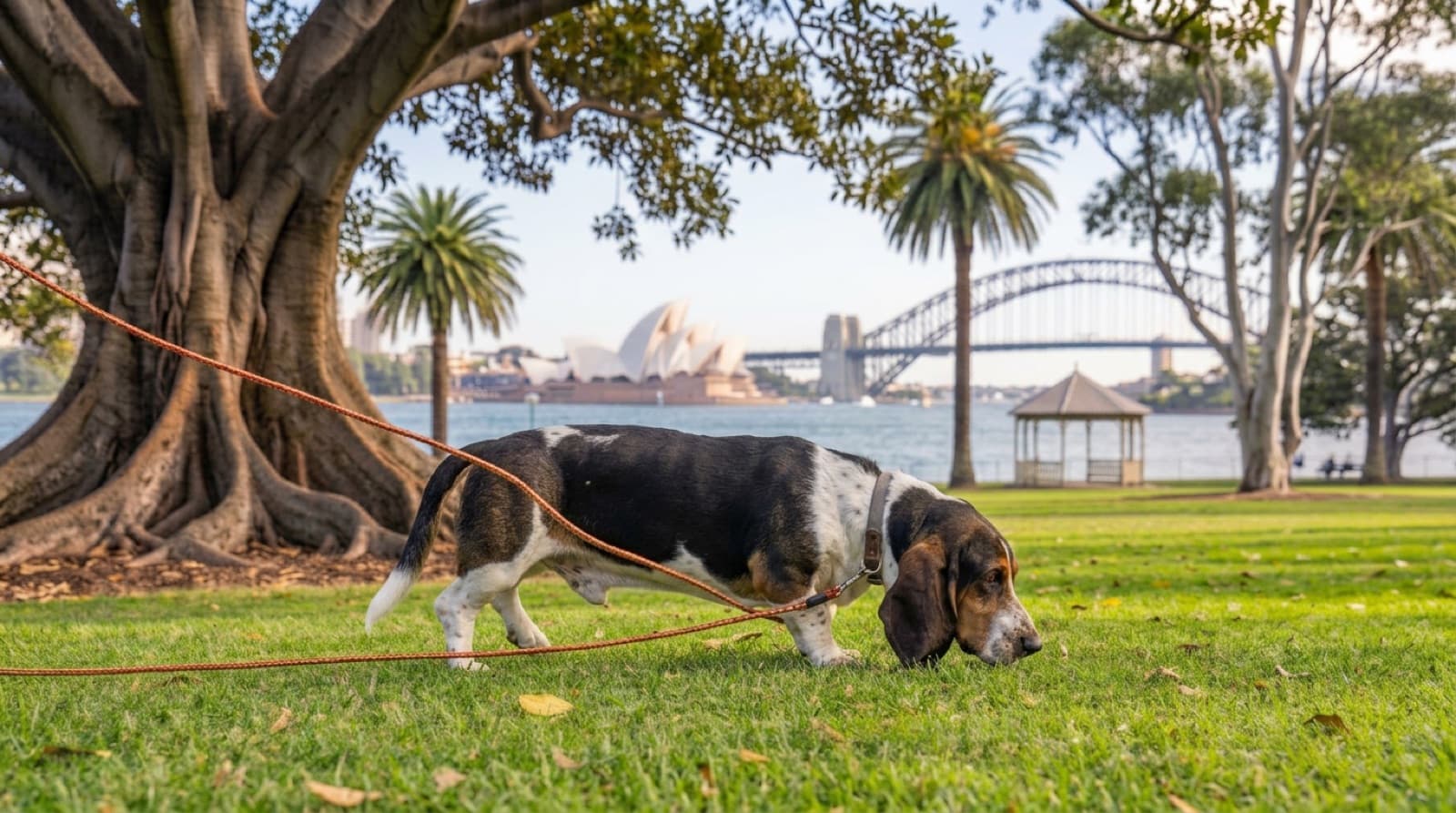
A Basset Hound will follow its nose over your recall, so treat it as a dog that stays on lead or long-line in any unfenced space, and only off lead in fully fenced areas. This is instinct, not disobedience: the breed was built to track a scent for hours without taking direction. Train with reward-based methods and high-value food, keep sessions short and patient, and lean on the breed's strong food drive. Manage the nose with sniffy walks, scent games and a 5 to 15 metre long-line clipped to a harness. Keep the yard securely fenced with no gaps to dig under or slip through, because a scent plus an open gate is how Bassets go missing. Channel the nose and a Basset is a calm, happy dog. Fight it and you get baying, digging and wandering.
Why recall is genuinely hard for a scent hound
Most training guides start with sit and stay. With a Basset, the honest first lesson is about the nose, because it explains almost every behaviour challenge the breed brings, and it is the reason off-leash freedom is off the table in unfenced spaces.
Basset Hounds are scent hounds, bred over centuries to lock onto a smell and follow it patiently for hours, making their own decisions without waiting for a handler. Only the Bloodhound is said to have a keener nose. That heritage is baked into the dog in front of you. When a Basset picks up an interesting scent, its attention narrows to the trail, and in that state your voice, your treats and your calling genuinely fade into the background. It is not that the dog is defying you. It is that a very old, very strong instinct has taken the wheel.
That is why recall, the ability to call a dog back reliably under distraction, is one of the hardest things to teach a Basset. Plenty of breeds can be trained to a recall you can trust even around distractions. Scent hounds sit at the difficult end of that spectrum, because the very thing pulling the dog away, a scent, is the thing the breed was designed to prioritise above all else. You can build a decent recall for the home, the yard and fenced areas, and it is well worth doing. What you should not do is bank your dog's safety on it in an open space.
The practical takeaway, and the position the rest of this guide is built on: in unfenced spaces, a Basset stays on lead or long-line, always. Off lead is for fully fenced areas only. This is not pessimism about training. It is respect for what the breed is, and it is the single rule that keeps Sydney Bassets from ending up lost or on a road.
Reward-based training for a stubborn, food-loving hound
The good news is that the same nose that makes recall hard comes attached to a stomach that makes training possible. Bassets are strongly food-motivated, and food is your single biggest lever. The trick is to accept that you are negotiating with a clever, independent hound, not commanding a biddable working dog, and to make cooperation genuinely worth the dog's while.
- Use high-value food. Boring biscuits will lose to an interesting smell. Small pieces of something the dog loves keep a Basset in the game.
- Keep sessions short and upbeat. Five to ten minutes a few times a day beats one long drill. End on a win before the dog gets bored and switches off.
- Reward instantly and generously. Mark and pay the moment the dog does what you asked, so it connects the action with the reward.
- Be patient and consistent. A Basset learns more slowly than a Labrador and will test whether a rule really holds. Hold the line calmly rather than repeating commands louder.
- Skip the harsh corrections. Punishment makes a stubborn hound shut down or dig in. Reward-based methods build willing cooperation instead.
This is not a soft option, it is the effective one. The RSPCA Knowledgebase recommends reward-based training for dogs precisely because it works with the animal rather than against it, which matters even more with a breed as independent as this. A group class with a force-free, reward-based trainer is worth the money, both for the training and for practising around the distractions of other dogs and people.
Long-lines and leash management
Because off lead in open spaces is out, the long-line is the tool that gives a Basset real freedom safely. A long-line is a 5 to 15 metre lead that lets the dog roam, sniff and explore in unfenced parks and reserves while you keep a physical connection for when the nose takes over.
- Clip it to a harness, not the collar. A well-fitted harness spreads the load, so a sudden lunge onto a scent does not jerk the neck or the vulnerable long back.
- Let the dog work at the length of the line. The point is space to sniff and explore, not a tight leash. Keep it loose most of the time and just there as insurance.
- Manage the line. Keep it from wrapping around your legs or the dog's, loop excess in your hand, and use gloves if your hound pulls hard onto a scent.
- Choose open ground. Long-lines snag in dense scrub, so use them on grass and open reserve rather than thick bush.
For everyday walks, a harness plus a standard lead suits a Basset well, sparing the neck and the back while still giving you control of a dog that likes to plant its nose and pull toward a smell. Avoid retractable leads for a scent hound in busy areas; they encourage constant light pulling and give you little control in the moment a scent appears.
Secure containment: fencing, digging and the open gate
Bassets are not athletic escape artists in the way a Kelpie or a Husky is. They rarely jump or climb. What they do is follow a scent, and a nose-driven hound will work along a fence line looking for a way through, dig under a weak spot, or slip out the instant a gate is left open. Containment for a Basset is about closing those low-level gaps.
- Keep a solid, well-maintained fence with no gaps at ground level, and check the perimeter for spots the dog could push through or dig under.
- Address digging points along the fence, since a determined Basset will excavate toward an interesting smell on the other side.
- Make sure gates latch properly and stay shut. An open gate plus a scent is how most Bassets go missing.
- Supervise yard time rather than assuming the fence alone will hold a scent-driven dog for hours.
Back up the physical containment with the basics that get a lost dog home fast: keep your microchip details current on the NSW Pet Registry, register the dog with your council, and keep a collar and ID tag on. If a Basset does slip out on a scent, an up-to-date chip is your best chance of a quick reunion.
Browse adoptable Basset Hounds in Sydney
Rescue Bassets arrive with a temperament assessment from their foster carer, including notes on training, scent-drive and how they go with other animals. Browse live NSW listings.
See Available Basset Hounds →Channelling the nose: scent games and sniffy walks
The most effective thing you can do with a Basset is give the nose a job. Scent work is the breed's natural outlet, and a Basset that gets to use its nose is calmer, quieter and far less likely to bay, dig or wander out of boredom. It also tires the dog out more than plain physical exercise does, which is handy for a low-energy breed you should not be running hard.
- The sniffy walk. Instead of marching the dog briskly, let it stop, snuffle and read the ground at its own pace. Slow and nose-led beats fast and forced for a Basset.
- Scatter feeding. Toss part of the daily food ration into the grass or around the house and let the dog find it. Simple, free and satisfying.
- Snuffle mats and food puzzles. These make the dog work its nose and brain for meals rather than gulping from a bowl.
- Find-it games. Hide a treat or a toy and let the dog track it down. You can build this into gentle nose-work as the dog gets the idea.
None of this needs the dog off lead, and all of it turns the instinct that makes a Basset hard to recall into something you actively enjoy about the breed.
The baying voice
Bassets are vocal. The breed has a deep, carrying bay it uses when excited, bored, lonely or on a scent, and while it is usually less constant than a Beagle's, it travels a long way, which matters in a Sydney unit or a close suburban street. You will not train the voice out entirely, because baying is part of what a Basset is, but you can cut nuisance noise a lot by dealing with the cause.
Most excessive baying is boredom, under-exercise or too much time alone. A well-exercised, nose-satisfied Basset with company and a decent routine is a much quieter dog. Reward calm and quiet, avoid accidentally reinforcing the noise by rushing over with attention every time the dog sounds off, and do not leave a Basset isolated all day. If you live in strata with thin walls, factor the voice in honestly before you adopt, because a bored, lonely Basset will happily let the whole building know how it feels.
Doing it safely in Sydney
Off lead only where it is fenced. Sydney has good fully fenced options for a Basset to be loose, such as the large fenced dog area at Sydney Park in St Peters and fenced sections at Bicentennial Park at Sydney Olympic Park. Unfenced or timed off-leash zones, quiet local parks with no fence, bushland and beaches are for on-lead or long-line only, because the moment the nose finds a trail the dog can drift off and ignore you.
Time it around the heat. Bassets do not handle the Sydney summer well, with their heavy, low body, so walk and train in the cool of the early morning or evening, keep sessions gentle on hot, humid days, and always carry water. Save the longer sniffy walks for the cooler hours.
Check for ticks after every scent walk. A nose-down Basset pushes through grass and undergrowth, which is exactly where the paralysis tick lives across the Sydney region. Keep the dog on year-round vet-recommended tick prevention, and after any bush or grassy outing check the coat down to the skin, including inside the long ear folds. We cover the health side of heat and ticks fully in our Basset Hound health guide.
Frequently Asked Questions
Can I train my Basset Hound to have reliable off-leash recall?
Realistically, no, not to a level you can trust in an unfenced public space. Bassets are scent hounds bred for centuries to lock onto a smell and follow it for hours without taking direction, and that instinct is hardwired, not a training gap. When a Basset catches an interesting scent, its focus narrows to the trail and your voice, treats and calling become background noise it can genuinely tune out. You can and should train a solid recall for fenced areas and everyday manners, and some Bassets respond well in low-distraction settings, but the honest advice most hound-experienced trainers give is to treat a Basset as a dog that stays on lead or long-line in any unfenced space. It is not stubborn disobedience so much as a nose doing exactly what the breed was built to do.
Why is a Basset Hound so hard to train compared with other breeds?
Because independence was the point of the breed. Basset Hounds were developed to work a scent trail on their own initiative, making decisions without waiting for a handler, so unlike a Labrador or a Border Collie they were never bred to look to you for instructions. That shows up as the famous stubbornness: a Basset will often hear a command, weigh it against whatever it would rather do, and choose the more interesting option. It is not a lack of intelligence, it is a different kind of intelligence pointed at problem-solving and scent rather than obedience. The way through is reward-based training that makes doing what you ask genuinely worth the dog's while, delivered with patience and short sessions. Punishment and repetition just make a Basset shut down or dig in. Once you accept you are negotiating with a clever, food-motivated hound rather than commanding a working dog, training gets a lot more productive.
What is the best way to train a Basset Hound?
Reward-based (positive reinforcement) training, built around food, is the method that works with this breed. Bassets are strongly food-motivated, which is your biggest advantage, so use high-value treats, keep sessions short and upbeat (five to ten minutes a few times a day beats one long drill), and reward generously the instant the dog does what you asked. End on a win before the dog gets bored. Be patient and consistent, because a Basset learns more slowly than a biddable breed and will test whether a rule really holds. Avoid harsh corrections, which make a stubborn hound switch off. The RSPCA and most modern trainers recommend reward-based methods for exactly this reason: they build willing cooperation rather than a battle of wills. Group classes with a force-free, reward-based trainer are worth it, both for the training and for socialising the dog around distractions.
Are Basset Hounds escape artists, and how do I keep one contained?
They can be, and it is usually the nose rather than athletic ability that gets them out. A Basset is not a jumper or a climber, but it will follow a scent under, through or along a fence line, and it can dig, so a determined hound finds the weak spot in a yard. Secure containment means a solid, well-maintained fence with no gaps at ground level, attention to spots where the dog could dig underneath, and gates that latch properly and stay shut, because an open gate plus an interesting smell is how most Bassets go missing. Supervise in the yard rather than assuming the fence alone will hold a scent-driven dog for hours. Microchip details kept up to date on the NSW Pet Registry, council registration, and a collar tag give you the best chance of a quick reunion if a Basset does slip out on a scent.
How do I give my Basset Hound enough mental stimulation?
Let it use its nose, because scent work is the breed's natural outlet and it tires a Basset out more than physical exercise does. The simplest version is the sniffy walk: instead of marching the dog briskly, let it stop, snuffle and read the ground at its own pace, which is deeply satisfying for a scent hound. At home, scatter part of the daily food ration in the grass or through the house for the dog to find, use snuffle mats and food puzzles, and play simple find-it games hiding treats or a toy for the dog to track down. These channel the nose into something you are happy with and take the edge off boredom, which is what drives baying, digging and wandering. A mentally satisfied Basset is a calmer, quieter, better-behaved Basset, and none of it needs the dog off lead.
Do Basset Hounds bay and howl, and can I train it out?
Bassets are vocal, with a deep, carrying bay they use when excited, bored, lonely or on a scent, and while it is usually less relentless than a Beagle's, it carries a long way. You will not train the voice out entirely, because baying is part of what the breed is, but you can reduce nuisance noise a lot by dealing with the cause. Most excessive baying comes from boredom, under-exercise or being left alone too long, so a well-exercised, mentally satisfied Basset with company and a decent routine is a much quieter one. Reward quiet, avoid accidentally reinforcing the noise by giving attention every time the dog sounds off, and do not leave a Basset isolated all day. If you live in strata with thin walls, factor the voice in honestly before you adopt, because a bored, lonely Basset will let the whole building know about it.
Is it safe to let my Basset Hound off-leash at a Sydney dog park?
A fully fenced off-leash area is the right place, and the only place, to let a Basset properly off lead. Sydney has good fenced options such as the large fenced dog area at Sydney Park in St Peters and fenced sections at Bicentennial Park at Sydney Olympic Park, where the perimeter stops a scent-following hound wandering off. Unfenced or timed off-leash zones, quiet local parks with no fence, bushland and beaches are not safe for a Basset off lead, because the moment the nose finds a trail the dog can drift away and ignore you. In a shared dog park, a Basset is generally easy-going company, but keep an eye on the gate, make sure your dog is not nose-down heading for a gap, and go at quieter times if your hound is timid. For everywhere else, use a long-line.
What is a long-line and how do I use it with a Basset Hound?
A long-line is a 5 to 15 metre lead that lets a Basset roam, sniff and explore in unfenced spaces while you keep a physical connection if the nose takes over. For a scent hound it is genuinely the right tool for parks, reserves and bush tracks where off-leash is not safe. Clip it to a well-fitted harness rather than the collar so a sudden pull does not jerk the neck or the long back, hold or lightly anchor the end, and let the dog explore at the length of the line. Keep the line from wrapping around your legs or the dog's, and use it on open ground rather than dense scrub where it snags. The dog gets to do what it loves, following its nose, and you get to stop it disappearing over a scent. Pair it with plenty of sniffy walking and your Basset gets real enrichment without ever being loose in an unfenced space.
How much exercise does a Basset Hound need, and how do I manage it in the Sydney heat?
Less than the working breeds, but more than the couch-potato reputation suggests. Most adult Bassets do well on about forty-five to sixty minutes of gentle activity a day, ideally including a proper sniffy walk that exercises the nose as well as the legs, split into shorter outings rather than one long march. Do not over-exercise a young Basset while the joints and spine are developing, and keep it low-impact for every Basset, no forced running or repeated jumping. In a Sydney summer, walk in the cool of the early morning or evening, because the heavy, low-slung body does not handle heat well, and always carry water. A scent walk pushes a Basset through grass and undergrowth, so check the coat and inside the long ear folds for paralysis ticks afterwards, and keep the dog on year-round vet-recommended tick prevention. Gentle, regular, nose-led exercise keeps the weight down and the dog content.
Keep reading
Adoptable Basset Hounds in Sydney
Live listings of Basset Hounds and Basset crosses across Sydney and NSW rescues.
Basset Hound Adoption in Sydney
Where to adopt, why Bassets end up in rescue, and what it costs against a breeder.
Basset Hound Health Issues in Sydney
Back and disc problems, obesity, ears, eyes, joints, skin folds and bloat, plus Sydney heat and ticks.
All Sydney Adoption Guides
Browse every breed and how-to guide for adopting a rescue dog in Sydney.