The short answer
An Australian Shepherd needs at least ninety minutes of real physical exercise a day plus dedicated mental work, and a young working-line dog often needs more. Physical exercise alone is not enough: this is a breed built to think while it works, so a walked-out but bored Aussie still destroys, paces and escapes. Channel the herding instinct (chasing and heel-nipping at kids, bikes and pets) with recall training and structured outlets rather than punishment. Contain an athletic escaper with real fencing and, above all, by meeting its needs so it has no reason to leave. This is not an apartment dog, a sedentary dog, or a leave-alone-all-day dog. Get the exercise and stimulation right and the same dog becomes calm, biddable and deeply rewarding.
Why physical exercise alone is not enough
The most common mistake new Aussie owners make is assuming more walks will fix the problem behaviour. They will not, past a point. The Australian Shepherd was developed to work stock all day, which means both physical stamina and constant decision-making, so the breed's brain needs engagement as much as its body needs a run.
Physical exercise tires the body; mental work tires the brain. An Aussie that has run for an hour but had nothing to think about comes home physically tired and mentally restless, and it acts out indoors anyway. This is why owners are so often baffled: they are doing the walks and still living with a dog that chews, paces and cannot settle. The missing piece is almost always the cognitive one.
The practical target is both, every day: roughly ninety minutes of real physical exercise, plus dedicated mental work through training, scent games, puzzle feeders and structured activities. Mental work can be split into short sessions and slotted around your day, and a few minutes of concentrated training often produces more calm than a much longer walk. The RSPCA Knowledgebase has good general guidance on why enrichment and mental stimulation matter as much as physical activity for active breeds.
Channelling the herding instinct
The defining behaviour of the breed, and the one that catches families off guard, is the herding instinct. An Aussie is wired to control movement, so it chases, circles and nips at the heels of things that move: running children, cyclists, joggers, other pets, sometimes cars. It is hardwired instinct, not aggression, but it frightens people and it is genuinely dangerous near traffic, so it has to be actively managed rather than ignored or punished.
The management plan has three parts, and they work together:
- Prevent rehearsal. Manage the environment so the dog is not free to practise chasing kids or bikes. Every rehearsal makes the behaviour stronger, so use gates, leads and supervision while you train.
- Train strong alternatives. A reliable recall and a solid settle or 'leave it' let you interrupt and redirect before a chase starts. Reward these heavily, because you are competing with a powerful instinct.
- Give the drive an outlet. Channel it into structured games like fetch with rules, flirt-pole play, or a dog sport that uses the same instincts constructively. A drive with a legal outlet stops leaking into the wrong targets.
Around young children, supervision is non-negotiable while the training is being built, because a fast, low nip at a running toddler happens in an instant. If the behaviour is already entrenched, a force-free trainer experienced with herding breeds is worth the money, and reward-based methods matter here: aversive tools tend to raise arousal in a breed that is already highly driven.
Browse Australian Shepherds available in Sydney rescue
Foster carer notes describe each specific dog's drive level and what kind of active home would suit them best.
See Available Australian Shepherds →Structured activities that suit an Aussie
The most satisfying activities for this breed pair physical effort with problem-solving and, ideally, working alongside you. A few fit the Aussie especially well:
- Recall and impulse-control training. The single highest-value skill for a herding dog, because a strong recall is what makes off-leash exercise and instinct management possible. Build it daily.
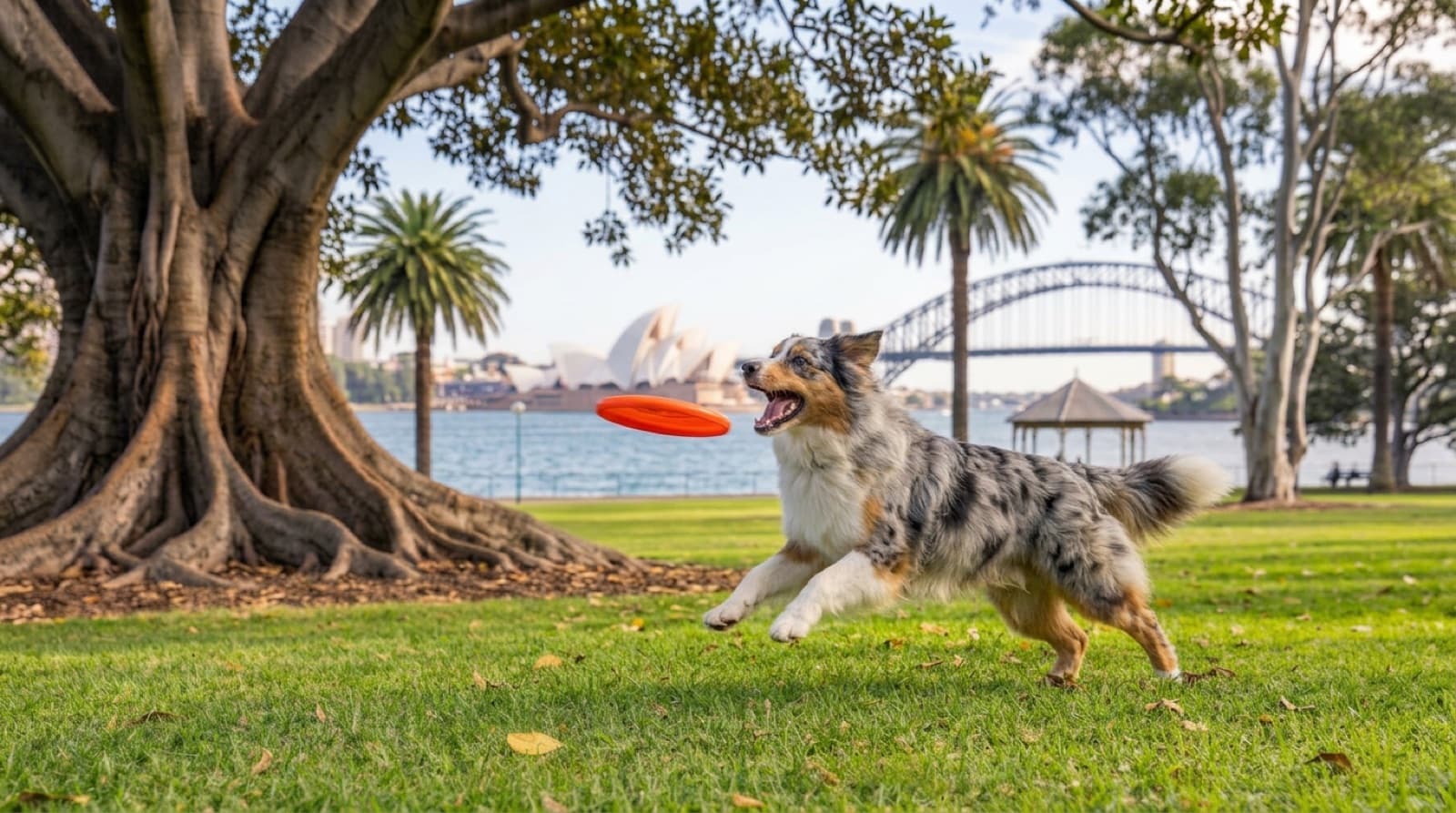
- Structured fetch and tug. Fetch with rules (sit, wait, release, return) and tug with a clear release cue burn energy while practising self-control. Far better than mindless ball-chucking, which can wind a dog up rather than settle it.
- Scent and nose games. Low physical demand, high mental demand. Hide food or a toy and let the dog search. Brilliant for rainy days, hot afternoons, and dogs resting a joint.
- Agility and dog sports. The breed's athleticism and biddability make it a natural. Sydney has active dog-sport communities running classes from foundation upward. Pick one and commit, because consistency matters more than the specific sport.
- Trick training. A low-cost daily option that provides real mental work at home. Teach a new trick a week to keep a clever dog engaged.
For at-home enrichment on top of the training, keep a rotation of puzzle feeders, snuffle mats, frozen food toys and lick mats, and use them especially during alone time. Solo puzzle work is the floor; partnered training is the ceiling. Aim to include both every day.
Containment: the athletic escaper
Aussies are athletic, clever and motivated, which makes them capable escapers when they are bored or under-exercised. A dog that is not getting enough physical and mental work has a strong reason to get out, so the single best anti-escape measure is meeting the dog's needs so it has no motivation to leave in the first place. Containment and enrichment are two halves of the same job.
On the physical side, look at your fencing honestly. An Aussie can clear a low fence, dig under a loose one, or learn to work a gate latch, so you may need adequate height, a dig barrier along the base, and a secure, self-latching gate. Do not rely on a yard as the dog's main daily activity: a bored dog left in a yard for hours practises fence-running and escaping, both of which get stronger with repetition. Use the yard for supervised, structured play, and bring the dog inside when you cannot watch it. Fix the boredom and the fence at the same time.
The honest verdict on lifestyle fit
It is worth being blunt, because getting this wrong is what fills rescue with the breed. An Australian Shepherd is not an apartment dog, not a sedentary dog, and not a leave-alone-all-day dog. It is a working animal that needs space, daily exercise, mental work and company, and it does not cope with long solitary days in a small home.
That does not make every busy owner unsuitable. A calmer older Aussie with a genuinely committed owner who provides real daily exercise and midday company can do well even without a big yard. But if you work full-time away from home, you need a plan: doggy daycare a couple of days a week, a midday walker, a work-from-home arrangement, or a household member whose hours differ. Without one of those, a young Aussie left alone all day is one of the most common paths to destruction, escaping and eventual surrender. Being honest about your week before you adopt is the kindest thing you can do for the dog.
A Sydney routine that works
Morning:
- A solid 45-minute walk or off-leash run, kept to the cool early hours in summer
- 10 to 15 minutes of training (recall, impulse control, a new skill)
- A puzzle feeder or frozen food toy as you leave, so the alone time starts with a job
Midday (if you work away from home):
- Doggy daycare a couple of days a week, a dog walker, or a midday visit so the dog is not alone all day
Evening:
- A second walk or an off-leash session at a designated area once recall is reliable
- A short training session or scent game, plus structured fetch or tug with rules
- A tick check down to the skin after any bush or grassy outing, and a wind-down chew before bed
Weekly:
- A dog-sport class or a longer structured outing at a bush trail or off-leash area for variety
Sydney gives an Aussie plenty of options. Popular off-leash areas include Sydney Park at St Peters, timed zones in Centennial Parklands, Sirius Cove Reserve at Mosman, off-leash sections of Bicentennial Park at Sydney Olympic Park, and Rowland Reserve at Bayview. Always check current council signage, since off-leash rules and hours change. Keep the hard efforts to the cool of the morning and evening through summer, never leave the dog in a car, and keep year-round paralysis-tick prevention up, because an active off-leash Aussie meets ticks in exactly the grassy and bush areas it loves. We cover the tick and heat detail in the Australian Shepherd health guide.
Frequently Asked Questions
How much exercise does an Australian Shepherd need each day?
Plan on at least ninety minutes of real physical exercise a day for an adult Aussie, plus dedicated mental work on top. Real exercise means more than a stroll around the block: brisk walking, off-leash running where it is safe and legal, swimming, fetch with structure, or a dog sport. This is a breed built to work all day on a ranch, so its baseline stamina is high, and a young working-line dog often needs more than the ninety-minute floor. Just as important, the exercise has to be balanced with mental work, because a physically tired but mentally bored Aussie will still find trouble. Split the exercise across the day where you can, and adjust for Sydney heat by keeping the hard efforts to the cool early morning and evening. Growing puppies under about 18 months need their high-impact exercise limited to protect developing joints.
Why isn't physical exercise alone enough for an Australian Shepherd?
Because the breed was built to think while it works, not just to run. An Aussie spent generations making constant decisions about stock, reading a handler, and solving problems on the move, so its brain craves that kind of engagement. Physical exercise tires the body, but it leaves the working brain unfilled, which is why owners are often baffled that a dog they walked for an hour still chews the couch or paces the house. The fix is to add mental work: training sessions, scent games, puzzle feeders, and structured activities where the dog has to use its head. A useful rule of thumb is that a few minutes of concentrated training can tire a clever dog more than a much longer walk. Meet both needs, physical and mental, and the same dog that seemed impossible becomes calm and settled at home.
How do I manage an Australian Shepherd's herding instinct around kids and bikes?
Recognise it for what it is and give it a legal outlet, rather than trying to punish it away. Herding instinct shows up as chasing, circling and nipping at the heels of things that move: running children, cyclists, joggers, other pets, sometimes cars. It is hardwired behaviour, not aggression, but it can frighten people and it is dangerous near traffic, so it needs active management. The plan has three parts. First, prevent rehearsal: manage the environment so the dog is not free to chase kids or bikes while you train. Second, teach and reward strong alternatives, especially a reliable recall and a settled 'leave it', so you can interrupt and redirect. Third, channel the drive into structured outlets like fetch with rules, flirt-pole play or a dog sport, so the instinct has somewhere to go. A force-free trainer experienced with herding breeds is worth the money if the behaviour is entrenched. Consistent supervision around young children is non-negotiable while you build the training.
What mental stimulation works best for an Australian Shepherd?
The best mental work combines your involvement with the dog's problem-solving, because partnered work satisfies an Aussie more deeply than solo toys. Daily training sessions are the foundation: teach new skills, practise recall and impulse control, and build tricks of increasing complexity. Scent games use the nose and tire the brain fast, and they suit dogs of any age, including seniors or those resting a joint. Dog sports like agility are a natural fit for the breed's athleticism and biddability. Around all of that, use enrichment tools to fill the gaps: puzzle feeders, snuffle mats, frozen food toys and lick mats, especially during alone time. Solo puzzle work is the floor and partnered training is the ceiling, so aim to include both. Rotating the challenge keeps a clever dog engaged, because novelty is part of what makes the work satisfying.
My Australian Shepherd is destructive when left alone. What do I do?
First, work out whether it is boredom or genuine distress, because the fixes differ. A bored, under-exercised Aussie destroys things because it has energy and brainpower with nowhere to go, and the answer is more exercise and mental work before you leave, plus an enrichment plan for the alone time, like a frozen food toy or a puzzle feeder as you walk out. A dog in genuine separation distress panics when left, may salivate, vocalise or try to escape, and that is a welfare issue that needs a gradual behaviour plan and often professional help, so speak to your vet or a qualified force-free behaviour professional. For the common boredom case, adding a solid walk and a short training session before you leave, plus something to work on while you are out, usually reduces the destruction sharply within a couple of weeks. If it does not improve, or the dog seems distressed rather than simply busy, get professional advice rather than pushing on alone.
Can an Australian Shepherd live in an apartment or be left alone all day?
Honestly, an apartment and long daily absences are the two hardest situations for this breed, and together they are a recipe for a miserable dog and a destroyed home. An Aussie is an athletic, high-drive working dog that needs space, exercise and company, and it does not cope well being alone from morning to night. That does not make apartment life absolutely impossible for every individual, especially a calmer older dog with a genuinely committed owner who provides serious daily exercise and midday company, but it stacks the odds against you. If you work full-time away from home, you need a real plan: doggy daycare a couple of days a week, a midday walker, a work-from-home arrangement, or a household member whose hours differ. Without one of those, a young Aussie left alone all day is one of the most common paths to surrender, and choosing a lower-drive breed would be kinder to you both.
How do I stop my Australian Shepherd escaping the yard?
Treat containment as a serious project, because Aussies are athletic, clever and motivated escapers when bored or under-stimulated. A dog that is not getting enough exercise and mental work has a strong reason to get out, so the single best anti-escape measure is meeting the dog's needs so it has no motivation to leave. On the physical side, check your fencing honestly: an Aussie can clear a low fence, dig under a loose one, or work a gate latch, so you may need height, a dig barrier along the base, and a secure, self-latching gate. Never leave the dog alone in the yard for long stretches as its main daily activity, because a bored dog in a yard practises escaping and fence-running. Supervise outdoor time, use the yard for structured play rather than storage, and bring the dog inside when you cannot watch it. Containment and enrichment work together: fix the boredom and the fence at the same time.
Where can I exercise an Australian Shepherd off-leash in Sydney?
Sydney has good off-leash options, and a reliable recall is the thing that makes them usable for a herding breed with a chase instinct. Popular fenced or designated off-leash areas include Sydney Park at St Peters in the Inner West, timed off-leash zones in Centennial Parklands, Sirius Cove Reserve at Mosman, off-leash sections of Bicentennial Park at Sydney Olympic Park, and Rowland Reserve at Bayview on the Northern Beaches. Always check the current council signage, because off-leash rules and hours change and some areas are timed. Choose quieter times while you build recall, keep the dog on a long line until the recall is genuinely reliable around distractions, and do a tick check down to the skin after any bush or grassy outing, since the paralysis tick is a year-round Sydney risk. Structure the outing with some heel work, recalls and settles so it counts as mental work as well as a run.
Can I own an Australian Shepherd if I work full-time?
Yes, but only with a genuine plan for the dog's day, and it is harder than for a lower-drive breed. The needs do not shrink because you are at the office: an adult Aussie still wants ninety minutes of exercise plus mental work, and it should not be alone from morning to night. Sustainable patterns include doggy daycare two or three days a week (the physical and social day genuinely helps this breed), a midday dog walker, a work-from-home arrangement so the dog is not alone the full day, or a partner whose hours overlap differently. Front-load a solid walk and a short training session before work, leave enrichment for the alone time, and do the bigger exercise and training in the evening. Without midday coverage, a young Aussie plus a full-time-empty house is a common setup for destruction, escaping and eventual surrender, so be honest about whether you can make the day work before you adopt.
Keep reading
Adoptable Australian Shepherds in Sydney
Live listings with foster carer notes on drive and energy level.
Australian Shepherd Adoption in Sydney
Where to adopt, why Aussies end up in rescue, and what it costs against a breeder.
Australian Shepherd Health Issues in Sydney
MDR1 drug sensitivity, hips and elbows, eye disease, epilepsy, the double-merle risk, plus heat and ticks.
All Sydney Adoption Guides
Browse every breed and how-to guide for adopting a rescue dog in Sydney.