The short answer
Staffies are generally healthy and often live well into their teens. Plan for five things: skin allergies, which are common in the breed; hip and elbow problems in some lines; three genetic conditions a DNA test can detect; paralysis ticks in Coast bushland; and heat and sun on hot beach days. Keep tick prevention going all year and give a pale-coated dog shade. Take out pet insurance while the dog is young, before anything is on record. Your regular vet handles day-to-day care, and SASH Tuggerah and ARH Gosford both run 24-hour emergency services.
How healthy is a Staffy, overall?
As a breed, Staffordshire Bull Terriers are above average for medium-sized dogs. Lifespan averages 12 to 14 years. They are muscular and active well into their senior years, and most do not develop the chronic mobility problems that affect larger breeds. The American Staffordshire Terrier, a separate and larger breed often grouped under “Staffy” in rescue listings, has a similar overall profile.
This guide exists not because Staffies are unhealthy, but because a small number of breed-specific issues are common enough to plan for. Knowing their names helps you spot them early, ask your vet the right questions, and arrange insurance before a problem becomes a pre-existing condition. If you are still deciding, our Staffy adoption guide for the Central Coast covers where to find one.
Skin allergies (atopic dermatitis)
Skin allergies are the most common chronic problem in Staffies. The veterinary term is atopic dermatitis, an inherited tendency to react to environmental allergens such as pollens, grasses and dust mites. The signs are mostly visible: itchy paws the dog licks constantly, red ears, repeat ear infections, patchy hair loss around the feet, belly and groin, and a smell that returns however often you bathe the dog.
Two things help you get on top of it early. First, do not assume it is fleas. Flea allergy looks similar and is worth ruling out, but if the dog is on flea prevention and the itching continues, allergy becomes the working diagnosis. Second, see your vet sooner rather than later. The longer the skin barrier breaks down, the harder it is to settle.
On the Coast, rinse salt water and sand off after a swim, because both can dry and irritate already sensitive skin. Treatment has moved well beyond steroids alone, with options including allergy desensitisation, targeted anti-itch medication, diet trials and ongoing skin barrier care. Your vet will choose based on your dog. The RSPCA Knowledgebase has an introductory overview: RSPCA on atopic dermatitis in dogs.
Paralysis ticks in Coast bushland
The Australian paralysis tick (Ixodes holocyclus) is native to the east coast and found along the NSW coast, including the bushland reserves and walking tracks that run through much of the Central Coast. Risk is year-round, with the biggest peak from spring to late summer. A Staffy that explores the bush edges of a bigger block, or walks the tracks around Gosford and Wyong, is exactly the dog that meets ticks.
The tick injects a toxin while attached, and the dog can develop a paralysis that spreads over hours to days. Untreated, it can kill. Treatment is intensive, while prevention is simple:
- Year-round prevention without gaps. Several well-established products on the Australian market cover paralysis ticks. Your vet will recommend the right one for your dog, whether oral or spot-on.
- A daily hands-on check after any bush or coastal walk. Run your hands over the dog from head to tail, paying attention to the ears, neck, around the jaw and between the toes.
- If you find a tick, remove it carefully and call your vet straight away, even if the dog seems fine. Signs can appear hours after removal.
Watch for wobbly back legs, a changed bark, coughing, vomiting or trouble breathing or swallowing. Those need a vet immediately. The standard reference is the RSPCA guide to keeping dogs safe from paralysis ticks.
Browse adoptable Staffies on the Central Coast
Adopted Staffies arrive desexed, vaccinated, microchipped and vet checked. Check the live listings and ask the shelter about any known health notes before you visit.
See Available Staffies →Three breed-specific genetic conditions
Three inherited conditions are recognised in Staffordshire Bull Terriers, each caused by a single recessive gene and each detectable by a saliva DNA test. Reputable breeders test their breeding stock. Rescue Staffies usually have not been tested, but the underlying disease rate in the general Staffy population is relatively low.
L-2-hydroxyglutaric aciduria (L-2-HGA). A metabolic disease affecting the brain. Affected dogs typically show signs between six months and one year: tremors, behavioural changes, sometimes seizures, sometimes exercise intolerance. There is no cure, but management is possible.
Hereditary cataracts (HC). A specific cataract pattern that develops in young dogs, usually visible by 12 to 18 months. The dog gradually loses vision in the affected eye. Surgical removal is possible.
Persistent hyperplastic primary vitreous (PHPV). A developmental eye abnormality that ranges from mild to severe. It is diagnosed by a veterinary eye examination, and a DNA test is also available.
For an adopted Staffy, DNA testing is optional. Canine DNA kits are ordered online and use a cheek swab you post back; ask your vet which provider they recommend. The result usually informs planning rather than active treatment.
Hip, elbow and joint problems
Hip and elbow dysplasia are less common in Staffies than in larger breeds, but they do occur. The breed carries heavy muscle on a stocky frame, which loads the joints. Watch for stiffness after rest, reluctance to climb stairs or jump into the car, an unusual gait such as “bunny-hopping” with the back legs, and slowing down on walks earlier than expected.
If you see any of those signs, your vet can arrange an orthopaedic examination and X-rays. Treatment depends on severity, from weight management at the mild end to surgery at the severe end. Prevention is mostly about keeping the dog lean, avoiding repeated big jumps off furniture or out of vehicles, and regular, moderate exercise. Soft sand is good for a fit dog, but long runs on it can be hard work for a Staffy that is stiff or carrying extra weight. The Australian Veterinary Association publishes general guidance on dog health.
Heat, humidity and sun on a short coat
Staffies are not flat-faced like Bulldogs, so their heat tolerance is reasonable, but Coast summers are often humid as well as warm, and humidity makes it harder for a dog to cool by panting. On hot days:
- Walk early morning or after sunset, and skip the middle of the day.
- Test footpaths and beach sand with the back of your hand. If you cannot hold it there for five seconds, it is too hot for paws.
- Carry water on any walk longer than about 20 minutes, and bring shade to the beach.
- Never leave the dog in a parked car, even for a few minutes.
- Watch for heavy panting that does not settle, drooling, weakness or stumbling. Those are heatstroke signs. Cool the dog with tepid, not icy, water and get to a vet.
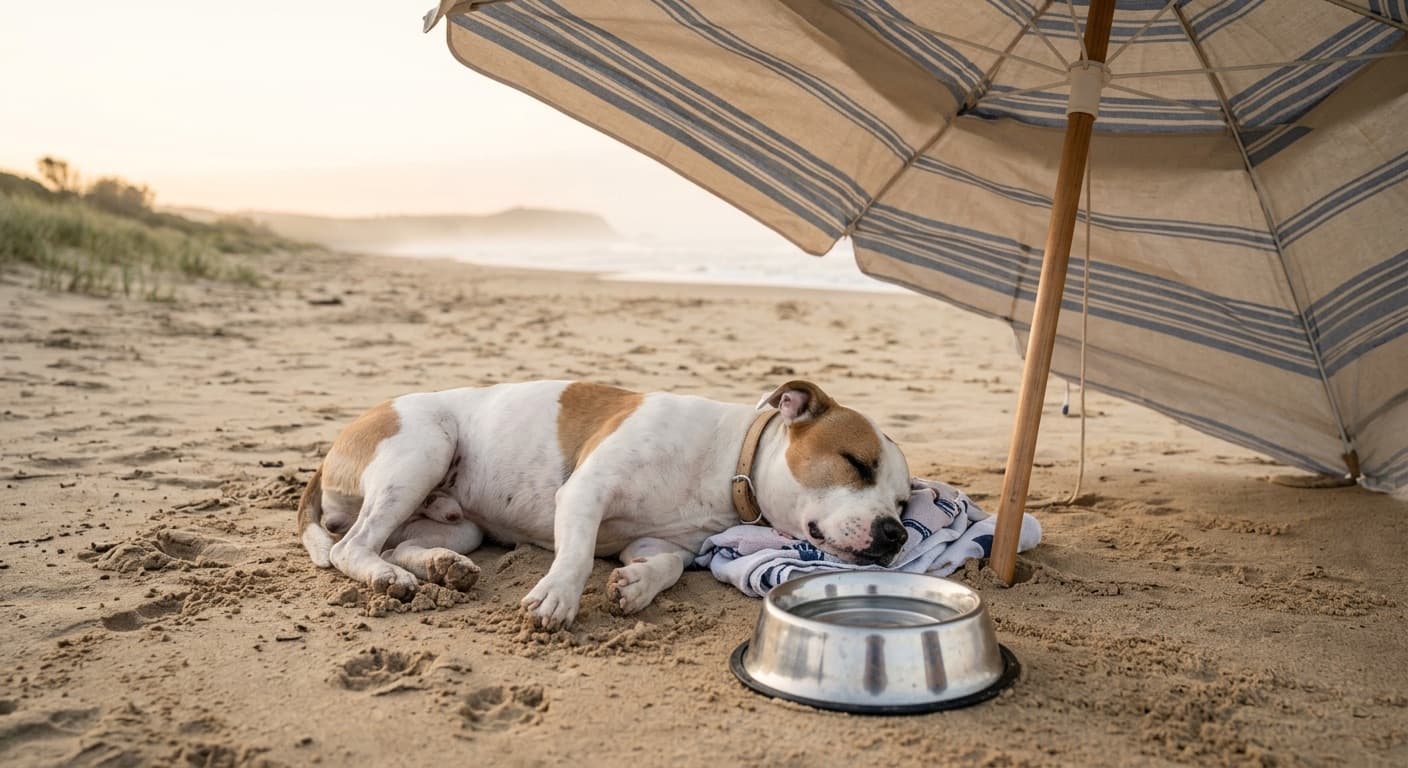
The short coat brings one more risk. Staffies with white or pale coats, or pink skin on the nose, ears and belly, can get sunburnt, and repeated sun damage to pale skin is a concern your vet will want to know about. Give the dog shade at the beach and in the yard, and ask your vet about a dog-safe sunscreen rather than using a human product. A Staffy that lives outdoors on a bigger block needs constant shade and water in summer.
Central Coast vet care: who handles what
Day-to-day care: any local GP vet. Staffies do not need a breed specialist. Find a vet you trust and book an introductory check within a couple of weeks of adoption.
After hours and emergencies: the Coast has two 24-hour hospitals. SASH Central Coast at Tuggerah is open around the clock every day of the year and is also a specialist referral hospital, covering areas such as dermatology, surgery and internal medicine. Animal Referral Hospital Gosford runs 24/7 emergency and critical care. Paralysis tick cases often come in overnight, so save both in your phone and work out which is closer before you need one. Your GP vet arranges specialist referrals when a case needs them.
Pet insurance: is it worth it for a Staffy?
For most owners, yes. Skin allergies can need ongoing dermatology care, a paralysis tick admission can be intensive, and joint surgery is expensive. The key is timing. Sign up while the dog is young and healthy, because insurers exclude pre-existing conditions, so anything on the vet record before the policy starts will not be covered later.
Major Australian providers cover Staffies, including PetSure (the underwriter behind many brand-name policies), Petplan Australia and RSPCA Pet Insurance. Read the product disclosure statement before you commit; the gap between basic and top-tier cover is significant, particularly for joints, dental and chronic conditions.
Housing is the other thing new Staffy owners ask about. Our Staffy housing guide for the Central Coast covers rentals, strata and why the breed is not restricted in NSW.
Frequently Asked Questions
Are Staffies a healthy breed overall?
Yes, broadly. Staffordshire Bull Terriers have a 12 to 14 year lifespan, which is solid for a medium-sized breed, and they stay sturdy and active well into their senior years. The things to plan for are skin allergies, hip and elbow problems in some lines, three named genetic conditions detectable by DNA test (L-2-HGA, hereditary cataracts and persistent hyperplastic primary vitreous), and on the Coast, paralysis ticks and summer sun. None of those are inevitable, and most are manageable when caught early.
What is L-2-HGA in Staffies?
L-2-hydroxyglutaric aciduria (L-2-HGA) is a hereditary metabolic disease that affects Staffordshire Bull Terriers specifically. Affected dogs typically show neurological signs, such as tremors, seizures or behavioural changes, between six months and one year of age. It is caused by a single recessive gene, so a DNA test can identify carriers and affected dogs before symptoms appear. Rescue Staffies usually have not been tested, but the disease is relatively rare in the general Staffy population. If you want certainty, a canine saliva DNA test can cover it; ask your vet which test they recommend.
How worried should I be about paralysis ticks on the Central Coast?
Worried enough to keep your Staffy on prevention year-round, especially if you walk the bush tracks and reserves around Gosford and Wyong. The paralysis tick (Ixodes holocyclus) is found along the NSW east coast, including coastal bushland, with the biggest risk in spring and summer. Without prevention, a tick can paralyse and kill a dog. Use a vet-recommended tick-prevention product without gaps, check the coat by hand after every walk, and see a vet immediately if you find a tick or notice wobbly back legs, a changed bark, coughing or trouble swallowing.
Do Staffies cope with Central Coast summers and beach days?
Better than flat-faced breeds like Bulldogs or Pugs, because a Staffy's muzzle is longer and it cools more efficiently. On hot, humid days it can still overheat, so walk early or after sunset, carry water, and never leave the dog in a car. Watch the sun too: a Staffy with a white or pale coat, or pink skin on the nose and belly, can burn, so give it shade on the beach and ask your vet about a dog-safe sunscreen. Hot sand and footpaths can burn paws in the middle of the day, so test the surface with the back of your hand.
Where is the nearest 24-hour emergency vet on the Central Coast?
The Coast has two 24-hour animal hospitals. SASH Central Coast at Tuggerah is open 24 hours a day, every day of the year, and is also a specialist referral hospital. Animal Referral Hospital (ARH) Gosford in West Gosford is open 24/7 for emergency and critical care. Save both in your phone the week you bring your Staffy home, work out which is closer, and call ahead on the way so the team knows you are coming.
Is pet insurance worth it for a Staffy?
For most owners, yes. Skin allergies can need ongoing care, a paralysis tick case can mean intensive treatment, and joint problems in an older dog can be costly. The key is timing: sign up while the dog is young and healthy, because insurers exclude pre-existing conditions, so anything on the vet record before the policy starts will not be covered later. Read the product disclosure statement closely, because cover for chronic conditions and joints varies a lot between policies.
Should I worry about hip dysplasia in my adopted Staffy?
Less than in some larger breeds, but it does happen. Staffies are medium-sized, so the joint load is lower than in a Great Dane or Labrador, but poor breeding can still produce dysplastic dogs. If your Staffy limps, is reluctant to climb stairs or jump into the car, or is stiff after rest, ask your vet for an orthopaedic examination. Treatment ranges from weight management through to surgery in severe cases.
Keep reading
Adoptable Staffies on the Central Coast
Live listings of Staffies and Staffy crosses available to Central Coast adopters.
Staffy Adoption on the Central Coast
Where to adopt, what the fee covers, $0 registration and whether a Staffy suits you.
Staffy Housing: Rentals, Strata & NSW Law
The restricted-breed myth in detail, landlord and strata rules, and council lead rules.
All Central Coast Adoption Guides
Every breed and how-to guide for adopting a rescue dog on the Central Coast.