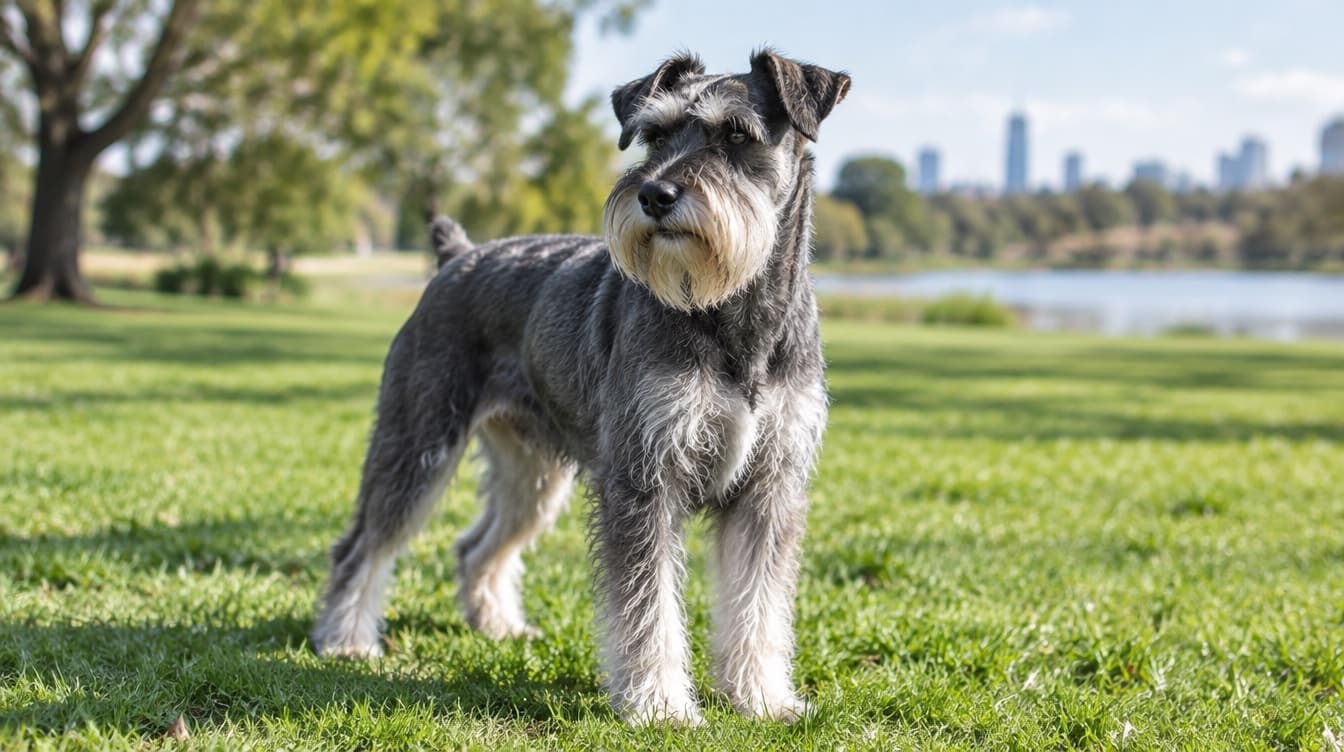
The short answer
You can adopt a Standard Schnauzer in Perth, though purebreds are uncommon in rescue, so set alerts across Dogs' Refuge Home WA at Shenton Park, RSPCA WA at Malaga, the foster-based SAFE Perth and SAFE, and PetRescue, be application-ready, and stay open to a Schnauzer cross or an older dog. Adoption runs about $600 all-inclusive against several thousand dollars from a breeder, and the breed is not restricted in WA. The honest commitments are exercise and mental work for a clever working dog, a wiry coat that needs regular stripping or clipping, and managing the alert barking early in a suburban setting. Meet those and you have a loyal, fun, capable companion.
Why Standard Schnauzers end up in Perth rescue
Understanding why a clever working dog lands in rescue tells you exactly what to plan for before you adopt one.
It is a working brain that needs a job. The Standard Schnauzer is intelligent and energetic, bred to work all day, and it needs real daily exercise plus training and mental work. A bored, under-exercised Schnauzer invents its own entertainment, which looks like digging, barking and mischief, and that gets labelled a behaviour problem when it is really an unmet need.
The alert barking. This is a natural watchdog that tells you about visitors, noises and movement. That is an asset in some homes and a genuine nuisance in a close suburban Perth street or a strata complex, and barking complaints are a real path to surrender when the behaviour was never managed.
The coat and life changes. The wiry coat needs regular stripping or clipping, which some owners did not budget for, and ordinary life changes, a move, a relationship breakdown or an owner who could not keep up, bring others to rescue. Crosses appear too, carrying similar needs. The temperament is usually intact: most just needed an engaged home ready to exercise, train and groom a clever dog.
Where to adopt a Standard Schnauzer in Perth
Because Standard Schnauzers are uncommon in general rescue, a wide alert net is the right approach. Set listing alerts on every rescue you would consider and stay open to crosses and older dogs. For a fuller directory, see our Perth adoption resources hub.
1. Dogs' Refuge Home WA
A dogs-only, not-for-profit shelter at Shenton Park in inner Perth, running since 1935. It takes a broad mix of dogs including working breeds and crosses, and every adoption includes desexing, vaccination, microchipping and a vet check. Browse the current dogs at dogshome.org.au.
2. RSPCA Western Australia
The state welfare body, with its Animal Care Centre at 108 Malaga Drive in Malaga, northern Perth. Adoptions run by appointment and every animal is health- and behaviour-checked before listing, so you get an honest read on the dog's energy and how vocal it is before you commit. Apply at rspcawa.org.au.
3. SAFE Perth and SAFE
Both run a foster-care model rather than a central metro shelter, so a working dog lives in a home while it waits. Because the dog lives with a foster carer, the notes on its energy, barking and behaviour with people and other animals tend to be detailed and honest, which is exactly what you need to match a clever working breed to the right household. SAFE Perth lists at safeperth.com.au and SAFE at safe.org.au. Confirm which organisation holds a given dog rather than assuming they are the same office.
4. PetRescue
A national aggregator that lists Schnauzers and Schnauzer crosses from many smaller WA rescue groups in one searchable place, at petrescue.com.au. It is the fastest way to scan many WA rescues at once.
Be wary of any group that asks for money before you have confirmed a real address, a current adoptable-dog list and registered status. Browse the current Standard Schnauzers and Schnauzer crosses on the Perth Standard Schnauzer listings.
What a Standard Schnauzer costs: adopt versus buy
Adoption is far cheaper at the outset. A rescue fee for an adult Schnauzer or Schnauzer cross through a Perth rescue commonly runs about $600, and that fee already covers desexing, vaccination, microchipping, worm and flea treatment and a vet check. A Standard Schnauzer from a breeder in WA, by contrast, often runs to several thousand dollars, with none of that vet work done yet.
Council registration is a separate legal step and is set by your local council rather than a single Perth figure. Under the Dog Act 1976, a dog must be microchipped by 3 months and before it changes hands, and registered with your local council from 3 months, with a substantially reduced fee for a desexed and microchipped dog. Check the WA Government dog ownership hub and your own council for the current amount.
The ongoing cost that defines this breed is grooming, because the wiry coat needs regular stripping or clipping, alongside the time to exercise and train a clever dog. Adopting is many times cheaper up front, the dog arrives already vetted, and an assessed adult lets you see the real energy and temperament rather than gamble on a puppy.
Standard Schnauzers and Western Australian dog law
The Standard Schnauzer is not a restricted breed in Western Australia. Under the Dog Act 1976, only five breeds are restricted: the American Pit Bull Terrier, Dogo Argentino, Fila Brasileiro, Japanese Tosa and Perro de Presa Canario. A Schnauzer is legal to own and to rehome normally. It simply needs to be microchipped by 3 months of age and before it changes hands, and registered with your local council from 3 months, with a substantially reduced fee for a desexed and microchipped dog. The dangerous-dog framework under the Act applies to any breed by behaviour rather than by type, and a well-exercised, well-trained Schnauzer whose barking is managed is a good suburban neighbour.
Browse adoptable Standard Schnauzers in Perth
Standard Schnauzers are uncommon in rescue, so crosses and older dogs appear more often than purebred puppies. Browse live WA listings and set an alert.
See Available Standard Schnauzers →If you have been searching “Standard Schnauzer for sale Perth”
Plenty of people arrive here after searching for a Schnauzer to buy, because the for-sale listings outnumber the rescue ones. Reputable breeders exist, but before you spend anything, know that the online market for popular purebred puppies in Australia is one of the more scam-prone corners of the pet world. A cheap puppy, a deposit request for a dog you have not met in person, or a seller who will not show you both healthy parents is a warning sign rather than a bargain, and Scamwatch has documented deposit scams for puppies that do not exist.
WA does not run a Pet Exchange Register or a breeder source-number scheme, so there is no source number to look up here. The practical safeguard is the microchip: a dog sold or given away legally in WA must be microchipped and registered, so ask to see the microchip paperwork before you pay anything, and treat a seller who cannot produce it as a red flag. Adoption sidesteps much of that: it costs a fraction of a breeder price, gives a vet-checked dog a home, and an assessed adult asks far less guesswork. The RSPCA Australia Knowledgebase has good general guidance on choosing a dog and avoiding poorly bred puppies.
Adult or puppy, and how to choose
For almost every adopter an assessed adult is the more responsible choice, and Schnauzer puppies are rare in rescue anyway. An adult shows you its real size, energy level and how vocal it is rather than a guess, often has some training in place, and carries a lower adoption fee. With a clever, alert dog, seeing the actual temperament matters: the rescue can tell you how much exercise the dog needs, how it is with other animals, and how it manages at home.
When you choose, read the foster carer's notes closely. They will tell you how a specific dog does with children, other pets, strangers and being left alone, and that record predicts the fit far better than the breed average. For the broader picture, see our guide to the best dog rescues in Perth and the Perth dog registration guide for the WA microchip and council steps.
Frequently Asked Questions
Where can I adopt a Standard Schnauzer near me in Perth?
Start with the main Perth shelters and rescues: Dogs' Refuge Home WA at Shenton Park, RSPCA WA at Malaga, and the foster-based rescues SAFE Perth and SAFE. A purebred Standard Schnauzer is uncommon in rescue, so Schnauzer crosses and similar bearded working dogs show up more often than full purebreds. Set listing alerts across every rescue you would consider, have your application ready, and stay open to a cross or an older dog. PetRescue lists dogs from many smaller WA rescues in one place. Never send money before you have confirmed a real, registered rescue.
Why do Standard Schnauzers end up in rescue?
Usually because this is more dog than the buyer expected. The Standard Schnauzer is an intelligent, bold, versatile working breed with real energy, and it needs daily exercise, training and mental work or it gets bored and inventive. It is also a natural, alert watchdog that barks at what it notices, which can become a problem in a suburban Perth street or a strata complex. Add the wiry coat, which needs regular hand-stripping or clipping, and an owner who pictured a low-effort dog can find the exercise, training and grooming add up. When they do, the dog is surrendered. Others reach rescue through ordinary life changes. In an active, engaged home this is a loyal, clever, fun companion.
How much does it cost to adopt a Standard Schnauzer versus buy one?
Adoption is far cheaper up front. A rescue fee for an adult Schnauzer or Schnauzer cross through a Perth rescue commonly runs about $600, and that fee already includes desexing, vaccination, microchipping, worm and flea treatment and a vet check. A Standard Schnauzer from a breeder in WA, by contrast, often runs to several thousand dollars, with none of that vet work done yet. So adopting is many times cheaper at the outset and the dog arrives already vetted. The ongoing cost worth planning for is grooming, because the wiry coat needs regular stripping or clipping, plus the exercise and training time the breed needs to stay settled.
Are Standard Schnauzers restricted in Western Australia?
No. The Standard Schnauzer is not a restricted breed in WA. The five restricted breeds under the Dog Act 1976 are the American Pit Bull Terrier, Dogo Argentino, Fila Brasileiro, Japanese Tosa and Perro de Presa Canario. A Schnauzer is legal to own and to rehome normally, and like any WA dog it needs to be microchipped by 3 months of age and before it changes hands, and registered with your local council from 3 months. A desexed and microchipped dog pays a substantially reduced council registration fee.
Are Standard Schnauzers good family dogs?
Yes, for an engaged family. A well-raised Standard Schnauzer is loyal, playful, clever and typically devoted to its people and good with children it is raised with, and its alert nature makes it a natural watchdog. The cautions are its energy and its brain, because an under-exercised, under-stimulated Schnauzer makes its own fun, and its tendency to bark, which needs managing early in a suburban setting. Early socialisation and training channel all of that well. A foster carer who has lived with the specific dog can tell you how it is with children, other pets and visitors far better than the breed average, so ask.
Do Standard Schnauzers bark a lot?
They can, and it is worth knowing before you adopt. The Standard Schnauzer was bred as an all-purpose farm and guard dog, so it is alert and vocal and will tell you about visitors, noises and movement. That makes it a good watchdog but a potential nuisance in a close suburban street or a strata complex if the barking is not managed. The fix is early training, enough exercise and mental work so the dog is not barking from boredom, and not rewarding alarm barking. Ask the rescue or foster carer how vocal the individual dog is, because it varies.
Should I adopt an adult Standard Schnauzer or a puppy?
For most adopters an adult is the better choice, and Schnauzer puppies are rare in rescue anyway. An adult shows you its real size, energy level and temperament rather than a guess, often has some training in place, and carries a lower adoption fee. A vet-checked, foster-assessed adult that a rescue can describe honestly, matched to an active home that can give it exercise and mental work, is the low-guesswork way into the breed.
I keep seeing Schnauzer puppies for sale. Is adopting really an option?
It is, and it is worth trying first. The for-sale listings are easy to find, but that demand attracts backyard breeding and the occasional online scam. A cheap puppy, a deposit request for a dog you have not met in person, or a seller who will not show you both healthy parents is a warning sign rather than a bargain. WA does not run a Pet Exchange Register or a breeder source-number scheme, so the practical safeguard is the microchip: a dog sold or given away legally in WA must be microchipped and registered, so ask to see the microchip paperwork before you pay. Adoption costs a fraction of a breeder price, gives a vet-checked dog a home, and an assessed adult asks far less guesswork about temperament and energy.
Keep reading
Adoptable Standard Schnauzers in Perth
Live listings of Standard Schnauzers and Schnauzer crosses across Perth and WA rescues.
Best Dog Rescues in Perth
The verified WA shelters and foster rescues to set alerts with.
Registering a Dog in Perth
Microchipping, council registration and the WA rules for a new dog.
All Dogs for Adoption in Perth
Every adoptable dog we track across Perth and WA shelters and rescues, updated regularly.