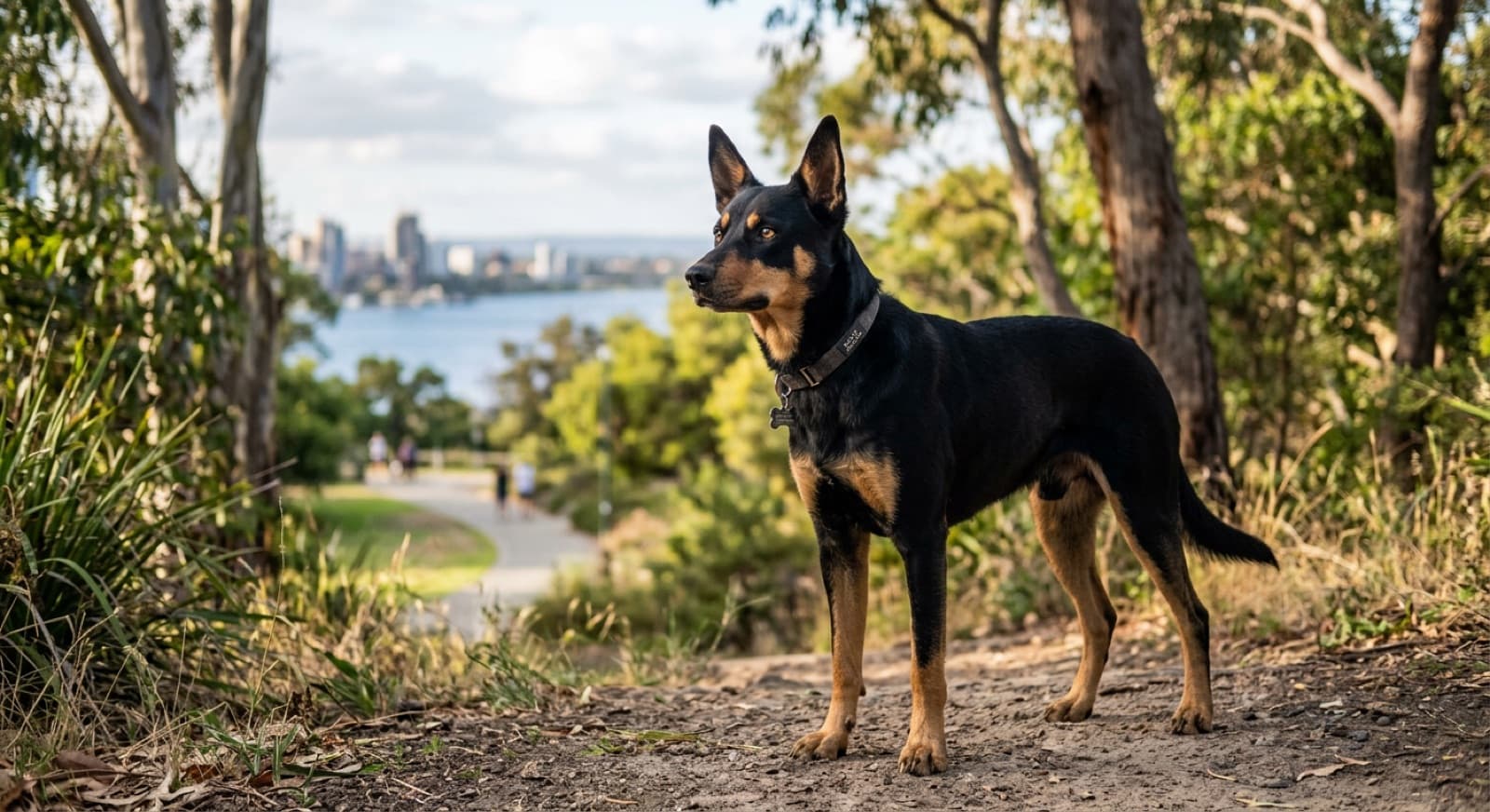
The short answer
The Australian Kelpie is a hardy, generally very healthy working breed. The things to know are cerebellar abiotrophy (the breed's defining hereditary condition, a neurological disease of young dogs), hip dysplasia (at lower rates than most working breeds), eye conditions including progressive retinal atrophy, and the cruciate and joint injuries that come with a very active dog. The biggest day-to-day risk is heat, not because of the coat but because a Kelpie's drive means it will run itself into heatstroke, so manage the exercise in the Perth summer. Keep the dog lean, insure it young, and see a vet promptly for any young-dog unsteadiness. A rescue Kelpie arrives vet-checked. This is general information, not veterinary advice.
A hardy breed, by design
It is worth starting with the good news. The Kelpie was developed and maintained as a working stock dog, selected relentlessly for the ability to work hard across harsh Australian country, and that functional selection kept the breed sound. Kelpies are athletic, moderate in build with no exaggerated features, and generally healthier than many pedigree and working breeds, often living twelve to fifteen years in good working condition. The health points below are things to be aware of, not a warning against the breed, and a rescue Kelpie arrives already desexed, vaccinated, microchipped and vet-checked.
Cerebellar abiotrophy: the defining genetic risk
The breed's best-known hereditary condition is cerebellar abiotrophy (CA), a neurodegenerative disease affecting the cerebellum, the part of the brain that coordinates movement. Affected dogs are usually born apparently normal and then, from a young age, develop a progressive loss of balance and coordination: a wobbly, high-stepping or exaggerated gait, tremors, and difficulty judging distance and movement. It is uncommon, and responsible breeders manage it through pedigree knowledge and careful breeding.
A rescue Kelpie will not come with a breeding history, so the practical point for an adopter is simply this: any young dog showing unsteadiness, tremors or coordination problems needs a proper veterinary assessment, because several conditions can look similar and only a vet can sort out what is going on. It is not a reason to avoid a rescue Kelpie, most of which are perfectly sound, but it is a reason to take early neurological signs seriously rather than assuming a clumsy puppy.
Joints, eyes and the working-dog wear
On the joints, Kelpies can carry hip dysplasia, but at lower rates than most working and large breeds thanks to the breed's working selection; keeping the dog lean and managing a puppy's growth are the everyday protections, and reputable breeders hip-score their dogs using standards such as those from the Orthopedic Foundation for Animals. The bigger joint issue for many pet Kelpies is simply the wear and tear of a very active life: cruciate ligament injuries, in particular, are common in athletic dogs that leap, twist and skid at speed, and they often need surgical repair. Warming a dog up before hard exercise, keeping it lean, and not overdoing high-impact repetition all help.
On the eyes, the breed can carry progressive retinal atrophy, a gradual inherited loss of vision, along with some other eye conditions, which is why breeding dogs should hold a current eye certificate. Any change in a Kelpie's vision or a cloudiness in the eye is a veterinary conversation.
Browse Kelpies available in Perth rescue
A rescue Kelpie arrives desexed, vaccinated, microchipped and vet-checked, with foster carer notes on drive, temperament and any known health needs. Match the individual dog to your ability to meet its needs.
See Available Kelpies →Heat: the drive is the danger
The single most important seasonal health point for a Kelpie in Perth is heat, and the reason is counter-intuitive. The short coat is not the problem; the drive is. A Kelpie is one of the most work-focused dogs alive, and it will keep running, chasing and working well past the point of sensible in the heat, ignoring its own overheating to keep going. On the long runs of 35-to-40-degree days Perth gets, that makes exertional heatstroke a genuine risk: a Kelpie chasing a ball or a frisbee on a hot day can push itself to collapse.
The answer is to manage the exercise rather than rely on the dog to self-regulate, because it will not. Exercise only in the cool of early morning or evening, keep sessions shorter and lower-intensity on hot days, always carry water, provide shade, never leave the dog in a parked car, and stop the game before the dog wants to. Test hot pavement with the back of your hand first. Watch for heavy or frantic panting, drooling, wobbliness, bright red gums or collapse, and if you see them, cool the dog with cool (not icy) water and get to a vet urgently. One WA upside on the parasite side: the paralysis tick is not established in Western Australia, so the local risk is low, though keep flea, worm and heartworm prevention going year-round. General guidance is available from the RSPCA Knowledgebase and the Australian Veterinary Association, but your vet sets the plan for your dog.
Frequently Asked Questions
Are Kelpies a healthy breed?
Yes, generally very. The Australian Kelpie was bred for hard stock work across tough country, and that working selection kept the breed athletic, functional and hardy, with lower rates of some conditions than many other working or pedigree breeds. The things to know are a defining genetic condition (cerebellar abiotrophy), a moderate risk of hip dysplasia, some eye conditions, and the joint wear and cruciate injuries that come with a very active dog. A short-coated working dog also handles the Perth heat reasonably, but its own drive is the risk, because a Kelpie will run itself into heatstroke. Keep the dog lean, manage the heat, and insure it young.
What is cerebellar abiotrophy in a Kelpie?
Cerebellar abiotrophy (CA) is the breed's defining hereditary condition, a neurodegenerative disease of the cerebellum, the part of the brain that coordinates movement. Affected dogs are usually born normal and then, from a young age, develop a progressive loss of balance and coordination: a wobbly, high-stepping gait, tremors and difficulty judging movement. It is uncommon, and responsible breeders manage it through pedigree knowledge and screening. A rescue Kelpie will not come with a breeding history, so any young dog showing unsteadiness, tremors or coordination problems is an immediate veterinary assessment, since several things can look similar and a vet needs to sort them out.
Do Kelpies get hip dysplasia?
They can, but at lower rates than most working and large breeds, because the breed was selected for sound working structure rather than appearance. Hip dysplasia is a developmental joint condition that leads to arthritis over time, and the everyday protections are the same as for any breed: keep the dog lean, and manage a growing puppy's exercise so developing joints are not overloaded. Reputable breeders hip-score their breeding dogs. Watch for stiffness, a reluctance to jump or rise, or slowing down, and raise it with your vet, who can advise on management. A rescue Kelpie should have its joints checked as part of settling in.
Why is heat so dangerous for a Kelpie specifically?
Not because the coat is heavy, it is not, but because the drive is. A Kelpie is one of the most work-focused dogs there is, and it will keep running, chasing and working past the point of sensible in the heat, ignoring its own overheating to keep going. In the Perth summer that makes exertional heatstroke a real risk: a Kelpie chasing a ball on a 38-degree day can collapse. The answer is to manage the exercise, not rely on the dog to self-regulate: run it in the cool of early morning or evening only, keep sessions shorter on hot days, always carry water, and stop before the dog wants to. Watch for heavy panting, wobbliness or collapse and treat it as an emergency.
Should I get pet insurance for a rescue Kelpie?
It is worth it, taken out while the dog is young and healthy so nothing is later excluded as pre-existing. Kelpies are hardy, but a very active dog is prone to cruciate ligament injuries and other working-dog joint problems that can need surgery, and eye or neurological conditions can also add up. Insurance turns an unpredictable cost into a manageable premium. Compare policies on their exclusions, waiting periods and annual limits rather than on price alone, and read the product disclosure statement. Insurance sits alongside the everyday basics of keeping the dog lean, fit and up to date on vet care.
Keep reading
Kelpie Adoption in Perth
Where to find a rescue Kelpie, real costs, and what a working dog really needs.
Kelpies in Suburban Perth
Can a working Kelpie live in the suburbs? Exercise, mental work, fencing and enrichment.
Adoptable Kelpies in Perth
Live listings with foster carer notes on drive, temperament and health needs.
Perth Adoption Resources
Guides on adopting, costs, council rules and settling a rescue dog in Perth.