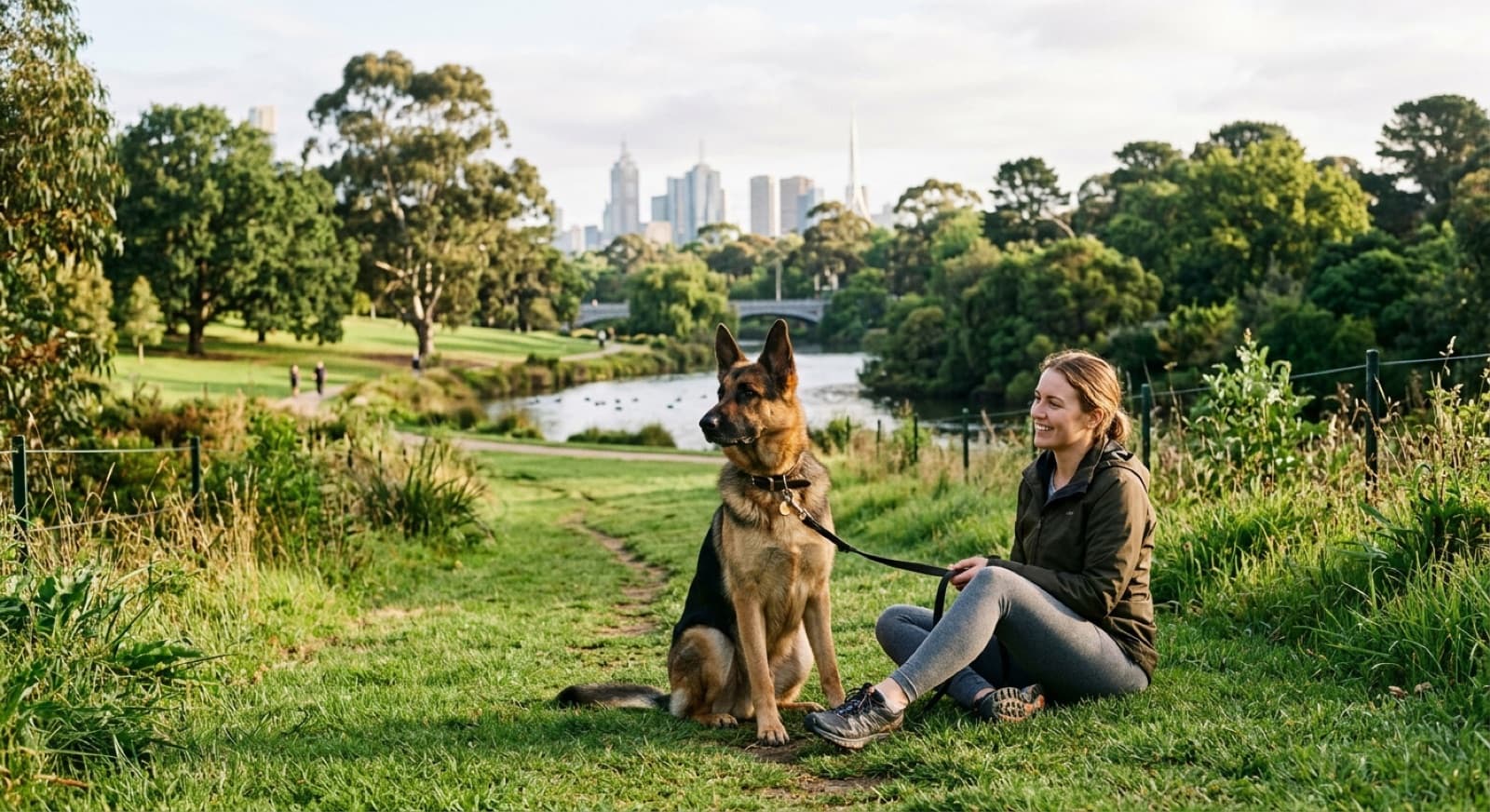
The short answer
Perth has a handful of established shelters and rescues that regularly handle German Shepherds (still called Alsatians by many Australians): Dogs' Refuge Home WA in Shenton Park, RSPCA WA at Malaga, and the foster-based rescues SAFE Perth and SAFE. Adoption fees run about $300 to $600 for an adult, and that already covers desexing, vaccination, microchipping and a vet check. WA breeders charge around $2,500 to $4,500 for a Shepherd puppy plus roughly another $1,500 in first-year vet costs, all of which rescues cover. The shift worth knowing about: adult and senior Shepherds are the easiest dogs in the kennel, and they wait the longest in WA shelters.
Where to adopt a German Shepherd (or Alsatian) in Perth
A short list of shelters and rescues accounts for most of the Shepherd traffic across Perth and Western Australia. They differ in style (large metro shelter versus foster-based rescue), in how strict the application is, and a fair bit in adoption fee. Fees and current availability change, so check each site directly.
1. Dogs' Refuge Home WA
A dogs-only, not-for-profit shelter at Shenton Park in inner Perth, running since 1935 and one of Australia's oldest animal welfare agencies. It houses up to around 150 dogs at a time under a pro-life policy, and Shepherds and Shepherd crosses are a regular feature. Every adoption covers desexing, vaccination, microchipping and a vet check. Browse the current dogs at dogshome.org.au.
2. RSPCA Western Australia
The state welfare body, running since 1892, with its Animal Care Centre at 108 Malaga Drive in Malaga, northern Perth. Adoptions run by appointment, and every animal is health- and behaviour-checked before it is listed. Shepherds and Shepherd crosses come through year-round. Apply at rspcawa.org.au.
3. SAFE Perth
A Perth-metro, no-kill, foster-based rescue running since 2005 with several hundred volunteers and foster carers. It pulls animals due for euthanasia from pounds and vets across the south-west. Because dogs live in foster homes rather than kennels, you get a clear picture of the real personality before you commit. Listings at safeperth.com.au.
4. SAFE (Saving Animals From Euthanasia)
WA's largest foster-based rescue, founded in 2003, with a statewide branch and foster network across regional WA and the metro area. It runs on a foster-care model rather than a central metro shelter, so larger dogs such as Shepherds are placed in homes while they wait. More at safe.org.au. SAFE Perth and SAFE both operate under the SAFE banner in WA, so confirm which organisation holds a given dog rather than assuming they are the same office.
A quick way to scan many WA rescues at once is PetRescue, a national aggregator that lists animals from hundreds of member rescue groups in one searchable place. The four rescues above will cover almost everyone's adoption journey in Perth.
What the rescue fee actually buys you
Across Perth rescues, the all-inclusive fee covers everything you would otherwise pay for separately in the first few weeks. For a Shepherd specifically, that bundle is worth a fair bit, because GSDs are big dogs and big-dog vet bills add up.
Included in a typical Perth rescue adoption fee:
- Desexing (a Shepherd-size desex at a Perth private vet runs into the hundreds)
- Vaccination (the initial C5 schedule)
- Microchipping (a legal requirement before any dog is sold or transferred in WA)
- Worm and flea treatment, plus a heartworm-prevention start
- A vet workup, plus a behavioural assessment in the larger shelters
That bundle would cost you well over the adoption fee if you bought the dog elsewhere and then paid for it all separately. The $300 to $600 adoption fee is the rescue recovering part of the cost of getting the dog ready for you, not a price tag on the dog itself.
One thing the fee does not cover is council registration, which is a separate legal step. Under the Dog Act 1976, a dog must be microchipped by 3 months of age and before any sale or transfer, and registered with your local council once it is 3 months old. Perth is not one council but dozens of local governments, so the exact fee is set by yours. A desexed and microchipped Shepherd pays a substantially reduced registration fee, and pensioner or concession card holders commonly get a further discount. Check the WA Government dog ownership hub and your own council for the current amount.
“GSD for sale Perth”: the real cost picture
Many people start their search typing “German Shepherd for sale Perth” or “GSD puppies for sale WA”. Worth a quick reality check on what each path actually costs.
Registered WA breeder, working or show lines, 8-week-old pup:
- Puppy price: about $2,500 to $4,500 (often higher for sought-after lines)
- First-year vet, food, training and gear: roughly $1,500 to $2,000
- Waiting list time: commonly 6 to 12 months
- What you get: documented parents, a predictable line, an eight-week-old project
Perth rescue, adult Shepherd:
- Adoption fee: about $300 to $600 (already includes the vet bundle above)
- First-month setup: roughly $300 to $500 (bed, bowls, harness, food)
- Wait time: usually weeks, sometimes days
- What you get: a known temperament, a vet-checked adult dog, and a foster carer or shelter staffer who can tell you exactly what the dog is like
The breeder route makes sense for some buyers (service-dog candidates, sport prospects, very specific show interest). For a family pet, the maths and the assessment quality both lean rescue. The same breed comes through either door.
One more option that shows up a lot: Gumtree and Facebook Marketplace “free to good home” Shepherds, or low-cost private resales. Give those a wide berth. WA does not run a source-number register you can look up (there is no Pet Exchange Register or breeder supply number here), so the practical safeguard is the microchip. A dog sold or given away legally in WA must be microchipped and registered, so ask to see the microchip paperwork before you commit any money, and treat a seller who cannot produce it as a red flag. If a deal feels off, you can report it to Scamwatch. If budget is the worry, a rescue Shepherd at $300 to $600 with a full vet workup is genuinely cheaper than a “free” dog whose first vet visit is on you.
Adopting an older or adult German Shepherd
Across the WA rescues LocalPetFinder aggregates, adult and senior Shepherds turn up more often than puppies, and they are the dogs most likely to be overlooked. That is a shame, because they are usually the easiest dogs in the building.
Three things make an older Shepherd a smart adoption.
You skip the puppy year. A Shepherd puppy is a year of intense work: house-training, lead-training, chew prevention, recall basics, socialisation and vet schedules. People who have done it once often do not want to do it again. An adult Shepherd skips all of that.
You get to see the dog you are actually adopting. Adult Shepherds in foster are evaluated for energy, prey drive, reactivity, comfort with kids, and how they go with other dogs. The puppy lottery is gone. The rescue lists what the dog is genuinely like.
Senior Shepherds wait too long. A six or seven-year-old Shepherd in a Perth shelter still has years ahead. They wait longer than younger dogs because new adopters often default-skip them, and shelters such as RSPCA WA and Dogs' Refuge Home sometimes run reduced fees on senior dogs to help move them.
Practical points if you are considering an older Shepherd:
- Exercise still matters. A seven-year-old GSD still needs 45 to 60 minutes of activity a day. They are not a couch dog. They are a slightly slower version of themselves. In summer, do that activity in the cool of early morning or late evening.
- Joint health is worth checking. Ask the rescue about any known hip or elbow issues. Some older Shepherds do well with a softer bed and a vet-recommended joint plan, which is straightforward to manage.
- Pet insurance is harder past 9 years. Several Australian insurers have age limits on new sign-ups. If you are adopting an older Shepherd, check the insurer's upper age limit before assuming you can sign up.
- Adoption fees are often reduced. Several Perth shelters run reduced fees on senior dogs at various times. Worth asking.
Browse adoptable German Shepherds in Perth
Live listings from Perth shelters and rescues, including adults and the occasional puppy. Filter by age and household compatibility.
See Available Shepherds →Health issues to plan for in a rescue Shepherd
German Shepherds are generally hardy, but the breed carries a few known conditions worth understanding before you adopt. None of this is a reason to avoid the breed. It is a reason to ask the rescue good questions and to line up a vet you trust. Always consult your vet about screening and treatment rather than acting on a checklist.
- Hip and elbow dysplasia. Shepherds are one of the breeds most associated with joint dysplasia, where the joint develops abnormally and can lead to arthritis. Screening schemes such as the Orthopedic Foundation for Animals score breeding dogs' hips and elbows, and a rescue can often tell you whether a dog shows any signs. Keeping the dog lean and fit is the single best thing you can do.
- Bloat (gastric dilatation-volvulus, or GDV). Deep-chested breeds like the Shepherd are at higher risk of this life-threatening emergency, where the stomach swells and can twist. The RSPCA Knowledgebase covers the warning signs. If your dog's belly is swelling and they are retching without bringing anything up, that is a get-to-a-vet-now situation.
- Degenerative myelopathy (DM). A progressive spinal-cord disease seen in older Shepherds that gradually affects the hind legs. It is not painful but it is not curable, and your vet can talk you through management. The Australian Veterinary Association is a good starting point for finding a vet experienced with the breed.
For a rescue Shepherd whose history you may not know, the sensible plan is a full vet check soon after adoption, pet insurance signed up early (premiums and eligibility both worsen with age), and a lean body condition kept for life.
German Shepherd crosses you'll see in WA rescue
Heads up: a fair share of “Shepherds” in WA rescue are actually crosses. Common ones that appear on Perth listings:
- Sheprador (Lab x GSD): the most common GSD cross in Australian rescues. Looks Shepherd-like, often a bit smaller, usually more biddable than a pure Shepherd.
- Shepsky (Husky x GSD): intense, vocal, high-drive. Beautiful coats, and a heavy shedder that feels the Perth heat. Not a beginner dog.
- Golden Shepherd (Golden Retriever x GSD): friendlier than a pure Shepherd, slightly less guarded, family-oriented.
- Cattle Dog / Kelpie x Shepherd: uniquely Australian and common in WA. Tough, smart, high-drive, suited to active or large-yard homes more than a small courtyard.
- Staffy x Shepherd: a Staffordshire Bull Terrier cross that pairs the social side of the Staffy with the size and structure of the Shepherd. Neither parent breed is restricted in WA.
Rescue breed labels on any of these are the foster carer's best judgement, so read the temperament notes on the profile rather than the label. Browse the live German Shepherd listings in Perth to see which crosses are available right now.
A double-coated dog through a Perth summer
Perth has a Mediterranean climate: hot, dry summers and mild, wet winters. A German Shepherd's double coat handles the mild winters easily. The real challenge is the other end of the scale. On the long runs of 35 to 40-degree days Perth gets, a double-coated working dog heats up fast, so walk in the cool of early morning or late evening, keep water available, provide shade, and never leave the dog in a parked car. Test the footpath with the back of your hand first, because hot bitumen and sand burn paw pads. And do not shave the coat to cool the dog down. The double coat insulates against heat as much as cold, and shaving it can make overheating and sunburn worse.
Two WA-specific hazards are worth knowing. Snakes, mainly dugites, gwardars and tiger snakes near water, are active around Perth's bushland corridors, wetlands and river foreshores in the warmer months (roughly September to April). A curious dog that disturbs one can be bitten and needs an emergency vet fast. And in WA reserves and bushland, watch for “1080 poison risk” signage: the state's Western Shield 1080 baiting program runs across many reserves, and the WA Government advises treating every baited area as dangerous to pet dogs at all times, so keep your dog under control and know your nearest 24/7 emergency hospital (Perth Vet Emergency at Cannington is one option).
One thing you can worry less about in Perth than on the east coast: paralysis ticks. The Australian paralysis tick is an eastern-seaboard species and is not established in WA, so local paralysis-tick risk is low. The main time to think about it is before you travel east with your dog, when you should ask your vet about tick prevention. For where to walk, WA off-lead areas are set by each council, so check your council's dog exercise areas index, for example the City of Stirling list, before assuming a park is off-lead.
Is a German Shepherd actually the right dog for you?
Shepherds are not a soft option. Worth being honest with yourself about whether you can give one a fair go before you apply, because being knocked back at the application stage is much less painful than returning a dog three months in.
A Shepherd is probably right for you if:
- You have owned a medium or large dog before, or you are ready to invest in training classes from day one.
- You can give the dog 60 to 90 minutes of real activity a day, worked around Perth's summer heat.
- Your housing has space for a 30 to 35 kg dog, and your rental provider or strata has signed off in writing.
- You are home enough that the dog is not alone for 10-hour stretches every weekday.
- You are ready for shedding. A lot of shedding. Twice a year the “coat blow” is a fortnight of vacuuming daily.
A Shepherd is probably NOT right for you if:
- This would be your first dog and you do not have time for weekly training classes.
- You live in a tiny courtyard home with no nearby park or grassed area.
- You work 10 or more hours away from home five days a week with no dog walker or daycare.
- You want a dog who will be friendly with everyone who walks past. Shepherds are reserved with strangers by design.
The reason Shepherds wind up in rescue more than most breeds is mismatched expectations. People picture a steady, intelligent family guardian, which they are. They do not expect the exercise demand, the training commitment, the shedding, or the watchful temperament that comes with the territory. Be straight with yourself about the work before you apply, and the dog you adopt is much more likely to stay with you for life.
Frequently Asked Questions
Are German Shepherds and Alsatians the same dog?
Yes. Same breed, different name. "Alsatian" is the older Australian and British name for the German Shepherd Dog. The name was changed in some countries during and after World War II to soften the German association. Most Perth rescues use both names interchangeably on their listings, and plenty of older Aussie dog owners still call them Alsatians. If you are searching either term you will find the same dogs.
Can I adopt a German Shepherd puppy in Perth?
Sometimes, but adults are much more common in rescue. Most GSD puppies at Perth rescues come from accidental litters, owner surrenders of pregnant dogs, or transfers from regional WA pounds. They get adopted fast, often within days of listing, so set up an alert and apply quickly. For most families an adult Shepherd is actually a better fit anyway. You know the temperament, the dog is usually past the worst chewing phase, and you skip the toilet-training months.
How much does a German Shepherd adoption cost in Perth all-in?
Roughly $700 to $1,000 for everything in the first month, including the adoption fee. Rescue fees run about $300 to $600 for an adult Shepherd and $400 to $800 for a puppy, and that fee already covers desexing, vaccination, microchipping and a vet check. On top of the fee, budget for council registration, where a desexed and microchipped dog pays a substantially reduced fee set by your local council, plus a bed, bowls, harness and a solid lead for a big dog. Compare that to a breeder pup at $2,500 to $4,500 plus roughly another $1,500 in first-year vet bills that rescues cover up front.
Should I adopt or buy a German Shepherd from a breeder in Perth?
For most Perth families, adopt. Both paths get you the same breed. Buying from a registered WA breeder (about $2,500 to $4,500) makes sense if you specifically need a puppy from documented working lines for a service or sport role, or you want a particular show line. For a family pet, a rescue Shepherd is cheaper, faster, comes assessed for temperament, and many breeder waiting lists run six months to a year anyway. In WA there is no source-number register to check, so the practical safeguard on a private sale is the microchip: a legally sold dog must be microchipped and registered, so ask to see the microchip paperwork and treat a listing that cannot produce it as a red flag.
Why are there so many older German Shepherds available?
A few reasons combine. Shepherds live about 10 to 13 years, and many owners outlive their ability to manage a 35 kg working dog through life changes, mobility, or a move into housing that will not take pets. Relationship breakdowns are another common surrender story. And a share of dogs that are no longer suitable for breeding come through. The good news for adopters is that older Shepherds are usually the easiest dogs in the kennel: house-trained, lead-trained, settled in temperament, past the destructive teen phase.
Are German Shepherds restricted in Western Australia?
No. The German Shepherd Dog is NOT a restricted breed in WA. The five restricted breeds under the Dog Act 1976 are the American Pit Bull Terrier, Dogo Argentino, Fila Brasileiro, Japanese Tosa and Perro de Presa Canario. Shepherds are subject to ordinary WA dog law: microchipping by 3 months and before any sale or transfer, and registration with your local council once the dog is 3 months old. Desexing is not compulsory for an ordinary Shepherd, but a desexed dog pays a much lower council registration fee.
How do I keep a German Shepherd cool through a Perth summer?
Walk in the cool of early morning or late evening, never in the middle of a 38-degree day, and press the back of your hand to the footpath first: if you cannot hold it there for five seconds, it is too hot for paws. Keep fresh water available, provide shade, and never leave a dog in a parked car even for a few minutes. Do not shave a German Shepherd's double coat to cool it down, because the coat insulates against heat as well as cold and shaving it can make overheating and sunburn worse. Watch for heavy panting, drooling, wobbliness or collapse, and get to a vet immediately if you see them.