The short answer
A well-raised Doberman is a confident, loyal, affectionate guardian, not an aggressive dog; the reputation comes from the look and the history, not from a stable modern Doberman. The keys are early and ongoing socialisation so the guarding instinct stays balanced, an hour or more of daily exercise plus mental work, plenty of company because the breed is a velcro dog prone to separation anxiety, and reward-based training, because this intelligent, sensitive breed thrives on positive methods and is harmed by harsh or fear-based ones. The Doberman is not a restricted breed in WA, but any dog can be declared dangerous on its behaviour, so good training is a legal safeguard as much as a lifestyle one. Meet those needs and a Doberman is one of the most rewarding dogs to own; neglect them and you get the anxious, difficult dog the breed is unfairly blamed for. In Perth, exercise in the cool hours and enrich indoors on hot summer days. This is general information, not veterinary or behavioural advice.
What a Doberman is really like
Behind the imposing looks, the Doberman is a sensitive, people-focused dog that wants above all to be with its family. It is one of the most intelligent breeds, quick to learn and quick to read a household, and it forms an intense bond with its people. A well-bred, well-raised Doberman is affectionate and playful at home, gentle with the children it lives with, and watchful rather than reactive with the outside world.
The guardian instinct is real and is part of the breed, but it is not the same as aggression. A stable Doberman is alert and will notice a stranger at the gate, but it takes its cue from a calm, confident owner and settles once it learns a situation is safe. The reactive, difficult Dobermans people fear are almost always the product of poor breeding, no socialisation, fear or harsh handling, not of the breed itself. Which is exactly why the rest of this guide matters so much.
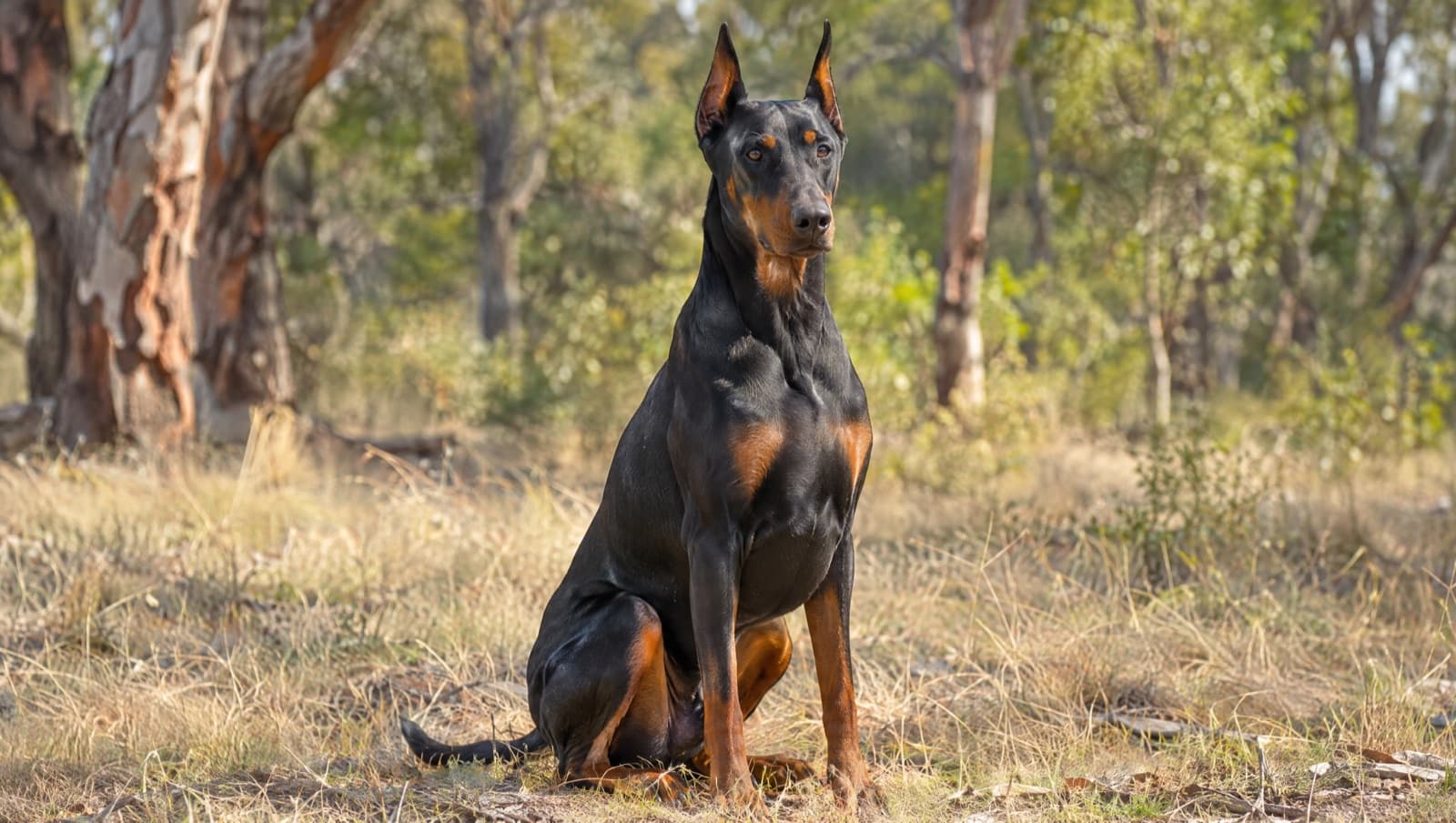
It is worth adding one thing about the look, because it shapes how the breed reads to strangers. Ear cropping and tail docking for cosmetic reasons are illegal in Australia, so a Doberman born and raised here has natural, floppy ears and a full tail. The sharp cropped-ear image many people carry is not how Australian Dobermans appear, and the softer natural look is exactly what the law intends.
Socialisation: the most important job
If there is one thing that makes or breaks a Doberman, it is socialisation. Because the breed has a natural guarding drive, it needs to learn, thoroughly and repeatedly, that visitors, strangers, other dogs, traffic, and everyday life are all normal and safe. That learning is what keeps the guardian instinct balanced instead of tipping into fear or reactivity.
- With a puppy, the early months are a window for lots of calm, positive exposure to new people, dogs, places and sounds, always at a level the pup enjoys.
- With an adopted adult, socialisation is ongoing and gradual: steady, positive introductions at the dog's own pace, rewarding calm, and never flooding a nervous dog with too much at once.
- Make it lifelong. Socialisation is not a box you tick once; keeping a Doberman regularly and positively exposed to the world through its life keeps it confident and easy.
A well-socialised Doberman is a calm, confident dog in public and a joy to own. If a rescue Doberman is wary or under-socialised, a good reward-based trainer can help you build its confidence, and the foster carer's notes will tell you where the dog is starting from. The RSPCA Knowledgebase has sound general guidance on positive socialisation.
Browse Dobermans available in Perth rescue
A rescue Doberman comes with a foster carer's read on its temperament, its socialisation, and how it is with people and other dogs, so you know what you are working with. Live listings from Perth shelters and WA rescues.
See Available Dobermans →Exercise, mental work and the velcro nature
A Doberman is a working athlete, and it needs the exercise to match: around an hour or more of real physical activity a day, plus mental work, to be calm and balanced at home. A walk on its own does not satisfy a dog this driven. Mix brisk walks and off-lead running in a safe, fully fenced area with training games, scent work, puzzle feeders, and ideally a job or a dog sport that gives the working mind an outlet. An under-exercised, under-stimulated Doberman turns its energy to restlessness, anxiety and destruction, and that is one of the most common reasons the breed ends up surrendered. In Perth, off-lead areas are set by each local government, so confirm the current rules on your council's dog exercise areas index, for example the City of Stirling list, which includes Peasholm Dog Beach at Scarborough, before you rely on any particular spot.
Just as important is company. The Doberman is a famous velcro dog that wants to be with its people, and it does not cope well left alone for long hours, so it is prone to separation anxiety. This is a companion guardian, not a backyard dog. Build alone-time gradually with a new rescue, keep departures and arrivals calm, leave the dog occupied, and be honest about whether your household suits a dog that thrives on company. In the Perth summer, time the physical exercise for the cool of early morning and late evening, carry water, and lean on indoor mental enrichment on the hottest days, which keeps a working brain busy without the heat load. Keep the dog under control near bushland and water in the warmer months, where dugites, gwardars and tiger snakes are active.
The law and Perth housing: why training is a safeguard
The Doberman is not a restricted breed in WA. Under the Dog Act 1976, the restricted-breed provisions apply only to five breeds (the American Pit Bull Terrier, Dogo Argentino, Fila Brasileiro, Japanese Tosa and Perro de Presa Canario), so a Doberman is legal to own and rehome normally and carries no special permit or muzzle rule by breed.
What every Perth owner should understand is the other side of that law. A council can declare any individual dog, of any breed, dangerous after an attack or menacing behaviour, and a declared dog then faces sterilisation, muzzling and leashing in public, an approved enclosure, the prescribed collar, and a notification duty to the council. That is behaviour-based, not breed-based, so it is squarely within your control, and it is one more practical reason the socialisation and reward-based training in this guide matter so much for a large, powerful guardian. A well-trained, well-socialised Doberman that is calm in public and reliably under control is a dog that never gets near a behavioural declaration. The WA Government dog ownership hub sets out the responsible-ownership rules in plain English.
The more common real-world hurdle is housing. A lot of Perth homes are rented or sit under a strata scheme, and some owners and schemes are cautious about large guardian breeds even where the law places no restriction on them. If you rent or live under a strata scheme, check the pet rules before you adopt, and be ready to present yourself as a responsible, prepared owner. A Doberman that has done a reward-based obedience class and is calm and well-mannered is far easier to house, which loops straight back to why the training is worth the effort.
Training a smart, sensitive breed
Dobermans are a dream to train with the right approach and a problem with the wrong one. They are highly intelligent, eager to please and genuinely sensitive, so they learn quickly and thrive on reward-based, positive training. They respond badly, sometimes very badly, to harsh, fear-based or so-called “dominance” methods, which erode the trust the breed depends on and can create exactly the fear-driven reactivity you want to avoid in a guardian dog.
Keep training sessions short, upbeat and consistent, reward generously, and start early: an adopted adult benefits from a reward-based obedience class just as a puppy does, and it is a great way to build the bond and the socialisation at once. For a first-time Doberman owner especially, a good force-free Perth trainer is a genuinely worthwhile investment, because getting the foundations right in a large, driven, sensitive dog pays off for its whole life. Offer a Doberman clear, kind, consistent leadership and plenty of positive work, and it gives back deep loyalty and biddability. For the honest picture on the breed's health, which shapes what exercise is appropriate as the dog ages, see the Doberman health guide, and the Australian Veterinary Association can help you find a vet experienced with the breed.
Frequently Asked Questions
Are Dobermans aggressive?
A well-bred, well-socialised, well-trained Doberman is not an aggressive dog; it is a confident, alert guardian that is affectionate and gentle with its family. The breed's reputation comes from its history as a protection dog and from its imposing looks, but modern Dobermans have been bred for a stable, biddable temperament, and a stable Doberman is watchful rather than reactive. Aggression in the breed is far more often the result of poor breeding, no socialisation, fear, or harsh handling than of the breed itself. The way to raise a safe, sound Doberman is early and ongoing socialisation, reward-based training, meeting the dog's exercise and company needs, and never using fear or force, which backfire badly on a sensitive guardian breed.
Is a Doberman a restricted or regulated dog in Western Australia?
No. The Doberman is not a restricted breed in WA. Under the Dog Act 1976, the five restricted breeds are the American Pit Bull Terrier, Dogo Argentino, Fila Brasileiro, Japanese Tosa and Perro de Presa Canario, and the Doberman is not among them, so it is legal to own and rehome normally. What every WA owner should understand is that a council can declare any individual dog of any breed dangerous based on its behaviour, not its breed. A declared dog faces sterilisation, muzzling, leashing and enclosure rules, plus a notification duty. That is one more practical reason to invest in socialisation and reward-based training with a large guardian breed: it keeps your dog safe, well-mannered and well clear of any behavioural declaration.
Do Dobermans need a lot of exercise?
Yes. A Doberman is an athletic working breed that needs around an hour or more of real physical exercise a day, plus mental work, to be balanced and calm at home. A walk alone is not enough for a dog this driven; mix brisk walks and off-lead running in a safe fenced area with training games, scent work, puzzle feeders and, ideally, a dog sport or a job to do. An under-exercised, under-stimulated Doberman becomes restless, anxious and destructive, which is a common reason the breed reaches rescue. In Perth, time the physical exercise for the cool of early morning and evening and lean on mental enrichment indoors on the hottest, driest summer days.
How important is socialisation for a Doberman?
It is one of the most important things you can do for the breed. A Doberman has a natural guardian instinct, and early, positive, ongoing socialisation is what teaches it that visitors, strangers, other dogs and everyday situations are normal and safe, so the guarding drive stays balanced rather than tipping into fear or reactivity. With a puppy this means lots of calm, positive exposure during the early months; with an adopted adult it means steady, reward-based introductions at the dog's pace, never flooding it. A well-socialised Doberman is a confident, easy dog in public; an unsocialised one can be wary and difficult, so make socialisation a lifelong habit.
What training methods work best for a Doberman?
Reward-based, positive training, without exception. Dobermans are highly intelligent, eager to please and genuinely sensitive, so they learn fast and thrive on positive methods, and they respond badly to harsh, fear-based or dominance approaches, which damage trust and can create the very fear-driven behaviour you want to avoid in a guardian breed. Keep sessions short, upbeat and consistent, reward generously, and enrol in a reward-based obedience class early. This is also a breed where a good force-free trainer is a worthwhile investment, especially for a first-time Doberman owner, because getting the foundations right in a large, driven dog matters a lot.
Do Dobermans have separation anxiety?
They are prone to it, because the Doberman is a true velcro dog that bonds intensely with its people and wants to be with them. Left alone for long hours, many Dobermans become anxious, and separation-related distress is a common reason the breed is surrendered. If you adopt one, build alone-time gradually from short absences, keep departures and arrivals low-key, leave the dog with something to do, and be realistic about your hours: this is a companion guardian that suits a home where someone is around a lot more than a household that is out all day. A dog walker, day care or a family member around all help, and a reward-based trainer or your vet can help if anxiety is severe.
Are Dobermans good with children and other dogs?
A well-socialised Doberman that lives with children is often gentle and patient with them, and the breed bonds deeply with its family. The size and drive mean supervision matters, especially with very young children who can be knocked over by an excited large dog, and calm handling teaches the dog that visiting kids and other dogs are normal. With other dogs, early socialisation again does the heavy lifting; some Dobermans are social and easy, others are more selective. For a rescue dog, the foster carer's notes on how the dog has gone with children and other dogs are far more reliable than any breed average, so read the profile and ask the rescue directly.
When is the best time to exercise a Doberman in Perth?
In the cool of early morning or late evening through the summer, not the middle of a hot day. Perth summers run long stretches in the mid-30s to 40 degrees, and an athletic dog will push itself past what is safe, so shift the hard physical exercise to the cool hours, carry water, and press the back of your hand to the footpath or sand first; if you cannot hold it there for five seconds, it is too hot for paws. On the hottest days, swap some physical exercise for indoor mental work, which tires a working brain without the heat load. Keep the dog under control near bushland and water in the warmer months, where snakes are active.
Keep reading
Doberman Adoption in Perth
Where to find a rescue Doberman, real costs vs a breeder, and why they reach rescue.
Doberman Health Issues
Dilated cardiomyopathy and cardiac screening, von Willebrand disease, bloat and the vet budget.
Adoptable Dobermans in Perth
Live listings with foster carer notes on temperament and training needs.
Perth Adoption Resources
Guides on adopting, costs, council rules and settling a rescue dog in Perth.