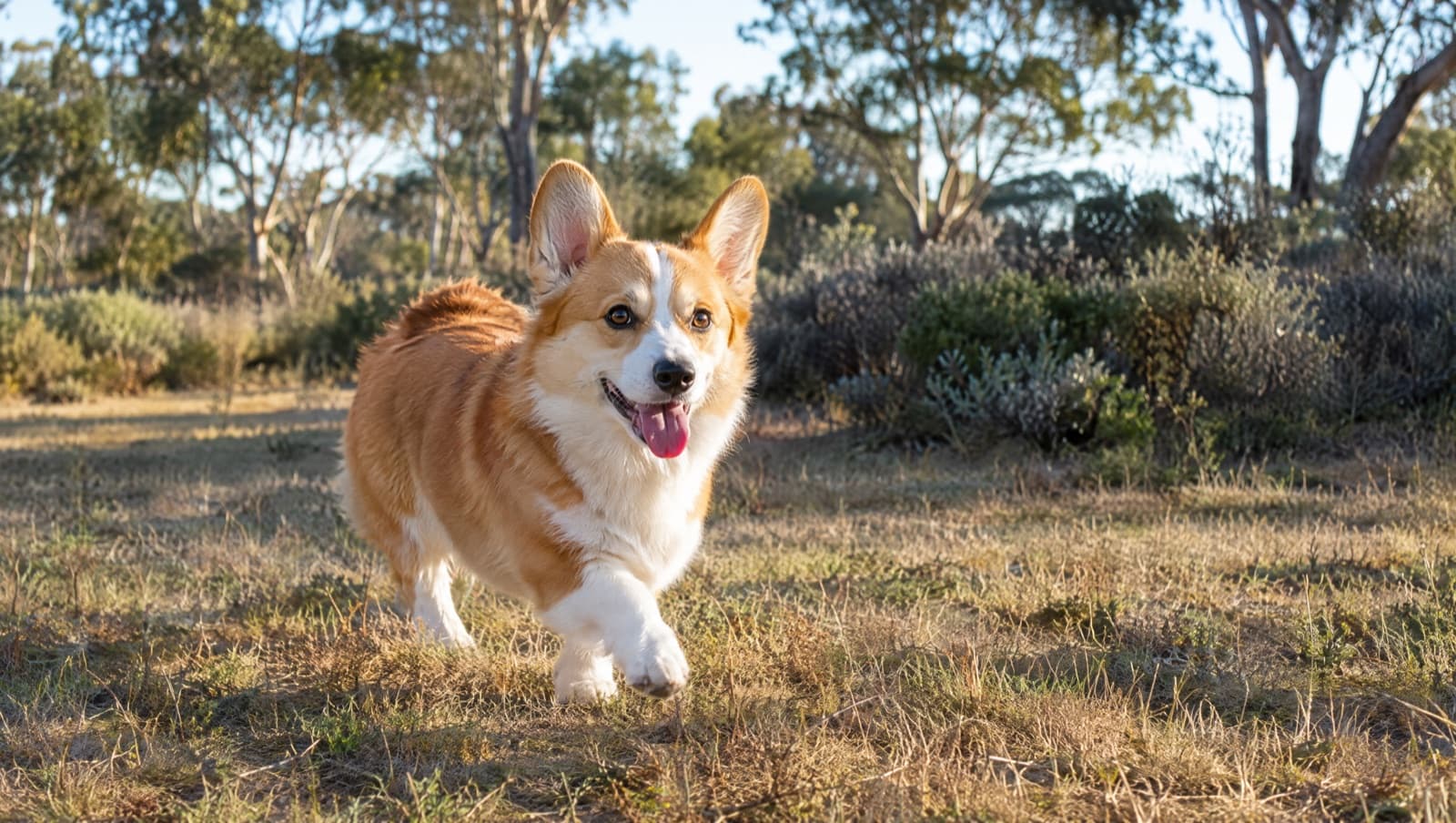
The short answer
A Corgi needs about 45 to 60 minutes of real daily exercise plus mental work, because it is a herding dog, not a lap dog. The heel-nipping is a hardwired instinct to redirect, not punish: give it an acceptable outlet, reward calm and an incompatible behaviour, and teach children not to run and shriek. The barking comes down with a trained quiet cue and, more than anything, with enough exercise and enrichment, since a bored Corgi is a loud one. Protect the long back by keeping the dog lean and avoiding repeated jumping and stairs, and favour low-impact activity like walking and swimming. In Perth, exercise in the cool of the morning and evening, never shave the double coat, and lean on indoor mental work on the hottest days. This is general information, not veterinary or behavioural advice.
How much exercise a Corgi really needs
The short legs fool people. A Corgi was bred to spend the day moving cattle across Welsh farmland, and it carries that stamina and drive into a suburban home. A healthy adult wants roughly 45 to 60 minutes of genuine physical exercise a day, split across a couple of walks, and it wants to use its brain as much as its legs.
The mental side is the part owners underestimate. A Corgi is one of the most intelligent breeds, and a dog that gets a long walk but no thinking work is still under-stimulated. That is when the barking, the counter-surfing and the general mischief appear, because a smart working dog with nothing to do invents its own jobs. The most balanced Corgis get a mix: a brisk walk for the body, plus training games, scent work and puzzle feeders for the mind. Ten or fifteen minutes of real mental work can settle a Corgi more than an extra half-hour of walking, which is a genuine gift on a hot Perth day when outdoor time has to be cut short.
Training a smart, stubborn breed
A Corgi learns fast, which cuts both ways. It picks up the cues you teach quickly, and it picks up the habits you did not mean to teach just as quickly. The breed also has an independent, opinionated streak inherited from a job that often meant working away from the handler, so a Corgi will weigh up whether a request is worth its while rather than obey on reflex.
Reward-based training is what works. Keep sessions short and upbeat, pay well with food or a game, and make the behaviour you want more rewarding than the alternative. Harsh or punishment-based methods tend to make a clever, sensitive herding dog shut down or grow pushier, not more compliant. Start the basics early, keep them consistent across the whole household, and build in the two breed-specific jobs below, channelling the nipping and managing the bark, from day one. A Perth force-free trainer or a reward-based puppy class is worth it if you want a head start.
Channelling the herding and heel-nipping instinct
Corgis moved livestock by barking and nipping at the heels of animals many times their size, and that instinct does not switch off in a lounge room. A Corgi may chase and nip at fast movement: running children, cyclists, other pets, ankles. It is trainable, and it is important to understand it is instinct rather than aggression, so the goal is to redirect it, not punish it out of the dog.
The approach that works:
- Give the instinct an outlet. A flirt pole, a chase-and-fetch game, or teaching the dog to herd a ball or a toy on cue lets it do the thing it is wired to do, in a way you control.
- Teach an incompatible behaviour. Train a solid recall or a “go to your mat” so that when movement excites the dog, it has a trained alternative to nipping, and reward that heavily.
- Never let the nip work. If nipping makes the exciting movement continue, the dog learns it works. Calmly stop the game or the movement, so the nip ends the fun rather than fuelling it.
- Manage children and visitors. Teach kids not to run and shriek around the dog, supervise closely, and give the Corgi a settle spot away from chaos. This is where most family nipping happens.
- Get help early. A force-free, reward-based trainer is worth it if the nipping is entrenched, and works far better than any punishment-based approach, which tends to make an aroused herding dog worse.
Managing the bark
Corgis are vocal by design; they were bred to alert and to move stock with their voice, and they will bark at movement, at the door, at other dogs and when excited or bored. You will not train a herding breed into silence, but you can bring it down to a level that works in a Perth unit or a close suburb.
Two things do most of the work. First, meet the dog's needs: a well-exercised, mentally-satisfied Corgi barks far less than a bored one, so the exercise and enrichment above are half the solution. Second, teach a quiet cue: let the dog bark once or twice, say your cue word, and the instant it stops, mark and reward the silence, gradually building the length of quiet you ask for. Avoid shouting, which the dog hears as you joining the alarm, and avoid punishment-based anti-bark collars, which can increase anxiety and often make barking worse. A reward-based trainer can help if the barking is already a habit. If you live under a strata scheme with close neighbours, factor the voice in honestly before you adopt.
Browse Corgis available in Perth rescue
A rescue Corgi comes with a foster carer's read on its energy, its herding-nipping and its voice, so you know what you are training before you commit. Live listings from WA shelters and rescues.
See Available Corgis →Exercise that protects the long back
A Corgi's exercise has to respect its shape. The long spine on short legs is the breed's weak point, and disc problems are its most serious risk, so the goal is to keep the dog fit and lean, which protects the back, while avoiding the movements that load it.
- Favour low-impact activity. Steady walking, gentle jogging on soft ground and swimming are all excellent. Swimming in particular suits Perth, building fitness without heat load or impact.
- Limit jumping and stairs. Repeated leaps on and off furniture or in and out of the car, hard landings and long staircases all stress the discs. Use ramps, and lift the dog with support under both the chest and the hindquarters rather than by the middle.
- Keep the dog lean. Weight is the single biggest lever for spine and joint health in this breed, so pair the exercise with measured feeding. The Corgi health guide covers the back and weight in depth.
- Skip high-impact agility. Formal agility with big jumps is generally not recommended for the breed. If you want a dog sport, ask a trainer about low-jump or ground-based options. The Australian Veterinary Association can help you find a vet to clear your dog for a given activity.
Training and exercising in the Perth climate
Perth has a Mediterranean climate: hot, dry summers and mild, wet winters. A Corgi has a dense double coat built for Welsh weather, and it sits low to hot ground, so summer exercise needs care:
- Exercise in the cool hours. Early morning and late evening, never the middle of a 38-degree day, and skip the walk on a scorcher in favour of indoor mental work. The afternoon “Fremantle Doctor” sea breeze gives some relief later in the day.
- Pick a fenced, shaded off-lead spot. WA off-lead areas are set by each local government, not state-wide, so confirm the current status on your council's dog exercise areas index, for example the City of Stirling list, which includes Peasholm Dog Beach at Scarborough.
- Check the ground. The short legs put a Corgi's belly and paws close to hot pavement and sand. Use the back-of-the-hand test before you set out: if you cannot hold your hand there for five seconds, it is too hot for paws.
- Watch for snakes on bush and river walks. Dugites, gwardars and tiger snakes are active around Perth's bushland corridors, wetlands and river foreshores in the warmer months, roughly September to April, and a quick, curious Corgi that disturbs one can be bitten. Teach a firm leave-it and keep the dog under control near long grass and water.
- Mind 1080 baiting in reserves. The state's Western Shield 1080 baiting program lays fox and feral-cat baits across many WA reserves and bushland, and the WA Government advises treating every signposted baited area as dangerous to pet dogs at all times. 1080 is lethal to dogs, so check for signage before bushland walks and keep your dog leashed and under control.
- Never shave the coat. The double coat insulates against heat as well as cold and protects the skin from the sun; brushing out the dead undercoat is what actually keeps the dog cool.
- Carry water and watch for heat stress. Heavy panting, drooling, wobbliness or vomiting on a hot day is an emergency. The RSPCA Knowledgebase has current heat guidance, and you should know your nearest Perth 24/7 emergency hospital.
Get the balance right, physical exercise for the body, mental work for the brain, an outlet for the instinct, and a routine that respects the back and the heat, and the Corgi's intelligence and drive become the reasons you love the breed rather than the reasons it ends up in rescue.
Frequently Asked Questions
How much exercise does a Corgi need?
More than the short legs suggest. A healthy adult Corgi wants around 45 to 60 minutes of real physical exercise a day, split across a couple of walks, plus mental work on top, because it is a herding dog bred to work all day. Just as important as the physical side is the thinking: a Corgi that gets a long walk but no mental challenge is still under-stimulated and will find its own entertainment, usually barking and mischief. Mix a brisk walk with training games, scent work, puzzle feeders and short bursts of play. Adjust for age and health, go gently with a puppy whose joints are still growing or a senior, and in Perth time it all for the cool hours.
How do I stop my Corgi nipping at heels and ankles?
Manage it as a redirected instinct, not as naughtiness. Corgis were bred to move cattle by nipping at heels, so chasing and nipping fast movement is hardwired, and it shows up around running children, cyclists and ankles. The approach that works is to give the instinct an acceptable outlet and reward the alternative: teach an incompatible behaviour like coming to you or targeting a toy when movement excites the dog, reward calm, and never let the nipping be rewarded by the chase continuing. Teach children not to run and shriek around the dog. It is trainable and it is not aggression, but it needs early, consistent, reward-based work, and a force-free trainer is worth it if you are struggling.
How do I train a Corgi to bark less?
You cannot make a herding breed silent, but you can bring the barking down to a livable level, which matters in a Perth unit or a close-set suburb. The most effective single tool is a trained quiet cue: let the dog bark once or twice, say your cue, and the moment it stops, mark and reward the quiet, building up the duration over time. Underneath that, the biggest lever is meeting the dog's needs, because a bored, under-exercised Corgi barks far more, so daily exercise and mental work do a lot of the job. Avoid shouting, which the dog reads as you joining in, and avoid punishment-based anti-bark devices, which can worsen anxiety. A reward-based trainer can help if the barking is entrenched.
Why does keeping a Corgi lean protect its back?
Because weight is the single biggest lever you have over the breed's worst health problem. A Corgi has a long spine on short legs and a big appetite, and every extra kilo loads that spine and the joints, raising the risk of disc disease and accelerating arthritis. Exercise and feeding work together here: measured meals and treats counted into the daily total keep the dog lean, while steady low-impact activity keeps the supporting muscle strong. You should be able to feel the ribs easily and see a waist from above. An overweight Corgi also copes worse with the Perth summer heat. Your vet can set a target weight and confirm the right amount to feed.
Do Corgis need a big yard?
No, and a yard is never a substitute for walks and mental work. A Corgi left alone in even a large yard will not exercise itself; it will patrol the fence, bark and dig. What the breed actually needs is a daily walk, structured play and thinking work with you, which a well-exercised Corgi is then happy to follow with a long sleep indoors. A small courtyard or a unit can work fine if you commit to that routine. A secure fence does matter for safety, and in a Perth yard a cool, shaded spot and fresh water are essentials in summer, but the exercise happens on the lead and in training, not in the yard.
How do I keep a Corgi exercised indoors on a hot Perth day?
Lean on the brain. On a 40-degree Perth day when a midday walk is off the table, 10 to 15 minutes of real mental work tires a Corgi more than a longer walk would, and it carries no heat risk. Rotate puzzle feeders and slow-feeder bowls, scatter-feed part of a meal for the dog to sniff out, play short hide-and-seek games with food or a toy, and run brief reward-based training sessions teaching new cues and tricks. A snuffle mat and a frozen food-stuffed toy are both good for a hot afternoon. Save the physical exercise for early morning and after sundown, and treat the indoor enrichment as the main event on the hottest days.
When can a Corgi puppy start proper exercise?
Build it up gradually, because a growing Corgi's joints and long back need protecting. A common rule of thumb is roughly five minutes of formal walk per month of age, once or twice a day, so a four-month-old pup might do two short walks rather than a long hike, with the rest of its exercise coming from free play and training. Avoid repeated jumping on and off furniture, in and out of the car, and long staircases while the pup is growing, and favour soft ground over hot pavement. Mental work, short training games and gentle socialisation can start early and safely. If in doubt, ask your vet what is appropriate for your individual puppy.
Is running or agility safe for a Corgi with its long back?
Moderate, controlled exercise is good for a Corgi and helps keep it lean, which protects the spine, but the long back and short legs mean you should avoid repetitive high-impact stress. Steady walking, gentle jogging on soft ground and swimming are all excellent and low-impact. What to limit is repeated jumping on and off furniture or in and out of cars, hard landings, and long stairs, all of which load the discs, so use ramps and lift the dog carefully with support under the chest and hindquarters. Formal agility with big jumps is generally not recommended for the breed. If in doubt, ask your vet what is appropriate for your individual dog, especially if it has any back history.
Keep reading
Corgi Adoption in Perth
Where to find a rescue Corgi, real costs vs a breeder, and why they reach rescue.
Corgi Health Issues
The long back and disc risk, obesity, hips and eyes, plus the Perth heat and snake picture.
Adoptable Corgis in Perth
Live listings with foster carer notes on energy, temperament and training needs.
Perth Adoption Resources
Guides on adopting, costs, council rules and settling a rescue dog in Perth.