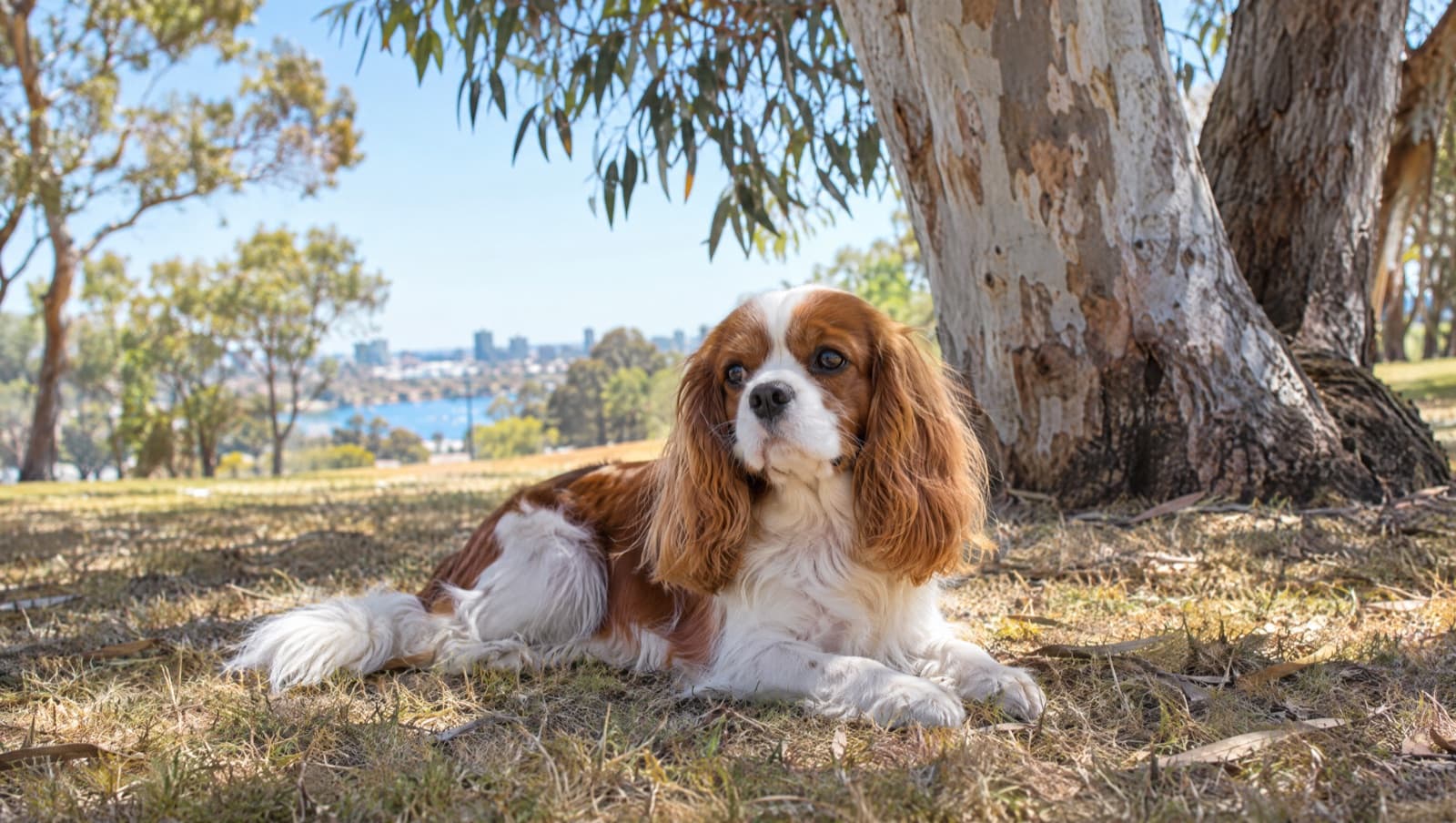
The short answer
The Cavalier's defining health issue is mitral valve disease, a progressive heart condition the breed develops far more, and often younger, than most dogs, and it is the leading cause of death in the breed. The other well-known condition is syringomyelia, a painful neurological problem linked to skull shape, and the breed can also have episodic falling syndrome, eye conditions, ear infections from the long drop ears, and joint issues like patellar luxation and hip dysplasia. None of this should stop you adopting a Cavalier, but it makes a good vet, regular check-ups, early pet insurance and knowing the warning signs essential. Keep the dog lean, keep routine flea, worm and heartworm prevention going, and manage the Perth summer heat for a fine-coated dog. Paralysis ticks are not established in WA, so local tick risk is low. This is general information, not veterinary advice.
Mitral valve disease: the condition that defines the breed
If you understand one thing about Cavalier health, make it this. Mitral valve disease (MVD) is a degenerative heart condition in which the mitral valve, one of the heart's valves, thickens and no longer closes properly, so blood leaks backward and the heart works harder. Cavaliers are affected by it far more than most breeds and often develop it years earlier, and it is the leading cause of death in the breed. These are breed-average patterns, not a verdict on any individual dog.
The important thing for an owner is that MVD is manageable and that early detection matters. A vet usually picks it up first as a heart murmur at a routine check-up, long before the dog seems unwell, which is one reason regular vet visits are so worthwhile for this breed. From there the condition is monitored, and if and when it progresses, medication can help the heart cope and can give a dog good, comfortable years. Many Cavaliers live happily for a long time after a murmur is found. Watch for a cough (especially at night or after exercise), tiring quickly, faster or laboured breathing at rest, or a drop in appetite and energy, and see your vet about any of them. Your vet can advise on monitoring, a heart scan and treatment; this is a veterinary condition to manage together, not to self-diagnose. The RSPCA Australia Knowledgebase is a sound starting point for understanding inherited disease in pedigree dogs.
Syringomyelia and the neurological picture
The other well-known condition in the breed is syringomyelia (SM), a serious neurological problem in which fluid-filled cavities form within the spinal cord. It is usually linked to a Chiari-like malformation where the skull is too small for the back of the brain, crowding it, and it is something the breed is predisposed to.
The most recognisable sign is air scratching, where the dog scratches at its neck or shoulder, often on one side and often without actually touching the skin, particularly when excited or on the lead. There may also be sensitivity or pain around the head and neck, yelping that seems to come from nowhere, or in more severe cases changes in coordination. Severity varies enormously: some dogs are barely affected, others need real ongoing management. It is diagnosed by MRI, so it is very much a veterinary matter. Not every Cavalier develops it, but persistent unexplained scratching, neck sensitivity or yelping is a reason to see your vet for a proper assessment rather than assuming it is a skin or flea problem.
A rarer condition, episodic falling syndrome, can also occur in the breed. It causes brief episodes of muscle stiffness or collapse brought on by excitement or exercise, which can look alarming but is not a seizure. It is likewise one to raise with your vet, who can tell it apart from a cardiac or neurological event. The Australian Veterinary Association can help you find a vet experienced with the breed if you want a second opinion on anything neurological.
Eyes, ears and joints
Eyes. Cavaliers can carry several inherited eye conditions, including hereditary cataracts, retinal problems and dry eye (keratoconjunctivitis sicca, where the eye does not make enough tears), which is why breeding dogs should hold current eye clearances. Watch for cloudiness, redness, excessive blinking or a dog pawing at its eyes, and see your vet, since several eye conditions are very treatable when caught early.
Ears. The long, low-set, feathered ears are part of the Cavalier's charm and also trap warmth and moisture, so ear infections are common. Keep the ears clean and dry, check them regularly for odour, redness or head-shaking, and see your vet for any sign of infection rather than a home remedy.
Joints and weight. Like many small breeds, Cavaliers can be prone to patellar luxation (a slipping kneecap) and hip dysplasia, both of which organisations such as the Orthopedic Foundation for Animals screen for in breeding dogs. Keeping the dog lean is the everyday protection for the joints, and it matters for the heart too: a small dog needs little food, and it is easy to overfeed a food-loving Cavalier into carrying weight that strains an already-vulnerable heart. Measure meals, count treats, and keep the dog in trim condition.
Browse Cavaliers available in Perth rescue
A rescue Cavalier arrives desexed, vaccinated, microchipped and vet-checked, with any known heart or health history disclosed in the listing. Live listings from Perth shelters and WA rescues.
See Available Cavaliers →Heat, snakes and 1080 in the Perth climate
Perth has a Mediterranean climate: hot, dry summers and mild, wet winters. This is where a Perth Cavalier guide parts company with an east-coast one, and most of the difference is about heat and local hazards rather than parasites.
Summer heat is the everyday risk. A Cavalier's fine, silky coat gives little insulation and the muzzle is moderately short, so the breed feels the long runs of 35 to 40-degree days Perth gets. Keep exercise to the cool of the morning and evening, always carry water, provide shade and a cool indoor space (a Cavalier wants to be inside with you anyway), and never leave a dog in a parked car. Test the footpath or sand with the back of your hand first, since hot ground burns small paw pads. Watch for heavy panting or distress on hot days, and the breed's low-to-moderate exercise needs make it easy to keep activity in the cool hours.
Snakes and 1080. Dugites, gwardars and tiger snakes near water are active around Perth's bushland corridors, wetlands and the Swan and Canning river foreshores in the warmer months, roughly September to April. A small, curious dog that disturbs one can be bitten and needs an emergency vet fast, so keep a Cavalier on lead and away from long grass and water edges on warm-weather walks. The other WA-specific hazard is 1080 (sodium fluoroacetate) baiting: the state's Western Shield program lays fox and feral-cat baits across many reserves and bushland, and the WA Government advises treating every baited area, signposted “1080 POISON”, as dangerous to pet dogs at all times. 1080 is lethal to dogs, including from eating a poisoned carcass, so check for signage before bushland walks and keep your dog leashed and under control in reserves. Know your nearest 24/7 hospital: Perth Vet Emergency at Cannington is one option.
Parasites, and the paralysis-tick difference. One thing you can worry less about in Perth than on the east coast is paralysis ticks. The Australian paralysis tick is an eastern-seaboard species and is not established in WA, so local paralysis-tick risk is low, and the main time to think about it is before you travel east with your dog, when you should ask your vet about tick prevention. A Cavalier's silky coat and long feathered ears still hide fleas easily, so keep routine flea, intestinal worm and mosquito-borne heartworm prevention going year-round on your vet's advice, and search the coat and ears by hand after any long-grass outing.
Planning for the health commitment
Put together, the Cavalier's health profile means you should plan for the real possibility of significant vet costs, above all around the heart, and the good news is that a prepared owner can manage it well. The four things that matter most are within your control: choose a good local vet and build a relationship early, take out pet insurance while the dog is young and healthy so nothing is excluded later, book regular check-ups so a murmur or other change is caught early, and keep the dog lean and its parasite prevention up to date.
A rescue Cavalier actually starts you ahead. It arrives desexed, vaccinated, microchipped and vet-checked, so a professional has already looked it over and the rescue can tell you what the in-care assessment found, including whether a murmur has been heard. Ask specifically about the heart, any scratching or neck sensitivity, the eyes, the ears and the weight, book your own baseline vet visit in the first week, and insure straight away. Do that, and you give a rescue Cavalier the best possible run at the long, affectionate life the breed is so loved for. For where to find one and what it costs, see the Cavalier adoption guide for Perth. None of the above is a substitute for veterinary advice on your individual dog.
Frequently Asked Questions
Are Cavaliers healthy dogs?
Honestly, the breed carries serious inherited health risks, and this is the single most important thing to understand before adopting one. Cavaliers are strongly predisposed to mitral valve disease, a progressive heart condition that most of the breed develops as they age and often earlier than in other dogs, and they can also be affected by syringomyelia, a painful neurological condition. None of this means you should not adopt a Cavalier: millions of them live happy, well-loved lives. It means going in with your eyes open, choosing a good vet early, taking out pet insurance while the dog is young, budgeting for regular checks, and knowing the warning signs. Always work with your vet on an individual dog.
What is mitral valve disease in Cavaliers?
Mitral valve disease (MVD) is the breed's defining health issue and its leading cause of death. It is a degenerative heart condition in which the mitral valve thickens and leaks, and Cavaliers develop it far more, and often younger, than most breeds. A vet usually detects it first as a heart murmur at a routine check, and it can progress over years toward heart failure, though many dogs live comfortably for a long time with monitoring and, when needed, medication. Because early detection matters, regular vet check-ups are important for a Cavalier. If your vet hears a murmur, they can advise on monitoring, a heart scan, and treatment when the time comes.
What is syringomyelia in Cavaliers?
Syringomyelia (SM) is a serious neurological condition the breed is predisposed to, in which fluid-filled cavities form in the spinal cord, usually linked to a skull-shape malformation that crowds the back of the brain. The classic sign is air scratching, where the dog scratches at its neck or shoulder area, often without making contact, and there may be sensitivity or pain around the head and neck, or yelping. It varies widely in severity: some dogs are mildly affected, others need real management. It is diagnosed by MRI. Not every Cavalier develops it, but persistent unexplained scratching, neck sensitivity or yelping warrants a proper vet investigation rather than guesswork.
What warning signs should I watch for in a Cavalier?
For the heart: a cough (especially at night or after exercise), tiring quickly, faster or laboured breathing at rest, or reduced appetite and energy are all reasons to see your vet, as is any murmur your vet notes. For the neurological side: persistent scratching at the neck or shoulder, sensitivity around the head and neck, unexplained yelping, or changes in coordination. More generally, watch the eyes for cloudiness or redness, the ears for odour, head-shaking or discharge, and the weight, because a lean Cavalier is easier on both heart and joints. None of this is cause for alarm in a healthy dog, but knowing the signs means you catch a problem early, which is when it is most manageable. Your vet is the person to interpret any of it.
Should I get pet insurance for a rescue Cavalier?
For this breed, strongly yes, and as early as possible. Cavaliers combine a very high lifetime risk of heart disease with a real chance of neurological and other conditions, and cardiac care, an MRI, or ongoing medication can run into four or five figures over a dog's life. Insurance taken out while the dog is young and healthy means conditions are not later excluded as pre-existing, which is the whole point of insuring early, and it matters even more for a rescue dog whose history you do not fully know. Compare policies on their exclusions, waiting periods and annual limits rather than on price alone, and read the product disclosure statement carefully.
Do Cavaliers in Perth need year-round paralysis tick prevention?
No, and this is a key difference from the east coast. The Australian paralysis tick is an eastern-seaboard species and is not established in WA, so a Perth Cavalier's local paralysis-tick risk is low. The main time to think about it is before you travel east with your dog to Queensland or coastal New South Wales, when you should ask your vet about tick prevention. What a Perth Cavalier does need year-round is routine flea, intestinal worm and mosquito-borne heartworm prevention on your vet's advice. The bigger everyday risks in Perth are summer heat, snakes in the warmer months, and 1080 baiting in bushland.
Keep reading
Cavalier Adoption in Perth
Where to find a rescue Cavalier, real costs vs a breeder, and why they reach rescue.
Cavalier Temperament & Care
The gentle velcro nature, grooming the silky coat, exercise and keeping a companion dog happy in the Perth heat.
Adoptable Cavaliers in Perth
Live listings with foster carer notes on temperament and any known health needs.
Perth Adoption Resources
Guides on adopting, costs, council rules and settling a rescue dog in Perth.