The short answer
A Pomeranian's double coat sheds heavily and needs brushing a few times a week (daily during a seasonal coat blow) to remove the dead undercoat and prevent matting. Never shave a Pom: shaving a double coat strips its heat and sun protection and can cause the coat to grow back patchy or not at all (post-clipping alopecia), so it leaves the dog worse off on a hot day, not better. If you want the dog tidied for summer, ask a groomer for a light trim that never reaches the skin. Brush out the undercoat, keep the ears and rear mat-free, dry the coat fully after wet winter walks, and keep the dog inside on heatwave afternoons. Young Poms go through an awkward “puppy uglies” coat stage that is normal. This is general information, not veterinary advice.
Understanding the double coat
A Pomeranian has two layers: a soft, dense undercoat for insulation and a longer, harsher outer coat of guard hairs that gives the breed its stand-off, powder-puff look. The Pom descends from much larger spitz sled dogs, and the coat is designed for cold. That makes Melbourne's winters easy for a Pom, and makes the occasional 40-degree day the time to be careful.
The key idea is that the coat needs less dead hair, not less coat. When the shed undercoat is left in place it mats, traps heat against the skin and stops air circulating, which is the opposite of what you want in the heat. Brushing it out is the whole job, and it is why shaving, which removes the protective coat rather than the dead undercoat, is the wrong tool.
The brush-out routine
Regular brushing is what keeps a Pom's coat healthy, mat-free and cool, and it is an at-home job no groomer can do for you between visits.
- Brush a few times a week, daily during a coat blow. A slicker brush lifts the coat and an undercoat comb reaches the dead undercoat underneath. Regular short sessions are far easier than an occasional battle with a matted coat.
- Line brush down to the skin. Part the coat in sections and brush each from the skin outward, because mats form at the skin, not on the surface. Brushing only the top of the fluff misses them.
- Watch the friction points. Behind the ears, under the legs and armpits, and around the rear mat first and fastest, so check them every time.
- Keep the rear clean. A Pom's dense rear coat can trap mess, so trim and clean the area under the tail to keep it hygienic.
- Bath occasionally, dry thoroughly. A wash every few weeks or after a muddy outing is plenty, always after brushing out any mats, and dry the coat and skin fully, because a double coat left damp against the skin can cause skin problems.
Why you never shave a Pom, and the trims that are safe
It feels logical that shaving a fluffy dog would cool it down in a hot climate, and for a double-coated breed like the Pom it is a genuine mistake. Vets and breed groomers are consistent on this:
- The coat insulates both ways. It slows heat coming in as well as going out, so a shaved Pom can actually be hotter, not cooler.
- It exposes the skin. A shaved Pom has pale skin suddenly exposed to strong sun, which risks sunburn.
- It can permanently damage the coat. Shaved Pom coats commonly grow back patchy, fluffy-only or not at all, a change often called post-clipping alopecia or “coat funk”, and it can be irreversible.
- It does not stop shedding. A shaved Pom still sheds, just in shorter pieces.
What is fine is a light trim. A groomer can neaten a Pom into a tidy rounded shape (the popular “teddy bear” trim), tidy the feathering, and keep the paws and rear clean, all without going down to the skin. That gives you a cooler, easier-care dog for summer with no risk to the coat. Be explicit with your groomer that you want a trim, not a shave, and walk away from anyone who insists on clipping a double coat close to “help with the heat”. The RSPCA Knowledgebase has general guidance on coat and skin care worth reading alongside your groomer's advice.
Browse Pomeranians available in Melbourne rescue
A rescue Pom comes with a foster carer's read on its coat and temperament, so you know the grooming commitment before you commit. Live listings from Victorian shelters and rescues.
See Available Pomeranians →A Pom coat through the Melbourne year
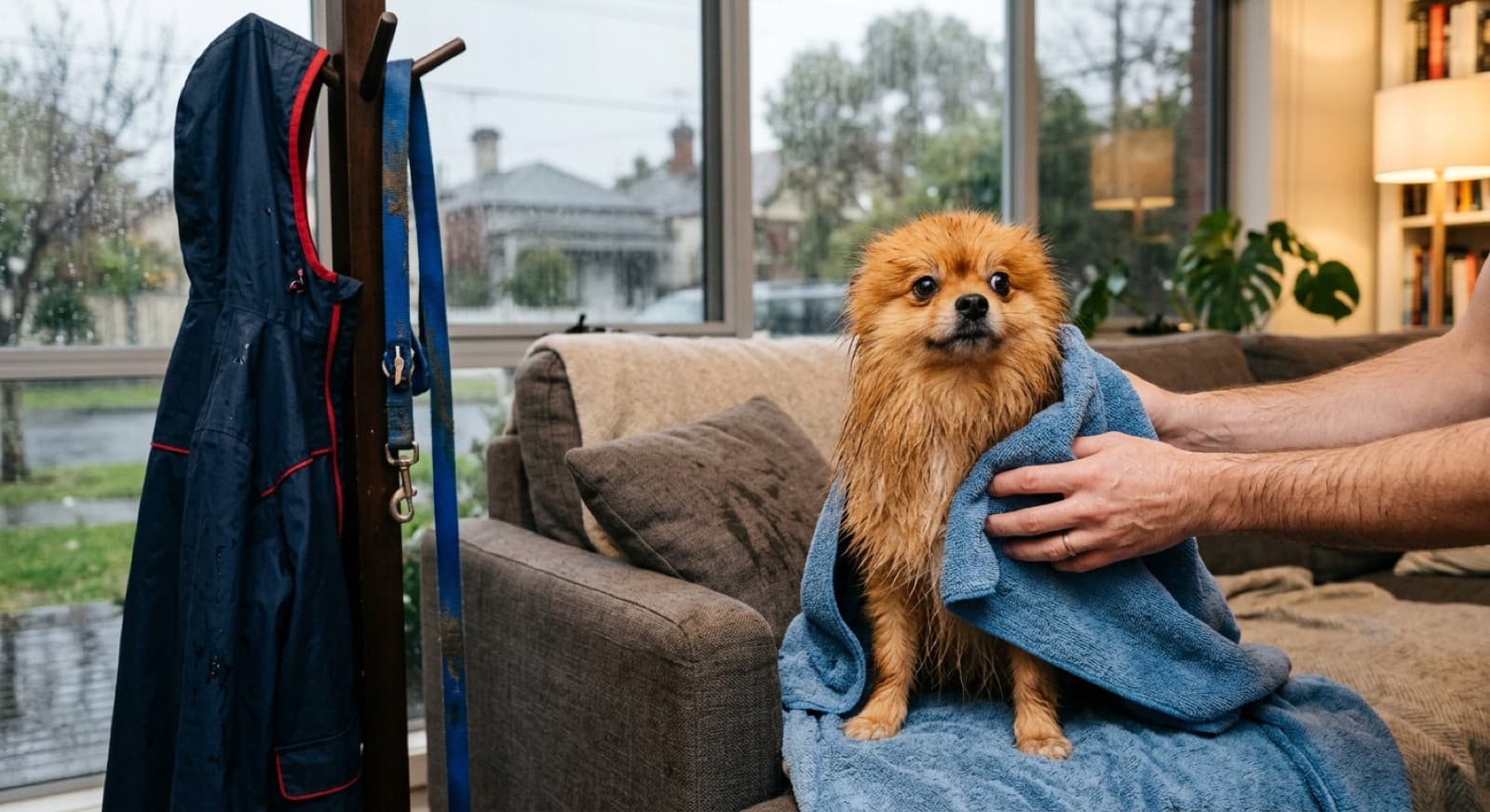
Winter and wet weather. Melbourne's winters are cool and damp, with rain spread across the year. A Pom copes well with the cold, but a wet coat is a grooming problem: damp undercoat mats faster and can hold moisture against the skin. After a wet walk, towel the dog thoroughly and finish with a hairdryer on a cool or low setting, brushing as you dry so the undercoat does not clump. A light raincoat on wet days saves a lot of drying time.
Heatwave days. Melbourne summers are mostly mild, but the city can spike above 40 degrees, as the Bureau of Meteorology forecasts warn. The coat routine is your heat strategy: a Pom with its dead undercoat brushed out can shed heat, while a matted Pom cannot. On a heatwave day, walk in the early morning or late evening only, test the pavement with the back of your hand, keep water out and keep the dog inside through the afternoon. Never leave it in a parked car. Heavy panting or wobbliness is an emergency.
Spring and autumn coat blows. Expect the heaviest shedding as the seasons turn. Brush daily through a blow and the house stays manageable.
The puppy uglies
If you adopt a younger Pom, you may meet the puppy uglies: the awkward stage, roughly four to fourteen months, when the dog sheds its soft puppy coat before the adult double coat comes in and can look patchy and scruffy for a while. It is completely normal. Keep brushing, feed the dog well, and be patient, because the adult coat almost always fills in. Most rescue Poms are adults, so you may skip this entirely. Patchy coat loss in an adult is different and worth a vet visit, as the Pomeranian health guide explains.
Frequently Asked Questions
Should I shave my Pomeranian for a Melbourne summer?
No, and this is the most important thing to know about Pom coat care. A Pomeranian has a double coat, and shaving it is not just unnecessary, it can cause lasting damage. The coat insulates against heat as well as cold and shades the skin from strong summer sun, so a shaved Pom is not cooler and its skin is exposed to sunburn. Worse, shaved Pom coats often grow back patchy, uneven or not at all, a well-known problem sometimes called post-clipping alopecia or 'coat funk' in the breed. What actually keeps a Pom cool is brushing out the dead undercoat, not removing the coat. If you want the dog tidied for summer, ask for a light trim that never goes down to the skin.
How often should I brush a Pomeranian?
A few times a week as a baseline, and daily during the two seasonal coat blows when the undercoat sheds out in earnest. Regular brushing with a slicker brush and a comb removes the dead undercoat that would otherwise mat and trap heat, keeps the skin able to breathe, and dramatically cuts the amount of hair around the house. Brush right down to the skin in sections (line brushing), because mats form at the skin rather than on the surface, and pay special attention to the friction points behind the ears, under the legs and around the rear, where a Pom mats first.
What are the Pomeranian puppy uglies?
The 'puppy uglies' is the awkward coat stage a Pom goes through, roughly between four and fourteen months, when it sheds its soft puppy coat before the full adult double coat comes in. During this phase the dog can look patchy, thin or scruffy, sometimes quite dramatically, and it is completely normal. Keep up the regular brushing through it, feed the dog well, and be patient: the adult coat almost always fills in beautifully. Because most rescue Poms are adults, you may skip this entirely, but it is worth knowing if you adopt a younger dog.
Can a Pomeranian get a summer trim safely?
Yes, a light trim is fine; it is shaving to the skin that causes the problems. A groomer can neaten a Pom into a tidy rounded 'teddy bear' shape, trim the feathering and keep the rear and paws clean, all without removing the protective coat or exposing the skin. That gives you a cooler, lower-maintenance dog for summer without risking the coat regrowth. Be clear with your groomer that you want a trim, not a shave or a close clip, and never let anyone talk you into shaving a double coat to 'cool the dog down'.
Do Pomeranians shed a lot?
Yes, heavily for such a small dog, and more during the seasonal coat blows. The dense double coat sheds year-round, and you will find fluffy Pom hair on clothes and furniture. You cannot stop it, but regular brushing controls it: it captures the loose hair before it drops and removes the dead undercoat before it mats. A good slicker brush, an undercoat comb and a decent vacuum are the tools that make living with a Pom's coat easy rather than a battle.
Keep reading
Pomeranian Adoption in Melbourne
Where to find a rescue Pom, real costs vs a breeder, and the teacup warning.
Pomeranian Health Issues
Tracheal collapse, luxating patella, dental disease, coat loss and the vet budget.
Adoptable Pomeranians in Melbourne
Live listings with foster carer notes on coat type and temperament.
Melbourne Adoption Resources
Guides on adopting, costs, council rules and settling a rescue dog in Melbourne.