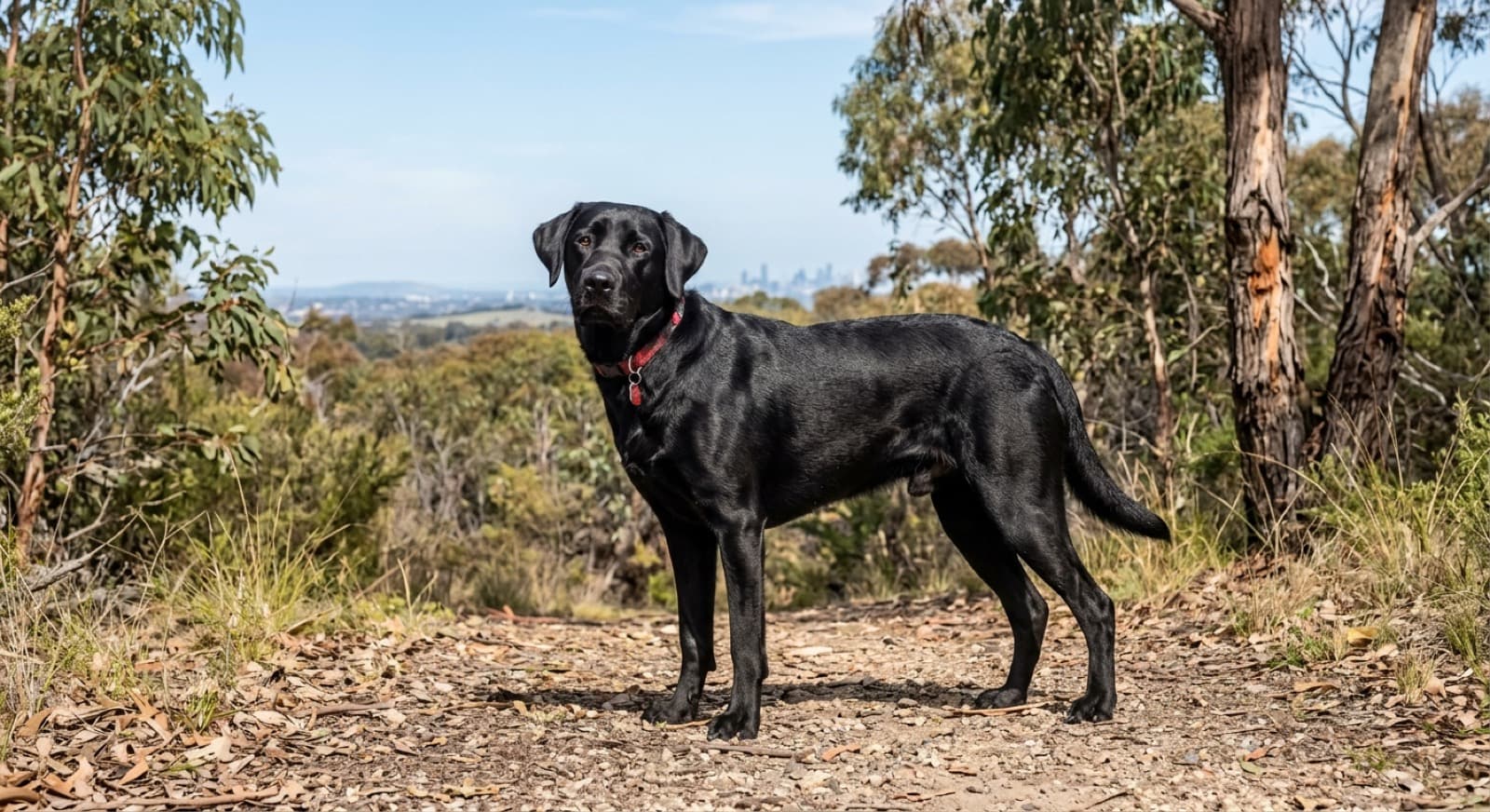
The short answer
Labradors live 10 to 13 years on average. The breed-specific issues to plan for are weight gain driven by the POMC gene (the defining Labrador health issue, and the one that worsens everything else), hip and elbow dysplasia (treatable, weight is the biggest lever), chronic ear infections (floppy ears plus a love of water), exercise-induced collapse (EIC, genetic and DNA-testable), progressive retinal atrophy and cataracts (inherited vision changes), and arthritis in later life. Cancer rates rise from about age seven. The Melbourne seasonal layer is summer heat on a food-driven dog, worse for an overweight Lab, plus year-round fleas, intestinal worms and mosquito-borne heartworm. Paralysis ticks, the headline risk on the NSW coast, are low risk in metro Melbourne. Pet insurance pays off for the breed if you sign up while the dog is young. Your local Melbourne GP vet handles the day-to-day, and the Animal Referral Hospital runs 24/7 emergency and specialist care when it is needed (Lort Smith's emergency department is open every day, but only 8am to 10pm).
Melbourne's real seasonal danger: heatstroke, and it comes faster for an overweight Lab
Labradors are driven by food and play and do not reliably stop before they overheat, and an overweight Lab tips into heatstroke faster than a lean one. On a 40-plus degree Melbourne heatwave day that combination is a genuine risk. Warning signs are heavy panting that does not settle, bright red gums, thick drool, weakness, stumbling, vomiting or collapse. Heatstroke is a true emergency and it kills fast. Move the dog into shade, offer small amounts of water, wet the belly, groin and paws with cool (not icy) water, and get to a vet straight away. Do not wait to see if it settles. The RSPCA Australia summary at RSPCA on protecting pets from heat stress is worth reading and keeping on your phone.
For emergency care (24/7 unless noted), Melbourne options include Lort Smith (North Melbourne, 8am to 10pm daily), Animal Referral Hospital Essendon Fields and Animal Emergency Centre Mount Waverley, Advanced Vetcare (Kensington), and the University of Melbourne teaching hospital at Werribee.
Why Labradors carry breed-specific health risks
Labradors have been bred as working retrievers and family companions for well over a century. Selection for retrieving work concentrated a powerful build, a water-resistant coat and a strong food drive, and each of those comes with related health consequences. The breed is also one of the most popular in Australia, which means both responsible and careless breeding happen at scale, so genetic conditions still appear regularly. The upside for adopters is that rescue Labradors often come from broader gene pools, and the Victorian rescues we aggregate vet-check every dog before listing.
The most authoritative references on Labrador health for Australian owners are the Australian Veterinary Association, the RSPCA Knowledgebase, the international hip and elbow scoring standards from the Orthopaedic Foundation for Animals, and the breed-health screening guidance from Dogs Victoria. If you are still weighing up the breed itself, our Labrador adoption guide for Melbourne covers the rescues, the real costs and the process.
1. Weight and the POMC gene (the one that shapes the rest)
If there is a single defining health issue in the breed, it is the tendency to gain weight, and it is not simply about willpower at the food bowl. Researchers have identified a variant in the POMC gene that is common in Labradors and disrupts the appetite-regulation signals, so many Labs genuinely feel hungrier and are a little slower to burn energy than other breeds. That is why a Lab will hoover up whatever is offered and beg for more, and why obesity in the breed is best treated as a management problem to be engineered around rather than a discipline failure.
Weight matters here more than in almost any other breed because excess kilos worsen nearly everything else on this page. An overweight Lab loads its hips and elbows harder, is more prone to cruciate injury, overheats faster in a Melbourne summer, and carries higher anaesthetic and general-health risk. Keeping the dog lean is the highest-value thing an owner can do, and Labs that stay trim commonly live around two years longer than those that do not.
What good weight management looks like:
- Measure the food, do not eyeball it. Use a cup or scale and portion to the dog's ideal weight, not its current weight, adjusting on vet advice.
- Count treats into the daily total. Training treats and chews add up fast in a breed this food-motivated.
- Learn to body-condition score. You should feel the ribs easily and see a waist from above. The scales alone hide slow creep.
- Do not free-feed. A bowl left down all day is an open invitation for this breed.
The RSPCA Australia guidance on recognising and managing an overweight dog is a good reference, and our Labrador weight management guide covers the portion-control routine and the POMC factor in detail.
2. Hip and elbow dysplasia
Hip dysplasia is a developmental condition where the hip joint forms improperly during growth, so the ball does not sit cleanly in the socket, and over time the joint wears unevenly and arthritis follows. Elbow dysplasia is the equivalent in the front leg. Labradors carry among the higher breed rates of both in Australia. Responsible breeders X-ray and score parent hips and elbows before breeding, but the conditions still appear regularly in the breed.
Signs in a young Lab (6 to 24 months):
- Reluctance to run, jump or climb stairs
- Bunny-hopping gait, using both back legs together
- Stiffness after rest, particularly in the morning
- Limping after exercise
- Reduced muscle mass in the back legs
Diagnosis and treatment:
Your vet confirms it with an orthopaedic exam and X-rays under sedation, imaging both hips because dysplasia is often asymmetric. Mild to moderate cases respond to weight control, joint supplements and a tailored exercise plan. Severe cases sometimes need surgery, from a femoral head ostectomy through to total hip replacement, which Melbourne specialty orthopaedic surgeons handle routinely through the referral hospitals listed further down. Newer regenerative options such as platelet-rich plasma and stem cell therapy are increasingly available at Melbourne specialty practices.
The biggest single preventable factor, again, is weight. A lean Lab lives with mild dysplasia far more comfortably than an overweight one lives with severe, which is the practical reason the weight section above sits first.
3. Chronic ear infections
Labradors have heavy hanging ear flaps that trap moisture and limit airflow into the ear canal. Combine that with the breed's love of swimming, and Labs have close to ideal conditions for ear infections. Many adult Labs also have underlying allergies that keep the ears inflamed, and recurrent ear infections are one of the most common ongoing health issues in the breed.
Signs:
- Head shaking and scratching at the ears
- Strong smell from the ears
- Dark waxy discharge or visible redness
- Head tilting to one side
- Sensitivity to touch around the ear
Prevention and management:
- Dry the ears thoroughly after swimming. The single most important intervention for a water-loving Lab.
- Do a weekly visual and smell check. Lift the ear flap, look for redness, note any unusual odour.
- Use an ear-cleaning solution as your vet recommends. Typically once a week to once a fortnight for prevention.
- Chase down underlying allergies. If infections keep returning, an allergy workup is the next step rather than another short course of treatment.
Recurrent infections warrant a proper investigation, which may include an ear swab and, for persistent cases, imaging. A vet is the right call whenever the ear looks red, smells off, or the dog is clearly uncomfortable.
Browse adoptable Labradors in Melbourne
Live listings from Victorian rescues, each with the dog's known health flags noted on the profile. A baseline vet check plus a weight and ear assessment should be first on the list in the new home.
See Available Labradors →4. Exercise-induced collapse (EIC)
EIC is a genetic condition where the dog collapses after 5 to 15 minutes of intense, excited exercise. The back legs become weak, then wobble, then cannot support weight, and severe episodes involve loss of consciousness. It is caused by a single recessive gene, so an affected Lab carries two copies.
Triggers:
- Intense, excited exercise such as fetch, chase games and swimming
- Heat and humidity, which makes a Melbourne heatwave day higher-risk for an affected dog
- Prolonged high-arousal activity
- Sometimes a single specific trigger that varies by dog
What to do during an episode:
- Stop the activity immediately
- Get the dog into shade or air-conditioning
- Cool with water if hot, over the paws, belly and ears
- Most dogs recover within 5 to 30 minutes
- If the dog does not start recovering within 30 minutes or shows breathing difficulty, treat it as an emergency
DNA testing for EIC is available and is increasingly part of standard breeder screening. A rescue Lab from unknown breeding can be tested if EIC is suspected. Affected dogs live full lives if they are not pushed into high-intensity exercise, which is a manageable adjustment for most families.
5. Cancer in older Labradors
Cancer is the leading cause of death in older Labradors, and the breed has elevated rates compared with the general dog population from about age seven onwards, particularly for lymphoma, mast cell tumours and haemangiosarcoma.
Signs that warrant vet investigation:
- Enlarged lymph nodes (under the jaw, in front of the shoulder, behind the knee)
- New skin lumps (biopsy any new lump in a Lab over five)
- Sudden collapse or weakness, which can indicate a splenic tumour
- Persistent weight loss without a diet change
- Decreased appetite or a behavioural change in an older dog, which is notable in a breed this food-driven
Twice-yearly vet checks from age seven catch many cancers earlier, and outcomes are consistently better with early detection. Melbourne specialty oncology is available through the referral hospitals covered below, on referral from your GP vet.
6. Eyes, arthritis and other conditions worth knowing
Progressive retinal atrophy and cataracts.
Progressive retinal atrophy (PRA) causes gradual vision loss that usually starts with night vision, while inherited cataracts cause progressive clouding of the lens. Both have a genetic basis, and reputable breeders screen parent dogs, with DNA testing available for the PRA forms that affect the breed. Annual eye checks from age seven catch many cases early. Dogs adapt remarkably well to slow vision loss when the household layout stays consistent.
Arthritis in later life.
Whether or not a Lab has dysplasia, the breed's size and activity mean arthritis is common in the senior years. Signs are slow rising, stiffness after rest, reluctance on stairs and reduced enthusiasm for walks. Management is weight control, a vet-guided joint plan, gentle consistent exercise, and mobility support at home such as ramps for the car, raised feeders and an orthopaedic bed. Melbourne's cool winters are a help here, since a comfortable senior Lab moves more easily and stays fitter in the cold half of the year.
Cruciate ligament injuries.
Labradors tear cranial cruciate ligaments, the dog equivalent of a human ACL, at higher rates than the general dog population, usually during a sudden direction change or hard stop. The signs are sudden hind-leg lameness and reluctance to bear weight, and most cases need surgical repair, which Melbourne specialty surgeons handle through the referral hospitals. Weight, once more, is a major risk factor, and around half of dogs that tear one cruciate tear the other within a year or so.
Summer heat: the seasonal risk for a food-driven breed
Labradors have a dense, water-resistant double coat, and the undercoat insulates against both cold and heat by trapping a layer of air close to the skin. The common well-meaning mistake is shaving a Lab in summer thinking it will help. It does the opposite, because it removes the insulation and exposes the skin to direct sun.
The bigger factor, though, is drive. A Labrador is motivated by food and play and will keep fetching well past the point of sense, and an overweight Lab reaches dangerous body temperature faster than a lean one. Melbourne has a temperate, variable climate. Summer sits around a mild 14 to 26 degrees on an average day, then spikes into 40-plus degree days several times a season, and those spikes are the danger window. On those days:
- Walk and play in the cool of early morning or after sunset. Skip the middle of the day entirely on 40 degree days.
- Stop the game before the dog wants to stop. A Lab will run itself into heatstroke if you let it.
- Test the footpath with the back of your hand. If you cannot hold it there for five seconds, the pavement is too hot for the dog's paws.
- Carry water on any walk over 20 minutes.
- Never leave the dog in a parked car. Even on a mild day the interior reaches dangerous temperatures within minutes, and on a hot day it is lethal within five.
- Watch for heavy panting that does not settle, extra drooling, weakness or stumbling. Cool the dog with cool (not icy) water over the belly, groin and paws, and get to a vet.
- Swimming is a great hot-weather option for this water-loving breed, but dry the ears afterwards to head off infection.
The flip side of Melbourne's climate is that winters are genuinely cool, so a Labrador thrives in the cold and shoulder seasons when you can safely burn off its considerable energy and keep the weight in check. Melbourne has good off-lead options such as the parks listed in the Parks Victoria dog-friendly index, including Royal Park in Parkville and parts of Yarra Bend Park in Kew. A tired, well-exercised Lab is an easier dog and a leaner one.
Paralysis ticks: low local risk in Melbourne
If you have read a coastal NSW or Queensland dog-health article, you will have seen paralysis ticks treated as a year-round, life-or-death threat. In metropolitan Melbourne that framing does not apply. The Australian paralysis tick (Ixodes holocyclus) is an eastern-seaboard species whose established range runs down the coast, and it does not maintain populations in Melbourne's climate, so a dog that lives and walks in the metro area is at far lower paralysis-tick risk than a dog on the NSW coast. This is a genuine difference, not a technicality, and it is why localised advice matters.
The residual risk in Melbourne is mostly about travel and geography:
- Travel to endemic areas. If you take your Lab to the NSW coast or into East Gippsland, you are heading into paralysis-tick country. Start tick prevention before the trip and do a daily physical tick check while you are there and after you get home.
- A separate southern species. The southern paralysis tick (Ixodes cornuatus) is recorded in some cooler, wetter parts of Victoria rather than the suburbs, which is another reason to ask a local vet about your specific area.
- Ask your vet what suits where you live and travel. Many dogs are already on an all-in-one monthly product that covers ticks alongside fleas and worms, so make it a vet conversation rather than a default.
The RSPCA Australia paralysis tick page is a good reference for the biology and the prevention picture: RSPCA on keeping dogs safe from paralysis ticks.
Fleas, worms and heartworm: the year-round layer
Away from the seasonal heat risk, routine parasite prevention in Melbourne is the same as most of Australia. Fleas and intestinal worms are a year-round concern, and heartworm, which is spread by mosquitoes and is present in Victoria, needs its own prevention. Many owners cover all of these with a single monthly or annual product, and the right combination depends on the dog, so your vet will steer you. Agriculture Victoria's animal welfare pages are a useful reference for the broader responsibilities of dog ownership in the state, including council registration under the Domestic Animals Act 1994 (Vic).
Melbourne vet care: who handles what for a Labrador
Day-to-day care: any Melbourne GP vet. Find one near you, take the dog in for an introductory check within a fortnight of adoption, and get a baseline weight, body-condition score and ear check on the file from the start. Labradors do not need a breed specialist for ordinary care.
Emergencies and specialist referrals (orthopaedic surgery, internal medicine, oncology): Melbourne is well served. Lort Smith in North Melbourne runs an emergency service open every day of the year. The Animal Referral Hospital at Essendon Fields and the Animal Emergency Centre at Mount Waverley offer 24/7 emergency plus specialty referral across the north-west and east. Advanced Vetcare in Kensington is a 24-hour critical-care and specialist hospital, and the University of Melbourne's teaching hospital at Werribee provides 24/7 emergency and specialist care in the west. Your GP vet refers you when a case needs specialist input.
For genetic DNA testing, you can order direct from Embark or Wisdom Panel (a saliva sample sent by post), and both cover the Labrador markers that matter, including exercise-induced collapse and the PRA forms. Most Melbourne vets can also arrange testing.
Pet insurance: is it worth it for a Labrador?
For most owners, yes. The conditions the breed faces are exactly the type insurance covers well: expensive, often surgical and often needing specialist care. A Lab that develops hip or elbow dysplasia plus a cruciate tear plus chronic ear infections plus eventual cancer treatment over a 10 to 13 year lifespan can run up a large bill, and even one major event covered usually makes the premiums worthwhile. Top-tier cover for a healthy adult Lab in 2026 runs roughly $50 to $110 a month, depending on the dog's age at sign-up and your excess.
Timing matters more than provider choice. Sign up while the dog is young and healthy, before any joint, ear or weight note lands on the vet record, because insurers exclude pre-existing conditions and a single early note can lock out coverage for the life of the policy. Watch the orthopaedic waiting period in particular, since some insurers apply a longer wait for joint conditions, which is relevant if you adopt an older Lab whose joints may already be changing.
The major Australian providers that cover Labradors include PetSure (which underwrites many brand-name policies), Bow Wow Meow, Petplan Australia, and RSPCA Pet Insurance. Read the product disclosure statement on whichever you pick.
Frequently Asked Questions
How long do Labradors live?
The breed average is 10 to 13 years, and some reach further. The single biggest lever on a Labrador's lifespan is weight: lean Labs commonly outlive overweight ones by around two years, so keeping the dog trim does more than any supplement. Routine vet care, consistent exercise and prompt attention to joint or ear changes matter too. Cancer is the leading cause of death in older Labs. Across the Victorian rescues we aggregate, lean and well-exercised Labradors commonly sit at the upper end of that range.
Why do Labradors gain weight so easily?
It is partly genetic. Researchers have identified a variant in the POMC gene that is common in Labradors and affects appetite regulation, so many Labs feel hungrier and burn energy a little more slowly than other breeds. That is why a Lab will happily eat well past the point of need and why obesity is the breed's defining health-management issue rather than a moral failing on the owner's part. It is manageable with measured portions, treats counted into the daily total, and honest body-condition scoring, but it takes deliberate effort. Because excess weight worsens the hip, joint and heat problems below, weight control is the highest-value thing a Melbourne Lab owner can do. Our Labrador weight management guide covers the routine in detail.
What is hip dysplasia and how common is it in Labradors?
Hip dysplasia is a developmental condition where the hip joint forms improperly during growth, leading to uneven wear, inflammation and arthritis over time. Labradors carry one of the higher breed rates in Australia, and reputable breeders score parent hips before breeding. Early signs in a young Lab include reluctance to run or jump, a bunny-hopping gait and stiffness after rest. Treatment ranges from weight control, joint supplements and a tailored exercise plan for mild cases through to surgery for severe ones, which Melbourne specialty orthopaedic surgeons handle through the referral hospitals. Weight is the biggest preventable factor, because an overweight Lab loads developing or already-affected joints far harder.
What is exercise-induced collapse (EIC)?
EIC is a genetic condition where the dog collapses after 5 to 15 minutes of intense, excited exercise. The back legs weaken and then cannot support weight, and severe episodes can involve loss of consciousness. It is caused by a single recessive gene, so an affected Lab carries two copies, and DNA testing is available and increasingly part of standard breeder screening. Most dogs recover within 5 to 30 minutes of stopping, but some episodes are dangerous, and heat makes them worse, which matters in a Melbourne summer. Management is about identifying triggers, such as heat and prolonged high-arousal activity, and avoiding them. If a collapsed dog does not begin recovering within about 30 minutes, or shows breathing trouble, treat it as an emergency.
Why do Labradors get so many ear infections?
Labradors have heavy hanging ear flaps that trap moisture and limit airflow into the ear canal, creating a warm, humid environment where bacteria and yeast thrive. The breed also loves water, so swimming, bathing and rain add moisture, and many Labs have underlying allergies that keep the ears inflamed. Prevention is straightforward: dry the ears thoroughly after every swim, do a weekly visual and smell check, and use an ear-cleaning solution as your vet recommends. Recurrent infections need a vet workup for an underlying allergy or anatomical cause rather than repeated short courses of treatment.
Do Labradors cope with Melbourne summer heat?
They manage the cool half of the year easily, but summer heat is a real risk, and an overweight Lab overheats faster than a lean one, which is one more reason to keep the dog trim. Labradors are food-and-play driven and do not reliably self-limit, and the water-resistant double coat holds heat. On a 40-plus degree Melbourne heatwave day, exercise in the cool of early morning or after sunset, skip the middle of the day, carry water, never leave the dog in a car, and stop the game before the dog wants to stop. Do not shave the coat, because the undercoat insulates against heat as well as cold. Warning signs of heatstroke are heavy panting that will not settle, bright red gums, thick drool, weakness, stumbling or collapse, and it is a true emergency.
Do Melbourne dogs need paralysis tick prevention?
For most metropolitan Melbourne dogs the local paralysis-tick risk is low. The Australian paralysis tick (Ixodes holocyclus) is an eastern-seaboard species that runs down the coast and does not establish populations in Melbourne, so a dog living and walking in the metro area is at far lower risk than a dog on the NSW coast or in East Gippsland. The real risk is travel: if you take your Lab to those areas, use tick prevention before the trip and do daily tick checks. Fleas, intestinal worms and mosquito-borne heartworm are the year-round parasites that matter more in Melbourne. Ask your vet for prevention suited to where you actually live and travel.
Is pet insurance worth it for a Labrador?
For most owners, yes, and the maths tends to work out well for this breed. Hip and elbow dysplasia, cruciate repair, chronic ear infections and eventual cancer treatment are exactly the expensive, often surgical events insurance covers well, and even one major claim usually makes the premiums worthwhile over a 10 to 13 year life. Top-tier cover for a healthy adult Lab in 2026 runs roughly $50 to $110 a month depending on the dog's age at sign-up and your excess. Timing matters more than provider choice, because insurers exclude pre-existing conditions, so sign up before any joint or ear note lands on the vet file. Providers to compare include PetSure, Bow Wow Meow, Petplan Australia and RSPCA Pet Insurance.
Should I get my rescue Labrador health screened?
A first vet visit within a fortnight of adoption is the priority, and for a Lab with an unknown background it is worth asking about a baseline joint check, an ear check and, if there is any working-line history, a DNA test for exercise-induced collapse. Embark and Wisdom Panel both run breed and health panels ordered direct with a mailed sample, and most Melbourne vets can also arrange testing. For an adopted adult with normal eyes and sound joints, the practical priority is simpler still: get the weight right and keep it there, because that one habit prevents or delays more of the problems on this page than anything else.
Keep reading
Adoptable Labradors in Melbourne
Live listings, each with the dog's known health flags noted on the profile.
Labrador Adoption in Melbourne
The Victorian rescues, real costs versus breeder, and where to find one.
Labrador Weight Management
The breed obesity risk, the POMC factor, and the portion-control routine.
How to Adopt a Dog in Melbourne
The full Melbourne adoption process, paperwork, vet questions and home checks.