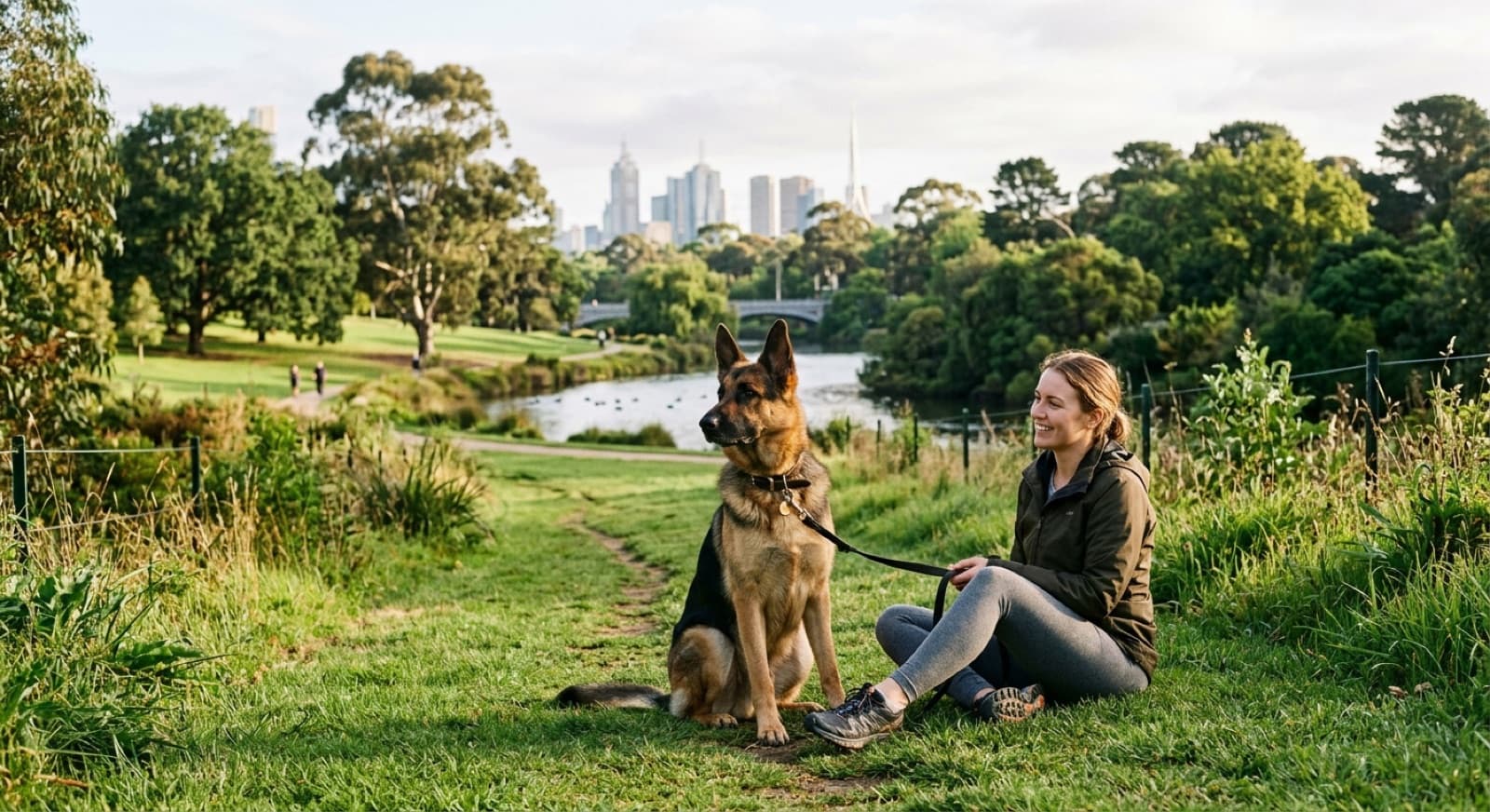
The short answer
You can adopt a German Shepherd in Adelaide, and they come through rescue regularly, so set alerts across the main South Australian rescues and be application-ready. A rescue adoption fee already covers desexing, vaccination, microchipping and a vet check, against several thousand dollars from a breeder, and the breed is not restricted in South Australia. The honest part is the breed: a Shepherd is a big, intelligent working dog that needs structure, training and a solid hour of exercise a day, sheds heavily, and is reserved with strangers by design. Adult and senior Shepherds are easier than puppies and wait the longest in South Australian shelters, so they are well worth considering. Match the household to the breed and a rescue Shepherd is a steady, loyal family guardian.
Why German Shepherds reach Adelaide rescue
Shepherds and Shepherd crosses come through South Australian rescue steadily, and the reasons repeat. Almost none are about a bad dog, and the single biggest cause is mismatched expectations.
Underestimated needs. People imagine a steady, intelligent family guardian, which the Shepherd is, but they do not expect the exercise demand, the training commitment, the heavy shedding or the watchful temperament that comes with the territory. When a household cannot meet that, the dog is surrendered.
Life changes and age. Shepherds live 10 to 13 years, and many reach rescue when an owner can no longer manage a 35 kg working dog through mobility, a move into housing that will not take pets, or a relationship breakdown. A share of dogs no longer suitable for breeding also come through. The result is a steady supply of adult and senior Shepherds, which are often the easiest dogs in the kennel.
Where to adopt a German Shepherd in Adelaide
Shepherds come through general rescue regularly, so a wide alert net matters. Set listing alerts on every rescue you would consider, and check council pounds too. For a fuller directory, see our guide to the best dog rescues in Adelaide.
1. RSPCA South Australia
The state body runs its main shelter and adoption centre at Lonsdale, with animals also in foster care across Adelaide. Shepherds and Shepherd crosses come through via owner surrender and stray intake, and every adoption includes desexing, vaccination, microchipping, a vet workup and a behavioural assessment. The behavioural assessment matters for a working breed, so read it carefully. Apply at rspcasa.org.au.
2. Animal Welfare League SA
South Australia's largest animal welfare organisation, based at Wingfield with a strong foster network. It handles a large intake of surrendered and stray dogs, so Shepherds and Shepherd crosses turn up regularly, always with a behavioural assessment, and adoption includes desexing, vaccination, microchipping and a vet check. Listings at awl.org.au.
3. Paws and Claws Adoptions
A foster-based South Australian rescue that rehomes a broad mix of dogs and crosses, including larger dogs that need a quiet home or a longer settling-in period. Because dogs live in foster, you get a clear picture of the real temperament before you commit, which matters for a Shepherd, where energy, prey drive, reactivity and comfort with children are exactly the things a carer can describe. The application usually includes a home check. More at pawsandclawsadoptions.com.au.
Beyond these, the fastest way to scan many South Australian rescues at once is PetRescue, a national aggregator that lists animals from hundreds of member rescues in one searchable place. A fair share of Shepherds in rescue are crosses, so read the temperament notes on a profile rather than the breed label, which is the foster carer's best judgement. Browse the current German Shepherds and Shepherd crosses on the Adelaide German Shepherd listings.
What a German Shepherd costs: adopt versus buy
Adoption is far cheaper at the outset. A rescue adoption fee already covers desexing, vaccination, microchipping, worm and flea treatment and a vet check, so the dog arrives ready to bring home and, if you adopt an adult, with a known temperament. Because a Shepherd is a big dog, that bundle of vet work is worth a fair bit on its own.
A German Shepherd puppy from a breeder, by contrast, runs into the thousands with none of that vet work done yet, and often a waiting list of many months. So adopting is many times cheaper up front. Separately from the adoption fee, in South Australia you register and microchip the dog through Dogs and Cats Online, the state-wide database, and your local council sets the registration fee, which is reduced for a desexed dog, so there is no single Adelaide-wide figure.
The ongoing cost is a large-dog one. A Shepherd eats accordingly, and the breed carries some real health risks that come with big-dog vet bills. Budget above the medium-dog average, take out pet insurance while the dog is young, and note that several insurers have an upper age limit on new sign-ups, so check that before adopting a senior.
Living with a working dog, and the health picture
The German Shepherd is loyal, intelligent and deeply bonded to its people, a steady family guardian when its needs are met. The trade-off is that it is a working breed: it needs structure, reward-based training from day one, and a solid hour of real activity a day split between a walk and active play, even as a senior. It sheds heavily, with a twice-yearly coat blow that means daily vacuuming for a fortnight, and it is reserved with strangers by design rather than friendly with everyone who walks past. Get the exercise and training right and the Shepherd is one of the most devoted dogs there is.
On health the breed carries some real risks worth planning around: hip and elbow dysplasia, degenerative myelopathy, bloat, exocrine pancreatic insufficiency, and joint problems in later life. A rescue Shepherd arrives vet-checked, so ask the rescue what the in-care assessment found and whether any hip or elbow issues are known, and provide a softer bed and joint support for an older dog. The double coat handles cool, damp days easily, but on a 40-degree heatwave day a double-coated working dog feels it fast, so walk early or late, keep water up, and never leave the dog in a parked car.
German Shepherds and South Australian dog law
The German Shepherd Dog is not a restricted or prescribed breed in South Australia and is legal to own and rehome normally. Under the Dog and Cat Management Act 1995, a dog must be microchipped and, for dogs born after mid 2018, desexed by six months of age unless a vet grants an exemption, and registered through Dogs and Cats Online with your local council each year. A rescue Shepherd arrives already desexed and microchipped, so you simply transfer it into your name on Dogs and Cats Online. The one practical thing to sort out is housing rather than law: a Shepherd is a large, active, shedding dog, so if you rent or live under a body corporate, confirm a dog of that size is allowed before you apply, and be ready to show a rescue the dog will have the space and exercise it needs.
Browse adoptable German Shepherds in Adelaide
Shepherds come through rescue regularly, including adults and the occasional puppy, and an adult lets you see the temperament before you commit. Browse live South Australian listings now.
See Available German Shepherds →If you have been searching “German Shepherd puppies for sale”
Many people start their search typing “German Shepherd for sale Adelaide” because the breed is bred and sold in numbers and the online listings are full while rescue supply is quieter. Buying can feel like the only route, but it is not, and the online market for popular dogs is a hotspot for scams and poorly bred animals, where a cheap puppy or a deposit request for a dog you have not met is a warning sign rather than a bargain. A free-to-good-home Shepherd on a classifieds site with a story about postage or a deposit is the classic setup to avoid. In South Australia a dog must be microchipped and registered through Dogs and Cats Online, so ask any seller for the microchip number and confirm it before you pay, and cross-check anything that feels off against Scamwatch.
Adoption costs a fraction of a breeder price and gives a vet-checked dog a home, and an older rescue Shepherd asks far less guesswork about health and temperament than a puppy. The same breed comes through either door. Set alerts, be application-ready, and be patient; the right dog does come up.
Adult or puppy, and is a German Shepherd right for you?
For almost every adopter an adult is the better choice. A Shepherd puppy is a year of intense work, where an adult shows you a settled temperament, established manners, a known medical history and a lower adoption fee, and adults in foster are assessed for energy, prey drive, reactivity and comfort with children. Older and senior Shepherds wait the longest and are often the easiest, most rewarding dogs in any shelter, so they are well worth considering.
Be honest about whether the breed fits your life. A Shepherd suits you if you have owned a medium or large dog before or are ready to invest in training from day one, can give it a solid hour of real activity a day, have space for a big dog, and are home enough that it is not alone for long stretches. It is not the dog for a first-time owner with no time for training, a tiny home with no nearby park, or someone who wants a dog friendly with everyone. The reason Shepherds wind up in rescue more than most breeds is mismatched expectations, so be straight with yourself about the work before you apply, and the dog you adopt is far more likely to stay with you for life.
Frequently Asked Questions
Are German Shepherds and Alsatians the same dog?
Yes. Same breed, different name. Alsatian is the older Australian and British name for the German Shepherd Dog. The name was changed in some countries during and after World War II to soften the German association. Most South Australian rescues use both names interchangeably on their listings, and plenty of older Aussie dog owners still call them Alsatians. If you are searching either term you will find the same dogs.
Where can I adopt a German Shepherd near me in Adelaide?
Start with the live listings on this page, which pull German Shepherds and Shepherd crosses from shelters and foster-based rescues across South Australia, then widen out. RSPCA South Australia, the Animal Welfare League SA and Paws and Claws Adoptions all rehome a broad mix of dogs including Shepherds and Shepherd crosses, and PetRescue aggregates many smaller South Australian rescues in one place. Shepherds also turn up in council pounds. Set listing alerts across every rescue you would consider, have your application ready to send the same day, and stay open to an older dog and to collecting from regional South Australia, not just metropolitan Adelaide.
Why do German Shepherds end up in Adelaide rescue?
A few patterns combine, and few are about a bad dog. Shepherds live 10 to 13 years, and many owners outlive their ability to manage a 35 kg working dog through life changes, mobility, or a move into housing that will not take pets. Relationship breakdowns are another common surrender story. A share of dogs that are no longer suitable for breeding come through from breeders. And some are surrendered by owners who underestimated the exercise, training and shedding a Shepherd needs. The good news for adopters is that older Shepherds are usually the easiest dogs in the kennel: house-trained, lead-trained, settled in temperament, past the destructive teen phase.
How much does it cost to adopt a German Shepherd in Adelaide versus buying one?
Adoption is far cheaper at the outset. A rescue adoption fee already covers desexing, vaccination, microchipping, worm and flea treatment and a vet check, so the dog arrives ready to bring home and, if you adopt an adult, with a known temperament. A German Shepherd puppy from a breeder, by contrast, runs into the thousands with none of that vet work done yet. Separately from the adoption fee, in South Australia you register and microchip the dog through Dogs and Cats Online and your local council sets the registration fee, which is reduced for a desexed dog, so there is no single Adelaide-wide figure. Because a Shepherd is a big dog, the included desexing, vaccination and vet work in an adoption fee are worth a fair bit on their own.
Are German Shepherds restricted in South Australia?
No. The German Shepherd Dog is not a restricted or prescribed breed in South Australia and is legal to own and rehome normally. It is subject to ordinary South Australian dog law under the Dog and Cat Management Act 1995: microchipping, desexing by six months of age for dogs born after mid 2018 unless a vet grants an exemption, and registration through Dogs and Cats Online with your local council, with a reduced fee for a desexed dog. A rescue Shepherd arrives already desexed and microchipped, so you simply transfer it into your name on Dogs and Cats Online.
Why are there so many older German Shepherds available?
Shepherds live 10 to 13 years, and many reach rescue in their middle or senior years when an owner can no longer manage a large working dog, or after a life change. Interest in adopting older Shepherds keeps climbing, and for good reason: a six or seven-year-old Shepherd still has years of good life ahead, is usually house-trained and lead-trained, and shows you a settled temperament rather than a puppy lottery. They wait longer than younger dogs because new adopters often default-skip them, so they are among the most rewarding dogs to adopt. Check an insurer's upper age limit before assuming you can take out new cover on an older dog.
Should I adopt an adult German Shepherd or a puppy?
For most households an adult is the better fit, and puppies are less common in rescue anyway. A Shepherd puppy is a year of intense work: house-training, lead-training, chew prevention, recall, socialisation and vet schedules. An adult Shepherd skips all of that and lets you see the dog you are actually adopting, because adults in foster are assessed for energy, prey drive, reactivity, comfort with children and how they go with other dogs. When a Shepherd puppy does hit a listing it usually goes fast, so set an alert and apply the day a litter is listed if a puppy is what you want.
I keep seeing German Shepherd puppies for sale. Is adopting really an option?
It is, and it is worth understanding the market first. The German Shepherd is bred and sold in numbers because demand is high, so the online listings are full of puppies for sale while rescue supply is quieter, which makes buying feel like the only route. It is not the only route, and the online market for popular dogs is a hotspot for scams and poorly bred animals, where a cheap puppy or a deposit request for a dog you have not met is a warning sign rather than a bargain. In South Australia a dog must be microchipped and registered through Dogs and Cats Online, so ask any seller for the microchip number and confirm the dog is registered before you pay anything. Adoption costs a fraction of a breeder price, gives a vet-checked dog a home, and an older rescue Shepherd asks far less guesswork about health and temperament than a puppy. Set alerts, be application-ready, and be patient.
Keep reading
Adoptable German Shepherds in Adelaide
Live listings with foster carer notes on energy, training and temperament.
Best Dog Rescues in Adelaide
The verified shelters and foster rescues to set alerts with across South Australia.
Dog Adoption in Adelaide
Browse adoptable dogs and every breed guide for Adelaide.
Adelaide Adoption Resources
Guides on adopting, costs, council rules and settling a rescue dog in Adelaide.