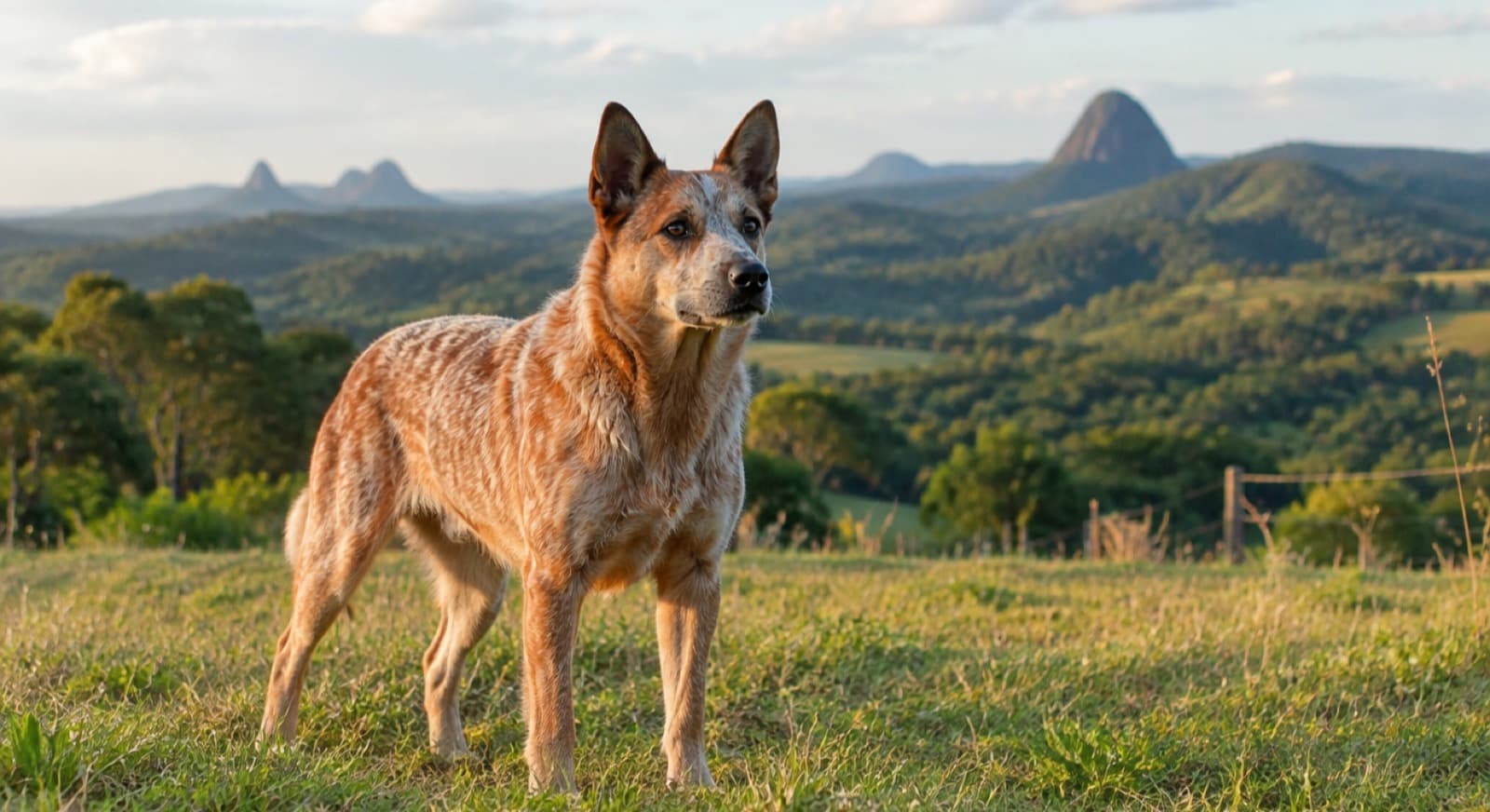
The short answer
You can readily adopt a Cattle Dog on the Sunshine Coast. Heelers and Heeler crosses come through the Sunshine Coast Animal Refuge (SCARS) at Tanawha, RSPCA Queensland's nearest centres at Gympie and Dakabin, and PetRescue. Adoption costs a few hundred dollars with desexing, vaccination and microchipping included, and the breed is not restricted in Queensland. The catch is the drive: a Heeler needs serious daily exercise, a job for its brain and training for the herding nip. Paralysis ticks are a year-round risk here, so tick prevention is not optional.
Why so many Cattle Dogs reach Sunshine Coast rescue
Across the Sunshine Coast rescues we aggregate, Cattle Dogs and Heeler crosses are listed often, and adults tend to wait longer than small fluffy dogs. The reasons are almost always about the home, not the dog.
Drive underestimated.
A Cattle Dog was bred to move cattle across big properties all day. A short walk and a backyard leave it bored, and a bored Heeler digs, barks, escapes, chews and nips. That dog gets labelled a problem and surrendered, when the real issue was a mismatch.
Impulse buys.
A Heeler puppy is cute and easy to love; some families take one on without picturing the working dog it becomes at 12 months. Surrenders often land in adolescence, between about one and two years old.
Rural moves and backyard breeding.
Some dogs come from rural homes that moved to the coast. Others come from casual litters and backyard breeders. The upside for an adopter is choice: a suitable Heeler of almost any age comes up regularly.
Where to look on the Sunshine Coast
- Sunshine Coast Animal Refuge (SCARS): the region's own shelter, an independent non-euthanasia refuge at Tanawha running since 1979. It takes Sunshine Coast Council pound dogs and owner surrenders, and every dog is vet checked, vaccinated, desexed and microchipped before listing. Adoption runs on a questionnaire and a meet at the refuge. See sippycreek.com.au.
- RSPCA Queensland: there is no RSPCA adoption centre on the Sunshine Coast itself. The nearest centres sit either side of the region, at Gympie to the north and Dakabin to the south. Both rehome dogs by appointment, with a vet workup and a behaviour assessment included. Browse at rspcaqld.org.au.
- Foster-based rescues: a foster carer who has lived with a Heeler for weeks can tell you how it handles children, cats, other dogs and being left alone. For a high-drive breed, that is the most useful thing to know.
- PetRescue: a national aggregator that lists Cattle Dogs from many smaller Queensland rescues at petrescue.com.au.
- Council pounds: Sunshine Coast Council and Noosa Council each run a pound. SCARS takes dogs from the Sunshine Coast facility, so most pound Heelers reach the refuge before public adoption.
Be open to a Heeler cross. Kelpie, Border Collie and Staffy crosses are common, and the foster notes describe each dog's energy far better than a breed label. If a herding cross appeals, our Kelpie adoption guide for the Sunshine Coast covers the related working breed.
What a Cattle Dog costs: adopt versus buy
| Cost | Rescue Cattle Dog | Breeder pup |
|---|---|---|
| Adoption fee or price | A few hundred dollars, shown on each listing | More, and often a waitlist |
| Desexing, microchip, vaccinations, vet check | Included | Paid separately |
| Council registration | Low desexed rate | Higher until desexed |
| Year-round tick, flea and worm prevention | Ongoing | Ongoing |
| Secure fencing and training class | Budget for both | Budget for both |
Cattle Dogs are a hardy breed, so ongoing costs are usually moderate; the bigger investment is time: daily exercise, training and something for the dog to do. Pet insurance taken out while the dog is young is still worth having. For the breed in depth, see our national Australian Cattle Dog guide.
Browse Cattle Dogs in Sunshine Coast rescue
Current listings from Sunshine Coast shelters and Queensland rescues, with carer notes on drive and household fit.
See Available Cattle Dogs →Living with a Heeler: energy, the nip and health
Living well with a Cattle Dog comes back to meeting its drive; it needs real daily exercise and a job for its brain. That job could be a dog sport, obedience, scent work, herding or being a running partner in the cool hours.
- The herding nip: a young Heeler may nip at heels to control movement. Reward-based training and plenty of outlet reduce it. Supervise around running children and bikes.
- A one-person dog: Heelers bond hard and can be wary of strangers, and good socialisation helps prevent reactivity to people and other dogs.
- Escape skills: a bored Heeler will dig or climb out. Check the fence line and gates before the dog comes home.
- Hearing and eyes: the breed has a notable rate of congenital deafness; it is also prone to progressive retinal atrophy, primary lens luxation and hip dysplasia. Ask the rescue what the in-care vet check found.
A deaf Heeler can still be a wonderful pet with hand-signal training and a secure yard. Ask your vet to explain any finding before you commit, and never guess at treatment yourself.
Heat, ticks and cane toads in South East Queensland
Paralysis ticks are a year-round danger here: the Sunshine Coast sits squarely in the paralysis tick's range, and the hinterland bushland fringe is classic tick country. Keep a vet-recommended tick preventative going all year. Search the coat by hand after every bush, creek or long-grass outing, checking the head, ears, neck and between the toes. Wobbly legs, a changed bark, vomiting or laboured breathing are an emergency.
The Sunshine Coast has two 24-hour emergency hospitals: Animal Emergency Service at Tanawha and SASH Sunshine Coast at Sippy Downs. Know the route before you need it. The RSPCA Knowledgebase has current tick guidance.
Heat: Heelers handle heat better than most breeds, but a working dog in a humid summer still needs care. Exercise early or late, carry water, and give the dog a cool tiled spot indoors. Before a midday walk, press the back of your hand to the footpath. If you cannot hold it there for seven seconds, it is too hot for paws.
Cane toads: a curious Heeler may mouth a cane toad on a warm, wet night, and toads are toxic. If it happens, wipe the gums forward with a damp cloth and call a vet straight away.
Registration, off-leash rules and scams
Queensland's law is the Animal Management (Cats and Dogs) Act 2008. A dog must be microchipped before 12 weeks of age or before it is sold or given away. It must then be registered with your council, and on the Sunshine Coast, registration is yearly. Sunshine Coast Council charges $63 a year for a desexed dog, or $35 for pensioners. Noosa Council in the north sets its own fees, so check its registration page.
Sunshine Coast Council changed its dog rules on 3 July 2026. Thirty bushland reserves closed to dogs, and new on-leash buffers apply at creek mouths and headlands. A dog off-leash in an on-leash area can bring an on-the-spot fine of $863. Check the council's off-leash areas page before you let a Heeler run.
On scams, Queensland gives you two checks. Any dog born on or after 26 May 2017 that is sold, given away or advertised must show a supply number from the Queensland Dog Breeder Register. Every dog must also be microchipped before it changes hands. A cheap Heeler pup with a deposit or transport fee is the classic setup Scamwatch warns about.
Frequently Asked Questions
Can you adopt an Australian Cattle Dog on the Sunshine Coast?
Yes, and more easily than most breeds. Across the Sunshine Coast rescues we aggregate, Cattle Dogs and Heeler crosses turn up regularly. Look at the Sunshine Coast Animal Refuge (SCARS) at Tanawha, RSPCA Queensland's nearest centres at Gympie and Dakabin, and PetRescue. Most are adolescents and young adults whose working drive outgrew a suburban home.
How much does it cost to adopt a Cattle Dog on the Sunshine Coast?
A rescue Cattle Dog usually costs a few hundred dollars, and the exact fee is on each listing. That fee already covers desexing, vaccination, microchipping and a vet check. A breeder pup costs more and arrives without that vet work. Council registration comes on top, and a desexed dog registers at the much lower rate.
Why do Cattle Dogs nip, and can it be trained out?
The nip is herding instinct, not aggression. Heelers were bred to move cattle by nipping at their heels, so a young dog may try the same on running children, bikes or other pets. Reward-based training, plenty of exercise and a real job for the dog's brain reduce it a great deal. Supervise a Heeler around small children until you know how it behaves.
Is a Cattle Dog a restricted breed in Queensland?
No. Queensland's five restricted breeds are the American Pit Bull Terrier, Dogo Argentino, Fila Brasileiro, Japanese Tosa and Perro de Presa Canario. A Cattle Dog is legal to own and rehome normally. As with any dog, a council can still declare an individual dog dangerous or menacing because of its behaviour.
What health checks should I ask about for a rescue Heeler?
Ask about hearing and eyes. Cattle Dogs have a notable rate of congenital deafness, and the breed is prone to inherited eye conditions such as progressive retinal atrophy and primary lens luxation, as well as hip dysplasia. A rescue dog arrives vet-checked, so ask what the in-care assessment found. Insure the dog while it is young.
Do Cattle Dogs cope with the Sunshine Coast heat?
Better than many breeds, but they still need managing. Exercise in the cool of the morning or evening, carry water, and give the dog a cool indoor spot to recover. Paralysis ticks are a year-round risk in South East Queensland, so keep a vet-recommended tick preventative going all year and check the coat after every bush or long-grass outing.
Keep reading
Adoptable Cattle Dogs on the Sunshine Coast
Current listings with carer notes on drive and family fit.
Australian Cattle Dog Breed Guide
The Australia-wide guide to the breed, its drive and its health.
Kelpie Adoption on the Sunshine Coast
The other great Australian working breed, and a common Heeler cross.
Sunshine Coast Adoption Resources
Guides on adopting, costs, council rules and settling a rescue dog on the Sunshine Coast.