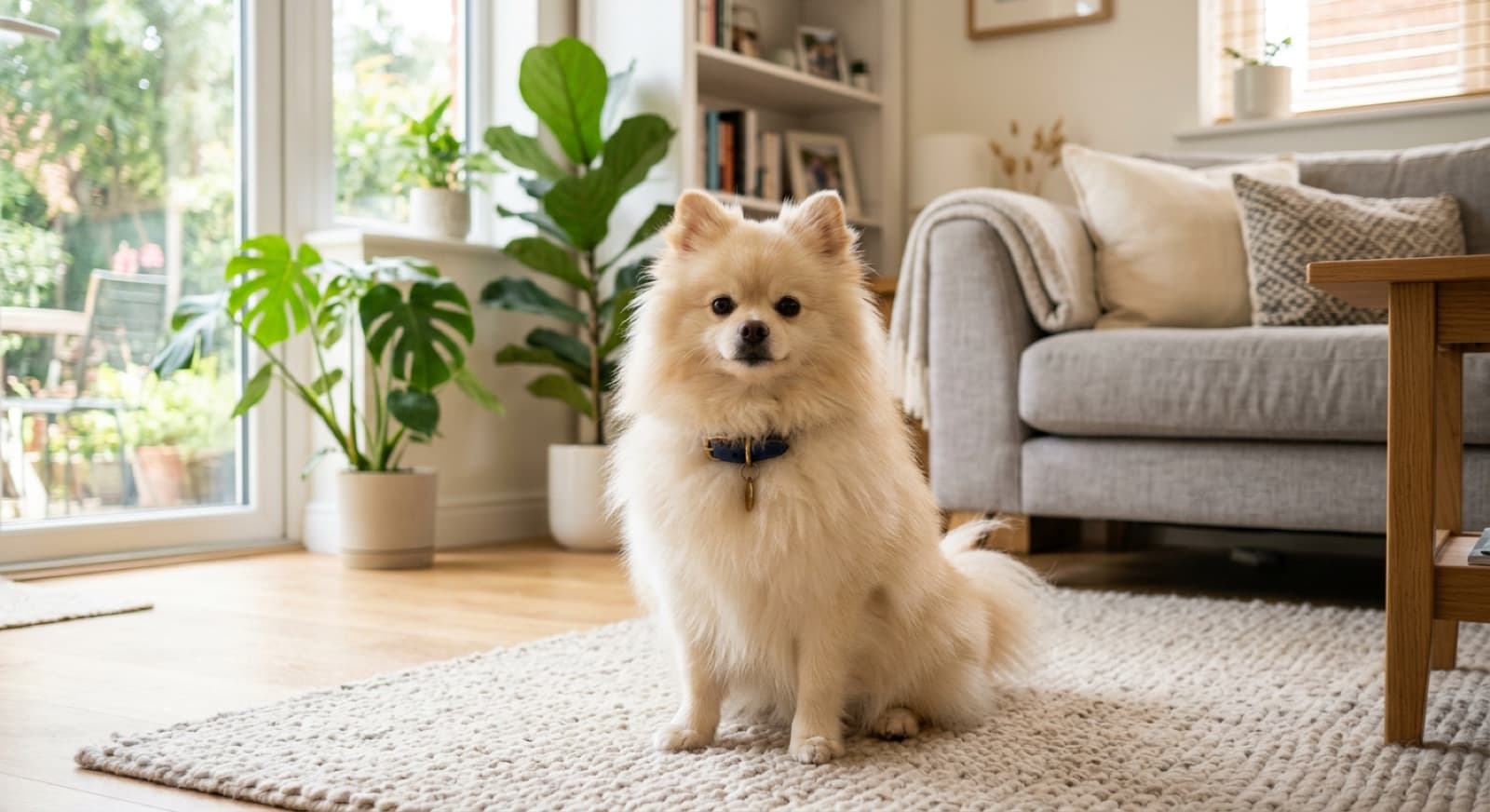
The short answer
The Pomeranian's main health issues are tracheal collapse (a weak windpipe, which is why you walk a Pom on a harness, never a collar), luxating patella (a slipping kneecap), and dental disease (a crowded small mouth). The breed can also have coat-loss conditions, congenital and age-related heart problems, eye conditions and, in very tiny dogs, low blood sugar. Using a harness, brushing the teeth, keeping the dog lean, keeping parasite prevention year-round for paralysis tick, and insuring early are the everyday things that most protect a Pom. Avoid breeding-driven “teacup” Poms, which are far more fragile. This is general information, not veterinary advice.
The windpipe: tracheal collapse and the harness rule
The most practical thing to know about Pom health has a simple fix. Pomeranians, like many toy breeds, are prone to tracheal collapse, a condition in which the cartilage rings that hold the windpipe open weaken, so the trachea flattens, especially on exertion or excitement. The classic sign is a honking cough, sometimes described as sounding like a goose, and in more advanced cases it can cause breathing difficulty.
You cannot change a dog's predisposition, but you can protect the windpipe, and the single best habit is to walk a Pom on a harness, never a collar. A collar puts pressure directly on the throat, which a small pulling dog aggravates, while a well-fitted harness spreads the pressure across the chest and keeps it off the neck entirely. Keeping the dog lean also helps, because excess weight worsens airway problems. If your Pom develops a persistent honking cough, see your vet, who can assess it and advise on management; mild cases are often managed well, and catching it early is best.
The knees: luxating patella
Luxating patella, a kneecap that slips out of its groove, is common in toy breeds including the Pom. It shows as a little skip or hop in the gait, or a back leg held up for a step or two before the dog carries on, and it ranges from mild (occasional and self-correcting) to needing surgery. Organisations such as the Orthopedic Foundation for Animals maintain the screening standards responsible breeders use. Keeping the dog lean protects the knees, as excess weight accelerates any joint problem, and limiting big jumps on and off furniture helps a small dog's joints too. If you notice a skipping gait or intermittent lameness, have your vet grade it and advise on management.
The teeth: dental disease
Dental disease is one of the most common and most preventable problems in the breed, because a Pom's small mouth crowds the teeth and traps plaque, which builds into gum disease, tooth loss and infection that can affect the whole body. It is largely within your control: brush the teeth regularly with dog-safe toothpaste, use vet-recommended dental chews, and have your vet check the teeth at routine visits and perform a professional clean under anaesthetic when needed. Good dental care is one of the highest-value, most overlooked things you can do for a small dog's long-term health and comfort, so build it into the routine from day one.
Coat loss, heart, eyes and the teacup problem
Coat loss. Poms can be affected by coat-loss conditions, sometimes grouped under “alopecia X” or called “black skin disease”, where the coat thins or is lost and the exposed skin can darken. It is largely cosmetic and often hormonal or genetic, seen more in this breed, but because hair loss can also signal allergies, parasites or hormonal disease, any significant coat loss is worth a vet check to find the real cause. Never-shaving the breed also matters here, since shaved Poms can suffer coat that does not grow back (post-clipping alopecia), covered in the Pomeranian coat care guide.
Heart and eyes. Poms can have congenital heart conditions such as patent ductus arteriosus, and, like many small breeds, can develop degenerative heart-valve disease with age, which a vet may pick up as a murmur. They can also carry eye conditions including tear-duct problems, cataracts and progressive retinal atrophy. A baseline vet check after adoption, and prompt attention to any cough, a murmur your vet notes, or a change in the eyes, is the sensible approach.
The teacup problem. Much of the worst fragility in the breed is created by breeding, not nature. Poms bred to be unnaturally tiny (“teacup”) are far more prone to dangerous drops in blood sugar (hypoglycemia), bones that break easily, and dental and other problems, and they often live shorter lives. A standard-size Pom is a sturdier, healthier dog, which is one more reason adoption, where you can meet a real adult dog, beats chasing a teacup puppy.
Browse Pomeranians available in Brisbane rescue
A rescue Pom arrives desexed, vaccinated, microchipped and vet-checked, with any known health issue disclosed in the listing. Live listings from Queensland shelters and rescues.
See Available Pomeranians →Heat and parasites in the Brisbane climate
A Pom's dense double coat is built for cold, not a Queensland summer, so despite its tiny size the breed feels the SEQ heat. Exercise in the cool of the morning or evening, use the back-of-the-hand test on hot pavement, always have water available, give the dog a cool indoor space, and never shave the coat to cool it (which backfires, see the coat guide) or leave the dog in a parked car. Watch for heavy panting or distress on hot, humid days and treat it as a heat-stress emergency.
The parasite picture is the important SEQ factor. The Australian paralysis tick is a genuine, effectively year-round danger along the Brisbane seaboard and can be fatal, and a Pom's thick coat hides a tick easily, so keep a year-round vet-recommended tick-prevention product in place and search the coat by hand after any park, bushland or long-grass outing. Fleas, intestinal worms and mosquito-borne heartworm also stay active close to year-round here, so keep prevention continuous. The RSPCA Knowledgebase and the Australian Veterinary Association have current guidance, and after-hours emergencies in Brisbane are handled by hospitals such as Animal Emergency Service at Jindalee and Underwood.
The vet budget, and why a rescue Pom is a good start
Put together, the Pom's profile means you should budget for the kind of toy-breed costs that can add up, above all dental care and the possibility of knee or airway treatment, and insure early. That is not a mark against a wonderful little companion so much as the honest reality of a toy breed, especially one so often over-bred.
A rescue Pom actually starts you ahead. It arrives desexed, vaccinated, microchipped and vet-checked, so a professional has already looked it over and the rescue can tell you what the in-care assessment found. Ask specifically about the teeth, any coughing, the knees, the coat and the weight, book your own baseline vet visit in the first week, walk the dog on a harness, keep its teeth and weight in check, set up year-round parasite prevention, and insure straight away while it is healthy. Do that and you have given a rescue Pom the best possible run at a long life.
Frequently Asked Questions
What are the main health problems in Pomeranians?
The ones to know are tracheal collapse (a weakening of the windpipe that causes a honking cough, which is why a harness rather than a collar matters), luxating patella (a slipping kneecap common in toy breeds), and dental disease, which is very common because a small mouth crowds the teeth. Poms can also have coat-loss conditions, congenital and age-related heart problems, eye conditions, and, in very tiny dogs, low blood sugar. None of this means a Pom is an unhealthy dog: a well-bred, sensibly-sized Pom is often long-lived. But it means using a harness, caring for the teeth, keeping the dog lean, and insuring early. Always speak to your vet about an individual dog.
Why should I use a harness instead of a collar on a Pomeranian?
Because Poms are prone to tracheal collapse, a condition where the cartilage rings of the windpipe weaken and the trachea flattens, causing a characteristic honking cough and, in bad cases, breathing difficulty. Pressure on the throat from a collar, especially when a small dog pulls, can aggravate a vulnerable windpipe. A well-fitted harness spreads any pressure across the chest instead, which is far safer for the neck and throat. It is a simple, cheap change that genuinely protects the breed, so use a harness for every walk. If your Pom develops a persistent honking cough, see your vet.
Do Pomeranians have bad teeth?
Dental disease is one of the most common and most preventable health problems in the breed, because a Pom's small mouth crowds the teeth and traps plaque. Left unmanaged, it leads to painful gum disease, tooth loss and infection that can affect overall health. The good news is that it is largely preventable: build in regular tooth brushing with dog-safe toothpaste, use vet-recommended dental chews, and have your vet check the teeth at routine visits and do a professional clean when needed. Good dental care is one of the highest-value things you can do for a Pom's long-term health and comfort.
Why is my Pomeranian losing hair?
There are a few possible causes, so it is a vet question rather than a guess. Pomeranians can be affected by coat-loss conditions, sometimes grouped under 'alopecia X' or called 'black skin disease', where the coat thins or is lost and the exposed skin can darken; it is largely a cosmetic, often hormonal or genetic condition seen more in the breed. Shaved Poms can also suffer post-clipping alopecia, where the coat does not grow back properly, which is one reason never to shave the breed. But hair loss can also signal other issues like skin allergies, parasites or hormonal disease, so any significant or patchy coat loss should be checked by your vet to find the real cause.
Should I get pet insurance for a rescue Pomeranian?
Yes, and as early as possible. Toy breeds like the Pom can need dental work, knee surgery for a luxating patella, or treatment for tracheal or heart conditions, any of which can run into four figures. Insurance taken out while the dog is young and healthy means conditions are not later excluded as pre-existing, which is the whole point of insuring early, and it matters even more for a rescue dog whose full history you may not know. Compare policies on their exclusions, waiting periods and annual limits rather than on price alone, and read the product disclosure statement carefully.
Keep reading
Pomeranian Adoption in Brisbane
Where to find a rescue Pom, real costs vs a breeder, and the teacup warning.
Pomeranian Coat Care
The double coat, the brush-out routine, why you never shave a Pom, and heat care.
Adoptable Pomeranians in Brisbane
Live listings with foster carer notes on temperament and any known health needs.
Brisbane Adoption Resources
Guides on adopting, costs, council rules and settling a rescue dog in Brisbane.