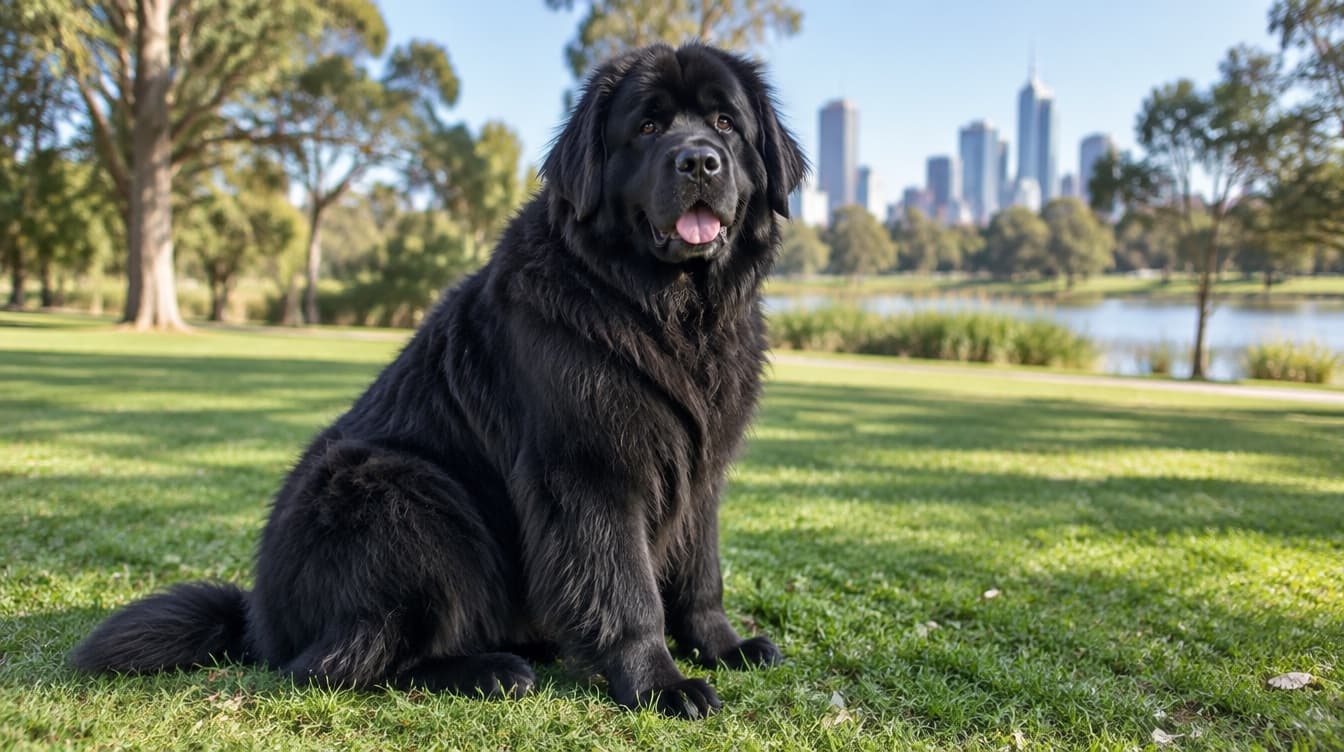
The short answer
You can adopt a Newfoundland in Brisbane, but only if you can manage a heavy-coated giant breed in a warm climate. Purebreds are uncommon here, so set alerts across RSPCA Queensland, AWLQ and PetRescue, be application-ready, and stay open to a cross or an older dog. Adoption runs about $400 to $450 for an adult, all-inclusive, against several thousand dollars from a breeder, and the breed is not restricted in Queensland. The honest part is the care: a Newfoundland needs space, a cool environment, exercise only in the cool of the day, serious grooming, and an owner who takes heat management seriously, because a Brisbane summer is genuinely hard on the breed. Meet those needs and you have one of the gentlest, most devoted family dogs there is.
Why Newfoundlands end up in Brisbane rescue
Understanding why Newfoundlands land in rescue tells you whether the breed is right for you, so it is worth starting there.
The scale is underestimated. People fall for the gentle teddy-bear image and do not reckon with what a giant breed actually means: huge food quantities, giant-dog vet and medication costs, a lot of space, heavy shedding and plenty of drool. When the reality of the size lands, some owners cannot keep up.
The coat and the heat. This is the honest core of owning the breed in Queensland. A Newfoundland carries a heavy double coat built for cold water, and a Brisbane summer is hard on it. Owners who did not plan for air conditioning, cool-of-the-day exercise and careful heat management, or who underestimated the grooming, are a common surrender story.
Short lifespan and health costs. Giant breeds have a relatively short lifespan and real health costs, and the strain of that, financial and emotional, sometimes contributes. Crosses appear too, carrying similar size and coat needs in a slightly different package.
What this means for you. A Newfoundland in rescue is almost never a broken dog. It is usually a gentle giant whose size, grooming or heat needs outran its last home. If you have the space, the budget and a genuine plan for keeping a heavy-coated dog cool through a Brisbane summer, you are looking at a wonderful adoption. If not, being honest now saves a dog from being the next surrender.
Where to adopt a Newfoundland in Brisbane
Because Newfoundlands are uncommon in a warm state, a wide alert net is the right approach. Set listing alerts on every rescue you would consider, and add giant-breed foster networks. For a fuller directory, see our Brisbane adoption resources hub.
1. RSPCA Queensland
The state body runs its main Animal Care Campus at Wacol plus other centres across South East Queensland. Newfoundlands and Newfoundland crosses come through occasionally via owner surrender, and every adoption includes desexing, vaccination, microchipping, a vet workup and a behavioural assessment, plus staff who can talk honestly about managing a giant breed in the Queensland climate. Browse at rspcaqld.org.au.
2. Animal Welfare League Queensland (AWLQ)
A long-running South East Queensland no-kill charity with re-homing centres around Brisbane and the Gold Coast. Newfoundlands are uncommon on the roster but do appear, more often as crosses. Adoption includes desexing, vaccination, microchipping and a vet check. Current listings on awlq.org.au.
3. PetRescue and foster-based rescues
PetRescue is a national aggregator that lists Newfoundlands and crosses from many smaller Queensland rescues in one searchable place, at petrescue.com.au. Giant-breed foster networks across Queensland take these dogs too. Because the dogs live in foster homes, the notes on a Newfoundland's temperament, grooming, how it copes with the heat and behaviour with people and other animals tend to be detailed and honest, which is exactly what you need to match a giant breed to the right household.
Be wary of any group that asks for money before you have confirmed a real address, a current adoptable-dog list and charitable status. Browse the current Newfoundlands and crosses on the Brisbane Newfoundland listings.
What a Newfoundland costs: adopt versus buy
Adoption is far cheaper at the outset. A rescue fee for an adult Newfoundland or Newfoundland cross through a Brisbane rescue commonly runs about $400 to $450, and the rare puppy around $650, and that fee already covers desexing, vaccination, microchipping, worm and flea treatment and a vet check.
A Newfoundland from a breeder in Queensland, by contrast, often runs to several thousand dollars, with none of that vet work done yet. So adopting is many times cheaper up front, the dog arrives already vetted, and if you adopt an assessed adult you can see the size and temperament and how the dog copes with the heat rather than gamble on a puppy.
The ongoing care is where a giant breed gets genuinely expensive, and this is the honest part. Budget for large food quantities, giant-dog vet and medication doses, regular grooming of the heavy coat, year-round paralysis tick and parasite prevention (a vet-recommended monthly product, essential everywhere in South East Queensland), and pet insurance you take out while the dog is young. Council registration under the Animal Management (Cats and Dogs) Act 2008 is a modest annual fee, substantially reduced for a desexed and microchipped dog, and payable to your council such as Brisbane City Council.
The heat: owning a cold-climate giant in Brisbane
This deserves its own section, because it is the make-or-break question for the breed in Queensland. The Newfoundland was bred to work in cold North Atlantic water and carries a dense, insulating double coat, so a Brisbane summer is genuinely demanding for it. If you adopt one here, you need air conditioning or a reliably cool indoor space, exercise limited to the cool of the early morning or evening, constant shade and fresh water, and real vigilance about overheating, because heatstroke is a fast and serious danger for a heavy-coated giant.
Do not shave the coat to cope with the heat. The double coat insulates against heat as well as cold and protects the skin from sun, so shaving it can make things worse and cause lasting coat problems. Manage the temperature through environment and timing instead, keep the coat well groomed so it can do its job, and talk to your vet about safe exercise in the Queensland climate. A Newfoundland can live a happy life in Brisbane, but only with an owner who treats heat management as a daily, non-negotiable part of the deal.
Browse adoptable Newfoundlands in Brisbane
Newfoundlands are uncommon in a warm state, so set an alert, and an adult lets you see the size and how the dog copes with the heat before you commit. Browse live Queensland listings now.
See Available Newfoundlands →If you have been searching “Newfoundland for sale Brisbane”
Plenty of people arrive here after searching for a Newfoundland puppy to buy, and for a giant breed adoption has a real advantage: an adult rescue Newfoundland lets you see the size and how the dog manages the heat rather than gambling on a puppy. The for-sale listings outnumber the rescue ones, but the online market for popular purebred puppies in Australia is scam-prone, so a cheap puppy or a deposit request for a dog you have not met in person is a warning sign rather than a bargain. The ACCC Scamwatch has documented deposit scams for puppies that do not exist.
A seller who will not show you both healthy parents at their property is a red flag rather than a mark of quality, and giant-breed puppies need careful, reputable breeding for healthy joints and growth. Adoption sidesteps much of that: it costs a fraction of a breeder price, gives a vet-checked dog a home, and an assessed adult asks far less guesswork about temperament and shows you how it handles the climate. Set alerts, stay open to a cross or a senior, and be patient. The RSPCA Australia Knowledgebase has good guidance on choosing a dog and avoiding poorly bred puppies.
Is a Newfoundland right for you?
Be honest about the scale and the heat. A Newfoundland is one of the gentlest, most devoted family dogs there is, patient and sweet and often wonderful with children, but it is a giant breed that needs space, a large budget, serious grooming, and, in Brisbane, a genuine plan for keeping a heavy-coated dog cool through summer. It drools, it sheds, and it does not suit a home that is out all day or cannot keep it cool. Get those things right and a Newfoundland is a magnificent companion. If you cannot offer the space, the budget or reliable heat management, a breed better suited to the Queensland climate will be kinder to you both.
Adult or puppy, and how to choose
For almost every adopter an assessed adult is the better choice, and Newfoundland puppies are rare in rescue anyway. An adult shows you the real size, temperament and how the dog copes with the heat, where a puppy is a gamble, and giant-breed puppies have demanding needs around careful growth and joint development. An adult often has some training in place and a lower adoption fee, and the rescue can tell you how it is with people, other animals and being left alone.
When you choose, read the foster carer's notes closely. They will tell you how a specific dog does with children, cats, other dogs and being left alone, and crucially how it manages the heat, and that record predicts the fit far better than the breed average. Ask about the grooming routine and any giant-breed health history.
Frequently Asked Questions
Where can I adopt a Newfoundland near me in Brisbane?
Start with the main Queensland rescues: RSPCA Queensland, with its Animal Care Campus at Wacol plus centres across South East Queensland, and Animal Welfare League Queensland (AWLQ), the long-running no-kill charity with centres around Brisbane and the Gold Coast. Purebred Newfoundlands are uncommon in rescue, especially in a warm state, so Newfoundland crosses show up more often than full purebreds. Set listing alerts across every rescue you would consider, have your application ready, and stay open to a cross or an older dog. PetRescue lists them from many smaller Queensland rescues in one place, and giant-breed foster networks take them too. Never send money before you have confirmed a real, registered rescue.
Why do Newfoundlands end up in rescue?
Almost always because the scale of the dog was underestimated. The Newfoundland is a giant breed, so it eats, is vetted, groomed and medicated at giant-dog scale, drools, sheds a heavy coat, and needs space, and plenty of owners who fell for the gentle teddy-bear image were not ready for that reality. The heavy double coat and the Queensland heat are a particular issue, because a dog built for cold water struggles in a Brisbane summer and needs real heat management. A relatively short lifespan and the health costs of a giant breed add strain. Others reach rescue through no fault of their own after a move or a change in circumstances. The temperament is almost always intact. Most Newfoundlands in rescue just needed an owner ready for the size, the grooming, the drool and the heat.
How much does it cost to adopt a Newfoundland versus buy one?
Adoption is far cheaper up front. A rescue fee for an adult Newfoundland or Newfoundland cross through a Brisbane rescue commonly runs about $400 to $450, and the rare puppy around $650, and that fee already includes desexing, vaccination, microchipping, worm and flea treatment and a vet check. A Newfoundland from a breeder in Queensland, by contrast, often runs to several thousand dollars, with none of that vet work done yet. So adopting is many times cheaper at the outset and the dog arrives already vetted. The ongoing care is the honest part, because everything about a giant breed is expensive: budget for large food quantities, giant-dog vet and medication doses, regular grooming of the heavy coat, year-round paralysis tick and parasite prevention, and pet insurance taken out while the dog is young.
Can a Newfoundland cope with the Brisbane heat?
This is the single most important question for the breed in Queensland, and the honest answer is that it takes real commitment. The Newfoundland was bred for cold water and carries a heavy, insulating double coat, so a Brisbane summer is genuinely hard on it. If you adopt one here, you need air conditioning or a reliably cool space, exercise only in the cool of the early morning or evening, constant access to shade and fresh water, and great care never to let the dog overheat, because heatstroke is a real and fast danger for a heavy-coated giant breed. Do not shave the coat, which disrupts its insulation and sun protection; manage the heat through environment and timing instead. Year-round paralysis tick prevention is essential everywhere in South East Queensland. A Newfoundland can live happily in Brisbane, but only with an owner who takes the heat seriously.
Are Newfoundlands good family dogs?
They are famous for it. A well-raised Newfoundland is gentle, patient, affectionate and devoted, often wonderful with children, which is why the breed has a nanny-dog reputation. The honest caveats are size and care rather than temperament: a giant dog can knock a small child over without meaning to, so supervision is basic sense, and the drool, shedding, grooming and heat management are a serious daily commitment. A Newfoundland also bonds hard and does not suit being left alone all day. As always, the foster carer's notes on a specific dog with children and other pets predict the fit better than the breed average, so ask.
Are Newfoundlands restricted in Queensland?
No. The Newfoundland is not a restricted breed in Queensland. It is legal to own and to rehome normally, and like any dog it simply needs to be microchipped before 12 weeks of age or before it changes hands, and registered with your local council from 12 weeks. Under the Animal Management (Cats and Dogs) Act 2008, a desexed and microchipped dog usually pays a substantially reduced registration fee. The practical hurdle is space and housing rather than law, since a giant breed needs room and some rentals and body corporate schemes are cautious about very large dogs. Check the current registration rules on your council page before you rely on a figure.
Should I adopt an adult Newfoundland or a puppy?
For almost every adopter an assessed adult is the better choice, and Newfoundland puppies are rare in rescue anyway. An adult shows you the real size, temperament and how the dog copes with the heat, where a puppy is a gamble, and giant-breed puppies have their own demanding needs around careful growth and joint development. An adult often has some training in place and a lower adoption fee, and the rescue can tell you how it is with people, other animals and being left alone. A vet-checked, foster-assessed adult Newfoundland, matched to a home ready for the size and heat, is the sensible way into the breed.
I keep seeing Newfoundland puppies for sale. Is adopting really an option?
It is, and for a giant breed adoption has a real advantage, because an adult rescue Newfoundland lets you see the size and how the dog manages the heat rather than gambling on a puppy. The for-sale listings outnumber the rescue ones, but the online market for popular purebred puppies in Australia is scam-prone, and a cheap puppy or a deposit request for a dog you have not met in person is a warning sign rather than a bargain. The ACCC Scamwatch has documented deposit scams for puppies that do not exist. Adoption costs a fraction of a breeder price and gives a vet-checked dog a home. If you have the space, budget and commitment to heat management a Newfoundland needs in Queensland, register your interest, set alerts, and be patient.
Keep reading
Adoptable Newfoundlands in Brisbane
Live listings of Newfoundlands and Newfoundland crosses across Brisbane and Queensland rescues.
Best Dog Rescues in Brisbane
The verified shelters and foster rescues to set alerts with across Queensland.
Registering a Dog in Brisbane
Council registration, microchipping and the Queensland rules for a new dog.
All Brisbane Adoption Guides
Browse every breed and how-to guide for adopting a rescue dog in Brisbane.