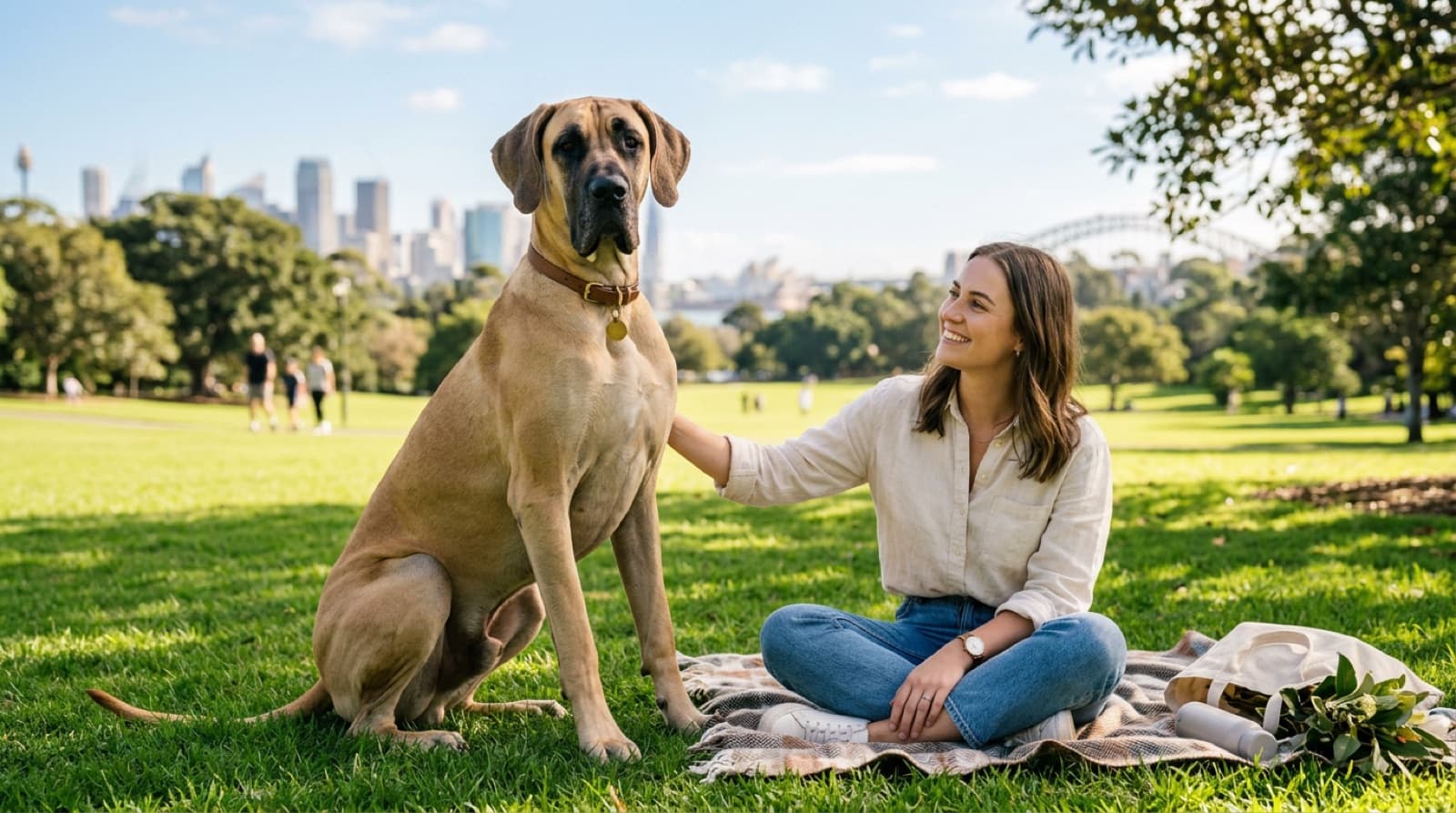
The short answer
You can adopt a Great Dane in Brisbane, but be patient and be honest about the breed. Purebreds are uncommon in rescue, so set alerts across RSPCA Queensland, Animal Welfare League Queensland, the foster-based rescues and PetRescue, be application-ready, and stay open to a Great Dane cross or an older dog. Adoption runs about $400 to $700 for an adult, all-inclusive, against several thousand dollars from a breeder, and the breed is not restricted in Queensland. The honest part is that a Great Dane is a giant dog. It is gentle, calm and deeply people-oriented, more couch potato than guard dog, but it costs a lot to feed and care for, needs space and early training for its size, and has a genuinely short lifespan of around 7 to 10 years. A dark-coated giant also feels the SEQ heat, so exercise in the cool and keep water and shade close. Meet those realities and you have one of the most affectionate companions there is.
Why Great Danes reach Brisbane rescue
Most breed guides open with where to adopt. With the Great Dane, the honest first lesson is why they reach rescue, because understanding that tells you whether the breed is right for you.
People buy the cute puppy, then meet the size. A Great Dane puppy is irresistible: wobbly, floppy-eared and clumsy. Then it keeps growing, and growing, into one of the tallest dog breeds there is. Owners who pictured a big dog often find themselves with a genuinely giant one, and everything scales with it. The lead pulls harder, the dog fills the lounge room, and the reality of the animal outgrows the fantasy of the puppy. When that gap gets too wide, the dog is surrendered.
The cost of a giant dog catches people out. A Great Dane eats like a giant, needs giant-sized everything, and its vet bills scale with its body. Desexing, anaesthetic, medication doses and specialist care all cost more for a dog this size. Owners who did not budget for that, or whose circumstances changed, can find the ongoing cost unsustainable. This is not a cheap dog to keep, and honesty about the budget up front saves a lot of heartbreak later.
The short lifespan and health costs. This is the hardest part, and it belongs in the open. Great Danes have a short lifespan for a dog, commonly around 7 to 10 years, and giant breeds carry higher rates of heart disease, bloat and bone problems. Some dogs reach rescue because an owner could not carry the health costs, or because a family that lost one giant could not face taking on another. It is a sad, real thread in why these dogs need homes.
Life changes and housing. Many Great Danes reach rescue through no fault of their own. A relationship breakdown, a move to a rental or an apartment that will not take a giant dog, a new baby, or an owner who simply ran out of space. Crosses appear too, often a Great Dane blended with a Mastiff or a Staffy type, and they carry a version of the same size and needs in a slightly different package.
What this means for you. A Great Dane in rescue is rarely a broken dog. It is usually a gentle, affectionate giant whose size or costs outran its last home. If you have the space, the budget and the heart for a short but wonderful chapter, you are looking at a lovely adoption. If any of those is a stretch, being honest now saves a dog from being the next surrender.
Where to adopt a Great Dane or Great Dane cross in Brisbane
Because Great Danes are uncommon in general rescue, a wide alert net is the right approach. Set listing alerts on every rescue you would consider, and add large and giant-breed foster networks. For a fuller directory, see our Brisbane adoption resources hub.
- RSPCA Queensland. The state body runs its main Animal Care Campus at Wacol plus other centres across South East Queensland, and Great Danes and Great Dane crosses come through occasionally via owner surrender. Every adoption covers desexing, vaccination, microchipping and a vet check, and a surrendered giant often arrives with a known history the team can talk you through. Browse at rspcaqld.org.au.
- Animal Welfare League Queensland (AWLQ). A long-running South East Queensland no-kill charity with re-homing centres across Brisbane and the Gold Coast. Great Danes are uncommon on the roster but do appear, more often as crosses with another large breed, and staff can talk through the realities of a giant breed. Listings at awlq.org.au.
- Foster-based and large-breed rescues. Brisbane volunteer and foster-network rescues take dogs of this type. Because the dogs live in foster homes, the notes on a Great Dane's energy, manners, health and behaviour with people and other animals tend to be detailed and honest, which is exactly what you need to match a giant dog to the right household.
- A breed-specific Great Dane rescue. Some adopters look for a dedicated Great Dane rescue. We cannot verify a currently active Queensland group by that name, so if you find one, confirm a real address, a current list of adoptable dogs and registered charitable status before you engage, and never send money first.
- PetRescue. A national aggregator that lists Great Danes and Great Dane crosses from many smaller Queensland rescues in one searchable place, at petrescue.com.au.
Browse the current Great Danes and Great Dane crosses on the Brisbane Great Dane listings.
What a Great Dane costs: adopt versus buy
Adoption is far cheaper at the outset. A rescue fee for an adult dog through a Brisbane rescue commonly runs about $400 to $700, though a giant breed like a Great Dane may sit a little higher, and that fee already covers desexing, vaccination, microchipping, worm and flea treatment and a vet check.
A purebred Great Dane puppy from a breeder in Queensland, by contrast, typically runs into the thousands, often several thousand dollars, with none of that vet work done yet. Great Danes are a high-demand, high-price breed, which keeps breeder prices high. So adopting is many times cheaper up front, the dog arrives already vetted, and if you adopt an adult you can see the temperament and any known history rather than gamble on a puppy.
The purchase price, though, is not where a Great Dane gets expensive. The real cost is the ongoing care of a giant dog, and it is genuinely high: big-dog food in giant quantities, year-round paralysis tick and parasite prevention (a vet-recommended monthly product, essential everywhere in South East Queensland), larger medication doses, and vet bills that scale with the body. Council registration is a modest yearly cost, and a desexed and microchipped dog pays a substantially reduced fee. Because this ongoing budget is the single most important number for a giant breed, we cover it properly in the Great Dane giant-breed ownership guide. Read that before you commit.
Great Danes are not restricted in Queensland
It is worth stating plainly, because the size makes people wonder. The Great Dane is not a restricted or regulated dog in Queensland, and it is legal to own and rehome normally. Under the Animal Management (Cats and Dogs) Act 2008, a dog must be microchipped before 12 weeks of age or before it changes hands, and registered with your local council from 12 weeks, with a substantially reduced rate for a dog that is desexed and microchipped. Check the current fee on your council's page, for example Brisbane City Council.
The real hurdle is housing rather than law. Some Brisbane landlords and bodies corporate are cautious about very large dogs, so if you rent or live in an apartment, confirm in writing that a dog this size is allowed and be ready to reassure. A rescue will want to see that you have thought the space and the body corporate question through. More on that below.
Browse adoptable Great Danes in Brisbane
Great Danes are uncommon in rescue, so crosses and older dogs appear more often than purebred puppies. Browse live Queensland listings and set an alert so you hear the moment one comes in.
See Available Great Danes →The gentle giant: temperament, and why size means training
The gentle-giant reputation is real. A well-socialised Great Dane is calm, affectionate and patient, deeply bonded to its people and happy to lean its whole weight against your leg as a sign of love. Indoors it is more couch potato than live wire. It wants moderate exercise, a daily walk and some play in bursts, and then a long snooze on the biggest, softest surface it can find. This is not an aggressive guard dog, despite the size and the deep bark. The imposing look does the deterring on its own. Underneath it is a soft, people-loving companion.
The reason training is not optional is the size, not the temperament. A dog that ends up as tall as a person on its hind legs, and heavier than many of the people walking it, has to have good manners, because a friendly Great Dane that jumps up or pulls on the lead can genuinely hurt someone by accident. Early, reward-based training while the dog is young and still teachable is the whole game. It needs to learn to walk politely, to keep four feet on the floor, and to be calm around visitors and children. A trained gentle giant is a joy. An untrained one is a lot of dog to manage, which is part of why some reach rescue.
Around small children the same rule applies. Great Danes are usually lovely and tolerant with the kids they live with, but a dog this size can knock a toddler over without any bad intent, so supervision and a bit of training for both dog and child keeps everyone safe. For the full picture on the breed's health, which shapes so much of ownership, lean on the Great Dane health guide rather than trying to cover it here.
If you have been searching “Great Dane for sale Brisbane”
Plenty of people arrive here after searching for a Great Dane to buy, and that makes sense: the for-sale listings vastly outnumber the rescue ones, so buying feels like the only route. Reputable breeders do exist, and there is nothing wrong with orienting yourself by them. But before you spend anything, know that the online market for popular purebred puppies is one of the more scam-prone corners of the pet world in Australia, and Great Danes, as a high-demand, high-price breed, are a target. In Queensland, any dog born on or after 26 May 2017 that is advertised must display a Queensland Dog Breeder Register supply number and a microchip number, so a listing with neither is a red flag, and a cheap or free dog with a story about a deposit or a transport fee is the classic setup Scamwatch warns about.
A seller who will not show you both healthy, health-tested parents at their property is a red flag rather than a mark of quality, and with a giant breed the parent health testing genuinely matters for the puppy's future. Adoption sidesteps much of that: it costs a fraction of a breeder price, gives a vet-checked dog a home, and an adult rescue Great Dane asks far less guesswork about health and temperament than a puppy. Set alerts, stay open to a cross or a senior, and be patient. The RSPCA Australia Knowledgebase has good general guidance on choosing a dog and avoiding poorly bred puppies.
Is a Great Dane right for you?
Be honest about the fit, because everything about a Great Dane is bigger. It needs space, both the floor room a giant dog occupies and, ideally, a home that can accommodate its size comfortably. It needs a real budget, because feeding and caring for a giant dog is expensive and the vet bills scale with the body. It needs early training and calm handling for its sheer strength. And it needs you to accept a short lifespan, commonly around 7 to 10 years, which is the honest heartbreak of the breed. None of that makes it a hard dog to live with day to day. A calm, trained adult Great Dane is one of the easiest, most affectionate housemates there is. The question is whether you can carry the size, the cost and the shorter time.
Do not try to weigh all of that from this page alone. The two sibling guides exist for exactly this decision. The giant-breed ownership guide lays out the real cost of feeding, space, gear and care, plus the giant-puppy growth rules if you ever raise one. The health guide covers the conditions that shape the lifespan, from bloat to heart disease, and how to plan for them. Read both before you fall in love with a specific dog.
The housing reality: renting and apartments with a giant dog
A Great Dane is legal everywhere in Queensland, but the practical hurdle is housing. Some Brisbane landlords and bodies corporate are wary of very large dogs, and that caution, fair or not, is real. The answer is not to hide the dog. It is to be the most organised, reassuring applicant a landlord has seen.
Confirm dogs are allowed before you apply, in writing, and be ready with a short pet resume: the dog is desexed, microchipped, council-registered, up to date on vaccinations and parasite prevention, and, ideally, has references from a foster carer or a previous landlord. A calm, well-trained gentle giant that lies quietly on its bed is easy to vouch for, and a rescue that runs a foster-to-adopt trial can help you demonstrate exactly that. Sort the housing and space question before you fall in love with a specific dog, not after.
Adult or puppy, and how to choose
For almost every adopter an adult is the better choice, and Great Dane puppies are rare in rescue anyway. An adult has a known temperament the rescue can describe, a full size you can see rather than gamble on, often some training in place, and a lower adoption fee. With a giant breed that gap matters even more than usual, because raising a Great Dane puppy well is a genuinely careful job. Giant-breed puppies must not be over-exercised while their joints and bones are still growing, since too much high-impact exercise too young can cause lasting orthopaedic damage. An adult is already grown, so you skip that entire delicate stage.
When you choose, read the foster carer's notes closely. They will tell you how a specific dog does with children, cats, other dogs, visitors and being left alone, and that record predicts the fit far better than the breed average. Ask about the training so far, the manners on the lead, and any health history, which matters a lot with a giant breed. Older, settled Great Danes are often the ones that wait longest, and a gentle senior giant can make the steadiest, most rewarding match for a first-time giant-breed owner who wants the breed without the puppy work.
Frequently Asked Questions
Where can I adopt a Great Dane near me in Brisbane?
Start with the main Queensland rescues: RSPCA Queensland, which runs its Animal Care Campus at Wacol plus other South East Queensland centres, and Animal Welfare League Queensland (AWLQ). Add Brisbane's foster-based and small-breed rescues, and PetRescue, which lists dogs from many smaller Queensland rescues in one place. Be realistic about supply. Purebred Great Danes are genuinely uncommon in rescue, so Great Dane crosses, often mixed with Mastiff or Staffy types, show up more often than full purebreds. The best approach is to set listing alerts across every rescue you would consider, have your application and vet references ready in advance, and stay open to a cross or an older dog. Large and giant-breed foster networks around Queensland also rehome dogs of this type. Some adopters search for a dedicated Queensland Great Dane rescue, but we cannot verify a currently active one by that name, so work through the general rescues, set alerts, and never send money before you have confirmed a real, registered rescue.
Why do Great Danes end up in rescue?
Almost always because someone took on more dog than they were ready for, not because of a fault in the Great Dane. Great Danes are bought as adorable, wobbly puppies, and then the size reality lands. A Great Dane grows into one of the tallest dogs on earth, and everything scales up with it: the food bill, the space it takes, the strength on the lead, the vet costs and the size of the car you now need. Plenty of owners underestimate all of that and surrender when it hits. Others reach rescue through no fault of their own, after a relationship breakdown, a move to housing that will not take a giant dog, or the sad, honest truth that Great Danes have a short lifespan and real health costs that some owners cannot carry. Crosses appear too. The temperament is usually intact. Most rescue Great Danes are lovely, gentle dogs whose size or costs simply outran their last home.
How much does it cost to adopt a Great Dane versus buy one?
Adoption is far cheaper up front. A rescue fee for an adult dog through a Brisbane rescue commonly runs about $400 to $700, and a giant breed like a Great Dane may sit a little higher, and that fee already includes desexing, vaccination, microchipping, worm and flea treatment and a vet check. A purebred Great Dane puppy from a breeder in Queensland typically runs into the thousands, often several thousand dollars, with none of that vet work done yet. So adopting is many times cheaper at the outset and the dog arrives already vetted. The real expense with a Great Dane is not the purchase, it is the ongoing cost of feeding and caring for a giant dog, which is genuinely high. Our giant-breed ownership guide covers that budget in detail. A well-cared-for adult rescue Great Dane is the cheapest sensible way into the breed.
Are there Great Dane rescues in Queensland?
There is no Queensland Great Dane-specific rescue we can verify as currently active, so the reliable route is the general rescues. RSPCA Queensland, Animal Welfare League Queensland, the foster-based rescues and PetRescue all rehome Great Danes and Great Dane crosses when they come in, and large and giant-breed foster networks around Queensland take them too. Because purebred Great Danes are uncommon in rescue, the winning strategy is a wide alert net rather than one specialist group. Set listing alerts on every rescue you would consider and be application-ready so you can move quickly. If you come across a group calling itself a Great Dane rescue, verify it before you engage: a real address, a current list of adoptable dogs, and registered charitable status. Never send a deposit to a group you cannot confirm is genuine.
Are Great Danes good family dogs?
They can be wonderful family dogs, and the gentle-giant reputation is well earned. A well-socialised Great Dane is affectionate, calm, patient and deeply bonded to its household, and many are lovely and tolerant with the children they live with. They are famously people-oriented and love to lean on you, sometimes literally. The catch is the size, not the temperament. A dog this large can knock a small child over without meaning any harm, so supervision around little kids matters, and early training is essential so a giant dog learns manners while it is still teachable. This is not a guard dog despite the imposing look. It is a companion. As always, the foster carer's notes on a specific dog with kids predict the fit far better than the breed average, so ask.
How long do Great Danes live?
This is the hardest honest fact about the breed. Great Danes have a genuinely short lifespan for a dog, commonly around 7 to 10 years, because giant breeds age faster and carry higher rates of heart disease, bloat and bone problems. It is shorter than most medium and small dogs, and it is something to sit with before you adopt, especially if children are involved. It also means a lot of loving in a shorter window, which many Great Dane owners will tell you is worth it. Adopting an adult does shorten your time together further, but it also gives a gentle older giant the home it deserves. Our Great Dane health guide covers the conditions that shape that lifespan and how to plan for them.
Can a Great Dane live in an apartment?
Surprisingly, yes, a Great Dane can suit an apartment better than many smaller, busier breeds, but with real caveats. Indoors a Great Dane is famously a bit of a couch potato. It wants moderate exercise, a daily walk plus some play, and then a long sleep on the biggest, softest surface available. That low indoor energy can work in a unit. The problems are practical: the sheer floor space a giant dog occupies, stairs and lifts for a heavy dog, close neighbours, and body corporate rules. Many Brisbane apartment buildings and bodies corporate are cautious about very large dogs, so confirm dogs are allowed in writing before you commit. A house with a yard is easier, but a calm adult Great Dane in the right apartment, with an owner who is home enough, can absolutely work.
Should I adopt an adult Great Dane or a puppy?
For almost every adopter an adult is the safer choice, and Great Dane puppies are rare in rescue anyway. With an adult you can see the full size and the settled temperament rather than gamble on how a giant puppy turns out, the fee is usually lower, and you skip the tricky giant-breed growth stage entirely. That growth stage matters more than most people realise: giant-breed puppies must not be over-exercised while their joints and bones are still developing, because too much high-impact exercise too young can cause lasting orthopaedic damage. Raising one properly is a real, careful job. An adult rescue Great Dane is already grown, and a gentle senior is often the steadiest, most rewarding match for a first-time giant-breed owner.
Is it safe to buy a Great Dane online?
Be very careful, because the online market for popular purebred puppies in Australia is one of the more scam-prone corners of the pet world. Great Danes are a high-demand, high-price breed, which makes them a target for fake listings and backyard breeders. In Queensland, any dog born on or after 26 May 2017 that is sold, given away or advertised must display a supply number from the Queensland Dog Breeder Register, and every dog must be microchipped before it changes hands, so a listing with no supply number and no microchip number is a red flag. A cheap puppy, a request for a deposit on a dog you have not met in person, or a seller who will not show you both healthy parents and health checks are warning signs rather than bargains. Scamwatch has documented deposit scams for puppies that do not exist. With a giant breed, poor breeding also carries real health risk, so parent health testing matters. Adoption sidesteps most of that risk: it costs a fraction of a breeder price, the dog is already vet-checked, and an adult rescue Great Dane asks far less guesswork about health and temperament.
Keep reading
Adoptable Great Danes in Brisbane
Live listings of Great Danes and Great Dane crosses across Brisbane and Queensland rescues.
Great Dane Health Issues in Brisbane
Bloat, heart disease, bone problems and the short lifespan, plus SEQ heat and paralysis tick.
Great Dane Giant-Breed Ownership
The real cost of feeding, space and gear, plus the giant-puppy growth rules for a healthy dog.
Brisbane Adoption Resources
Guides on adopting, costs, council rules and settling a rescue dog in Brisbane.