The short answer
A Golden Retriever's double coat insulates against heat as well as cold and shades the skin, so you never shave it, even in the Brisbane summer. Instead, brush out the dead undercoat two or three times a week (daily during the seasonal coat blows) so air can move through the coat, which is what actually keeps the dog cool. Manage the heat by exercising only in the cool of the early morning or evening, using water play instead of midday walks, and providing shade, cool surfaces and constant water. Bathe only when needed and always dry the coat and ears thoroughly, because the SEQ humidity makes damp coats a skin and ear problem. Get the coat and the heat right and the hardest part of owning a Golden in Brisbane is solved.
How the double coat actually works
A Golden has two layers: a longer, water-repellent outer coat of guard hairs, and a soft, dense undercoat underneath. Together they were designed to keep a working gundog warm and dry retrieving waterfowl in cold Scottish conditions. The part most owners miss is that the same coat works in reverse in the heat: the layer of air trapped in a well-maintained coat slows heat transfer in both directions, so it insulates against the sun and outside heat, not just the cold, while the guard coat shades the skin from direct sun.
That is why the coat is an asset in Brisbane rather than a liability, provided it is looked after. A clean, brushed-out coat with the dead undercoat removed lets air circulate against the skin and does its job. A matted, clogged coat cannot, which is where heat problems and skin trouble start. The maintenance, not the coat itself, is what matters.
Why you never shave a Golden Retriever
It feels logical in a hot climate, and it is the most common Golden care mistake there is. Shaving a double coat:
- Removes the dog's temperature regulation. Take away the coat and you take away the insulating air layer that slows heat gain, so a shaved Golden can actually feel the heat more, not less.
- Exposes the skin to sunburn and cancer risk. The coat shades pale skin from harsh Australian UV. A shaved Golden is at real risk of sunburn and, over time, a higher risk of skin cancer.
- Can grow back wrong. A shaved double coat often grows back patchy, with the soft undercoat coming in faster than the guard coat, sometimes permanently changing the texture and the coat's ability to insulate.
The only time clipping is appropriate is when a coat is so severely matted that brushing it out would be painful, and that is a decision for a professional groomer or your vet, not a routine summer measure. For everyday heat, brushing beats shaving every time.
The shedding, and a brushing routine that works
Goldens shed heavily and continuously, with two bigger seasonal coat blows a year when the undercoat lets go in quantity. There is no avoiding the hair, but a routine keeps it manageable and keeps the coat doing its job:
- Brush two to three times a week, stepping up to daily during a coat blow. Consistency beats the occasional marathon session.
- Use a deshedding tool that reaches the undercoat, along with a slicker brush for the feathering on the legs, chest and tail. A standard brush skims the surface; the undercoat is where the volume is.
- Work in sections down to the skin (line brushing) rather than just over the top, so you actually remove the dead undercoat rather than tidying the guard hairs.
- Check the feathering and behind the ears for mats, which form fastest in the soft longer hair, and tease them out gently or trim rather than letting them tighten.
- Make it a two-in-one job: brushing is the perfect moment to run a hands-on tick search through the coat, which matters year-round in SEQ.
Managing the SEQ heat day to day
Brisbane summers regularly reach the low-to-mid 30s with high humidity, and the humidity is the sting in the tail, because a panting dog cools less efficiently in humid air. A Golden is more heat-vulnerable than a short-coated breed, so the daily habits matter:
- Exercise in the cool hours only. Early morning or evening, never the middle of the day. Hot pavement burns paws, so check it with the back of your hand before you walk.
- Use water instead of walks on hot days. A safe swim, a paddling pool, a sprinkler or a hose gives a water-loving breed its exercise without the heat load. Dry the ears afterwards.
- Shade, cool surfaces and constant water. Tiles beat carpet, more than one water bowl, and never leave a Golden outside without shade or in a parked car.
- Know the heat-stress signs. Heavy or frantic panting, drooling, weakness, vomiting, or a bright red or bluish tongue. Move the dog to shade, wet it with cool (not icy) water, offer water, and get to a vet urgently. Heatstroke is an emergency, and the RSPCA Knowledgebase has current advice on keeping pets cool and recognising heat stress.
Browse Golden Retrievers available in Brisbane rescue
Many rescue Goldens love water, which is a gift in the Brisbane heat. Live listings from Brisbane shelters and Queensland rescues, with foster carer notes on temperament and coat condition.
See Available Golden Retrievers →Bathing, skin and the humidity
Bathe a Golden only when it genuinely needs it, roughly every six to eight weeks or after a muddy or salty swim, because over-bathing strips the coat's natural oils and can dry and irritate the skin. The bigger issue in the SEQ humidity is drying rather than washing: a dense coat and heavy drop ears trap moisture, and a damp coat in warm, humid air is exactly what skin infections and hot spots thrive on. Dry the dog thoroughly after any bath or swim, ears included, and if you see itchy, flaky, smelly or inflamed skin, treat it as a vet conversation rather than a grooming one, since it often points to an allergy or infection that needs proper treatment.
DIY grooming vs a professional groomer
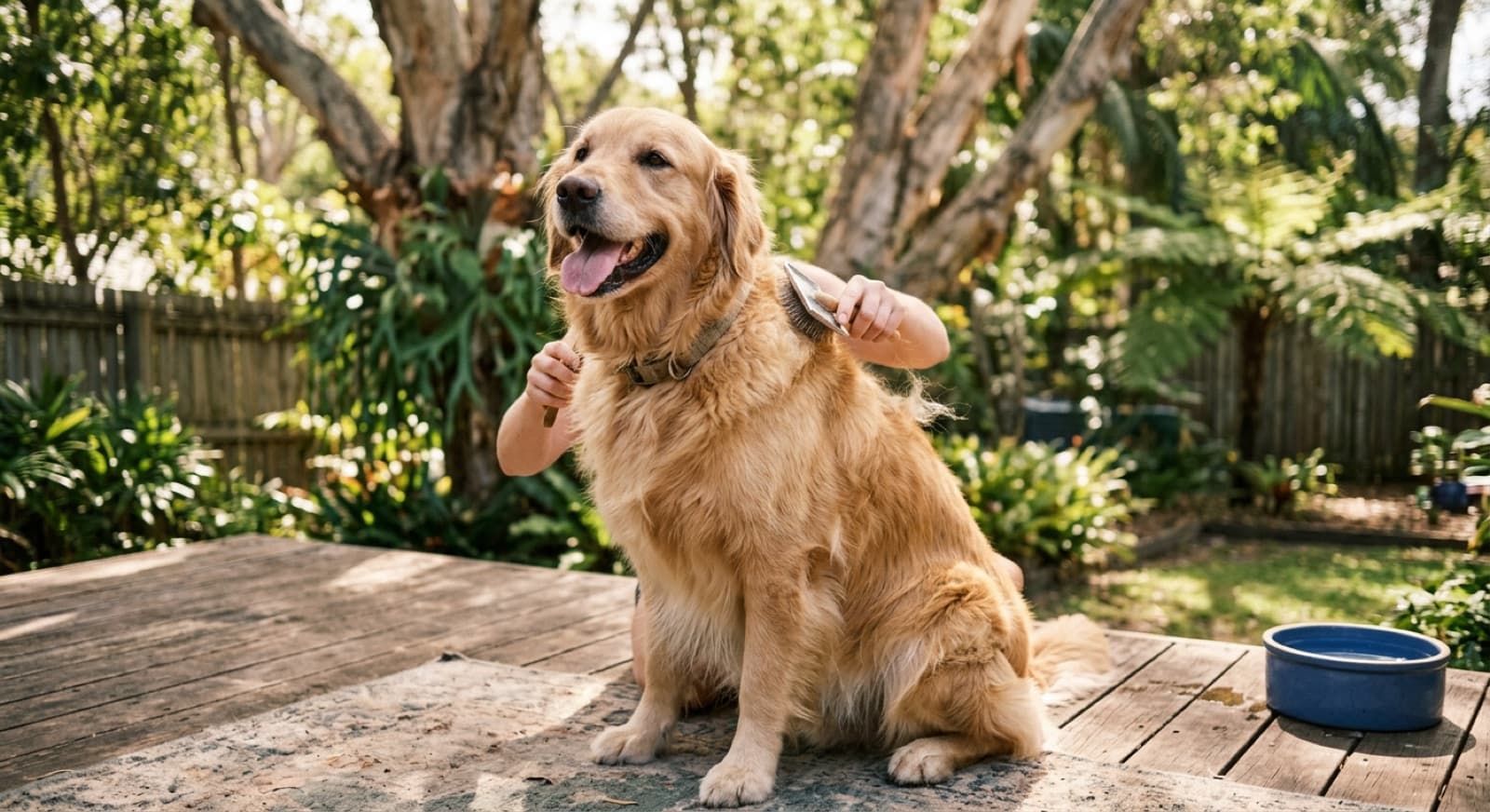
Most Golden owners manage the everyday brushing at home, and a good deshedding session on the back deck is a pleasant weekly ritual once both of you get used to it. A professional groomer earns their place a few times a year, especially heading into and out of a coat blow, for a proper deshed treatment, a wash-and-blow-dry that clears far more undercoat than home brushing, and a neaten-up of the feathering and the fur between the paw pads. Ask a Brisbane groomer for a deshed rather than a clip, and if anyone suggests shaving the coat for the heat, that is the moment to find a different groomer. For the wider health picture, including why the ears need special attention in this climate, see our Golden Retriever health guide for Brisbane.
Frequently Asked Questions
Should you shave a Golden Retriever in summer?
No. This is the single most common mistake owners make in a hot climate, and it does more harm than good. A Golden's double coat insulates against heat as well as cold and shades the skin from the sun, so shaving it removes the dog's own temperature regulation and exposes pale skin to sunburn and a higher skin-cancer risk. A shaved double coat can also grow back patchy or with a changed texture. The right approach is the opposite: brush out the dead undercoat so air can move through the coat, which is what actually helps the dog stay cool. If a coat is severely matted, a groomer or vet should advise, but routine shaving for heat is not the answer.
How much do Golden Retrievers shed?
A lot, all year, with two bigger seasonal coat blows. It is the single biggest day-to-day reality of living with the breed and a genuine surprise to households that did not plan for it. A brush two or three times a week keeps most of it under control and off the furniture, stepping up to daily during the coat-blow periods. A deshedding tool that reaches the undercoat removes far more than a standard brush. You will still find golden hair around the home, but consistent brushing is the difference between manageable and overwhelming.
How do I keep a Golden Retriever cool in the Brisbane summer?
Exercise only in the cool of the early morning or evening, never in the midday heat, and always carry water. Give the dog shade and a cool indoor surface (tiles beat carpet), keep fresh water in more than one spot, and use water play, a safe swim, a paddling pool or a hose, to give exercise without the heat load, which suits a water-loving breed perfectly. Keep the coat brushed out so air moves through it, and never leave a Golden in a parked car or outside without shade and water. Watch for heat-stress signs (heavy or frantic panting, drooling, weakness, a bright red or bluish tongue) and cool the dog and get to a vet urgently if you see them.
How often should I bathe a Golden Retriever in Brisbane?
Only when genuinely needed, roughly every six to eight weeks or after a muddy or salty swim, because over-bathing strips the coat's natural oils and can irritate the skin. The more important point in the SEQ humidity is drying: a Golden's dense coat and heavy drop ears trap moisture, so dry the dog thoroughly after any bath or swim, ears included, since a damp coat and warm humid air is exactly what skin and ear infections thrive on. If the skin is itchy, flaky or smelly, that is a vet conversation rather than a reason to keep bathing.
Keep reading
Golden Retriever Adoption in Brisbane
Where to find a rescue Golden, real costs vs a breeder, and what to expect.
Golden Retriever Health Issues
Cancer risk, hips and elbows, ears in the humidity, and the vet budget.
Adoptable Golden Retrievers in Brisbane
Live listings with foster carer notes on temperament and coat condition.
Brisbane Adoption Resources
Guides on adopting, costs, council rules and settling a rescue dog in Brisbane.