The short answer
You can adopt a Doberman in Brisbane, but go in knowing the breed. Purebreds are uncommon in rescue, so set alerts across RSPCA Queensland, Animal Welfare League Queensland and PetRescue, be application-ready, and stay open to a Doberman cross or an older dog. Adoption runs about $400 to $700 for an adult, all-inclusive, against several thousand from a breeder, and the breed is not restricted in Queensland. The honest part is that a Doberman is a large, powerful, high-energy guardian dog that needs real exercise, steady reward-based training, early socialisation and, above all, to be with its people, so it suits an experienced home rather than a first-time owner who is out all day. Australian Dobermans keep their natural floppy ears and full tail, since cropping and docking are illegal here. Meet the breed's needs and it is one of the most devoted companions you can own.
Why Dobermans end up in Queensland rescue
The Doberman was developed in 19th-century Germany as a protection and working dog, and that heritage still defines it: a smart, driven, athletic guardian that needs a job, exercise and its people. Understanding why they land in rescue tells you what you would be taking on.
People buy the look, then meet the working dog.
Dobermans are striking, and plenty are bought for the appearance or for protection without the owner grasping the daily reality: a powerful dog that needs an hour or more of real exercise, consistent training, early socialisation and constant company. When those needs surprise a household, the dog can be surrendered.
The velcro nature and separation stress.
Dobermans are famous velcro dogs that want to be with their family constantly, and they do not cope well left alone for long hours. A Doberman left in a yard or a unit all day becomes anxious, bored and destructive, and that mismatch is one of the most common routes to surrender. This is a companion guardian, not a backyard dog.
Life changes and health costs.
A move to a rental that will not take a big guardian breed, a relationship breakdown, or an owner who could not keep up with the exercise and training all rehome Dobermans. Some also reach rescue when the breed's health costs, particularly its heart risk, arrive. The dog is rarely the problem.
What this means for you. A Doberman in rescue is almost never a broken dog. It is usually a good guardian breed whose energy, training and company needs outran its last home. If you have some dog experience, can exercise and train it, and are home enough to keep it company, a rescue Doberman is a magnificent adoption. If you wanted an easy, low-effort dog, being honest now saves a dog from being the next surrender.
Australian Dobermans keep their natural ears and tail
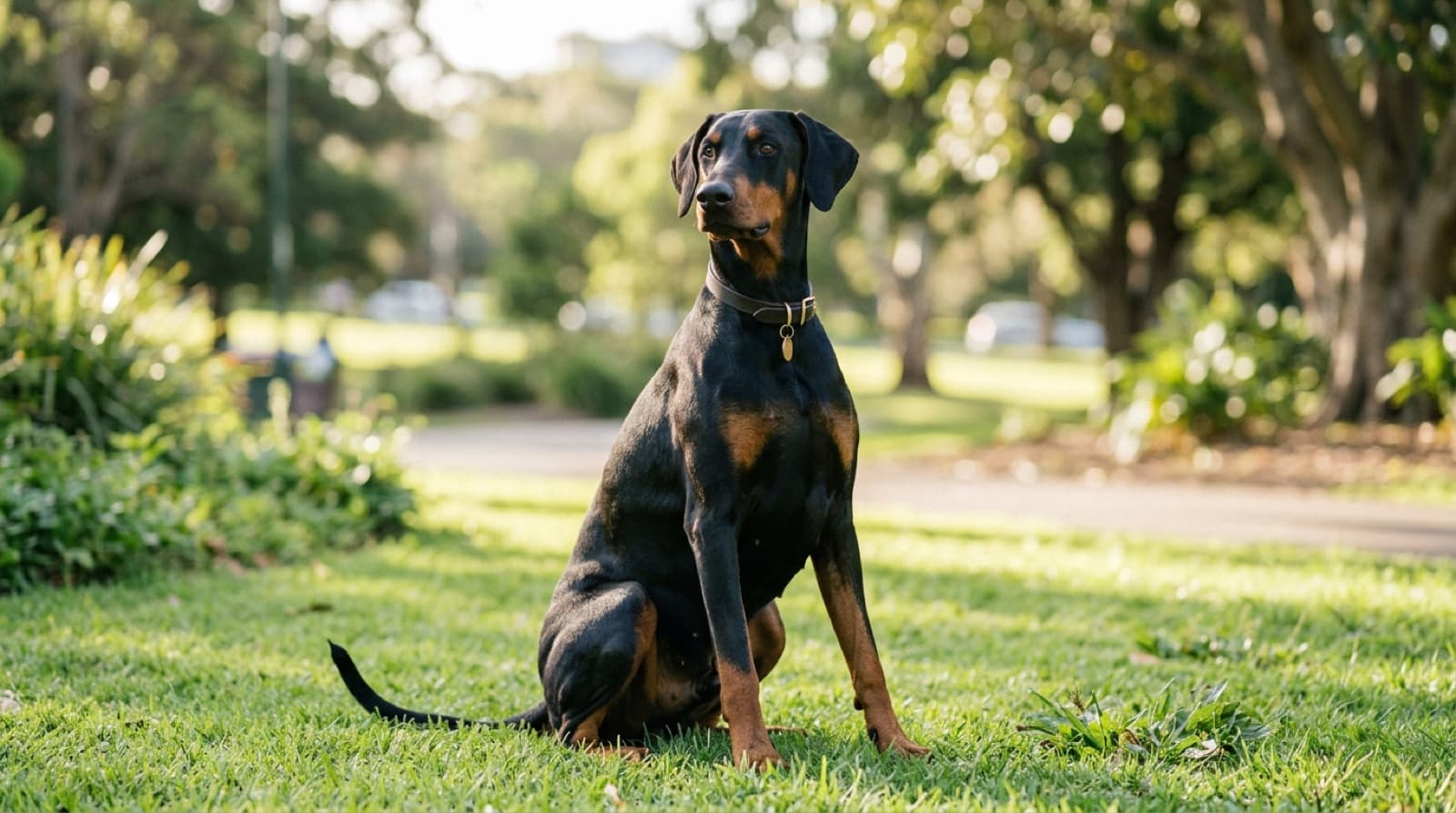
It is worth stating plainly, because the mental image many people carry is wrong. Ear cropping and tail docking for cosmetic reasons are illegal in Australia, so a Doberman born and raised here has natural, floppy ears and a full tail. The pointed-ears, stub-tail look from overseas photos is not how Australian Dobermans appear, and no reputable Australian breeder or rescue will offer it.
This matters for two reasons. First, a floppy-eared, full-tailed rescue Doberman is completely normal and, to most people, quickly more appealing than the cropped look. Second, if you ever see a young Australian dog advertised with cropped ears or a docked tail, treat it as a serious warning sign about where and how it was bred, and walk away.
Where to adopt a Doberman or Doberman cross in Brisbane
- RSPCA Queensland. The state body runs its main Animal Care Campus at Wacol plus other centres across South East Queensland, and takes in Dobermans and Doberman crosses through the year. Every adoption includes desexing, vaccination, microchipping, a vet workup and a behavioural assessment, which is valuable for a guardian breed. Browse at rspcaqld.org.au.
- Animal Welfare League Queensland (AWLQ). A long-running South East Queensland no-kill charity with re-homing centres at Willawong (South Brisbane), Warra (North Brisbane), Beenleigh and Coombabah on the Gold Coast. Dobermans and large crosses appear from time to time. Listings at awlq.org.au.
- Foster-based and guardian-breed rescues. Brisbane volunteer and foster-network rescues, including large-dog and guardian-breed groups, see Dobermans and Doberman crosses. A foster carer who has lived with the dog can tell you exactly how it is with visitors, other dogs, children and being left alone, which is exactly what you need to match a guardian breed to the right household.
- PetRescue. A national aggregator that lists Dobermans and Doberman crosses from many smaller Queensland rescues in one searchable place, each with the originating rescue's contact details, at petrescue.com.au. The single most efficient browse for every available Doberman.
Some adopters search for a dedicated Queensland Doberman rescue, but we cannot verify a currently active organisation by that name, so use the general rescues above, set alerts, and be wary of any group that asks for money before you have confirmed a real address, a current adoptable-dog list and charitable status.
The honest cost comparison
Real first-year costs in Brisbane:
| First-year cost | Rescue Doberman | Breeder Doberman |
|---|---|---|
| Adoption fee or purchase price | $400 to $700 | $2,000 to $4,000+ |
| Desexing | Included | $400 to $700 |
| Microchipping | Included | $60 to $80 |
| First-year vaccinations | Included | $250 to $400 |
| Initial vet check | Included | $100 to $200 |
| Council registration (reduced fee if desexed and microchipped) | Set by your council | Set by your council |
| Year 1 food (large breed) | $900 to $1,500 | $900 to $1,500 |
| Parasite prevention (paralysis tick, flea, worm, heartworm) | $350 to $600 | $350 to $600 |
| Initial gear (bed, harness, bowls, crate) | $300 to $550 | $300 to $550 |
| Reward-based training class | $200 to $500 | $200 to $500 |
| Pet insurance (strongly recommended for this breed) | $800 to $1,400 | $800 to $1,400 |
| Year 1 total (excluding council fee) | $3,250 to $6,050 | $5,110 to $9,930+ |
Adopting saves a large amount up front. Two lines run higher for a Doberman: parasite prevention, because year-round paralysis-tick cover is essential in SEQ, and pet insurance, which is genuinely worth prioritising given the breed's serious heart-health risk, covered in the Doberman health guide for Brisbane. Good training is the other investment that pays for itself, because a well-trained Doberman is far easier and cheaper to live with.
Browse Dobermans available in Brisbane rescue
Dobermans and Doberman crosses appear in Queensland rescue. Browse live listings and set an alert, and foster carer notes describe each dog's temperament, training and household fit before you apply.
See Available Dobermans →Is a Doberman right for you?
Be honest about the fit, because a Doberman is a serious commitment. It is large, strong, highly intelligent and driven, with a guardian instinct that needs confident, consistent, reward-based handling and early, ongoing socialisation so it learns that visitors and other dogs are normal. It needs an hour or more of daily exercise plus mental work, and it needs a lot of company, because a bored or lonely Doberman becomes an anxious, destructive one. For most first-time owners it is not the ideal first dog, though a committed first-timer who does the reading, lines up a good trainer and is home enough can absolutely succeed.
Offer the breed what it needs and it gives back extraordinary loyalty, intelligence and affection, and a well-raised Doberman can be a wonderful family dog. If this would be your first dog, be very honest with the rescue about your experience, your hours and your training plan, and let them help you decide. For the full picture on temperament, socialisation and training, see the Doberman temperament and training guide.
Registering your Doberman in Queensland, and the heat
The Doberman is not restricted in Queensland, so it is legal to own and rehome normally. Under the Animal Management (Cats and Dogs) Act 2008, a dog must be microchipped before 12 weeks of age or before it changes hands, and registered with your local council from 12 weeks, with a reduced fee for a desexed and microchipped dog; check your council, for example Brisbane City Council. On scams, any dog born on or after 26 May 2017 that is advertised must show a Queensland Dog Breeder Register supply number and a microchip number, so a listing with neither, or one showing an illegally cropped or docked Australian pup, is a clear red flag worth checking against Scamwatch.
On the climate, a Doberman's short coat handles the Brisbane heat better than a double-coated breed, but it is still an athletic dog that will push itself, so exercise in the cool of the morning and evening, carry water, and watch for heat stress on hot, humid days. The important SEQ factor is the paralysis tick, a genuine year-round danger along the Brisbane seaboard, so keep a year-round vet-recommended tick-prevention product in place and search the coat after any bushland or long-grass outing. The other local hazard is the cane toad, which is toxic if mouthed; teach a firm leave-it and supervise the yard after rain.
Frequently Asked Questions
Where can I adopt a Doberman in Brisbane?
Start with the main Queensland rescues: RSPCA Queensland (Animal Care Campus at Wacol plus other SEQ centres) and Animal Welfare League Queensland (re-homing centres at Willawong, Warra, Beenleigh and Coombabah), plus Brisbane foster-based and guardian-breed rescues and the national aggregator PetRescue. Be realistic about supply: purebred Dobermans are fairly uncommon in rescue, so Doberman crosses show up more often than full purebreds. Set listing alerts across every rescue you would consider, have your application and vet references ready, and stay open to a cross or an older dog. If you find a group calling itself a Doberman rescue, verify it has a real address, a current adoptable-dog list and charitable status before you send any money.
Why do Dobermans end up in rescue?
Almost always because someone took on more dog than they were ready for, not because of a fault in the Doberman. Dobermans are large, athletic and strikingly good-looking, and plenty are bought for the look or for protection without the owner grasping the day-to-day needs underneath. This is a smart, high-energy guardian breed that needs real exercise, real training and, above all, to be with its people, because Dobermans are famous velcro dogs. Left alone in a yard for long hours they get anxious, bored and destructive, and that is a common path to surrender. Others reach rescue after a relationship breakdown, a move to housing that will not take a big dog, or an owner who could not keep up. The temperament is usually intact; most rescue Dobermans just need an experienced owner who understands they adopted a working guardian, not an ornament.
How much does it cost to adopt a Doberman in Brisbane versus buy one?
Adoption is far cheaper up front. A rescue fee for an adult Doberman through a Queensland rescue commonly runs about $400 to $700, and that fee already includes desexing, vaccination, microchipping, parasite treatment and a vet check. A purebred Doberman puppy from a breeder typically runs into the thousands, often $2,000 to $4,000 or more, with none of that vet work done. So adopting is many times cheaper at the outset and the dog arrives already vetted. Where a Doberman gets expensive is the ongoing care: it is a large, deep-chested breed, so budget for big-dog food, year-round paralysis tick and parasite prevention, quality training, and pet insurance taken out while the dog is young, which matters especially given the breed's heart-health risk.
Are Dobermans a restricted breed in Queensland?
No. The Doberman is not a restricted or regulated dog in Queensland. Under the state's animal-management laws, the restricted-breed provisions target specific breeds such as the American Pit Bull Terrier, and the Doberman is not among them. A Doberman is legal to own and rehome normally, and simply needs to be microchipped before 12 weeks of age or before it changes hands, and registered with your local council from 12 weeks. What can be an issue is housing rather than law: some landlords and body corporates are cautious about large guardian breeds, so the real work is being an organised, reassuring applicant rather than clearing any legal hurdle.
Do Australian Dobermans have cropped ears?
No, and this is a genuinely good thing to know. Ear cropping and tail docking for cosmetic reasons are illegal in Australia, so a Doberman born and raised here has natural, floppy ears and a full tail. The cropped-ears, docked-tail look many people picture from overseas photos is not how Australian Dobermans appear, and no reputable Australian breeder or rescue will offer it. If you ever see a young Australian dog advertised with cropped ears, treat it as a serious red flag about where and how it was bred. A rescue Doberman with soft, natural ears is exactly what the law intends, and the floppy-eared look grows on most people fast.
Is a Doberman a good first dog, and are they good with families?
For most first-time owners, a Doberman is not the ideal first dog: it is large, strong, highly intelligent and driven, with a guardian instinct that needs confident, consistent handling and early socialisation. It also needs a lot of exercise and a lot of company. That said, a well-bred, well-socialised Doberman can be an excellent family dog, affectionate, loyal and deeply bonded, and many are gentle and patient with the children they live with. The keys are early socialisation, steady reward-based training, and enough exercise and mental work that the dog is calm at home. Because of the size and guarding drive, most rescues will look for a home with some dog experience, and the foster carer's notes on a specific dog with kids predict the fit far better than the breed average.
How can I tell if a Doberman advertised online is a scam?
Dobermans are a high-demand breed, which makes them a target for fake listings and backyard breeders. In Queensland, any dog born on or after 26 May 2017 that is sold, given away or advertised must display a breeder supply number from the Queensland Dog Breeder Register, and every dog must be microchipped before it changes hands, so a listing with no supply number and no microchip number is a red flag. A cheap puppy, a deposit request for a dog you have not met, or a seller who will not show you both healthy parents are warning signs the ACCC Scamwatch documents regularly. Be doubly wary of any Australian puppy advertised with cropped ears or a docked tail, since both are illegal here. Adopting through a verified Queensland rescue avoids the risk entirely.
Keep reading
Adoptable Dobermans in Brisbane
Live listings of Dobermans and Doberman crosses across Queensland rescues.
Doberman Temperament & Training
The guardian instinct, socialisation, exercise, the velcro nature, and reward-based training.
Doberman Health Issues
Dilated cardiomyopathy, von Willebrand disease, bloat and the vet budget.
Brisbane Adoption Resources
Guides on adopting, costs, council rules and settling a rescue dog in Brisbane.