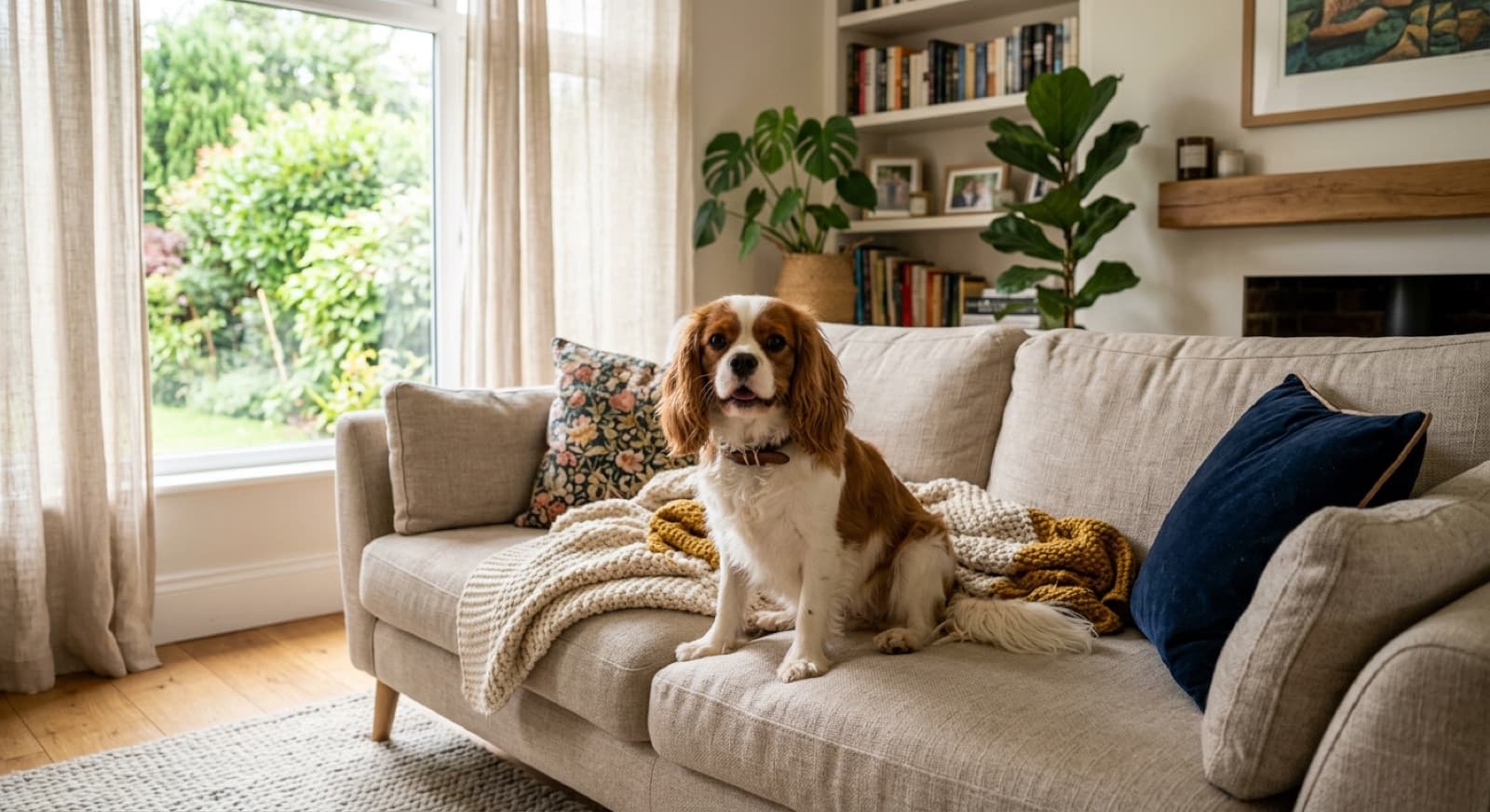
The short answer
A Cavalier is a gentle, affectionate, deeply people-focused companion, excellent with children, other pets and seniors, quiet, adaptable and happy in an apartment. It needs only low-to-moderate exercise (30 to 60 minutes a day plus play) and takes well to reward-based training. Its one real need is company: a Cavalier is a velcro dog prone to separation anxiety, so it suits a home where someone is around a lot, and building calm alone-time gradually is the most valuable thing you can teach it. Grooming is moderate: brush the silky coat a few times a week and keep the long ears clean and dry. In Brisbane, keep exercise to the cool hours and give the fine-coated dog a cool indoor space. This is general information, not veterinary advice.
The gentle, people-focused temperament
Cavaliers were bred for one job, to be a companion, and centuries of that shows in the temperament. This is a soft, affectionate, gentle dog that bonds deeply with its people and wants nothing more than to be near them. They are famously good-natured: patient with children, friendly with strangers, easy with other dogs and cats, and a lovely match for older adopters who want a devoted lap dog. There is very little edge to the breed, which is exactly why it is so widely loved and why it makes such a low-stress first dog for the right home.
That gentleness has a flip side worth understanding. A Cavalier is not a guard dog, not an independent dog, and not a dog that entertains itself. Its whole orientation is toward you. Give it your company and it is one of the most rewarding dogs to live with; leave it alone all day and you have a mismatch that makes the dog unhappy and can drive real problem behaviours.
The velcro dog and separation anxiety
The single most important thing to plan for is the Cavalier's need for company. This is a true velcro dog: it will follow you from room to room, want to be on the couch with you, and be happiest when it is part of whatever you are doing. Left alone for long hours, many Cavaliers become anxious, and separation-related distress is a common reason the breed ends up surrendered.
If your household suits a companion dog, this is a joy rather than a problem, and it is very manageable with a bit of care:
- Build alone-time gradually. With a new rescue dog especially, start with very short absences and extend them slowly, so the dog learns that you always come back and the home is safe when empty.
- Keep comings and goings low-key. Calm, undramatic departures and arrivals teach the dog that being alone is unremarkable.
- Leave an occupation. A food puzzle, a long-lasting chew or a snuffle mat gives the dog something to do in the first, hardest minutes alone.
- Use support if you work away. A dog walker, doggy day care or a family member who is around helps a Cavalier that would otherwise be alone all day.
- Get help early if needed. If a dog shows real distress when alone, a reward-based trainer or your vet can help before it becomes entrenched.
Exercise and training
A Cavalier's exercise needs are modest, which is part of the appeal. Around 30 to 60 minutes a day across a couple of gentle walks, plus some play and plenty of time with you, keeps the breed happy. They love a wander and a sniff more than a hard run, and they are just as content curled up afterwards, which makes them a natural fit for apartments, for less active owners and for seniors. Do not over-exercise a Cavalier in the heat, and be guided by your vet on activity for a dog with any known heart condition.
Training is generally easy. Cavaliers are intelligent, eager to please and highly food-motivated, so they respond well to short, positive, reward-based sessions, and their gentle nature means they never need a heavy hand. They take readily to house training, basic manners and gentle socialisation. The one thing genuinely worth training is independence: because they bond so hard, teaching a Cavalier to cope calmly on its own is more valuable than any trick, and is best built gradually and positively.
Browse Cavaliers available in Brisbane rescue
A rescue Cavalier comes with a foster carer's read on its temperament, how it copes alone, and how it is with children and other pets. Live listings from Queensland shelters and rescues.
See Available Cavaliers →Grooming the silky coat and the ears
The Cavalier's coat is one of its glories and needs regular, moderate care to stay that way. It is a silky, medium-length coat with feathering on the ears, legs, chest, feet and tail, and it sheds, so a robotic-vacuum household this is not. The routine that keeps it right:
- Brush a few times a week. Mats form most readily behind the ears, under the legs and armpits, and on the feathering, so brush those areas thoroughly with a comb and slicker. Regular brushing prevents the mats rather than fighting them later.
- Care for the ears. The long, low, feathered ears trap warmth and moisture and are prone to infection, and the Brisbane humidity makes it worse, so keep them clean and dry, check regularly for odour or redness, and see your vet for any sign of infection.
- Keep the eyes and feet tidy. Trim the hair around the eyes so it does not irritate them, and keep the hair between the paw pads trimmed. Watch for tear staining and see your vet if it is heavy.
- Nails and baths. Trim nails every few weeks, and bath occasionally, drying the coat and especially the ears thoroughly afterwards.
- Consider a shorter trim in summer. Some Brisbane owners keep the feathering trimmed shorter for easier maintenance and a little relief in the heat, which is a reasonable choice for this coat.
Life with children, other pets and the Brisbane heat
Few breeds slot into a family as gently as a Cavalier. They are patient and affectionate with children, and generally excellent with other dogs and cats, so a well-socialised Cavalier is an easy addition to a multi-pet home. As with any dog, teach children to handle a small dog gently and supervise young kids around it, and introduce a new rescue dog to existing pets slowly and calmly. The foster carer's notes on a specific dog will tell you how it does with children and other animals, which is more reliable than the breed average.
The Brisbane climate asks for one adjustment. A Cavalier's fine, silky coat gives little insulation and the muzzle is moderately short, so the breed feels the SEQ summer heat, and a dog that would happily potter all day can overheat if pushed in it. Keep walks and play to the cool of the morning and evening, always have water available, give the dog a cool tiled indoor space (which a lap dog will want to share with you anyway), and never leave a dog in a parked car. On the hottest days, gentle indoor company and play are all a Cavalier really wants. For the full health picture, including the heart condition the breed is known for and the year-round paralysis-tick risk, see the Cavalier health guide for Brisbane. The RSPCA Knowledgebase has good general guidance on keeping a dog cool and comfortable.
Frequently Asked Questions
Are Cavaliers good family dogs?
Yes, Cavaliers are one of the gentlest, most family-friendly companion breeds there is. They are affectionate, patient, people-oriented and generally excellent with children, other dogs, cats and older adopters, which is a big part of why they are so loved. Their small size and soft temperament make them a lower-risk choice around kids than many breeds, though young children should always be taught to handle a small dog gently, and any dog and child interaction should be supervised. The two things to weigh are the health commitment, since heart and other conditions can mean vet bills and hard days down the track, and the need for company. As always, a foster carer's notes on a specific dog with kids predict the fit far better than the breed average, so ask.
Do Cavaliers have separation anxiety?
They are prone to it, because the Cavalier is one of the most people-oriented breeds there is, a true velcro dog that wants to be with its person and struggles when left alone for long hours. That is a wonderful trait if you are home a lot and a real problem if you are out all day, and it is a common reason the breed reaches rescue. If you adopt one, build alone-time gradually from short absences, make departures and arrivals calm and low-key, leave the dog with something to do, and consider whether your routine genuinely suits a companion dog. A dog walker, day care or a home with someone usually around all help. If anxiety is severe, a reward-based trainer or your vet can help.
How much exercise does a Cavalier need?
Not a lot, which is part of the appeal. A Cavalier is happy with low-to-moderate exercise: around 30 to 60 minutes a day across a couple of gentle walks, plus some play and, just as importantly, time with you. They enjoy a wander and a sniff more than a hard run, and they are just as content curled up on the couch afterwards. This makes the breed a good fit for apartments, for less active owners and for seniors. In Brisbane, keep the walks to the cool of the morning and evening, because a fine-coated small dog feels the heat, and lean on gentle indoor play on the hottest days. Do not over-exercise a Cavalier in the heat or a dog with a known heart condition; ask your vet what is appropriate.
How much grooming does a Cavalier need?
A moderate but regular amount. The Cavalier's silky coat with its feathering on the ears, legs, chest and tail needs brushing a few times a week to prevent mats, which form most readily behind the ears, under the legs and on the feathering. Beyond brushing, keep the long ears clean and dry (they trap moisture and are prone to infection, especially in the Brisbane humidity), trim the hair around the eyes and under the paws, keep the nails trimmed, and bath occasionally. Some owners keep the feathering trimmed shorter for easier maintenance and to help in the heat. It is far less work than a Poodle-coated breed, but it is not a wash-and-go dog.
Are Cavaliers easy to train?
Generally yes. Cavaliers are intelligent, eager to please and highly food-motivated, which makes them responsive to reward-based training, and their gentle nature means they do not need a heavy hand, only patience and consistency. They take well to house training, basic manners and gentle socialisation. The main training challenge is not obedience but independence: because they bond so hard, teaching a Cavalier to cope calmly with being alone is the most valuable thing you can work on, and it is best built gradually and positively. Keep sessions short and rewarding, and a Cavalier will happily learn.
Keep reading
Cavalier Adoption in Brisbane
Where to find a rescue Cavalier, real costs vs a breeder, and why they reach rescue.
Cavalier Health Issues
Mitral valve disease, syringomyelia, the warning signs, and how to plan and budget for them.
Adoptable Cavaliers in Brisbane
Live listings with foster carer notes on temperament and household fit.
Brisbane Adoption Resources
Guides on adopting, costs, council rules and settling a rescue dog in Brisbane.