The short answer
Adopting a Beagle in Brisbane is straightforward and inexpensive. Fees run $300 to $600 for an adult through RSPCA Queensland, AWLQ, the foster-based rescues and PetRescue, and that already covers desexing, vaccination, microchipping and a vet check. The catch is not the dog, it is the breed reality. A Beagle is a nose on legs: it bays, it follows a scent until the scent runs out, and it eats anything within reach. Off-leash in an unfenced space is not safe for most Beagles, so a fenced yard plus a lead everywhere else is the Brisbane answer. Year-round paralysis-tick prevention is essential across South East Queensland, and Beagles feel the heat. Get the exercise, the fencing and the noise honestly sorted before you apply and you will have one of the friendliest family dogs going.
Why Beagles end up in Brisbane rescue
Beagle surrenders in Brisbane follow a pattern, and it is worth understanding before you adopt because it tells you exactly what to plan for. Very little of it is about a difficult dog.
Baying and noise complaints. This is the most common Brisbane Beagle surrender story, especially from apartments and unit complexes with shared walls. The Beagle bay is a long, carrying howl bred to signal a hunter over distance, and it is not something you train away. A bored or lonely Beagle in tight housing generates neighbour complaints, then a body corporate notice, then a surrender.
Escape and recall failure. A Beagle follows its nose, full stop. When a strong scent takes over, the dog stops hearing you and simply leaves, sometimes travelling kilometres. Owners who let a Beagle off-lead in an unfenced reserve, or who had a fence with a gap under it, lose the dog and often surrender in frustration after the second or third escape. This is hardwired, not naughtiness.
Food obsession and weight gain. Beagles are ruled by their stomachs. Bin-raiding, counter-surfing, stealing food off the table and relentless begging are all standard, and an owner who free-feeds or over-treats ends up with an overweight dog. Obesity then worsens the breed's back and joint problems, the vet bills climb, and some households give up.
Adolescent stubbornness. Beagle adolescence, roughly six to eighteen months, is where the charming puppy becomes a determined teenager with selective hearing. House-training slips, chewing ramps up, and the dog seems to forget everything it learned. Families who expected an easy small dog get overwhelmed and surrender. It is normal, and it passes with consistency, but it catches unprepared owners off guard.
Life changes. Moves into rentals that will not take a dog, new babies, relationship breakdowns. Beagles bond hard, and when the home changes the dog is often the casualty. Many of the best rescue Beagles come from exactly these situations and arrive already house-trained and socialised.
Read a Beagle surrender note carefully and ask the rescue directly: how vocal is this dog, what is its recall like, what is its body condition, and is there any history of escaping. A rescue that has fostered the dog will give you honest answers.
Where to actually look in Brisbane
A handful of sources account for most of the Beagles in the Brisbane pipeline, alongside council pounds and breed-focused foster networks. Because Beagle intake is steady rather than constant, a wide alert net across all of them catches the right dog soonest.
- RSPCA Queensland. The state body runs its main Animal Care Campus at Wacol plus other centres across South East Queensland, and takes in Beagles and Beagle crosses through the year via owner surrender and stray intake. Every adoption covers desexing, vaccination, microchipping and a vet check. Browse at rspcaqld.org.au.
- Animal Welfare League Queensland (AWLQ). A long-running South East Queensland no-kill charity with re-homing centres at Willawong (South Brisbane), Warra (North Brisbane), Beenleigh and Coombabah on the Gold Coast. Beagles and Beagle crosses pass through regularly. Listings at awlq.org.au.
- Foster-based rescues. Brisbane volunteer and foster-network rescues see Beagles often. A foster home means the carer can tell you exactly how the individual dog is with children, other pets, noise and being left alone, which matters a great deal for this breed.
- A breed-specific Beagle rescue. Dedicated Beagle rescues operate in Australia and place dogs through foster homes, and they know the breed inside out. Contact one directly and be ready to wait for the right match.
- PetRescue. A national aggregator that lists Beagles and Beagle crosses from many smaller Queensland rescues in one searchable place, at petrescue.com.au.
Beyond these, Beagles turn up as strays in council pounds fairly often, precisely because the breed is so prone to wandering off on a scent. Whichever source you use, verify any rescue through a real address, a current adoptable-dog list and charitable status before sending money, and treat free-purebred-Beagle offers online with suspicion. Browse the current Beagles and Beagle crosses on the Brisbane Beagle listings, and read our general Brisbane adoption guide for the full application process.
How much does Beagle adoption cost in Brisbane?
Adoption fees run about $300 to $600 for an adult Beagle and $400 to $800 for a puppy, depending on the rescue and the individual dog. Some shelter promotions drop adult fees lower; foster-based rescues sit at the higher end because their dogs come with more vet history and a longer assessment.
Every Brisbane rescue adoption fee already includes:
- Desexing
- Vaccination
- Microchipping
- Worm and flea treatment
- A vet check, plus a behavioural assessment at shelter-based rescues
Paying for those things yourself after a private purchase runs well into four figures at 2026 Queensland vet pricing, so the fee is not a price tag on the dog. It is a partial contribution to the cost of getting the dog ready for a home. A Beagle puppy from a breeder, by contrast, typically runs into the thousands with none of that work done yet, which is a big part of why the rescue path is both cheaper and safer.
Council registration is a separate legal step from the adoption. Under the Animal Management (Cats and Dogs) Act 2008, a dog must be microchipped before 12 weeks of age or before it changes hands, and registered with your local council from 12 weeks, with a substantially reduced rate for a desexed and microchipped dog. Check the current fee on your council's page, for example Brisbane City Council.
Setup costs in the first month:
- Council registration: reduced fee for a desexed and microchipped dog, set by your council
- Bed, bowls, lead and a secure harness or martingale: around $200
- First month of food and treats: around $50
- An optional own-vet introductory check: around $80
Budget roughly $700 to $1,000 for the first month all-in, including the adoption fee. Ongoing yearly costs for a healthy adult Beagle in Brisbane sit around $1,500 to $2,500, covering food, routine vet care, year-round parasite and tick prevention, registration and pet insurance. Insurance is genuinely worth it for a breed with documented ear, back and eye risks.
Browse adoptable Beagles in Brisbane
Live listings of Beagles and Beagle crosses from rescues across Brisbane and Queensland. Filter by age, size and household compatibility before you apply.
See Available Beagles →The scent-hound reality: recall, fences and Queensland bushland
Everything about living with a Beagle comes back to one fact: this is a nose on legs. The breed was developed to trail hares for hours, head down, following scent independently of the handler. That heritage makes a wonderful, driven, endearing dog, and it produces the two behaviours that surprise unprepared owners most.
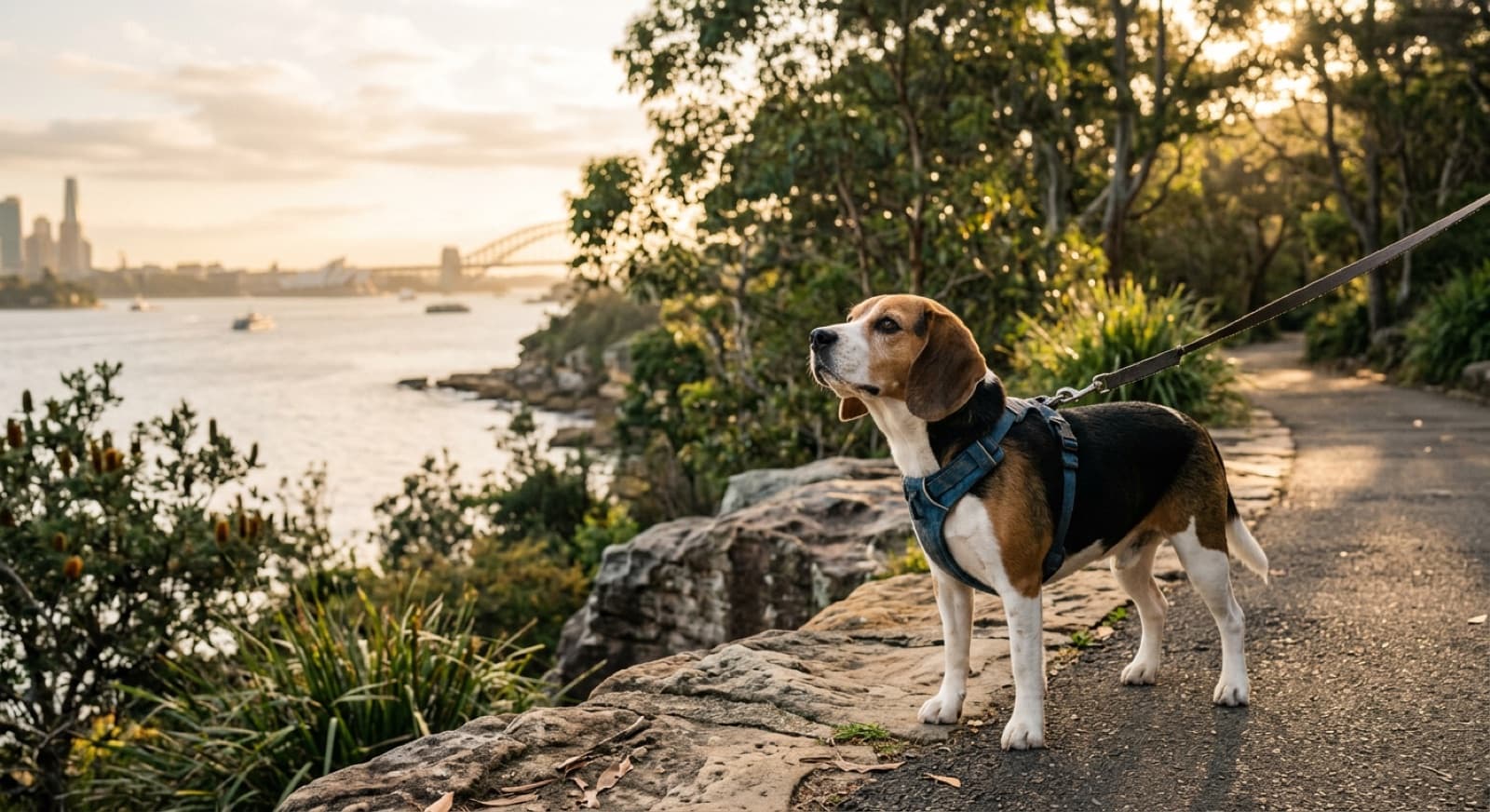
The first is recall failure. When a Beagle locks onto a scent, the rest of the world switches off. This is not stubbornness you can correct with enough training; it is what the dog was built to do. The practical consequence in Brisbane is firm: most Beagles should never be off-lead in an unfenced space. A securely fenced yard gives the dog freedom to run and sniff safely. Everywhere else, including the bushland reserves and creek tracks where the ground is layered with possum, bandicoot and lizard scent, the Beagle stays on a lead or a long-line. A fully fenced off-leash dog park is the safe place to let one run loose. Check any home fence for gaps at the bottom, because Beagles dig and squeeze, and confirm every gate latches.
Brisbane bushwalks add a second consideration: the paralysis tick. The paralysis tick is native to the Queensland coast and its bushland fringes, and it can be fatal without veterinary treatment. Every South East Queensland dog needs year-round tick prevention (your vet will recommend a suitable monthly product), and a nose-to-tail physical tick check is smart after any walk through long grass or bush. A Beagle with its head buried in the undergrowth for an hour is exactly the dog that picks one up.
The good news is that the same nose that causes the trouble is also the solution. Scent work satisfies a Beagle more deeply than distance. A slow, sniff-heavy walk where the dog reads every smell, scatter-feeding meals across the yard, puzzle feeders and hide-and-seek games all drain the mental energy that otherwise turns into baying and escape attempts. Aim for at least an hour of activity a day, weighted toward sniffing rather than forced marching. A tired Beagle with a full nose is a quiet, content Beagle.
Are Beagles loud? Baying, body corporate and neighbours
Beagles bay, bark and howl, and they are genuinely loud for their size. In a detached house with a yard this is background noise. In an apartment, a townhouse or a unit complex with shared walls it is the number-one route to a neighbour complaint and, too often, a surrender.
If you live under a body corporate or you rent, sort the noise question honestly before you apply. Check your body corporate by-laws and your lease, and think about how long the dog will be left alone on a workday. You cannot train a Beagle silent, but you can lower the volume by meeting its exercise and enrichment needs and by not leaving it alone for long stretches. A friendly heads-up to close neighbours in the settling weeks goes a long way too. Most Brisbane rescues will ask about your housing and hours precisely because they have seen how often the noise mismatch ends in a returned dog.
Are Beagles good with kids and other pets?
Generally yes on both counts, which is a big part of why the breed is so popular with families. Beagles were bred to hunt in packs, so most are sociable with other dogs and tolerant, affectionate company for children. Their steady, playful nature makes them one of the better family hounds.
The main caution around kids is the food drive. A Beagle will hoover up dropped snacks and may guard a high-value chew or a full bowl, so supervise meals and teach children not to bother the dog while it eats. With cats and small animals the answer is individual: a Beagle raised alongside a cat is often fine, while one with a strong prey drive is not. Brisbane rescues assess this in foster or shelter care and note it in the profile. If a listing says a dog has not been tested with cats or young children, ask the rescue for their read before you commit.
Should I adopt a Beagle puppy or an adult?
For most Brisbane households, an adult Beagle is dramatically easier than a puppy. Beagle adolescence runs roughly six to eighteen months and stacks selective deafness on a scent, bin-raiding, baying and a stubborn streak all at once. It is exactly the stage at which so many Beagles get surrendered.
An adult Beagle has a settled temperament a foster carer can describe accurately, established house manners, a documented medical history and a lower adoption fee. You get to see the real dog rather than gamble on how a puppy will turn out. Senior Beagles, eight years and up, are frequently the calmest and most rewarding companions in any shelter and settle beautifully into quieter homes. If you specifically want a puppy and have the time and patience for the early training and socialisation, a rescue Beagle puppy is still cheaper and safer than an unverified online seller, where the surrender-and-scam pipeline tends to start.
The first month home is a decompression period whatever the age. The 3-3-3 rule is a useful guide: three days to decompress, three weeks to start showing personality, three months to fully settle.
Beagle health, in brief
Beagles are a hardy, long-lived breed (12 to 15 years is typical), but a few conditions are worth planning around so you adopt with realistic expectations. None of this should put you off the breed, and it is covered in full in the Beagle health guide for Brisbane.
- Chronic ear infections. The long drop ears trap moisture and limit airflow, so weekly ear checks and cleaning are part of Beagle ownership. Neglected ears lead to recurring, painful infections, and the humid Brisbane climate makes them more likely.
- Obesity. The single biggest day-to-day risk. A food-obsessed Beagle overeats given any chance, and extra weight worsens the back and joints. Measured meals, counted treats and a firm no-scraps rule are essential.
- Back problems (IVDD). The long-backed build makes intervertebral disc disease and back strain a risk, made worse by obesity and by jumping off furniture.
- Epilepsy. Over-represented in the breed and usually manageable with veterinary treatment when it appears, typically in young to middle-aged dogs.
- Cherry eye and hypothyroidism. Cherry eye (a prolapsed third-eyelid gland) is common and usually corrected with minor surgery; hypothyroidism shows up in middle age and is managed with a daily tablet.
- Paralysis tick and heat. Not breed-specific, but non-negotiable in Queensland: year-round tick prevention, and summer exercise in the cool of the morning or evening rather than the heat of the day.
A rescue Beagle arrives already desexed, vaccinated, microchipped and vet-checked, but a baseline visit to your own vet in the first month is still worth it to establish records, check the ears, confirm the microchip is registered to you and set up tick prevention. For general welfare and health guidance, the Australian Veterinary Association and the RSPCA Knowledgebase are reliable, non-commercial starting points.
Frequently Asked Questions
Where can I adopt a Beagle near me in Brisbane?
Start with RSPCA Queensland, which runs its main Animal Care Campus at Wacol plus other South East Queensland centres, and Animal Welfare League Queensland (AWLQ), with re-homing centres at Willawong, Warra, Beenleigh and Coombabah. Beagles and Beagle crosses come through both, and also as strays in council pounds because the breed is famous for wandering off on a scent. Foster-based rescues place Beagles too, and their carer notes on recall, noise and being left alone are especially useful for this breed. There are breed-focused Beagle rescues that operate through foster homes, and PetRescue lists dogs from many smaller Queensland rescues in one place. Because Brisbane Beagle intake is steady but not huge, set listing alerts everywhere you would consider and apply the same day a suitable Beagle appears.
How much does it cost to adopt a Beagle in Brisbane?
Adoption fees run about $300 to $600 for an adult Beagle and $400 to $800 for a puppy, depending on the rescue and the dog. That fee already covers desexing, vaccination, microchipping, worm and flea treatment and a vet check, which would cost far more if you paid for them separately after a private purchase. On top of the fee, budget for council registration (a desexed and microchipped dog pays a substantially reduced rate, set by your council), basic setup like a bed, bowls, lead and a secure harness (around $200), and the first month of food. All up, plan roughly $700 to $1,000 for the first month including the adoption fee.
Can a Beagle ever be trusted off-leash in Brisbane?
For most Beagles, not in an unfenced space. The breed was built to follow a scent for hours with its nose down and its ears switched off, so when a strong smell takes over, recall collapses and the dog keeps going. This is instinct, not disobedience. The practical answer in Brisbane is a securely fenced yard for off-lead freedom and a lead everywhere else, including the bushland reserves and creek tracks where wildlife scent is layered everywhere. A fully fenced off-leash dog park is the safe place to let a Beagle run loose.
Are Beagles loud, and will that be a problem in a Brisbane apartment or unit?
Beagles are one of the most vocal breeds. They bay, which is a long carrying howl bred to signal a hunter over distance, and they bark at boredom, movement and being left alone. In a house with a yard this is manageable. In an apartment, a townhouse or a unit complex with shared walls, baying is a common route to a neighbour complaint and, sometimes, a surrender. If you live under a body corporate or you rent, be honest with yourself about the noise before you adopt, and check your by-laws and lease. Exercise, enrichment and not leaving the dog alone for long stretches lower the volume, but you cannot train a Beagle silent.
Why do so many Beagles end up in Queensland rescue?
A handful of patterns repeat, and few are about a bad dog. Baying that triggers noise complaints in apartments and unit complexes is the most common. Escape and recall failure when a Beagle catches a scent and simply leaves. Food obsession that leads to bin-raiding, counter-surfing and weight gain. Adolescent stubbornness between about six and eighteen months, when the sweet puppy becomes a determined teenager. And ordinary life changes: moves, new babies, relationship breakdowns. The dogs themselves are almost always friendly, sociable and good with families once the household matches the breed.
Are Beagles good with kids and other dogs?
Generally yes on both counts, which is a big part of the breed's appeal. Beagles were bred to hunt in packs, so most are sociable with other dogs and patient, affectionate companions for children. The main caution around kids is the food drive: a Beagle will hoover up anything dropped and may guard a high-value chew, so supervise meals and teach children not to disturb the dog while it eats. Brisbane rescues assess each dog in foster or shelter care and flag any resource-guarding or tolerance concerns in the profile, so read the write-up and ask directly if you have young children.
What health problems do Beagles have?
Beagles are a hardy, long-lived breed (often 12 to 15 years) but a few issues are worth planning around. Chronic ear infections are common because the long drop ears trap moisture, so weekly ear checks are part of Beagle ownership. Obesity is the single biggest day-to-day risk, driven by that famous appetite, and extra weight worsens the breed's long-backed spine (intervertebral disc disease). Epilepsy, cherry eye and hypothyroidism also appear. On top of the breed list, every Queensland dog needs year-round paralysis tick prevention, and Beagles feel the heat, so summer walks belong in the cool of the morning or evening.
Do Beagles need a lot of exercise?
Yes. A Beagle is a working scent hound with real stamina, and an under-exercised Beagle is a bored, vocal, destructive one. Plan at least an hour a day for an adult, split between a lead walk and sniff-focused activity. The good news is that scent work satisfies a Beagle more than distance alone, so a slow sniff-heavy walk where the dog reads every smell is worth more than a brisk march. Scatter-feeding, puzzle feeders and hide-and-seek games at home drain the mental energy that otherwise turns into baying and escape attempts.
Should I adopt a Beagle puppy or an adult?
For most Brisbane households, an adult Beagle is far easier. Beagle adolescence runs roughly six to eighteen months and stacks selective deafness on a scent, bin-raiding, baying and a stubborn streak all at once. An adult Beagle has a settled temperament you can actually assess, established house manners, a known medical history and a lower adoption fee. Senior Beagles are often the calmest, most rewarding dogs in any shelter. If you specifically want a puppy and have time for the early training and socialisation, a rescue Beagle puppy is still cheaper and safer than an unverified online seller.
Is it safe to buy a cheap or free Beagle online instead?
Be very careful. In Queensland, any dog born on or after 26 May 2017 that is sold, given away or advertised must display a breeder supply number from the Queensland Dog Breeder Register, and every dog must be microchipped before it changes hands, so a listing with no supply number and no microchip number is a red flag. Free-to-good-home and suspiciously cheap Beagle listings are where a lot of the surrender and scam pipeline starts, and Scamwatch has documented pet-sale scams that take a deposit or a transport fee for a dog that does not exist. A legitimate rescue always wants an application and a conversation before any dog changes hands, and every dog is already desexed, vaccinated and microchipped, so the rescue path is the cheaper and safer one.
Keep reading
Adoptable Beagles in Brisbane
Live listings of Beagles and Beagle crosses, with filters for age, size and household compatibility.
Beagle Recall and Escape in Brisbane
Why the nose beats the recall, how to secure a Brisbane yard, and what to do if a Beagle bolts.
Beagle Health Issues in Brisbane
Obesity, ears, backs, eyes and epilepsy, plus paralysis tick and summer heat in QLD.
Brisbane Adoption Resources
Guides on adopting, costs, council rules and settling a rescue dog in Brisbane.