The short answer
You can adopt a Norwegian Forest Cat on the Gold Coast, but be patient: the breed is uncommon in Australia and rare in rescue because nearly all are bought from breeders, and long-haired crosses come up more often. Watch Animal Welfare League Queensland at Coombabah, RSPCA Queensland, Best Friends Felines and PetRescue, and set alerts. When one appears, adoption runs about $150 to $180 for an adult, all inclusive of desexing, vaccination, microchipping and a FIV check, a fraction of the breeder price. The thick double coat needs regular brushing and must never be shaved; keep the cat cool and indoors in subtropical Queensland.
What a Norwegian Forest Cat actually is
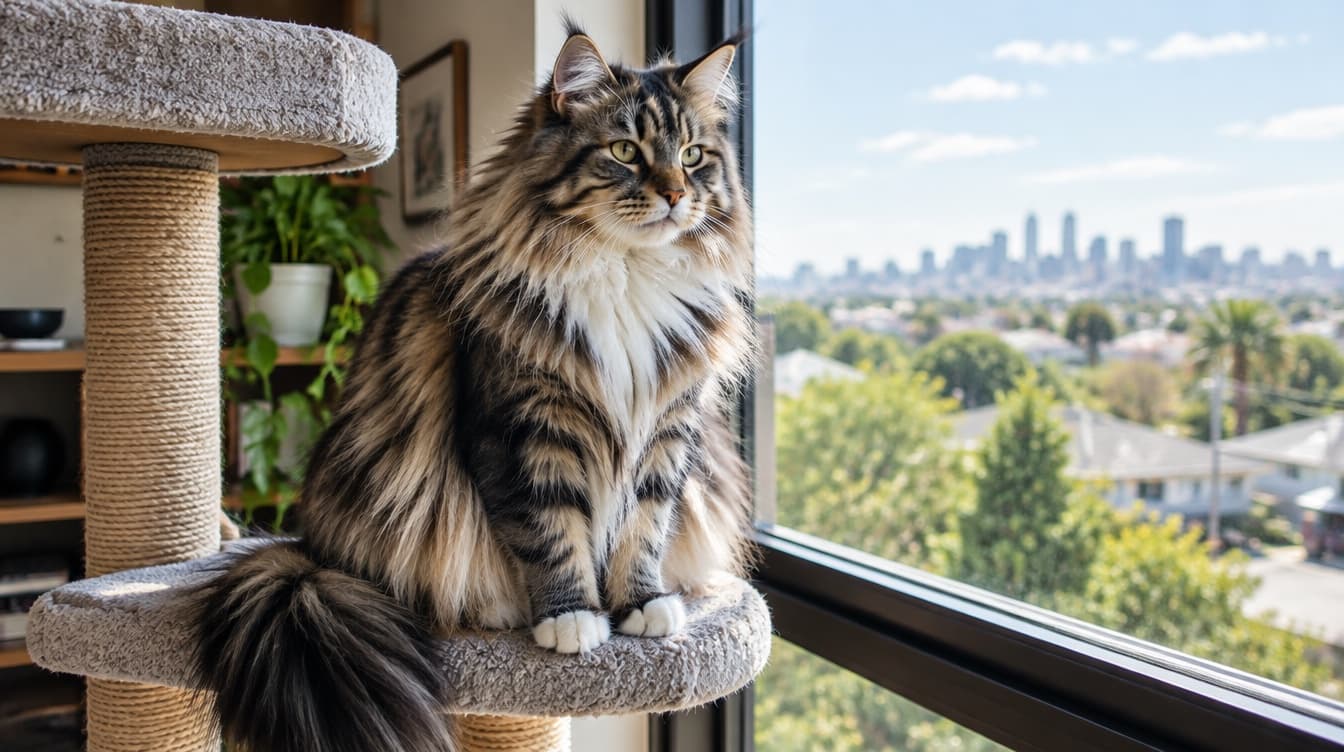
The Norwegian Forest Cat, affectionately a Wegie, is a large, sturdy, semi-long-haired cat from Scandinavia, built for cold with a thick, water-resistant double coat, a full ruff and a bushy tail. Like the Maine Coon it is slow to mature, reaching full size over several years. Despite the imposing looks it is a gentle, friendly, easygoing cat, affectionate with its people, tolerant of children and other pets, and playful without being demanding.
That calm, sociable nature is the appeal, and it is also what makes a Wegie or a long-haired cross a lovely indoor companion. For the profile and any large long-haired cats listed right now, see the Norwegian Forest Cat listings.
Why they are rare in rescue, and why they do turn up
Purebred Norwegian Forest Cats are scarce in Gold Coast rescue for two reasons: the breed is uncommon in Australia in the first place, and almost everyone who owns one bought it from a breeder, so very few enter the rescue system. A cat that cost well over a thousand dollars is one an owner tends to hold on to.
They do end up in rescue occasionally, and rarely because anything is wrong with the cat. The common thread is a life change: a move, a new baby, illness, or the grooming proving more than someone expected. Far more common than a purebred is a long-haired domestic cat or a Wegie cross carrying much of the same large, gentle, plush-coated character without the paperwork, and these make wonderful pets.
Where to adopt on the Gold Coast
Because they are scarce, watch several established South East Queensland rescues at once, set alerts, and be ready to apply when a large long-haired cat appears:
Animal Welfare League Queensland (AWLQ)
A long-running no-kill charity whose flagship Gold Coast Rehoming and Education Centre at Coombabah is the main shelter on the Gold Coast, with a foster network that means honest temperament notes. Adoption includes desexing, vaccination, microchipping and a vet check. Listings at awlq.org.au.
RSPCA Queensland
The state body rehomes cats across Queensland through its statewide network, with its main Animal Care Campus at Wacol in Brisbane. Gold Coast adoptions are handled through that network, with desexing, vaccination, microchipping and a vet check included. Listings at rspcaqld.org.au.
Best Friends Felines
A foster-based South East Queensland cat rescue that raises its cats in real homes before rehoming, so you get detailed notes on how a cat is with children, other pets and handling, which matters for a large indoor companion. More at bestfriendsfelines.com.
PetRescue
A national aggregator that lists cats from many smaller Queensland rescues in one searchable place, the easiest way to cast a wide net for a rare breed. Browse at petrescue.com.au.
For the full set of cat adoption guides, browse all our Gold Coast cat adoption resources.
What it costs: adopt versus buy
- Adult cat: about $150 to $180, all inclusive of desexing, vaccination, microchipping and a FIV check.
- Kitten: usually more than an adult, covering the same vet work plus the early vaccination course.
A purebred from a breeder is a different order of cost, commonly well over a thousand dollars, and that price buys a cat with none of the vet work done. Adoption is cheaper on the sticker price and saves you hundreds more in vet bills a rescue has already covered. Plan for the ongoing costs too: a double coat that needs regular brushing, quality food, litter, annual vet checks, and a vet-recommended cat-safe parasite product, which matters on the Gold Coast because the paralysis tick is present year-round. Pet insurance is cheapest to start while the cat is young. Like other pedigree lines the breed carries a few inherited conditions, including some heart, kidney and metabolic ones, so ask the rescue what the in-care vet check found and keep up annual checks.
If you have been searching “Norwegian Forest Cat for sale Gold Coast”
Plenty of people land here after searching for one to buy, and it is worth pausing. Purebred kittens are a scam-prone corner of the online pet market, because buyers will pay well over a thousand dollars sight unseen. The ACCC Scamwatch records pet scams where a seller takes a deposit for a kitten that does not exist, then vanishes. Adoption removes the risk: you deal with an established rescue, meet the cat, and pay a modest fee for an animal already desexed, vaccinated, microchipped and FIV tested. When a long-haired cross with the same gentle temperament may be waiting in a Gold Coast rescue for a fraction of the price, the safer and cheaper choice is usually clear.
Coat care and keeping cool in subtropical Queensland
The thick double coat is the one real commitment with this breed. Brush several times a week, and more during a seasonal moult, to prevent mats, and never shave it: the coat guards against sunburn, helps regulate temperature and can grow back poorly. Keep the cat cool the sensible ways on a Gold Coast summer day, with air flow or air conditioning, shade, fresh water, and play timed to the cooler hours.
A Wegie is a happy indoor cat, which also keeps the coat clean and mat-free and keeps the cat safe from the year-round paralysis ticks, cane toads, snakes and traffic that make free-roaming dangerous on the Gold Coast, as well as protecting native wildlife. Provide climbing towers, scratching posts, daily play and a shaded window perch, and a catio or secure yard for safe outdoor time. To focus on cats suited to indoor life, browse the indoor-appropriate cats available across Gold Coast rescues.
The Queensland basics before you bring one home
Queensland sets cat ownership rules under the Animal Management (Cats and Dogs) Act 2008, and a rescue handles most of them for you. Every cat must be microchipped by 12 weeks of age or before it is sold or given away, whichever comes first. Unlike New South Wales, the City of Gold Coast does not require cats to be registered under its Local Law No. 12 (Animal Management) 2013, so there is no annual cat registration here, though confirm the current rules with your own council. A rescue cat is already desexed and microchipped, so your job is mainly to update the microchip ownership details to you. For general veterinary guidance the RSPCA Australia Knowledgebase is reliable, and always speak to your own vet about an individual cat.
Browse adoptable Norwegian Forest Cats
Purebreds are rare, so the best move is to check the live listings and set an alert. See the Norwegian Forest Cats and long-haired cats available right now across Gold Coast and Queensland rescues.
See Available Cats →Choosing your cat
When a Norwegian Forest Cat or long-haired cross comes up, an adult with a known temperament is usually the safer bet, because the rescue or foster carer can tell you exactly what the cat is like and how it copes with grooming and handling. Read the foster notes over the photo, and stay open to a cross: if your priority is a large, gentle, plush-coated companion, a long-haired moggy gives you the character that matters and is what you are most likely to find in Gold Coast rescue.
Frequently Asked Questions
Where can I adopt a Norwegian Forest Cat near me on the Gold Coast?
Start with the main South East Queensland cat rescues and set alerts, because purebred Norwegian Forest Cats appear rarely. Animal Welfare League Queensland runs its flagship Gold Coast Rehoming and Education Centre at Coombabah, the main shelter on the Gold Coast, and RSPCA Queensland rehomes cats across the state. Best Friends Felines, a foster-based South East Queensland cat rescue, is worth watching too. You are far more likely to find a long-haired domestic cat or a Wegie cross than a purebred, so ask each rescue to flag you if a large long-haired cat comes in, and watch PetRescue, which aggregates listings from many smaller Queensland rescues.
Are Norwegian Forest Cats rare in Australian rescue?
Yes. The Norwegian Forest Cat is uncommon in Australia to begin with, and the few that are here are almost all bought from breeders, so very few enter the rescue system. A cat that cost well over a thousand dollars is one owners tend to keep, and the ones surrendered usually come in on a life change rather than a behaviour problem. What you will see far more often is a long-haired domestic cat or a Wegie cross with much of the same large, gentle, plush-coated character. If you love the look and nature rather than the pedigree, a long-haired moggy is well worth considering and much easier to find.
How much does it cost to adopt versus buy a Norwegian Forest Cat?
Adopting a Norwegian Forest Cat or long-haired cross through a Gold Coast rescue costs about $150 to $180 for an adult and usually more for a kitten, and that fee already covers desexing, vaccination, microchipping, a FIV check, worming and flea treatment and a vet check. A purebred from a breeder costs far more, commonly well over a thousand dollars, with none of that vet work done, so you pay those bills on top. Adoption is a fraction of the breeder price and the cat arrives already vetted.
How do I care for the coat in the Queensland heat?
The Norwegian Forest Cat has a thick, water-resistant double coat built for a Scandinavian winter, which needs regular brushing, several times a week and more during a seasonal moult, to prevent mats. Never shave the coat: it protects against sunburn and actually helps regulate temperature, and it can grow back poorly. Instead, keep the cat cool the sensible ways in a Gold Coast summer, with air flow or air conditioning on hot days, shade, fresh water, and activity timed to the cooler parts of the day. Keeping the cat indoors also keeps the coat clean and mat-free.
Do I need to microchip and register a Norwegian Forest Cat on the Gold Coast?
Under the Queensland Animal Management (Cats and Dogs) Act 2008, a cat must be microchipped by 12 weeks of age or before it is sold or given away, whichever comes first. Unlike New South Wales, the City of Gold Coast does not require cats to be registered under its Local Law No. 12 (Animal Management) 2013, so there is no annual cat registration on the Gold Coast, though you should confirm the current rules with your own council. A rescue cat is already desexed and microchipped when you adopt, so your main job is to update the microchip ownership details to you.
Keep reading
Adoptable Norwegian Forest Cats
The breed profile and any Wegies or long-haired crosses currently listed across Gold Coast and Queensland rescues.
Indoor-Appropriate Cats
Cats suited to safe indoor or contained living in subtropical Queensland.
All Cat Adoption Resources
Guides on adopting, kitten care, indoor living and costs for cats on the Gold Coast.
Cat Adoption Gold Coast
Every adoptable cat and all the local rescues in one place.