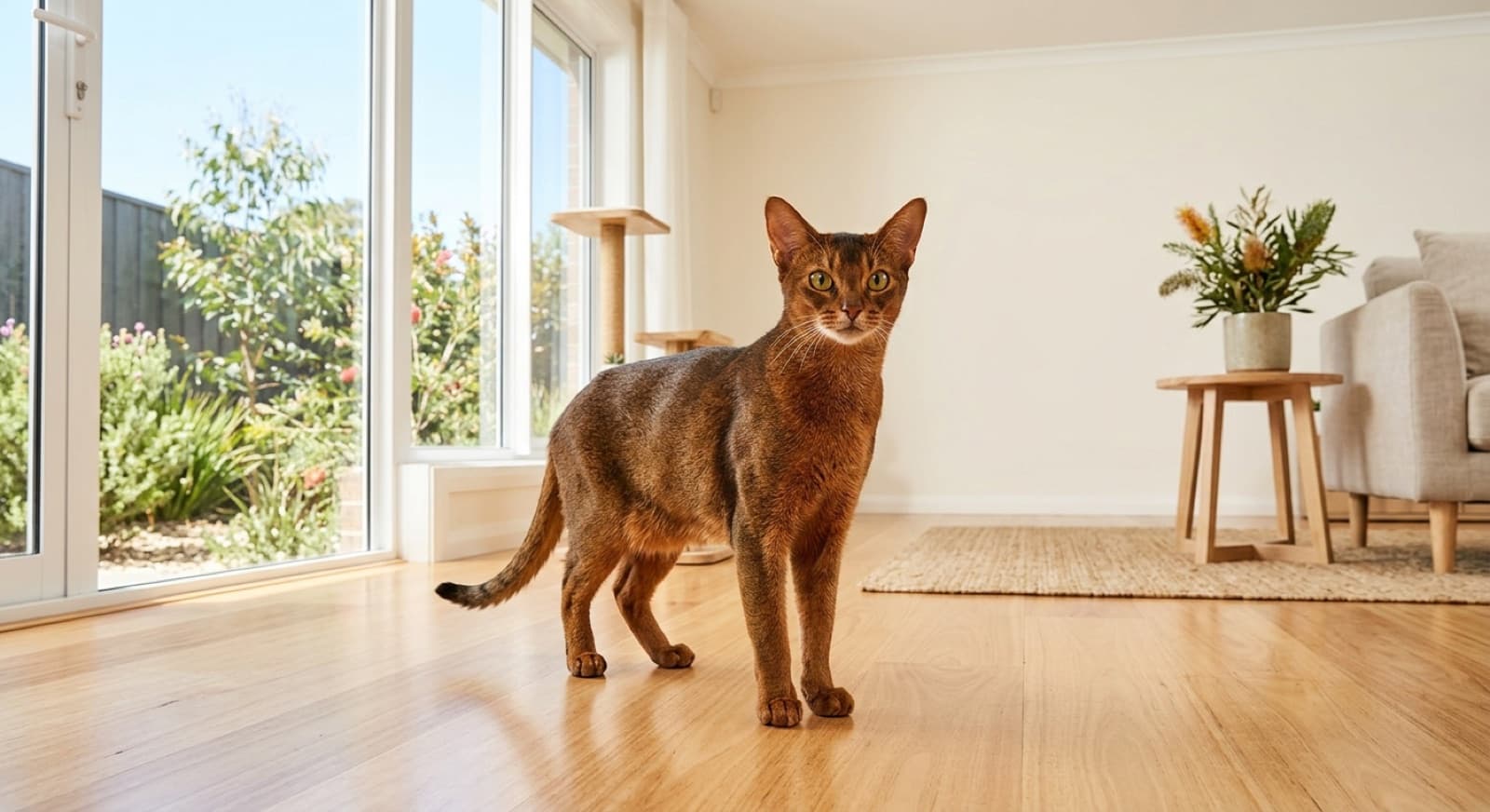
The short answer
The Abyssinian is an active, generally hardy cat, but the breed is associated with a few conditions: progressive retinal atrophy (PRA, an inherited eye disease that leads to blindness, with a DNA test), pyruvate kinase deficiency (an inherited cause of anaemia, also with a DNA test), renal amyloidosis (a serious kidney condition the breed is particularly prone to), patellar luxation (slipping kneecaps) and dental disease. DNA tests exist for the inherited eye and blood conditions, and responsible breeders screen for them. Adopting an adult rescue cat with a vet history lets you see its real health. Keep up regular vet and dental checks, including senior kidney screening, insure early, and see a vet for eye changes, the signs of anaemia, or the signs of kidney trouble. This is general information, not veterinary advice.
PRA and pyruvate kinase deficiency: the tested conditions
Two inherited conditions in the breed have DNA tests, which is genuinely good news. Progressive retinal atrophy (PRA) is an inherited degeneration of the retina that gradually leads to blindness and cannot be treated; the Abyssinian has a specific, well-characterised form, and a DNA test lets breeders avoid producing affected kittens. Cats cope with slow sight loss far better than people expect, especially indoor cats in a stable home, so a vision-impaired Abyssinian can still live a full life; watch for bumping into moved furniture, hesitance in dim light or dilated pupils, and have concerns checked by a vet.
Pyruvate kinase deficiency is an inherited shortage of an enzyme that red blood cells need, seen in Abyssinians and the related Somali, which causes the cells to break down and can lead to anaemia. The anaemia can be intermittent, so signs like lethargy, weakness, pale gums and poor appetite may come and go. A DNA test is available, and a vet can diagnose and manage the condition; for a rescue cat of unknown status, see a vet if you notice the signs of anaemia. Inherited-disease tests are catalogued by screening bodies such as the Orthopedic Foundation for Animals.
Renal amyloidosis: the kidney concern to monitor
This is the condition to take most seriously in the breed. Renal amyloidosis is a disorder the Abyssinian is particularly prone to, in which an abnormal protein called amyloid is deposited in the kidneys and gradually impairs how they work, potentially leading to kidney failure. It is not preventable, and the signs are those of kidney disease in general, increased thirst and urination, weight loss, poor appetite and lethargy, which are non-specific and shared with many other conditions.
Because it is a significant breed concern, regular veterinary monitoring is the practical safeguard, including blood and urine tests as the cat ages, so that any decline in kidney function is picked up early, when a vet can do the most to manage it and support the cat. Treat any persistent change, especially increased drinking or weight loss, as a reason to see the vet rather than wait. The RSPCA Knowledgebase and your vet are good references on kidney health.
Patellar luxation, dental care, and monitoring
- Patellar luxation. Slipping kneecaps are seen in the breed, showing as a skipping gait or lameness. Mild cases are managed conservatively and more severe ones may need surgery, and keeping the cat lean takes load off the joints.
- Dental disease. Gingivitis and periodontal disease are common in the breed, so brush the teeth with cat-specific toothpaste where tolerated and keep up regular vet dental checks; watch for bad breath, drooling or difficulty eating.
Adopting an adult, and insuring early
With a breed carrying a few known conditions, the transparency of a rescue adult is valuable: the cat has been vet-checked, obvious issues are known, and you can see its real health rather than gamble on how a kitten will develop. Most Abyssinians are active, healthy cats, so this is about going in informed and monitoring sensibly. Because the bigger costs are unpredictable, and the kidney concern in particular can become expensive, pet insurance taken out while the cat is young is the most valuable safeguard, since insurers exclude pre-existing conditions. Pair it with the preventive basics: a good diet, dental care, regular vet checks with senior blood and urine screening, and year-round cat-safe parasite prevention. For general veterinary guidance the Australian Veterinary Association is a reliable starting point, and your own vet is the right guide for an individual cat. Gold Coast after-hours and weekend emergencies are handled by hospitals such as the Animal Emergency Service at Carrara (104 Eastlake St, Carrara).
Thinking about an Abyssinian on the Gold Coast?
A rescue Abyssinian comes with a vet check and honest notes, so you adopt knowing the cat. Browse Abyssinians and active ticked-coat crosses available across Gold Coast and Queensland rescues.
See Available Abyssinians →Frequently Asked Questions
What health problems are Abyssinians prone to?
The main ones to know are progressive retinal atrophy (PRA), an inherited eye disease that leads to blindness and has a DNA test; pyruvate kinase deficiency, an inherited enzyme deficiency that can cause anaemia, also with a DNA test; renal amyloidosis, a serious condition the breed is prone to where a protein deposits in the kidneys; patellar luxation, or slipping kneecaps; and dental disease, which the breed is prone to. DNA tests exist for the inherited eye and blood conditions, and responsible breeders screen for them. Abyssinians are otherwise an active, generally hardy breed that often lives into its mid-teens. A rescue cat should have a full vet check. This is general information, not veterinary advice.
What is PRA in Abyssinians, and is there a test?
Progressive retinal atrophy (PRA) is an inherited degeneration of the retina that gradually leads to blindness and cannot be treated. The Abyssinian has a specific, well-characterised form of the disease, and a DNA test exists for it, which responsible breeders use to avoid producing affected kittens. Two reassuring points: cats adapt remarkably well to slow sight loss, especially indoor cats in a stable home, navigating by memory, scent and whiskers, which is another reason the breed is best kept indoors; and knowing a cat's status is straightforward with the test. For an adopted cat, watch for signs like bumping into moved furniture, hesitance in dim light, or dilated pupils, and have any concern checked by a vet.
What is pyruvate kinase deficiency?
Pyruvate kinase deficiency (PK deficiency) is an inherited condition, seen in Abyssinians and the related Somali, in which a shortage of an enzyme that red blood cells need causes them to break down, leading to anaemia. The anaemia can be intermittent and variable, so signs come and go, and may include lethargy, weakness, pale gums, poor appetite and weight loss. A DNA test is available, which breeders use, and a vet can diagnose and manage the condition. For an adopted cat of unknown status, the practical step is to see a vet if you notice the signs of anaemia, and to have regular check-ups. Many affected cats live reasonable lives with monitoring and care.
What is renal amyloidosis, and why does it matter in Abyssinians?
Renal amyloidosis is a serious condition the Abyssinian is particularly prone to, in which an abnormal protein called amyloid is deposited in the kidneys and gradually impairs how they work, potentially leading to kidney failure. It is not preventable, and the signs are those of kidney disease, increased thirst and urination, weight loss, poor appetite and lethargy, which are non-specific and shared with other conditions. Because it is a significant breed concern, regular veterinary checks matter, including blood and urine tests as the cat ages, and any persistent change warrants a vet visit. Early detection helps a vet manage kidney disease and support the cat for as long as possible. Your vet is the right guide for an individual cat.
What else should Abyssinian owners watch for?
Two things. Patellar luxation, where the kneecap slips out of its groove, is seen in the breed and can cause a skipping gait or lameness; mild cases are managed conservatively and severe ones may need surgery, and keeping the cat lean helps. Dental disease, including gingivitis and periodontal disease, is common in the breed, so brush the teeth with cat-specific toothpaste where tolerated and keep up regular vet dental checks, watching for bad breath, drooling, or difficulty eating. Across all of it, the everyday levers are the same: a good diet, a healthy weight, regular vet checks, and seeing a vet for any persistent change.
Is pet insurance worth it for an Abyssinian?
For most owners, yes, and it is easiest to arrange while the cat is young and healthy, because insurers exclude pre-existing conditions. An Abyssinian's potential issues, particularly kidney disease from amyloidosis, but also managing anaemia or dental work, can add up, and a rescue cat's history is often unknown. Take out cover as soon as you adopt, read the waiting periods and exclusions, and pair it with the preventive basics: a good diet, dental care, regular vet checks with senior blood and urine screening as the cat ages, and year-round cat-safe parasite prevention, which matters on the Gold Coast because South East Queensland has paralysis ticks all year. Routine monitoring is especially valuable in a breed with a kidney concern.
Keep reading
Adoptable Abyssinians on the Gold Coast
The Abyssinian breed profile and any Abyssinians or crosses currently listed across Gold Coast rescues.
Abyssinian Adoption on the Gold Coast
Where to look, why purebreds are rare in rescue, adopt-versus-buy cost, and avoiding scams.
Abyssinian Energy & Enrichment
Why the breed is so active, how much play and vertical space it needs, and keeping a busy cat happy.
All Cat Adoption Resources
Guides on adopting, kitten care, indoor living and costs for cats on the Gold Coast and in Queensland.