The short answer
Ragdolls are placid, affectionate, people-focused cats that often go limp when picked up and follow their owners around like a shadow, which is why they are called puppy-cats. That docility is lovely indoors and dangerous outside: a Ragdoll will not flee or defend itself, so it must live indoors or with contained access (a catio or secure yard), especially given Brisbane's year-round ticks, cane toads and snakes. Keep a laid-back cat happy with climbing, scratching, daily play and a window perch, and keep it lean, because the breed gains weight easily. Groom the soft semi-long coat two to three times a week; it mats less than a Maine Coon's but still needs brushing, and you never shave it.
The Ragdoll personality
The Ragdoll was bred for temperament above all, and it shows. These are placid, gentle, affectionate cats that want to be with their people, following you from room to room, greeting you at the door and settling on a lap for hours. Many go completely limp and relaxed when picked up, the trait that gives the breed its name. They are usually quiet, with a soft voice, and tolerant of handling and the general bustle of a family home, which is why they are often recommended for households with children or other pets. They are not high-energy or aloof; a Ragdoll's idea of a good day is company and a warm spot. For the breed profile and any Ragdolls currently listed, see the Ragdoll breed page.
Why that gentleness means indoors
Here is the crucial point, and it matters more for a Ragdoll than for almost any other cat. The same docility that makes the breed such a lovely companion leaves it defenceless outdoors. A street-smart cat is wary, flees danger, hides and fights back if cornered. A Ragdoll tends not to do any of that. It will walk trustingly up to a stranger, which makes a valuable, striking cat an easy target for theft, and it is poorly equipped to handle traffic, a dog, or a fight with another cat.
Brisbane adds its own hazards for a free-roaming cat: year-round paralysis ticks, cane toads that poison a cat that mouths them, snakes, and native wildlife that outdoor cats harm. Put together, the message is simple: a Ragdoll should live indoors or with contained outdoor access like a catio, secure yard or harness walks. Far from being a hardship, this suits the breed perfectly, because its personality is built around being near its people rather than roaming. The RSPCA Knowledgebase has good guidance on keeping indoor cats happy, and the full case is in the indoor versus outdoor cats guide.
Keeping a placid cat enriched and lean
A gentle, indoor cat still needs a stimulating environment, and a Ragdoll's laid-back nature can tip into boredom or weight gain without it. Two things to get right:
- Enrichment. Provide climbing towers, scratching posts, window perches and hideaways, daily interactive play with wand toys, and puzzle feeders that make the cat work for food. A catio or secure yard gives safe outdoor stimulation. Company matters too: a Ragdoll does best in a home where it is not alone all day, and many do well with a second cat.
- Weight. Ragdolls are large, food-motivated and not very active, so they gain weight easily, and excess weight strains the joints and worsens other health problems. Feed measured meals of a good-quality diet rather than free-feeding, and keep the cat lean. Your vet can advise on an ideal weight and portion.
Grooming the semi-long coat in the SEQ climate
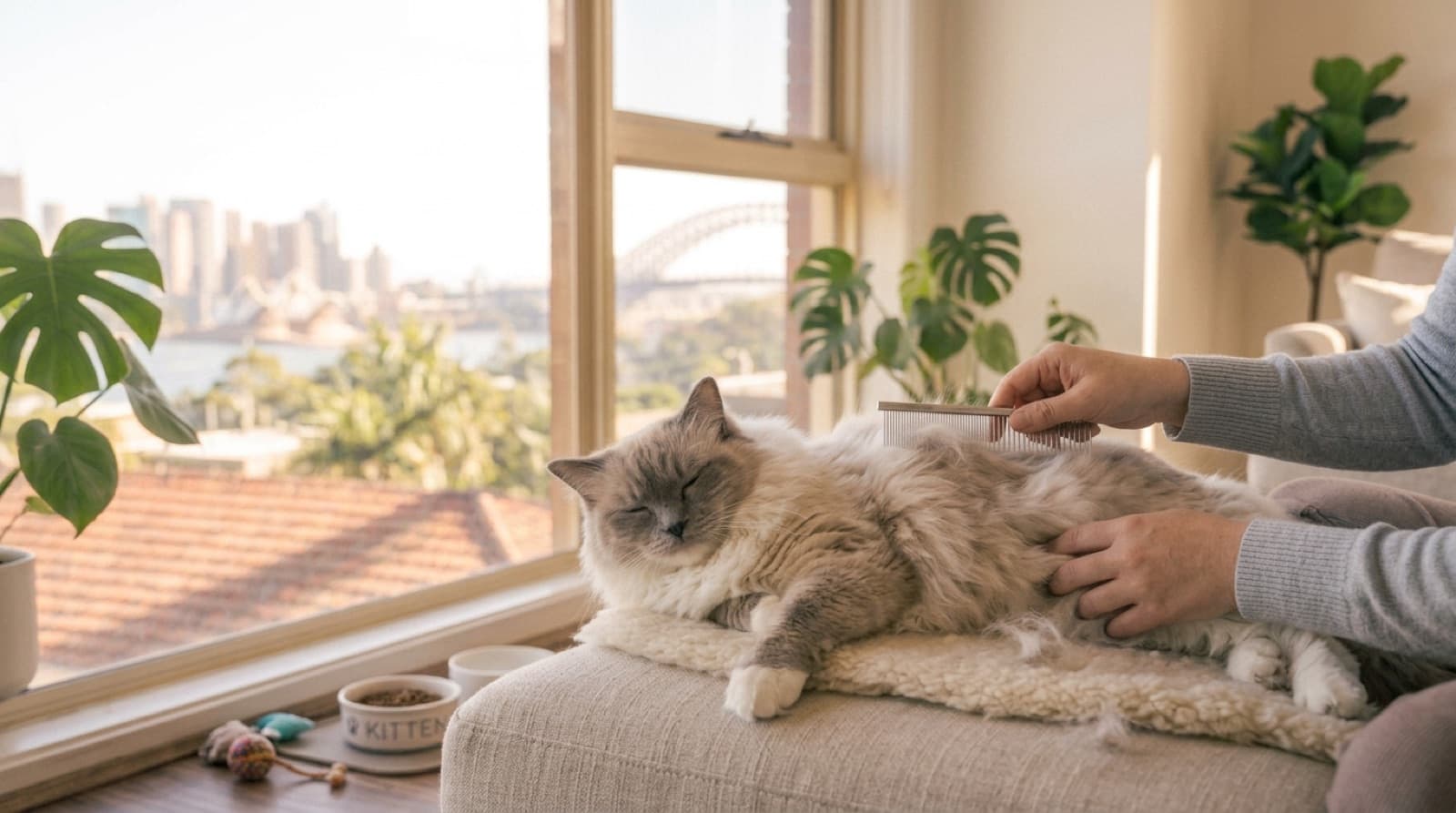
The Ragdoll has a soft, silky, semi-long coat with relatively little dense undercoat, so it mats less readily than a heavy double coat like a Maine Coon's. It still needs regular care, though: brush two to three times a week with a slicker brush and finish with a wide-tooth comb, more often during seasonal moults, focusing on the mat-prone spots behind the ears, in the armpits, on the belly and around the britches. Keeping the coat dry helps in the humid Brisbane climate. Never shave the coat to cool the cat, because it protects the skin from sunburn and helps regulate temperature; instead keep the cat indoors in the cool through the hottest part of the day. Round out the routine with claw trims every couple of weeks, ear checks, and dental care with regular tooth brushing and vet checks.
Meet a Ragdoll in Brisbane rescue
If you can offer a safe indoor home and plenty of company, a Ragdoll is one of the most affectionate cats there is. Browse Ragdolls and gentle colourpoint crosses available across Brisbane and Queensland rescues.
See Available Ragdolls →Frequently Asked Questions
What is a Ragdoll’s temperament like?
Ragdolls are famously placid, gentle and affectionate, and intensely people-focused. Many go limp and relaxed when picked up, which is where the name comes from, and the breed tends to follow its owners from room to room, greet them at the door and settle on a lap, earning the nickname puppy-cat. They are usually quiet, tolerant and good with children and other pets, and they are not high-energy or demanding in the way some breeds are. That easy, trusting nature is the whole appeal of the breed, and it is also the reason a Ragdoll needs to be kept safe indoors.
Why does a Ragdoll’s gentle nature mean it must stay indoors?
Because the same docility that makes a Ragdoll a wonderful companion leaves it defenceless outdoors. A street-smart cat flees danger, hides, and fights back; a Ragdoll tends not to. It will walk up to strangers, which makes a valuable, striking cat easy to steal, and it is poorly equipped for traffic, dogs or a cat fight. In Brisbane there are also year-round paralysis ticks, cane toads that are toxic if mouthed, and snakes. Kept indoors or with contained access like a catio or secure yard, a Ragdoll is safe and genuinely happy, because its whole personality is oriented to being near its people rather than roaming.
Are Ragdolls good with children and other pets?
Generally yes, and it is one of the breed's strengths. Ragdolls are typically tolerant, gentle and unbothered by the activity of a family home, which makes them a good fit with respectful children and with other cats or a calm dog when introduced properly. As with any cat, teach children to handle the cat gently and give it a quiet retreat it can always reach, and make introductions to other animals slow and supervised. A Ragdoll's placid nature means it is less likely to lash out, but it also means it may not remove itself from a stressful situation, so it is up to you to make sure it always has an easy escape.
How much grooming does a Ragdoll need?
Less than a Maine Coon, but still regular. The Ragdoll has a soft, semi-long, silky coat with relatively little dense undercoat, so it mats less readily than a heavy double coat, but it still needs brushing two to three times a week to remove loose hair and prevent tangles, more during seasonal moults. Use a slicker brush and a wide-tooth comb, and pay attention to the mat-prone spots behind the ears, in the armpits and around the britches. Keeping the coat dry helps in the humid Brisbane climate. Round it out with claw trims, ear checks and dental care, and never shave the coat to cool the cat, since it protects the skin and helps regulate temperature.
How do I keep a placid indoor Ragdoll happy and healthy?
Enrichment and weight control are the two things to get right. A gentle, indoor cat still needs stimulation, so provide climbing towers, scratching posts, window perches, daily interactive play and puzzle feeders, and consider a catio for safe outdoor time. Because Ragdolls are large, laid-back and food-motivated, they can gain weight easily, and excess weight strains the joints and worsens other health issues, so feed measured meals of a good-quality diet and keep the cat lean. Keep up year-round cat-safe parasite prevention for the SEQ paralysis tick, and see your vet for regular check-ups. A happy Ragdoll is a well-fed but not overfed cat with plenty of company and gentle play.
Keep reading
Adoptable Ragdolls in Brisbane
The Ragdoll breed profile and any Ragdolls or crosses currently listed across Brisbane rescues.
Ragdoll Adoption in Brisbane
Where to look, why purebreds are rare in rescue, adopt-versus-buy cost, and avoiding scams.
Ragdoll Health Issues
The breed-specific HCM gene and DNA test, PKD, bladder stones and obesity, and the signs to watch for.
All Cat Adoption Resources
Guides on adopting, kitten care, indoor living and costs for cats in Brisbane and Queensland.