The short answer
Brush a Maine Coon two to three times a week (daily during seasonal moults) right down to the skin with a slicker brush and a wide-tooth comb, focusing on the mat-prone spots behind the ears, armpits, groin, belly and britches. Never shave the double coat to cool the cat, because it insulates against heat as well as cold and often grows back wrong; instead keep it well brushed and free of dead undercoat, and keep the cat indoors in the cool through the hottest part of a Brisbane day. Cats rarely need baths. Round it out with claw trims, ear and dental care, a lean weight, and year-round cat-safe parasite prevention, since SEQ has paralysis ticks all year and a long coat hides one easily.
Why the coat is the commitment
A Maine Coon carries a long, shaggy, water-resistant double coat, a dense undercoat under a longer topcoat, that thickens into a ruff around the neck. It is beautiful and it is the reason the breed needs more grooming than a short-haired cat. The undercoat sheds and, if it is not brushed out, the loose hair tangles against new growth and felts into mats that pull on the skin and can become painful and infected. Cats do groom themselves, but a Maine Coon's coat is simply too much for the cat to manage alone, so regular brushing from you is not optional. Done little and often, it is a pleasant few minutes; left too long, it becomes a dematting job neither of you enjoys.
The brushing routine and tools
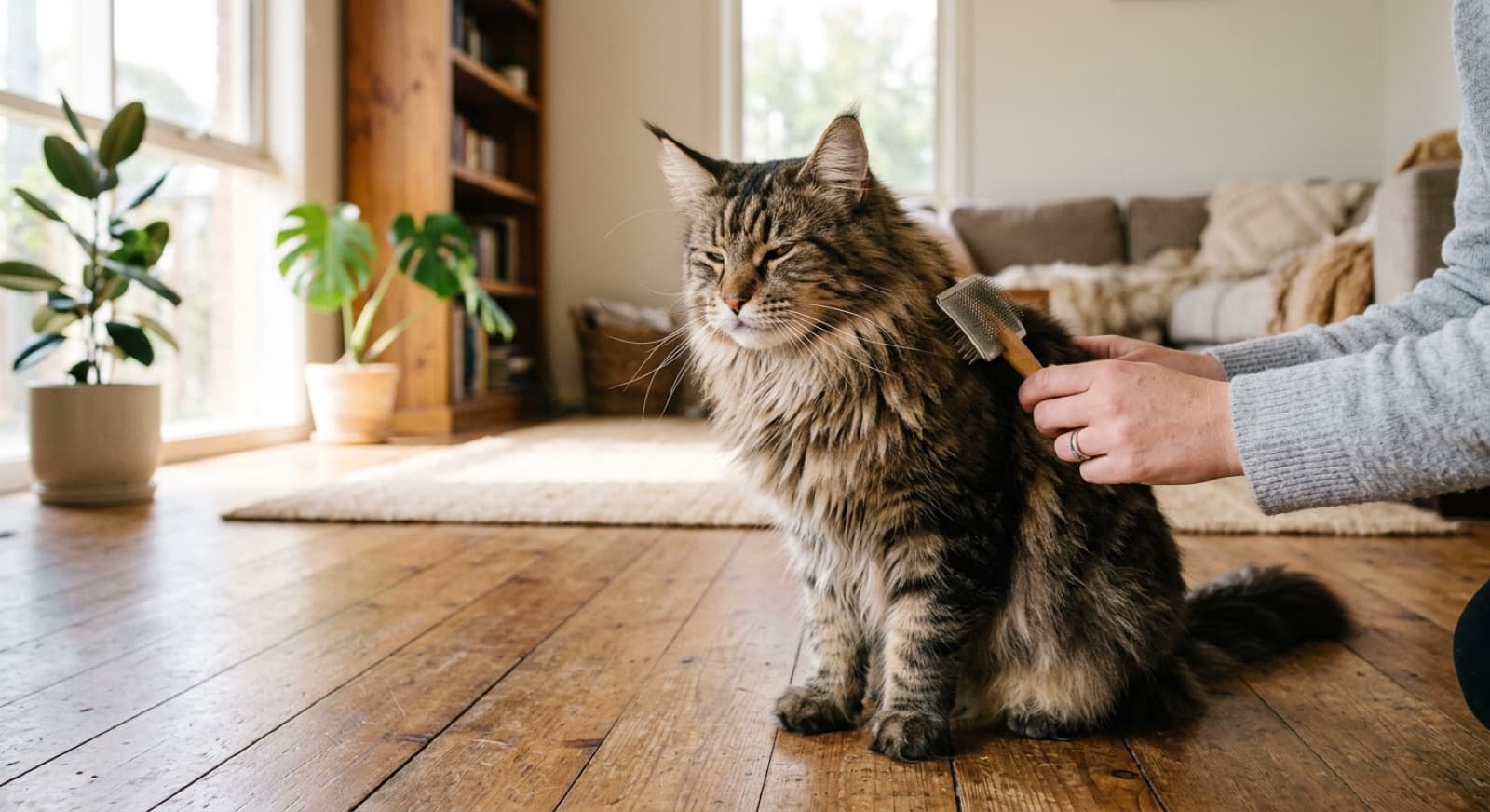
- How often: two to three times a week most of the year, daily during the heavier seasonal moults when the undercoat drops.
- Tools: a slicker brush or a de-shedding comb to reach the undercoat, and a wide-tooth metal comb to work through the coat afterwards and find hidden tangles. Brush down to the skin, not just over the surface, because mats form underneath where you cannot see them.
- Technique: work in sections and in the direction the coat lies, gently, and stop before the cat gets fed up. Keeping it positive, with treats and short sessions, is what makes a cat tolerate and even enjoy grooming for life.
- A new rescue cat: may need a patient settling-in period before it accepts handling, so build up slowly rather than forcing a full groom on day one.
Where mats form, and how to deal with them
Mats form where there is friction and moisture: behind the ears, in the armpits and groin, on the belly, around the britches at the back of the legs, and under a collar. Prevention is the regular brushing above, plus keeping the coat dry, which matters more in the humid Brisbane climate. If you find a mat, do not cut it out with scissors, because it is very easy to nick the skin underneath, which is a common way cats end up at the vet. Tease a loose mat apart gently with your fingers and a comb, working from the edges. A tight mat close to the skin is a job for a groomer or your vet, who can clip it safely.
Never shave the double coat, and coping with the SEQ heat
It feels logical that shaving a thick-coated cat in a hot climate would cool it down, but for a double-coated breed like the Maine Coon it is the wrong move. The double coat insulates against heat as well as cold and shades the skin from sunburn, so shaving removes that protection rather than helping, and a shaved double coat frequently grows back patchy or with a changed texture. The right way to help a long-haired cat through a Brisbane summer is to keep the coat well brushed and free of the dead undercoat that traps heat, keep the cat indoors in the cool during the hottest part of the day, and always provide shade and fresh water. The RSPCA Knowledgebase is a good reference on grooming and hot-weather care. A severely matted coat may be clipped by a vet or groomer for welfare reasons, but that is a remedy for neglect, not a routine method.
The rest of the care routine
- Claws: trim every couple of weeks, and provide large, sturdy scratching posts suited to the cat's size.
- Ears and teeth: check and gently clean the ears, and look after the teeth with regular brushing and vet dental checks, since dental disease is common in cats.
- Weight: keep a big cat lean, because excess weight strains the joints and makes self-grooming harder, which worsens matting.
- Parasites: keep up year-round parasite prevention with a vet-recommended, cat-safe product. South East Queensland has paralysis ticks all year, and a long coat hides a tick easily, so part the coat and run your hands over the skin every time you groom.
- Bathing: rarely needed; if you must, use a cat-specific shampoo, rinse thoroughly and dry the coat well, because a damp double coat mats.
Meet a Maine Coon in Brisbane rescue
If you can commit to the coat, a Maine Coon is one of the most rewarding cats there is. Browse Maine Coons and big long-haired crosses available across Brisbane and Queensland rescues.
See Available Maine Coons →Frequently Asked Questions
How often should I groom a Maine Coon?
Brush a Maine Coon two to three times a week as a baseline, and daily during the heavier seasonal moults, because the long double coat mats if the loose undercoat is not removed. A few minutes most days is better than a long session once a week, both for the coat and for keeping the cat relaxed about being handled. Maine Coons often enjoy grooming if it is introduced gently and early, and a rescue cat may need a patient settling-in period first. Regular brushing also cuts down hairballs and the amount of hair around your home, and it is the moment you check the skin for mats, ticks and lumps.
Where do Maine Coons get matted, and how do I prevent it?
Mats form where there is friction and moisture: behind the ears, in the armpits and groin, on the belly, around the britches at the back of the legs, and under a collar. Prevention is regular brushing right down to the skin with the right tools, not just over the surface, plus keeping the coat dry, which matters more in the humid Brisbane climate. Work through the coat with a wide-tooth comb after brushing to find mats you cannot see. If you find a mat, never cut it out with scissors, because it is very easy to cut the skin underneath; tease it apart gently with your fingers and a comb, or have a groomer or vet deal with a tight one.
Should I shave my Maine Coon to keep it cool in the Brisbane heat?
No. A Maine Coon has a double coat, and that coat insulates against heat as well as cold and protects the skin from sunburn, so shaving it does not make the cat cooler and can do harm, and a shaved double coat often grows back patchy or with a changed texture. The right way to help a long-haired cat in the SEQ heat is to keep the coat well brushed and free of the dead undercoat that traps heat, keep the cat indoors in the cool during the hottest part of the day, and always have fresh water and shade available. If a coat is already severely matted, a vet or groomer may clip it for welfare reasons, but that is a fix for neglect, not a routine cooling method.
Do Maine Coons need baths?
Not routinely. Cats groom themselves, and a well-brushed Maine Coon rarely needs bathing. An occasional bath can help if the coat is greasy, the cat has got into something, or a senior or unwell cat is not grooming well, but over-bathing strips the coat and dries the skin. If you do bathe one, use a cat-specific shampoo, never a human or dog product, rinse thoroughly, and dry the coat well afterwards, because a damp double coat mats and, in the humid Brisbane climate, can stay damp long enough to irritate the skin. Most of a Maine Coon's coat care is brushing, not bathing.
What else does caring for a Maine Coon involve?
Beyond the coat: trim the claws every couple of weeks, check and gently clean the ears, and look after the teeth with regular brushing and vet dental checks, since dental disease is common in cats. Feed a good-quality diet and keep the cat lean, because Maine Coons are big and can carry excess weight that strains the joints. Provide sturdy, large scratching posts and climbing towers built for the size. And keep up year-round parasite prevention with a vet-recommended, cat-safe product, because South East Queensland has paralysis ticks all year and a long coat hides a tick easily, so run your hands over the skin when you groom.
Keep reading
Adoptable Maine Coons in Brisbane
The Maine Coon breed profile and any Maine Coons or crosses currently listed across Brisbane rescues.
Maine Coon Adoption in Brisbane
Where to look, why purebreds are rare in rescue, adopt-versus-buy cost, and avoiding scams.
Maine Coon Health Issues
HCM heart disease, hip dysplasia, SMA and PKD, the DNA tests, and the signs to watch for.
All Cat Adoption Resources
Guides on adopting, kitten care, indoor living and costs for cats in Brisbane and Queensland.