The short answer
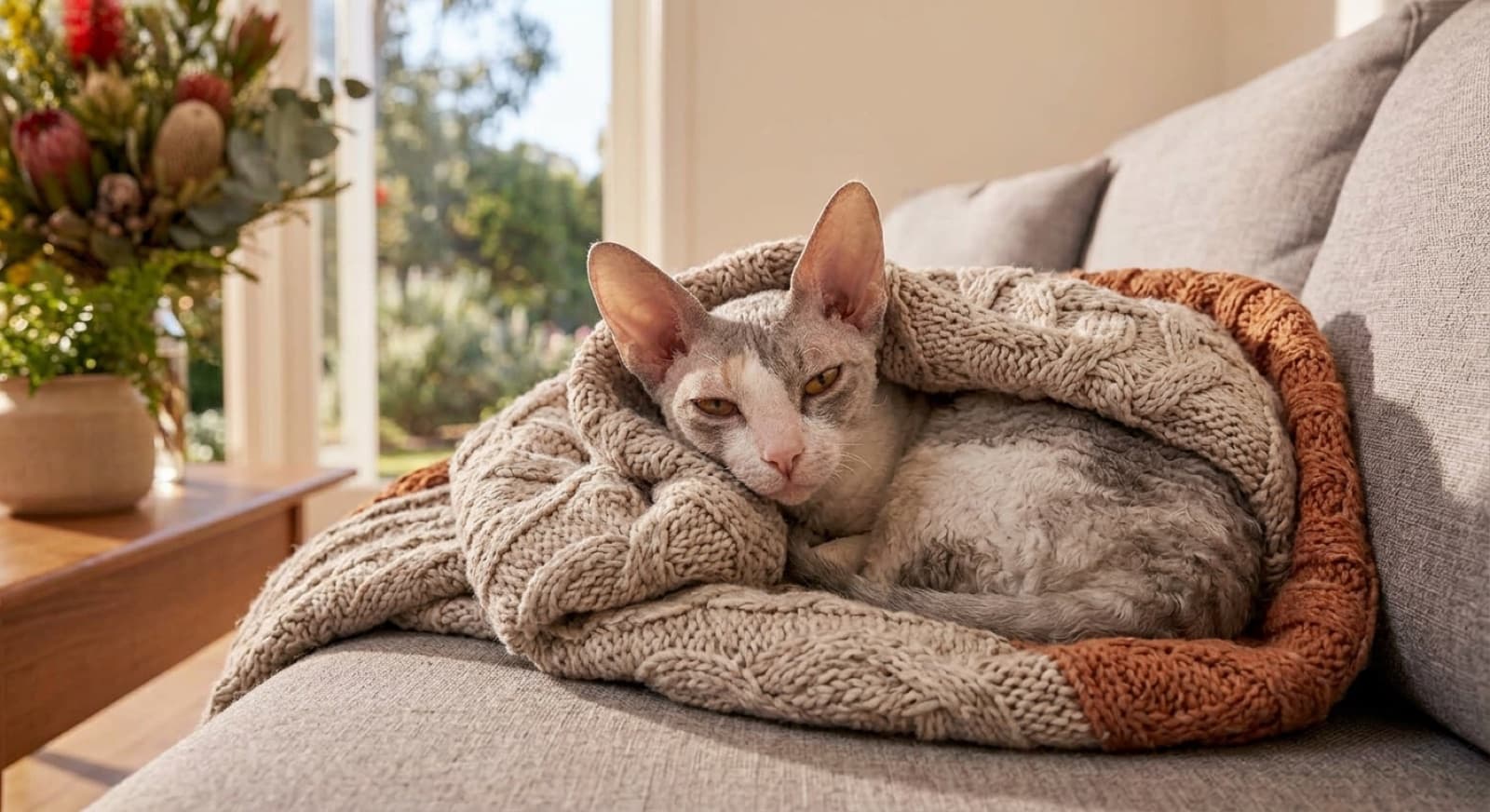
The Cornish Rex has a unique coat of pure soft down with no guard hairs, arranged in tight waves, that feels like velvet and sheds almost nothing but gives very little insulation. The result is a cat that feels the cold and craves warmth, seeking out laps, sunny spots, blankets and warm beds, which is the defining care point for the breed. Brisbane's warm climate genuinely suits a fine-coated cat, a real advantage, but provide cosy, warm resting spots away from air-conditioner draughts, and keep the cat out of prolonged direct sun, since a minimal coat also means less sun protection. Care for the coat gently (do not over-brush), give the occasional bath the oily skin benefits from, and clean the large ears regularly.
The most unusual coat in the cat world
A normal cat has coarse guard hairs over a softer undercoat. The Cornish Rex has essentially only the soft, fine undercoat, the down, with no guard hairs at all, and that down grows in tight, even waves, the marcel wave the breed is famous for. The effect is a coat that feels extraordinarily soft and plush, often compared to crushed velvet or lambswool, and one that sheds very little, which some allergy-prone owners find easier to live with, though no cat is truly hypoallergenic. It is a genuinely distinctive, lovely coat. The catch is simple physics: with so little coat, the breed has very little insulation, and that shapes everything about its care. For the breed profile and any Cornish Rex currently listed, see the Cornish Rex breed page.
Why the breed loves warmth
This is the heart of caring for a Cornish Rex. Because that down-only coat offers so little insulation, the breed feels the cold more than almost any other cat, and it actively seeks out warmth: sunny spots, your lap, the crook of your arm, under a blanket, a snug bed, or another cat to snuggle. Far from being a chore, this warmth-seeking is part of why the Cornish Rex is such a devoted, affectionate, cuddly companion, it genuinely wants to be tucked up with you. Your job is simply to make sure it always has warm, cosy places to retreat to, and to be alert to the things that chill it, cold nights and, above all, air conditioning.
Why the Brisbane climate suits it
Here is the genuinely good news. A fine-coated cat that craves warmth is far better matched to Brisbane's warm subtropical climate than to a cold one, so a Cornish Rex is comfortable for much more of the year here than it would be in a cool climate, which is a real advantage of the breed in this part of the country. That does not mean warmth takes care of itself. Cool winter nights, and especially the chilling blast of air conditioning through a hot summer, can leave a Cornish Rex cold indoors, so provide cosy, warm beds and resting spots away from draughts and the direct flow of the air conditioner. And the other side of a minimal coat is less protection from sun and heat: exposed skin can burn, so keep the cat out of prolonged direct sun through a hot window, which the breed's indoor lifestyle makes easy.
Gentle coat, skin and ear care
- Do not over-brush. The fine coat is delicate and can be damaged by vigorous brushing; most owners simply smooth it with a hand or a soft, slightly damp cloth. It sheds little, so grooming is not about removing hair.
- Occasional gentle bath. Because the sparse coat does not spread the skin's oils, a Cornish Rex can get a little greasy and, like other rex breeds, benefits from an occasional bath with a mild cat shampoo, which most cats never need. Ask your vet how often, dry the cat well and keep it warm afterwards, and never use a human or dog product.
- Ear care. The large ears collect waxy debris and need regular gentle cleaning with a vet-recommended cleaner; see a vet if an ear smells, looks red or sore, which may be an infection.
- Skin checks. Use gentle handling to check the skin for redness or sores, and for paralysis ticks, which are a year-round risk across South East Queensland and easy to feel on a fine-coated cat.
The RSPCA Knowledgebase has good general guidance on grooming and skin care, and your vet is the right guide for an individual cat.
Keeping a Cornish Rex cosy
Give the cat plenty of warm options and let it choose. Provide soft, cosy beds and blankets in warm, draught-free spots, including a raised bed by a sunny window it can bask in, and keep beds well away from the direct flow of air conditioning. Many Cornish Rex love to burrow under blankets or clothing, so a snug, igloo-style covered bed suits the breed perfectly. Company is a form of warmth too: another friendly cat gives a Cornish Rex someone to curl up with, which it loves. The simple rule is that whatever the temperature, a Cornish Rex should always be able to find a warm, comfortable place, and it will reward you with some of the most affectionate, cuddly companionship any cat offers.
Meet a Cornish Rex in Brisbane rescue
If you can offer warm spots, gentle care and plenty of company, a Cornish Rex is one of the softest, most affectionate cats there is. Browse Cornish Rex and rex-coated cats available across Brisbane and Queensland rescues.
See Available Cornish Rex →Frequently Asked Questions
What makes the Cornish Rex coat so unusual?
The Cornish Rex has one of the most distinctive coats of any cat. Unlike a normal cat, which has coarse guard hairs over a softer undercoat, the Cornish Rex has essentially only the soft, fine undercoat, with no guard hairs at all, and that down is arranged in tight, even waves, the marcel wave the breed is known for. The result is a coat that feels extraordinarily soft and plush, like crushed velvet or lambswool. It also sheds very little. The trade-off is that this minimal coat gives very little insulation, which is the single most important thing to understand about caring for the breed, and it is why warmth matters so much.
Do Cornish Rex feel the cold?
Yes, more than almost any other cat, because that down-only coat offers so little insulation. A Cornish Rex feels the cold acutely and actively seeks out warmth, sunny spots, laps, the crook of your arm, under a blanket, a warm bed, or another cat to snuggle, and this warmth-seeking is part of why the breed is such a devoted, cuddly companion. It is the defining care point for the breed. You do not need to keep a Cornish Rex in a hot house, but you do need to make sure it always has warm, cosy places to retreat to, and to be mindful of cold nights and the chilling effect of air conditioning.
Does the warm Brisbane climate suit a Cornish Rex?
It genuinely does, and this is a real advantage of the breed here. A fine-coated cat that craves warmth is far better matched to Brisbane's warm subtropical climate than to a cold one, so the breed is comfortable for much more of the year than it would be in a cool climate. That said, warm is not the whole story: cool winter nights and, especially, strong air conditioning can chill a Cornish Rex quickly, so provide cosy, warm beds and resting spots away from draughts and the direct blast of the air conditioner. The flip side of a minimal coat is less protection from sun and heat, so keep the cat out of prolonged direct sun.
How do I care for the coat and skin?
Gently, and less than you would think. Do not brush the fine coat vigorously, because it is delicate and can be damaged; most owners simply smooth it with a hand or a soft, slightly damp cloth. Because the coat is so sparse, the skin's natural oils are not spread through a full coat, so they build up on the skin, and a Cornish Rex, like other rex breeds, can become a little greasy and benefit from an occasional gentle bath with a mild cat shampoo, which most cats never need. The large ears also collect waxy debris and need regular gentle cleaning. See a vet for red or sore skin, or a smelly, sore ear, which may be an infection needing treatment.
How do I keep a Cornish Rex warm and comfortable?
Give it options to stay warm and let it choose. Provide soft, cosy beds and blankets in warm, draught-free spots, including a raised bed near a sunny window it can bask in, and keep beds away from the direct flow of air conditioning. Many Cornish Rex love to burrow under blankets or clothing, and a snug igloo-style bed suits them well. Company is warmth too: another friendly cat gives a Cornish Rex someone to snuggle with, which the breed loves. In short, make sure that whatever the temperature, a Cornish Rex can always find a warm, comfortable place, and it will be a happy, affectionate cat.
Keep reading
Adoptable Cornish Rex in Brisbane
The Cornish Rex breed profile and any Cornish Rex or rex-coated cats currently listed across Brisbane rescues.
Cornish Rex Adoption in Brisbane
Where to look, why purebreds are rare in rescue, adopt-versus-buy cost, and avoiding scams.
Cornish Rex Health Issues
HCM, patellar luxation, skin and dental issues, anaesthesia sensitivity, and the signs to watch.
All Cat Adoption Resources
Guides on adopting, kitten care, indoor living and costs for cats in Brisbane and Queensland.